
In the rapidly evolving world of consumer electronics, a product cycle usually lasts between twelve and twenty-four months. Smartphones, tablets, and even laptops are refreshed annually to keep pace with incremental gains in processing power and display technology. However, in the niche of high-end media streamers, one device has defied the conventional laws of technological obsolescence: the NVIDIA Shield TV Pro.
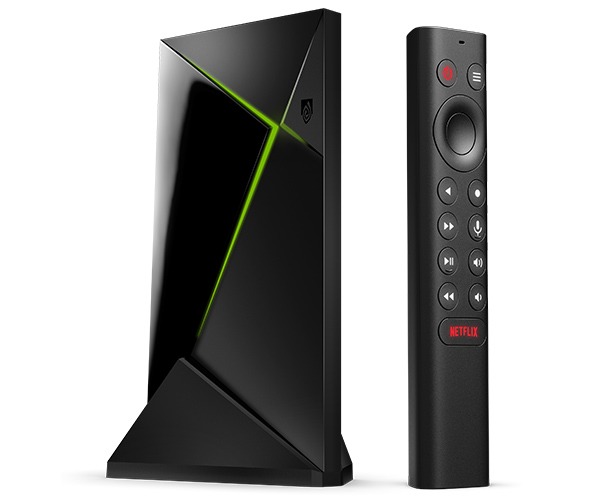
As of 2024 and heading into 2025, the “newest” model of the NVIDIA Shield TV Pro remains the version released in late 2019. While this may seem antiquated to the casual observer, the Shield TV Pro continues to occupy the throne as the most powerful and versatile Android-based streaming device on the market. This article explores why the 2019 model remains the current standard, the technical specifications that allow it to stay relevant, and what the future holds for NVIDIA’s specialized hardware.
Understanding the “Newest” Model: The 2019 NVIDIA Shield TV Pro in Today’s Market
When consumers search for the “newest” NVIDIA Shield TV Pro, they are often surprised to find that the hardware hasn’t seen a physical refresh in over five years. However, in the tech world, longevity is often a sign of over-engineered excellence rather than stagnation. The 2019 Shield TV Pro was so far ahead of its competitors at launch that it has taken half a decade for the rest of the industry to even begin catching up.
Why No New Hardware Since 2019?
The primary reason NVIDIA has not released a newer model is the sheer lack of competition in the high-end silicon space for media players. The 2019 model utilizes the Tegra X1+ processor. While this chip is an evolution of the architecture found in the original Nintendo Switch, it remains significantly more capable than the low-power ARM chips found in standard “sticks” or integrated smart TV platforms. NVIDIA’s focus has shifted heavily toward Artificial Intelligence and Data Center GPUs, leaving the Shield division to focus on software optimization rather than annual hardware iterations.
The Tegra X1+ Chip: A Legacy of Power
The “Plus” in the Tegra X1+ refers to a 25% increase in performance over the previous generation, primarily achieved through a more efficient 16nm manufacturing process. This efficiency allowed for higher clock speeds and, crucially, the overhead required for NVIDIA’s proprietary AI features. In a tech landscape where most streamers struggle with heavy 4K bitrates, the Shield TV Pro handles them with ease, thanks to its 3GB of RAM and dedicated GPU cores.
Core Features That Define the Shield TV Pro Experience
What keeps the 2019 NVIDIA Shield TV Pro at the top of “Best Tech” lists year after year isn’t just the raw horsepower; it’s the specific suite of features tailored to audiophiles, cinephiles, and gamers.
AI-Enhanced Upscaling: The Killer Feature
Perhaps the most significant technological leap in the 2019 model was the introduction of AI-Enhanced Upscaling. Using a neural network trained on millions of hours of footage, the Shield TV Pro can take 720p or 1080p content and upscale it to 4K in real-time with startling clarity. Unlike traditional “bicubic” or “bilinear” upscaling, which simply stretches pixels and adds a blur filter, NVIDIA’s AI sharpens edges and recovers detail in textures. For users with vast libraries of legacy content or those streaming from platforms that haven’t fully transitioned to 4K, this feature alone justifies the device’s premium price tag.
Dolby Vision and Atmos: A Home Theater Powerhouse
For the home theater enthusiast, the Shield TV Pro is often the only viable choice. It supports a wide array of HDR formats, most notably Dolby Vision. More importantly, it is one of the few streamers that supports “lossless” audio passthrough. This means it can send high-resolution audio formats like Dolby TrueHD, DTS-HD Master Audio, and DTS:X directly to an AV receiver. In a world where most streaming sticks “transcode” or compress audio, the Shield’s ability to handle high-bitrate Plex or Emby streams makes it the heart of any high-end cinema setup.
GeForce NOW and the Gaming Ecosystem
NVIDIA leveraged its dominance in the GPU market to turn the Shield into a formidable gaming machine. Through GeForce NOW, the Shield TV Pro can stream AAA games from the cloud at 4K resolution with HDR and 60 FPS (depending on the subscription tier). Furthermore, it serves as an excellent hub for local game streaming via NVIDIA GameStream (now transitioned toward Moonlight/Sunshine protocols) or Steam Link, allowing users to play their PC games on the big screen with minimal latency.
Software Ecosystem and Long-Term Support
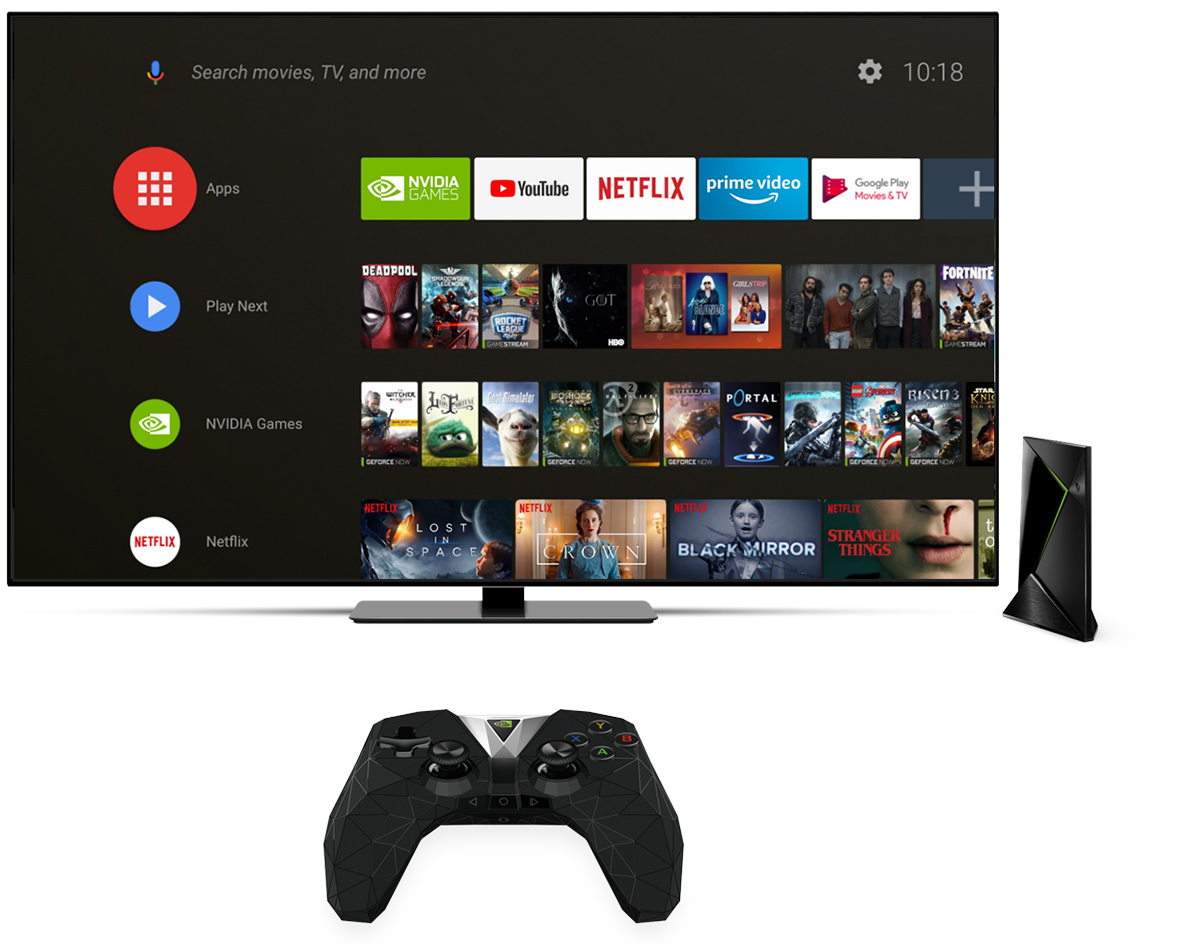
Hardware is only half of the story. The reason the 2019 Shield TV Pro feels like a “new” device is NVIDIA’s unprecedented commitment to software updates.
Android TV vs. Google TV
While most modern devices have migrated to the “Google TV” interface—which is heavily content-centric and often cluttered—the Shield TV Pro maintains a version of Android TV that leans closer to a “pro” experience. It is cleaner, faster, and allows for deep customization. NVIDIA has consistently updated the underlying Android version, ensuring that the latest security patches and app compatibility remain current.
The Shield’s Reputation for Updates
In the Android ecosystem, “fragmentation” and “abandonware” are common complaints. NVIDIA shattered this stereotype by providing updates to the original 2015 Shield for over seven years. This track record gives consumers confidence that even though the 2019 model is the current “newest,” it will likely receive support well into the latter half of the decade.
Customization and Power User Features
The Shield TV Pro is a favorite among “power users” because of its open nature. It supports sideloading of apps, third-party launchers, and functions as a standalone Plex Media Server. With two USB 3.0 ports, users can connect external hard drives or tuners, transforming a simple streaming box into a comprehensive media hub and DVR.
Comparisons: How the Shield TV Pro Holds Up Against Modern Rivals
To understand the Shield’s current standing, we must look at how it compares to the few devices that attempt to challenge its supremacy.
Shield TV Pro vs. Apple TV 4K (2022)
The Apple TV 4K is perhaps the Shield’s closest rival. It features the A15 Bionic chip, which is technically faster in synthetic benchmarks than the Tegra X1+. However, the Apple TV exists within a “walled garden.” It does not support lossless audio passthrough for DTS:X or Atmos in the same way the Shield does, making it less ideal for hardcore home theater users. While the Apple TV has a smoother UI, the Shield wins on sheer utility and file format support.
Shield TV Pro vs. Fire TV Cube (3rd Gen)
Amazon’s Fire TV Cube is a powerful device that includes Wi-Fi 6E support and an HDMI input. While it is faster than a standard Fire Stick, it is hampered by an ad-heavy interface and the lack of a “clean” Android experience. For users who value digital security and privacy, the Shield’s lack of aggressive data tracking compared to Amazon’s ecosystem is a major selling point.
Looking Ahead: The Rumored Successor and the Future of High-End Media Players
As we look toward the future, the question isn’t just “What is the newest model?” but “When will the next one arrive?”
Speculating on the “Shield TV 2” and the Nintendo Switch 2 Connection
The tech community is currently abuzz with rumors regarding the “Nintendo Switch 2,” which is expected to feature a new NVIDIA chip (likely the Tegra T239 based on the Ampere architecture). Historically, Shield hardware development has been closely tied to the chips NVIDIA produces for Nintendo. If a new, more powerful Tegra chip enters mass production, it is highly probable that NVIDIA will use a variant of that silicon to launch a next-generation Shield TV. Such a device would likely support AV1 decoding (a modern video codec the 2019 model lacks) and even more advanced AI features like DLSS (Deep Learning Super Sampling) for gaming.
Is It Still Worth Buying in 2024/2025?
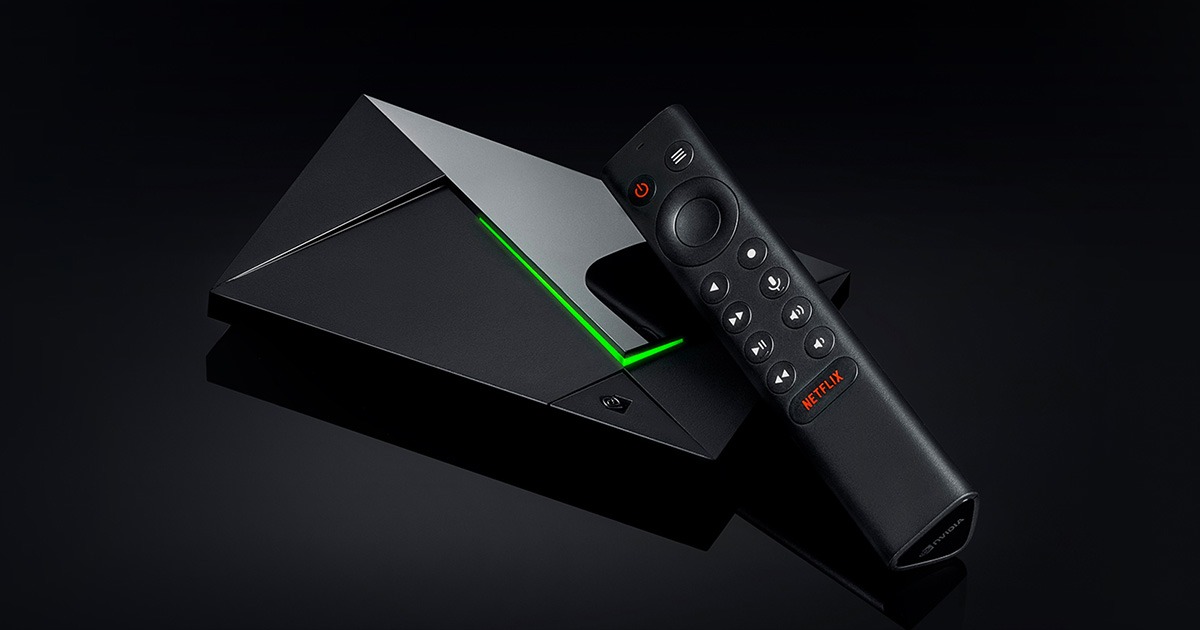
For the tech-savvy consumer, the answer is a resounding yes. Despite being the “oldest newest” device on the market, the NVIDIA Shield TV Pro offers a combination of I/O ports, audio support, and AI upscaling that no other device has matched. Until a competitor—or NVIDIA themselves—releases a box that supports AV1, HDMI 2.1, and the same level of audio passthrough, the 2019 Shield TV Pro remains the gold standard for digital media consumption.
In conclusion, while we wait for the next evolution in NVIDIA’s hardware journey, the 2019 Shield TV Pro stands as a testament to what happens when a company prioritizes high-quality components and long-term software support. It is not just a streaming box; it is a specialized computer that has mastered the art of the living room, maintaining its relevance in a “Tech” landscape that usually moves at breakneck speeds.
aViewFromTheCave is a participant in the Amazon Services LLC Associates Program, an affiliate advertising program designed to provide a means for sites to earn advertising fees by advertising and linking to Amazon.com. Amazon, the Amazon logo, AmazonSupply, and the AmazonSupply logo are trademarks of Amazon.com, Inc. or its affiliates. As an Amazon Associate we earn affiliate commissions from qualifying purchases.