
We have all experienced the cognitive itch known as an “earworm.” It is that elusive melody that loops incessantly in your mind, yet remains untethered to a title or an artist. In the past, solving this mystery required a trip to a record store or a fortuitous encounter with a knowledgeable radio DJ. Today, the question “what’s the name of the song that goes…” is no longer a social plea but a technical query.
The transition from human memory to digital precision represents one of the most fascinating trajectories in consumer technology. From the early days of basic audio fingerprinting to the modern era of generative AI and machine learning, the tech behind music recognition has become a ubiquitous part of our digital ecosystem. This article explores the sophisticated software, complex algorithms, and hardware integration that allow our devices to identify a song from a few seconds of distorted audio or a poorly hummed melody.
The Science of Sound: How Audio Fingerprinting Works
At the heart of modern music recognition lies a technology known as audio fingerprinting. This is not a simple recording of the sound, but rather a condensed digital summary of an audio signal. To understand how a tool like Shazam can identify a track in a crowded bar, we must look at how it translates air pressure into data.
Spectrograms and Digital DNA
When you record a snippet of a song, the software does not look at the file as a human hears it. Instead, it converts the audio into a spectrogram—a visual representation of the spectrum of frequencies in a sound as they vary with time. This spectrogram identifies unique “peaks” in the music, such as a specific drum hit, a vocal inflection, or a guitar riff.
By identifying these high-intensity points, the algorithm creates a “fingerprint”—a simplified map of the song’s most distinctive features. This map is then compared against a massive database of millions of pre-fingerprinted tracks. Because the fingerprint focuses on specific frequency peaks rather than the entire audio file, the technology is remarkably resilient against background noise or low-quality speakers.
Handling Noise and Distortion
One of the greatest technological hurdles in audio identification is environmental interference. Whether it is the chatter of a crowded room or the wind blowing into a smartphone microphone, the “noise” can easily drown out the “signal.”
To combat this, engineers utilize advanced signal processing techniques. Modern software uses “masking” algorithms that filter out frequencies likely to be background noise. By prioritizing the strongest, most stable parts of the audio fingerprint, the software can find a match even when the input is heavily degraded. This robust error-correction is what separates professional-grade music recognition from simple pattern matching.
From Humming to Hitting: The Rise of Query-by-Humming (QbH)
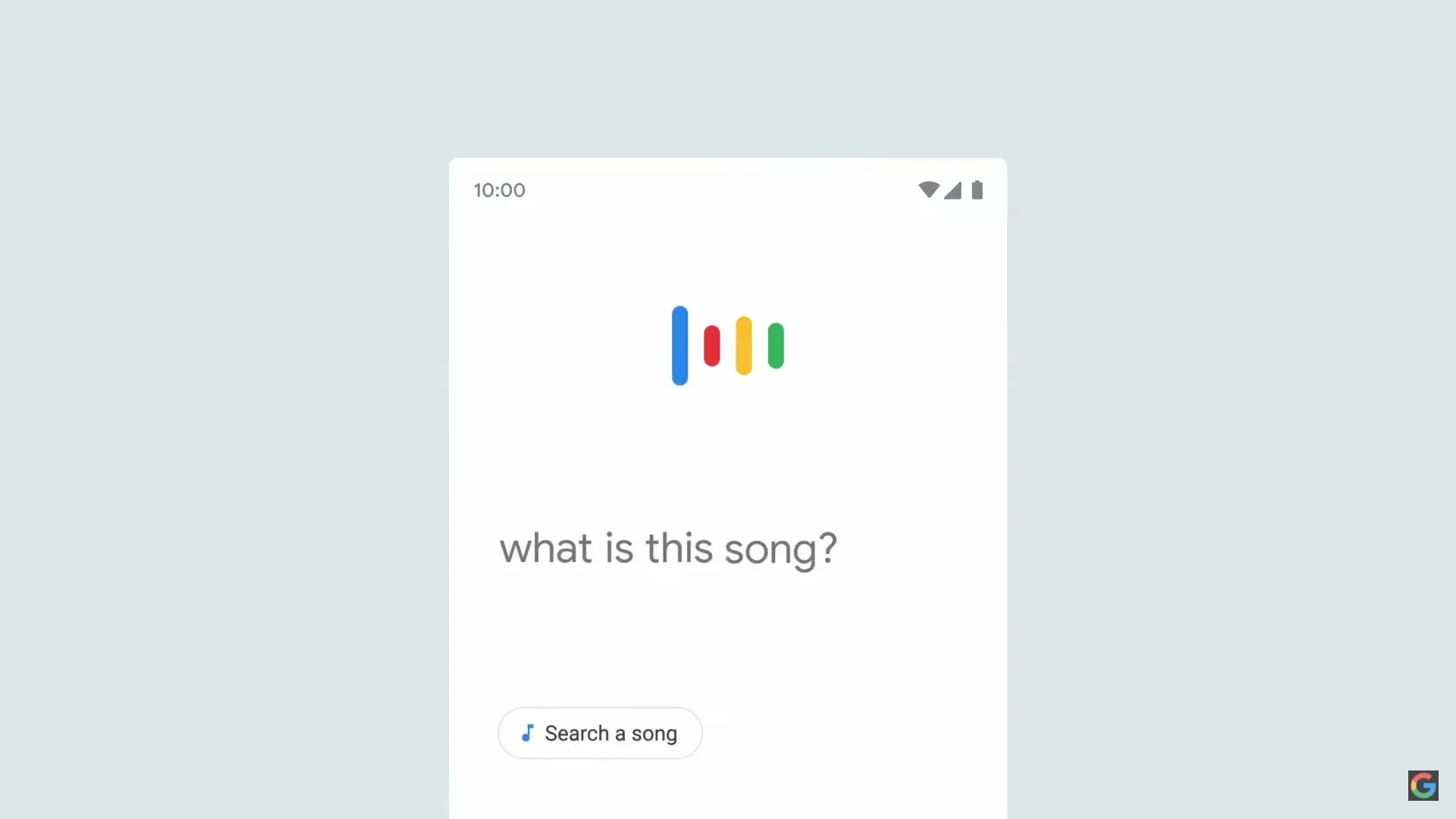
While audio fingerprinting works perfectly for recorded music, it fails when a user tries to identify a song by singing or humming it. This is because a hummed melody lacks the specific “peaks” and production quality of a studio recording. To solve the “what’s the name of the song that goes…” problem when no audio is playing, tech giants turned to Query-by-Humming (QbH).
Google’s Machine Learning Breakthroughs
Google revolutionized this space with its “Hum to Search” feature. Unlike Shazam, which looks for an exact acoustic match, Google’s AI treats the melody as a sequence of numbers. When you hum into your phone, the machine learning model transforms the audio into a simplified melody line, stripping away the tone of your voice or the lyrics.
This model was trained on millions of pairs of audio—some studio recordings, some people singing, and some people humming. Through deep learning, the AI learned to recognize the underlying mathematical relationship between a human voice and the professional track. It essentially learns to “hear” the melody’s architecture regardless of the performer’s vocal talent.

Melodic Matching vs. Lyric Databases
In addition to melodic recognition, natural language processing (NLP) plays a critical role. When a user remembers a few fragmented lyrics—”that song that goes ‘don’t go breaking my heart'”—the tech must distinguish between dozens of songs with similar titles or lyrics.
Modern search engines use semantic search to understand context. They don’t just look for keyword matches; they analyze the popularity of the song, recent trends, and the user’s listening history to provide the most likely candidate. This integration of audio AI and linguistic AI has made the “tip of the tongue” phenomenon almost obsolete.
The Ecosystem of Identification: Top Apps and Tools
The market for music recognition has consolidated into a few powerhouse players, each utilizing different technological strengths to serve the user.
Shazam: The Pioneer of Passive Listening
Acquired by Apple in 2018, Shazam remains the gold standard for identifying recorded music. Its integration into the iOS ecosystem—accessible via Control Center or Siri—has made it a seamless part of the mobile experience. Shazam’s primary tech advantage is its speed and its massive database. Because it is deeply integrated with Apple Music, it provides immediate utility, allowing users to add identified tracks to playlists instantly, thereby closing the loop between curiosity and consumption.
SoundHound and Midomi: The Humming Specialists
SoundHound (and its web-based counterpart Midomi) was an early leader in the QbH space. While Shazam focused on the “acoustic fingerprint,” SoundHound built its “Speech-to-Meaning” and “Deep Meaning Understanding” engines. This allows SoundHound to be particularly effective at identifying songs from live performances or user-generated vocals. Their proprietary technology focuses more on the musical structure than the audio texture, making it the preferred tool for musicians and those who find themselves humming tunes they can’t quite place.
Integrated AI: Siri, Alexa, and Google Assistant
The most recent shift in this tech niche is the move away from standalone apps toward integrated virtual assistants. Modern smartphones now feature “always-on” hardware components designed to recognize audio patterns with minimal battery drain. For example, the “Now Playing” feature on Google Pixel phones performs all music recognition locally on the device using a low-power digital signal processor. This is a massive leap in privacy and efficiency, as the audio never needs to leave the device to be identified.
The Future of Auditory AI: Beyond Song Identification
The technology developed to answer “what is this song” is now being pivoted toward broader applications in the tech world. The underlying AI models are becoming more sophisticated, moving beyond simple identification toward creative and protective uses.
Predictive Search and Contextual Recommendations
The next phase of music recognition tech is predictive. Using machine learning, services are beginning to understand the vibe of a song rather than just its identity. This “Sonic AI” can categorize music by tempo, key, and emotional resonance. If you ask an AI for “that song that goes like a summer sunset,” high-dimensional vector embeddings allow the system to search for music that matches the mathematical “fingerprint” of a specific mood.

Real-time Audio Translation and Copyright Protection
Beyond consumer convenience, this technology is vital for the digital economy. Platforms like YouTube and Twitch use advanced versions of audio fingerprinting to manage Content ID systems. This tech can scan millions of hours of video per second to identify copyrighted audio, even if it has been pitch-shifted or slowed down.
Furthermore, the same AI that recognizes a hummed melody is being adapted for real-time translation and assistive technologies for the hearing impaired. By “identifying” sounds in the environment—such as a siren, a baby crying, or a specific spoken phrase—these tools provide a visual or haptic representation of the auditory world, demonstrating that the tech behind a simple song search has profound implications for human-computer interaction.
In conclusion, the question “what’s the name of the song that goes…” has served as a catalyst for some of the most impressive developments in signal processing and machine learning. What started as a niche tool for music lovers has evolved into a sophisticated suite of AI capabilities that define how we interact with the soundscape of the 21st century. Whether through a digital fingerprint or a hummed sequence, technology has finally bridged the gap between our memories and our playlists.
aViewFromTheCave is a participant in the Amazon Services LLC Associates Program, an affiliate advertising program designed to provide a means for sites to earn advertising fees by advertising and linking to Amazon.com. Amazon, the Amazon logo, AmazonSupply, and the AmazonSupply logo are trademarks of Amazon.com, Inc. or its affiliates. As an Amazon Associate we earn affiliate commissions from qualifying purchases.