
When discussing personal finance and business operations in the Southeastern United States, few topics are as critical—or as frequently misunderstood—as the minimum wage. In Alabama, the conversation around the minimum wage is unique because the state is one of a handful of jurisdictions that does not have its own state-specific minimum wage law. Consequently, the financial floor for workers and the baseline for payroll expenses for businesses are dictated entirely by federal standards.
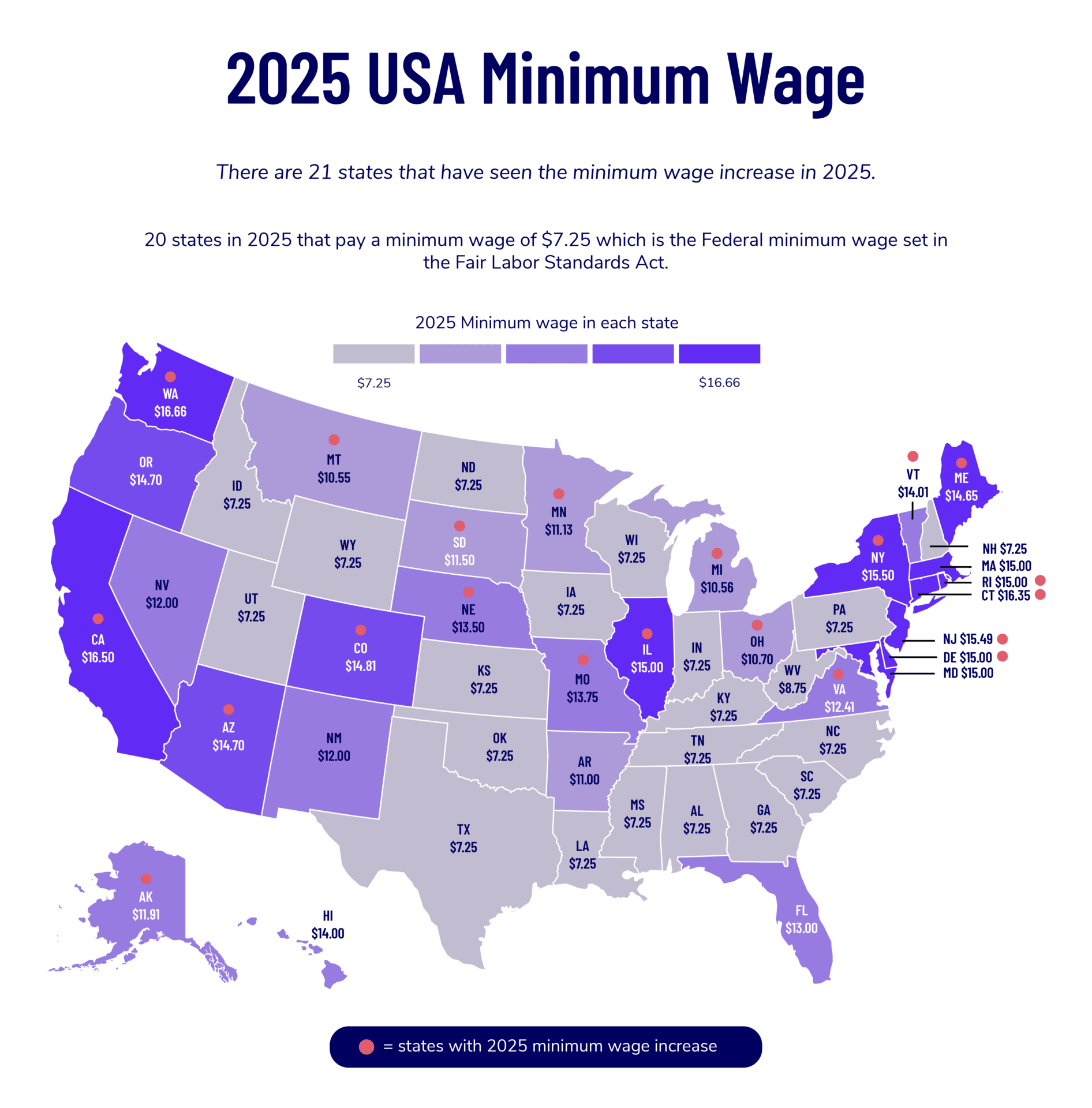
As of 2024, the minimum wage in Alabama remains at the federal level of $7.25 per hour. This rate has been in place since July 2009, marking the longest period in American history without an increase to the federal baseline. For residents, business owners, and investors, understanding how this figure interacts with the local economy is essential for effective financial planning and strategic management.
The Current Legal Framework: Federal Standards and State Inaction
To understand why Alabama operates at the $7.25 threshold, one must look at the interplay between state and federal legislation. The Fair Labor Standards Act (FLSA) is the federal law that establishes minimum wage, overtime pay, recordkeeping, and youth employment standards. When a state does not establish its own higher minimum wage, the FLSA serves as the default.
The $7.25 Threshold: A Legacy of the FLSA
The current federal rate of $7.25 was established during a different economic era. While many states—ranging from Florida to Washington—have implemented graduated increases that tie their minimum wages to inflation or specific legislative targets, Alabama has maintained the status quo. This means that for a full-time worker in Alabama earning the minimum wage, the gross annual income is approximately $15,080 before taxes. From a personal finance perspective, this figure creates significant challenges, particularly as the cost of essential goods continues to fluctuate.
The Lack of State-Specific Legislation
Alabama is one of five states—alongside Louisiana, Mississippi, South Carolina, and Tennessee—that has not adopted a state minimum wage. While there have been periodic legislative attempts to introduce a state-level floor, these efforts have generally failed to gain traction in the state legislature. The prevailing economic philosophy among state leadership has traditionally focused on maintaining a low-cost environment for business to attract industrial investment, particularly in the manufacturing and automotive sectors.
The Legal Precedent: State Preemption Laws
The history of the minimum wage in Alabama is also defined by a significant legal battle over local control. In 2016, the City of Birmingham attempted to pass an ordinance that would have raised the city’s minimum wage to $10.10 per hour. In a swift response, the Alabama State Legislature passed the Minimum Wage Uniformity Act, which prohibited local municipalities from setting their own minimum wage rates. This “preemption law” ensured that the $7.25 federal rate would remain the uniform standard across all 67 counties, regardless of the differing costs of living in urban versus rural areas.
The Economic Reality of Living on the Minimum Wage in Alabama
While the legal minimum is $7.25, the financial reality for most Alabamians is far more complex. The gap between the statutory minimum wage and a “living wage”—the income necessary to cover basic needs without government assistance—has widened significantly over the last decade.
Cost of Living vs. Earnings Capacity
Alabama is frequently cited for its low cost of living, which is often used as a justification for maintaining the federal minimum wage. Indeed, housing costs in many parts of the state are significantly lower than the national average. However, “lower cost” does not equate to “no cost.” Inflation in the sectors of healthcare, childcare, and transportation has outpaced wage growth for those at the bottom of the income scale. For a single adult in Alabama, the estimated living wage is often calculated at more than double the current minimum wage, depending on the specific county of residence.
The “Living Wage” Gap in Major Cities
In metropolitan hubs like Birmingham, Huntsville, and Mobile, the economic pressure is more acute. Huntsville, now Alabama’s most populous city and a burgeoning tech hub, has seen a surge in housing demand. As property values and rents rise, the $7.25 wage becomes increasingly untenable for service-sector workers who support the city’s infrastructure. This discrepancy often forces workers to commute from outlying rural areas, where housing is cheaper, but transportation costs then consume a larger portion of their take-home pay.
Impact of Inflation on Purchasing Power
The most significant financial hurdle for minimum wage earners is the erosion of purchasing power. A dollar in 2009 had significantly more utility than a dollar in 2024. When adjusted for inflation, the real value of Alabama’s minimum wage has declined by more than 30% since it was last raised. For those focused on personal finance and wealth building, this means that the “floor” of the Alabama economy is effectively sinking, making it harder for low-wage earners to transition into saving or investing.
Business Finance Perspectives: Why Most Employers Pay Above the Minimum

Interestingly, the statutory minimum wage in Alabama is increasingly becoming a theoretical figure rather than a practical one for most of the state’s workforce. Market forces, rather than government mandates, are currently driving wage growth across the state.
The Competitive Labor Market
In the wake of the global economic shifts over the past few years, the labor market in Alabama has tightened considerably. Businesses in the retail, hospitality, and manufacturing sectors have found that they cannot attract or retain reliable talent at $7.25 per hour. As a result, the “market minimum” has risen organically. It is now common to see entry-level positions at fast-food franchises or big-box retailers in Alabama starting at $12.00 to $15.00 per hour.
De Facto Minimum Wage Trends
Large national corporations with a significant presence in Alabama—such as Amazon, Target, and Walmart—have implemented internal minimum wage policies that far exceed the state’s requirements. Because these major employers set a higher bar, smaller local businesses are often forced to match these wages to remain competitive. This creates a “de facto” minimum wage that varies by industry and geography, often hovering around the $11.00 to $13.00 range in suburban and urban corridors.
Employee Retention as a Financial Strategy
From a business finance standpoint, paying the absolute minimum is often a counterproductive strategy. High turnover rates are incredibly expensive for businesses; the cost of recruiting, hiring, and training a new employee can often equal several months of that employee’s salary. Savvy Alabama business owners recognize that offering a competitive wage—coupled with benefits—is a strategic investment that stabilizes operations and improves the customer experience.
Strategies for Financial Growth Beyond the Minimum Wage
For individuals currently earning at or near the minimum wage in Alabama, the path to financial stability requires a proactive approach to income generation and financial management. Given the state’s legislative environment, waiting for a government-mandated raise is rarely a viable strategy.
Leveraging Side Hustles and Digital Income
The rise of the gig economy and remote work has provided Alabamians with opportunities to supplement their local wages with income from the national or global market. Freelancing in fields like digital marketing, virtual assistance, or content creation allows residents to benefit from Alabama’s low cost of living while earning wages that are not tethered to the local $7.25 floor. This “geographic arbitrage” is one of the most effective ways to boost personal net worth in a low-wage state.
Skill Acquisition and Upward Mobility
Alabama’s economy is heavily invested in “New South” industries, including aerospace, automotive manufacturing (MBUSI, Honda, Hyundai, Mazda-Toyota), and biotechnology. These industries offer high-paying roles that require specialized certifications rather than traditional four-year degrees. State programs like “AIDT” (Alabama Industrial Development Training) provide Alabamians with the resources to gain technical skills that can immediately move a worker from a minimum-wage service job into a high-wage manufacturing career.
Financial Tools for Maximizing Low Income
When income is limited, the importance of financial tools and disciplined budgeting is amplified. Utilizing high-yield savings accounts, even with small initial deposits, and taking advantage of employer-sponsored retirement matches (when available) are critical steps. Additionally, Alabamians can utilize state-specific programs like the “Earned Income Tax Credit” awareness initiatives and local credit unions that offer lower fees than national banking chains.
The Future Outlook for Alabama’s Economic Policy
Looking forward, the debate over the minimum wage in Alabama is likely to remain a point of contention between labor advocates and business interest groups. However, several factors could shift the landscape in the coming years.
Federal Legislative Pressure
The most likely source of a wage increase for Alabama workers remains the federal government. If Congress were to pass the “Raise the Wage Act” or similar legislation, Alabama would be required to comply. Many businesses in the state have already begun “future-proofing” their finances by modeling their budgets around a $15.00 minimum wage, recognizing that a federal change could occur at any time.

Regional Economic Shifts
As more companies migrate to Alabama to take advantage of its business-friendly climate, the increased demand for labor will naturally continue to push wages upward. The “Huntsville Effect”—where high-tech jobs drive up the median income of an entire region—is a prime example of how economic development can raise the standard of living more effectively than legislative mandates.
In conclusion, while the statutory minimum wage in Alabama remains fixed at $7.25, the actual financial environment is dynamic. For the worker, it is an economy that demands skill acquisition and personal initiative. For the business owner, it is a landscape that requires a balance between cost-control and competitive compensation. Navigating this environment successfully requires a deep understanding of both the legal floor and the market ceiling.
aViewFromTheCave is a participant in the Amazon Services LLC Associates Program, an affiliate advertising program designed to provide a means for sites to earn advertising fees by advertising and linking to Amazon.com. Amazon, the Amazon logo, AmazonSupply, and the AmazonSupply logo are trademarks of Amazon.com, Inc. or its affiliates. As an Amazon Associate we earn affiliate commissions from qualifying purchases.