
For over a century, the question “What’s the Dow today?” has served as the shorthand for “How is the economy doing?” Whether it is shouted across a trading floor, scrolled across the bottom of a news broadcast, or typed into a search engine by a concerned retiree, the Dow Jones Industrial Average (DJIA) remains the most recognizable barometer of financial health in the world.
While professional traders and institutional investors often look at a wider array of data points, the Dow holds a unique psychological and cultural grip on the public consciousness. To understand the “Money” niche is to understand the Dow—not just as a number, but as a complex reflection of corporate performance, investor sentiment, and global economic trends.

The Mechanics of the Dow Jones Industrial Average
To truly grasp what it means when the Dow is “up” or “down” today, one must first understand the architecture of the index itself. Unlike many modern indices, the Dow is a price-weighted index of 30 significant stocks traded on the New York Stock Exchange (NYSE) and the Nasdaq.
A Brief History of the Blue-Chip Index
Founded in 1896 by Charles Dow and Edward Jones, the index originally consisted of just 12 industrial companies. These were the “smoke-stack” industries of the era—sugar, tobacco, oil, and rubber. As the American economy evolved from an industrial powerhouse to a service and technology-driven landscape, the index evolved with it. Today, the 30 components represent a cross-section of the U.S. economy, featuring leaders in healthcare, technology, retail, and financial services. Despite the name “Industrial,” the Dow now includes giants like Apple, Microsoft, and UnitedHealth Group, proving that it is a living document of American enterprise.
How the Dow is Calculated: Price-Weighted Methodology
One of the most frequent points of confusion for new investors is the Dow’s price-weighted nature. Unlike the S&P 500, which is market-capitalization-weighted (meaning larger companies have a bigger impact), the Dow is influenced by the share price of its components.
To maintain consistency when stocks split or when companies are added or removed, the index uses the “Dow Divisor.” This is a predetermined constant that transforms the sum of the prices of the 30 stocks into the final index value. This means a $1 move in a high-priced stock like Goldman Sachs has a much larger impact on the “Dow Today” than a $1 move in a lower-priced stock, regardless of the companies’ actual market values. Understanding this quirk is essential for any investor trying to decipher why the index moved the way it did on any given Tuesday morning.
Why “What’s the Dow Today” Matters to Your Portfolio
For the individual investor, the daily movement of the Dow is more than just a headline; it is an indicator of the environment in which their personal wealth exists. Even if you do not own shares in the 30 specific companies that make up the index, your financial life is likely tethered to its performance.
The Dow as a Barometer for Market Sentiment
The Dow is often the first place investors look to gauge “market sentiment.” If the Dow is surging, it generally suggests that investors are optimistic about corporate earnings and economic growth. Conversely, a sharp drop in the Dow can signal fear—whether that fear stems from rising interest rates, geopolitical instability, or a looming recession.
Because the Dow consists of “Blue Chip” companies—established, profitable, and historically stable firms—its movement represents the “safe haven” of the equity markets. When these giants stumble, it often indicates a systemic issue that will eventually ripple down to smaller companies and individual retirement accounts (IRAs).
The Impact of Individual Corporate Performance on the Index
Checking the Dow today provides a snapshot of how the titans of industry are navigating the current fiscal climate. For instance, if the Dow is down while other indices are flat, it may be due to a poor earnings report from a single heavyweight component like Boeing or Caterpillar.
For the savvy investor, this provides a lesson in the importance of corporate fundamentals. By tracking the Dow, you are essentially tracking the health of the American consumer and the efficiency of global supply chains. If Walmart (a Dow component) reports struggling sales, it tells a story about the “Money” niche that goes far beyond a simple stock ticker—it tells you about the purchasing power of the average citizen.

Interpreting Daily Fluctuations: Signal vs. Noise
In the age of 24-hour news cycles and instant smartphone notifications, it is easy to become overwhelmed by the daily “ticks” of the market. Distinguishing between meaningful economic signals and temporary market “noise” is the hallmark of a sophisticated financial mind.
Understanding Volatility and Economic Indicators
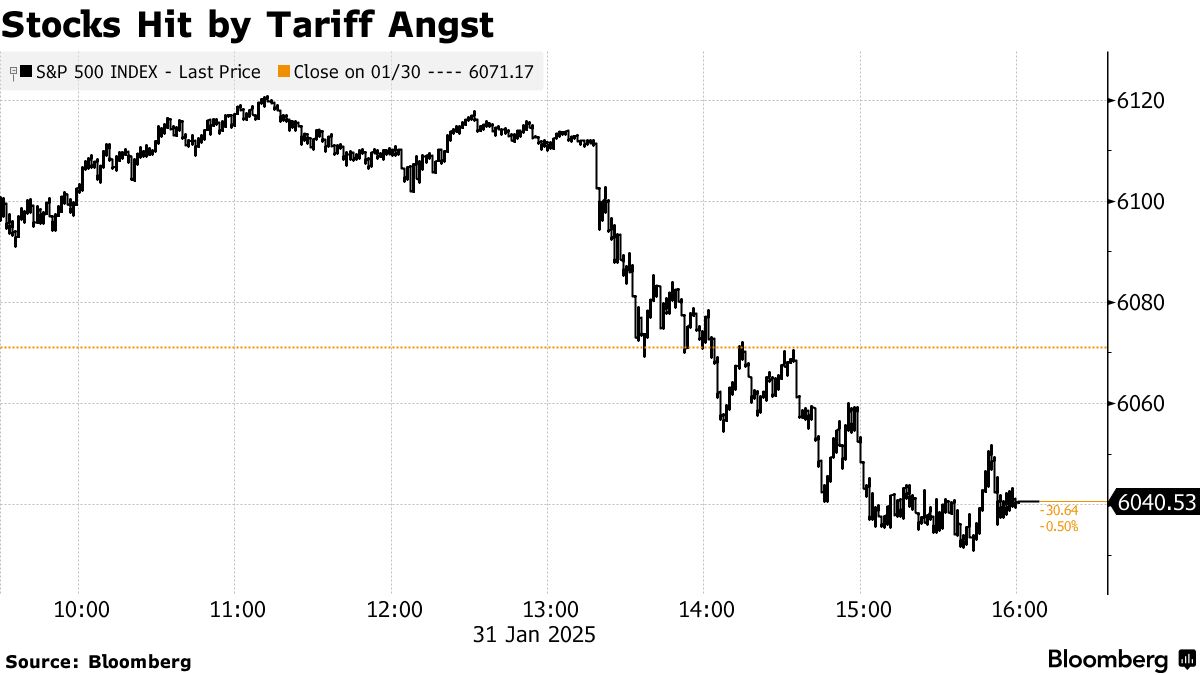
When you ask “What’s the Dow today?” and see a 500-point drop, the immediate reaction is often panic. However, in the context of a 38,000-plus point index, a 500-point move is less than 1.5%. Volatility is a natural part of the investing landscape.
Often, daily movements are reactions to external economic indicators. The Federal Reserve’s decisions on interest rates are perhaps the biggest driver of the Dow in the current era. Higher rates make borrowing more expensive for corporations, potentially slowing growth. When the Fed signals a “hawkish” stance, the Dow often reacts negatively. Understanding this relationship helps investors realize that a “bad day” for the Dow isn’t necessarily a sign of a failing company, but rather a reaction to the shifting cost of money.
Why the Dow Isn’t the Only Metric You Should Follow
While the Dow is the most famous index, it is not the most comprehensive. Because it only tracks 30 companies, it can sometimes provide a skewed view of the broader market. For example, the tech-heavy Nasdaq might be soaring due to an AI boom, while the Dow remains stagnant because its industrial and value-oriented components are facing different headwinds.
In the realm of personal finance and professional investing, it is crucial to use the Dow as a starting point, not an ending point. A holistic view of “Money” requires looking at the Dow alongside the S&P 500 (which tracks 500 companies) and the Russell 2000 (which tracks smaller companies). This gives a clearer picture of whether a rally is broad-based or confined to a few elite corporations.
Investing Beyond the Daily Tick: Long-Term Strategies
The ultimate goal of monitoring the Dow should not be to “day trade” its fluctuations, but to inform a long-term financial strategy. The most successful participants in the “Money” niche are those who use the index as a guide for building durable wealth.
The Role of Index Funds and ETFs
For those who want to “own the Dow,” the financial industry has created highly efficient tools. Exchange-Traded Funds (ETFs) that track the DJIA allow investors to gain exposure to all 30 companies through a single purchase. This is a cornerstone of passive investing. Instead of trying to guess which individual stock will outperform, investors bet on the collective success of the American economy’s largest players. Over decades, this approach has historically yielded significant returns, compounding wealth through both capital appreciation and the consistent dividends paid by Blue Chip firms.
Building a Diversified Portfolio for the Future
The Dow’s primary value to an investor is its historical perspective. Looking at a chart of the Dow today versus thirty years ago reveals a clear upward trajectory, despite numerous wars, pandemics, and financial crises. This historical resilience is the bedrock of the “buy and hold” philosophy.
A well-rounded financial plan uses the Dow as a benchmark for the “Large Cap Value” portion of a portfolio. However, true financial security comes from diversification—mixing the stability of Dow-style companies with international stocks, bonds, and perhaps alternative investments like real estate or commodities.
Conclusion: The Dow as an Educational Tool
The next time you find yourself asking “What’s the Dow today?”, remember that the answer is more than just a five-digit number. It is a reflection of the collective decisions of millions of investors, the innovation of the world’s largest corporations, and the overarching health of the financial system.
In the “Money” niche, knowledge is the most valuable currency. By understanding how the Dow is built, why it moves, and how it fits into the broader economic puzzle, you transition from a passive observer to an informed participant. Whether the Dow is up or down today, the disciplined investor knows that the real value lies in the long-term trend, the power of dividends, and the enduring strength of the global marketplace. The Dow is not just a daily headline; it is the heartbeat of the modern economy.
aViewFromTheCave is a participant in the Amazon Services LLC Associates Program, an affiliate advertising program designed to provide a means for sites to earn advertising fees by advertising and linking to Amazon.com. Amazon, the Amazon logo, AmazonSupply, and the AmazonSupply logo are trademarks of Amazon.com, Inc. or its affiliates. As an Amazon Associate we earn affiliate commissions from qualifying purchases.