
In the high-stakes world of global finance, few phrases carry as much weight as “What’s the Dow doing?” For over a century, the Dow Jones Industrial Average (DJIA) has served as the primary shorthand for the health of the American economy. Whether you are a seasoned institutional investor or a newcomer exploring personal finance, understanding the daily fluctuations of this index is crucial for making informed decisions.
To answer “what the Dow is doing today,” one must look beyond the green or red numbers on a screen. It requires an analysis of market sentiment, economic data, and the specific corporate narratives driving the thirty “blue-chip” companies that comprise the index. In this guide, we will dissect the mechanics of the Dow, explore the factors that dictate its daily movements, and discuss how investors can interpret this data without falling prey to short-term volatility.

Understanding the Dow Jones Industrial Average (DJIA) in the Modern Era
Before diving into today’s market action, it is essential to understand exactly what the Dow Jones represents. Unlike the S&P 500, which tracks 500 of the largest U.S. companies, the Dow is a price-weighted index of 30 significant stocks traded on the New York Stock Exchange (NYSE) and the Nasdaq.
The Composition: Why 30 Stocks Matter
The Dow is often criticized for its small sample size, yet it remains remarkably influential. These 30 companies are hand-selected by a committee at S&P Dow Jones Indices to ensure they represent the broad spectrum of the American economy—ranging from technology giants like Apple and Microsoft to industrial stalwarts like Boeing and Caterpillar. Because these companies are “blue chips”—meaning they are well-established, financially sound, and leaders in their respective industries—their collective performance is seen as a bellwether for the industrial and commercial strength of the United States. When you ask what the Dow is doing, you are essentially asking how the “captains of industry” are faring in the current economic climate.
Price-Weighted vs. Market-Cap Weighted: A Key Distinction
One of the most unique aspects of the Dow is that it is price-weighted. This means that stocks with a higher share price have a greater impact on the index’s total value than those with lower share prices. This is fundamentally different from the S&P 500 or the Nasdaq, which are market-capitalization-weighted. In the Dow, a $1 move in a $300 stock has the same effect as a $1 move in a $30 stock, even if the $30 company has a larger total market value. To maintain the index’s continuity, the “Dow Divisor” is used—a mathematical constant that adjusts for stock splits, dividends, and other structural changes. Understanding this mechanic helps investors realize that a massive swing in the Dow might sometimes be driven by just one or two high-priced components rather than a broad market trend.
Factors Influencing Today’s Market Movements
When the Dow opens every morning at 9:30 AM EST, a flurry of variables begins to influence its trajectory. If the index is “up,” it typically signals optimism; if it is “down,” it suggests caution or a “risk-off” environment. Identifying which factors are at play today is the first step in sophisticated financial analysis.
Macroeconomic Indicators: Inflation and Interest Rates
In the current financial landscape, the Federal Reserve is perhaps the most significant driver of the Dow’s daily performance. Investors keep a close eye on the “macro” picture—specifically inflation (measured by the CPI) and employment data. If today’s economic reports suggest that inflation is cooling, the Dow may rise on hopes that the Federal Reserve will lower interest rates. Conversely, if the labor market remains “too hot,” the Dow might slip as investors fear prolonged high-interest rates, which increase borrowing costs for the very companies that make up the index.
Corporate Earnings and Sector Performance
Since the Dow consists of only 30 companies, individual “Earnings Seasons” play a massive role in daily movement. When a heavyweight like Goldman Sachs or UnitedHealth Group releases its quarterly report, the reaction can swing the entire index. If these companies report strong profits and positive “forward guidance,” the Dow receives a boost. Furthermore, the index is divided into sectors. On any given day, the Dow might be dragged down by a slump in the energy sector (like Chevron) while being buoyed by a rally in the tech sector (like Salesforce). Analyzing the Dow today requires looking at which specific sectors are leading the charge and which are lagging.

Geopolitical Events and Global Stability
Money hates uncertainty. Geopolitical tensions, trade disputes, or sudden shifts in foreign policy can cause the Dow to retreat as investors move capital into “safe-haven” assets like gold or treasury bonds. Because many Dow components are multinational corporations with global supply chains, international instability can directly impact their bottom lines. For example, a disruption in global shipping lanes or a new tariff announcement can cause industrial stocks like 3M or Honeywell to fluctuate wildly within a single trading session.
How to Interpret “Daily Action” for Long-Term Success
It is easy to get caught up in the “noise” of daily trading. Financial news outlets often use sensationalist language—”The Dow Plunges!” or “The Dow Soars!”—to capture attention. However, for the disciplined investor focused on wealth creation, interpreting what the Dow is doing today requires a measure of stoicism and perspective.
Distinguishing Between Volatility and Value
Volatility is a natural characteristic of the stock market, not a bug. A 1% or 2% drop in the Dow in a single day might feel significant, but in the context of a multi-year investment horizon, it is often just a “blip.” It is important to distinguish between price volatility (temporary fluctuations) and a loss of fundamental value (a permanent change in a company’s ability to generate profit). If the Dow is down today because of a temporary technical sell-off, it may actually present a buying opportunity for those looking to add to their portfolios at a discount.
The Psychological Trap of Day-to-Day Monitoring
Studies in behavioral finance suggest that the more frequently an investor checks their portfolio, the more likely they are to make emotional, irrational decisions. Checking what the Dow is doing every hour can lead to “loss aversion,” where the pain of a daily loss outweighs the joy of a long-term gain. Successful personal finance management involves stepping back. While the Dow’s daily movement is a useful data point for understanding the current mood of the market, it should rarely be the sole catalyst for changing a long-term investment strategy.
Tools and Strategies for Tracking the Dow
For those who want to stay informed about the Dow’s performance, there are various professional tools and investment vehicles available. These allow you to not only monitor the index but also participate in its growth.
Real-Time Financial Dashboards
To see what the Dow is doing at this very moment, investors utilize financial terminals and digital dashboards. Platforms like Bloomberg, CNBC, and Yahoo Finance provide real-time ticks, showing the “open,” “high,” “low,” and “close” (OHLC) for the index. Advanced investors also look at “Dow Futures”—contracts that trade before the market opens—to get a sense of how the index will perform when the opening bell rings. These tools provide the “what,” but it is up to the investor to synthesize the “why” by following the news cycles mentioned previously.
Index Funds and ETFs: Putting the Dow to Work
If you believe in the long-term resilience of the American economy, you don’t have to pick individual stocks to profit from the Dow’s movements. One of the most popular ways to invest in the index is through Exchange-Traded Funds (ETFs) like the SPDR Dow Jones Industrial Average ETF Trust (ticker symbol: DIA), often referred to as “Diamonds.” By purchasing shares of this ETF, you are essentially buying a slice of all 30 companies in the index. This strategy offers instant diversification and aligns your personal wealth with the performance of the most established corporations in the world.
Conclusion: The Dow as a Financial Compass
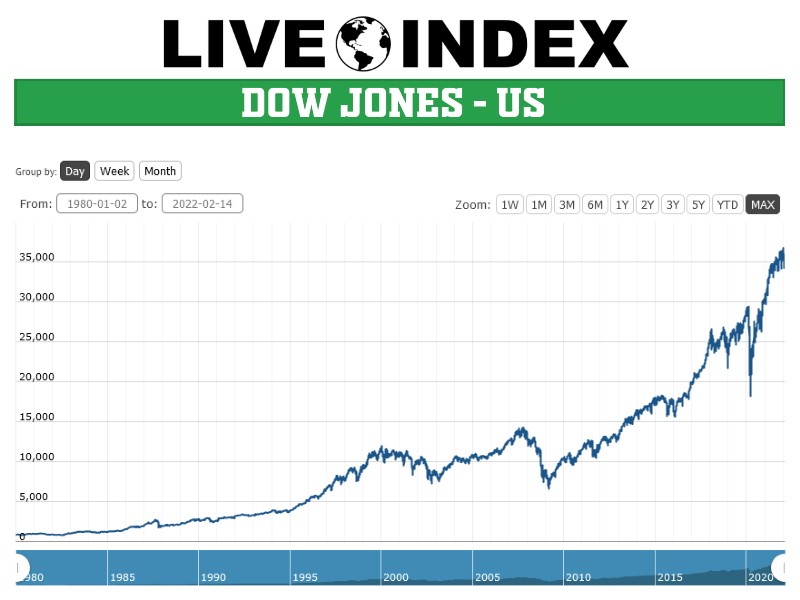
So, what is the Dow Jones doing today? Ultimately, the answer is that it is reflecting the collective wisdom—and sometimes the collective anxiety—of millions of participants in the global marketplace. It is a reflection of current interest rates, corporate profitability, and the general outlook for the American economy.
While the daily “points” gained or lost may dominate the headlines, the true value of the Dow lies in its history as a testament to industrial progress and economic growth. For the savvy investor, today’s Dow movement is not a signal to panic or to gamble, but rather one piece of a much larger puzzle. By understanding the composition of the index, the factors that drive its volatility, and the tools available for tracking it, you can transform the question of “What’s the Dow doing?” from a moment of uncertainty into an opportunity for strategic financial growth. Stay informed, stay disciplined, and remember that in the world of money, time in the market almost always beats timing the market.
aViewFromTheCave is a participant in the Amazon Services LLC Associates Program, an affiliate advertising program designed to provide a means for sites to earn advertising fees by advertising and linking to Amazon.com. Amazon, the Amazon logo, AmazonSupply, and the AmazonSupply logo are trademarks of Amazon.com, Inc. or its affiliates. As an Amazon Associate we earn affiliate commissions from qualifying purchases.