
In the modern landscape of personal finance, the “subscription economy” has transformed from a minor budgetary line item into a significant pillar of monthly expenditures. At the center of this ecosystem sits Amazon Prime, a service that has evolved from a simple free-shipping perk into a multi-faceted digital powerhouse. For the savvy consumer, the question is no longer just “how much is an Amazon Prime subscription?” but rather “is the financial outlay justified by the realized value?”
Understanding the pricing structure of Amazon Prime is essential for maintaining a healthy household budget. As of 2024, the standard cost for an Amazon Prime membership in the United States is $14.99 per month or $139 per year. While these figures seem straightforward, the fiscal implications of the membership go much deeper, affecting consumer behavior, savings strategies, and long-term financial planning.
1. Analyzing the Pricing Tiers: Strategic Choices for Every Budget
When evaluating Amazon Prime from a personal finance perspective, the first step is identifying which tier aligns with your cash flow. Amazon has strategically tiered its pricing to capture various demographic segments, ensuring that the barrier to entry remains flexible while maximizing their recurring revenue.
Monthly vs. Annual Plans: The Prepayment Discount
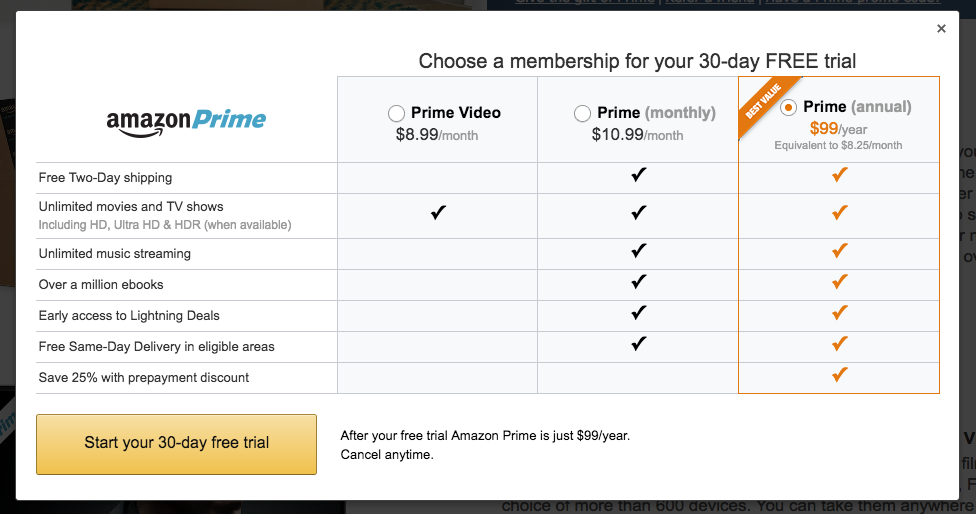
For the average consumer, the choice between the $14.99 monthly fee and the $139 annual fee is a classic lesson in “the cost of liquidity.” Paying monthly offers flexibility; you can cancel at any time if your budget tightens. However, this flexibility comes at a premium. At $14.99 a month, the annual total reaches $179.88. By opting for the $139 upfront annual payment, you effectively save approximately $40 per year—a 22% discount. From a wealth-management standpoint, if you have the cash reserves, the annual plan represents a guaranteed “return” on your money that far exceeds the interest rates of most high-yield savings accounts.
Prime Student and Prime Access: Targeted Financial Relief
Amazon offers significant discounts to specific populations to ensure market penetration. Prime Student is currently priced at $7.49 per month or $69 per year, following a six-month trial. This is a strategic move to build brand loyalty in a demographic with high future earning potential.
More importantly for social equity and budgeting, “Prime Access” provides a discounted rate of $6.99 per month for recipients of qualifying government assistance, such as SNAP, EBT, and Medicaid. For households operating on a strict budget, this 50% discount can be a vital tool for accessing lower-priced bulk goods and essential groceries through the Amazon ecosystem without the high overhead of a standard membership.
The Hidden Costs: Sales Tax and Regional Variability
It is a common financial oversight to forget that the quoted $139 or $14.99 is often the “base price.” Depending on your state of residence, sales tax is applied to digital subscriptions. In states with high sales tax, your annual membership could easily creep toward the $150 mark. When auditing your annual expenses, it is crucial to look at your actual bank statements rather than the marketing materials to see the true “out-of-pocket” cost.
2. The ROI of Amazon Prime: Measuring Value Beyond Shipping
To determine if the subscription is a sound investment, one must perform a Cost-Benefit Analysis (CBA). The membership fee is essentially a “pre-payment” for a suite of services. If the market value of the services you actually use exceeds the annual fee, the subscription is a net positive for your net worth.
The Mathematics of Free Shipping
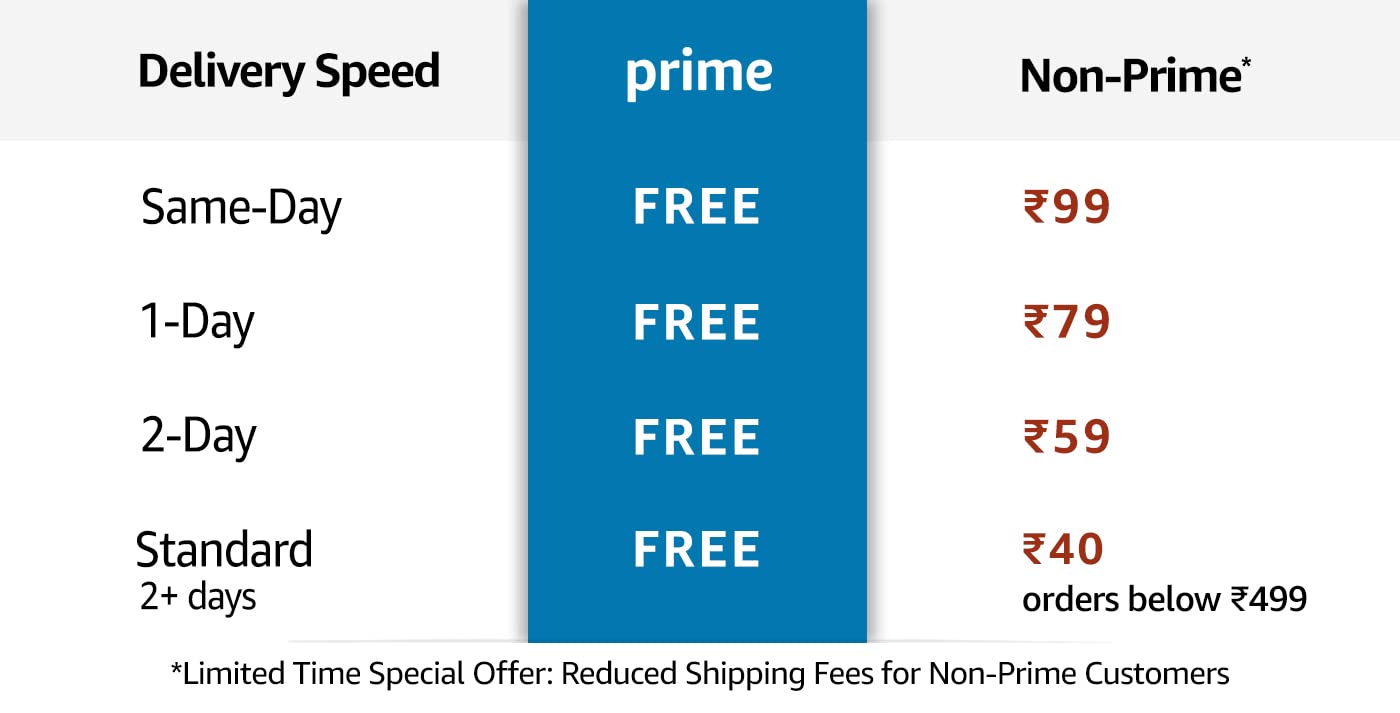
The core value proposition of Prime remains its logistics network. In a world where standard shipping for a single item often ranges from $5.99 to $9.99, the break-even point is relatively low. If you place 24 orders a year—roughly two per month—the shipping savings alone cover the $139 annual fee. For families who rely on Amazon for household essentials, diapers, or pantry staples, the savings can reach into the hundreds of dollars annually, especially when factoring in the “Subscribe & Save” discounts that offer up to 15% off recurring deliveries.
Entertainment Value: Consolidating Digital Subscriptions
In the era of “subscription fatigue,” Amazon Prime offers a unique opportunity for budget consolidation. A Prime membership includes:
- Prime Video: A competitor to Netflix ($15.49/mo) and Hulu ($14.99/mo).
- Prime Music: A limited but functional alternative to Spotify or Apple Music ($10.99/mo).
- Prime Reading and Gaming: Alternatives to Kindle Unlimited or gaming subscriptions.
If a consumer uses Prime Video as their primary streaming service and cancels a $15/month Netflix subscription, the Prime membership pays for itself in less than ten months on entertainment value alone, effectively making the shipping and other perks “free.”
Grocery and Pharmacy Perks: Integrated Savings
The acquisition of Whole Foods and the launch of Amazon Pharmacy have added new layers to the Prime financial ecosystem. Prime members receive an additional 10% discount on sale items at Whole Foods Market, which can significantly lower the “grocery inflation” many households are currently experiencing. Furthermore, Amazon Pharmacy’s “RxPass” allows members to get all their eligible generic medications for a flat fee of $5 a month. For those with chronic conditions, this can represent a massive reduction in annual healthcare spending.
3. The Psychology of Spending: When a Subscription Becomes a Liability
While the math often favors the membership, a professional financial assessment must also account for the “Prime Effect” on consumer behavior. Subscriptions are designed to reduce “friction” in spending, which can be a double-edged sword for your personal balance sheet.
The “Sunk Cost” Trap and Impulsive Spending
Psychologically, once a consumer has paid $139 for a membership, they often feel a “need” to use it to “get their money’s worth.” This frequently leads to impulsive, low-value purchases. Because the shipping is “free,” the barrier to clicking “Buy Now” is virtually non-existent. Over a fiscal year, these small, $10 to $20 unplanned purchases can aggregate into thousands of dollars of “lifestyle creep” that would not have occurred if the consumer had to pay for shipping or visit a physical store.
Subscription Creep: The Silent Budget Killer
Amazon Prime is a masterclass in the “ecosystem” business model. Once you are a member, you are more likely to subscribe to “channels” within Prime Video (like Paramount+ or HBO Max), or sign up for Audible and Kindle Unlimited. From a financial management perspective, it is vital to track these “add-on” costs. The $14.99 base fee can quickly balloon into a $60/month digital overhead if you aren’t vigilant about your recurring billing.
Auditing and Pruning: When to Cancel
A smart financial strategy involves an annual “subscription audit.” If your order history shows fewer than 15 orders a year and you rarely utilize the video or music libraries, the membership is likely a drain on your capital. Amazon allows users to “End Membership” with a prorated refund in some cases, or simply set the membership to not renew. For seasonal shoppers, it may be more fiscally responsible to pay the $14.99 for a single month during the December holiday season and remain unsubscribed for the other 11 months of the year.
4. Market Trends and the Future of Prime’s Financial Impact
As we look toward the future, the cost of Amazon Prime is likely to continue its upward trajectory. Understanding the macro-economic factors behind these price hikes can help consumers decide how much they are willing to pay for convenience in the years to come.
Inflation and the Logistics Premium
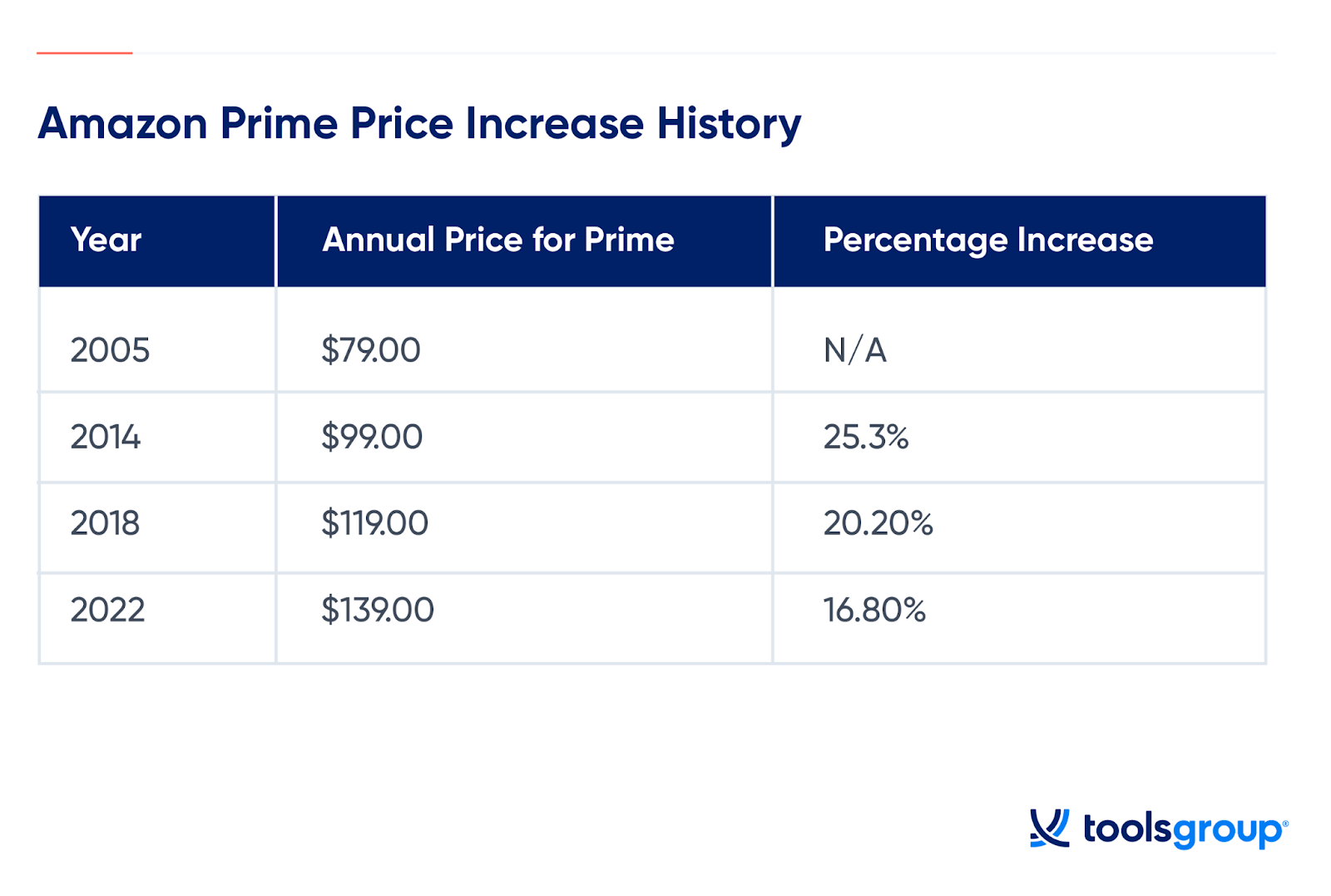
The price of Prime has risen from $79 to $99, then $119, and now $139. These increases are driven by the rising costs of fuel, labor, and “last-mile” delivery infrastructure. As Amazon continues to push for same-day delivery, the capital expenditure required to maintain that speed is immense. For the consumer, this means that the “cost of convenience” is indexed to the global economy. If inflation remains sticky, a $159 or $179 annual fee in the near future is a realistic projection that must be accounted for in long-term financial planning.
The Competition: Walmart+ and Beyond
From a competitive finance standpoint, Amazon no longer holds a monopoly on the “shipping plus perks” model. Walmart+ ($98/year) and Target Circle 360 are aggressive competitors offering similar shipping benefits, often at a lower price point. For a consumer focused on maximizing every dollar, switching to a competitor or rotating memberships based on promotional offers (such as “half-off” deals during Black Friday) can be a sophisticated way to maintain the benefits of the digital economy while minimizing the impact on your net worth.
Final Financial Verdict: A Tool, Not a Default
Ultimately, an Amazon Prime subscription is a financial tool. Like any tool, its value is determined by how it is used. At $139 a year, it can be a source of significant savings on shipping, groceries, and entertainment, or it can be a “leak” in your budget that encourages unnecessary consumption. By treating the membership as a business expense for your household—complete with an annual ROI review—you can ensure that your $14.99 a month is an investment in your lifestyle rather than a tax on your convenience.
aViewFromTheCave is a participant in the Amazon Services LLC Associates Program, an affiliate advertising program designed to provide a means for sites to earn advertising fees by advertising and linking to Amazon.com. Amazon, the Amazon logo, AmazonSupply, and the AmazonSupply logo are trademarks of Amazon.com, Inc. or its affiliates. As an Amazon Associate we earn affiliate commissions from qualifying purchases.