
Navigating the college admissions landscape can feel like orchestrating a complex financial strategy. Beyond academic achievements and personal essays, the timing of your application—specifically whether you apply Early Action or Regular Decision—can have profound financial implications for students and their families. This isn’t just about getting an acceptance letter; it’s about optimizing financial aid, maximizing scholarship potential, and making informed investment decisions in higher education. Understanding these distinctions from a financial lens is crucial for crafting a sound financial plan for college.
Understanding the Application Timelines: More Than Just Deadlines
The initial perceived difference between Early Action (EA) and Regular Decision (RD) is simply the deadline. EA applications are typically due in October or November, with decisions often released by December or January. RD applications usually have deadlines in January or February, with decisions arriving in March or April. However, these differing timelines set in motion distinct financial processes and opportunities that warrant careful consideration for any family planning to fund a college education.

Early Action: An Expedited Financial Look
Applying Early Action means submitting your application well in advance of the standard deadline. From a financial standpoint, this often translates to receiving financial aid offers sooner. This expedited timeline can be a significant advantage for families seeking to understand their financial commitment early. It provides a clearer picture of the expected contribution and potential aid packages from specific institutions before other commitments are made. This early insight allows for preliminary financial planning, budget adjustments, and potentially, a chance to negotiate or compare offers more effectively if multiple EA acceptances are secured. It’s a strategic move for those who prioritize financial clarity and early planning in their college funding journey.
Regular Decision: The Standard Approach to Funding Education
Regular Decision represents the conventional application timeline, allowing students ample time to finalize their applications, standardize test scores, and potentially improve their academic profiles. Financially, RD often means a later understanding of financial aid eligibility and package details. While this might seem less advantageous for early planning, it offers a broader window for families to refine their financial strategies, explore external scholarship opportunities, and carefully compare the financial implications of various schools once all offers are on the table. For some, the extended time allows for more thorough research into the actual costs and long-term financial return on investment (ROI) from different educational paths, ensuring a more deliberate and less rushed financial commitment.
The Financial Implications of Early Action
The choice to apply Early Action can profoundly impact a family’s financial strategy, offering both unique opportunities and potential pitfalls. It’s critical to weigh these aspects carefully against personal financial circumstances and educational goals.
Early Financial Aid Offers and Comparison Power
One of the most compelling financial benefits of Early Action is the prospect of receiving financial aid offers significantly earlier than the Regular Decision pool. For families relying heavily on financial assistance, this early insight is invaluable. It allows them to understand the true “net price” of attendance (cost of attendance minus grants and scholarships) from specific institutions much sooner. This early information empowers families to begin budgeting, explore external financing options, or even start conversations with financial advisors.
Furthermore, if a student is accepted to multiple EA schools, having several financial aid offers in hand by mid-winter provides unparalleled comparison power. This allows families to meticulously analyze and contrast aid packages, scholarship amounts, and loan options across different universities, facilitating a more informed decision about which institution offers the best financial value and fit. This comparison period, extended by early offers, is crucial for making a financially sound choice and potentially even using one strong offer to leverage a better package from a preferred school (though this should be approached judiciously and with a clear understanding of financial aid policies).
Strategic Use of Early Action for Scholarship Opportunities
While Early Action itself doesn’t guarantee more scholarships, its early timeline can be strategically leveraged to enhance a student’s scholarship potential. Some institutional scholarships may have earlier deadlines that align with or precede EA deadlines. By applying early, students ensure they are considered for all available institutional aid and merit scholarships tied to the early application cycle. Moreover, receiving an early acceptance can free up time and mental energy for students to focus intensely on applying for external, private scholarships, many of which also have early fall or winter deadlines. Knowing a college acceptance is secured can reduce stress and allow for a more dedicated effort towards funding the education through external means, directly impacting the out-of-pocket costs.
The Non-Binding Advantage for Financial Leverage
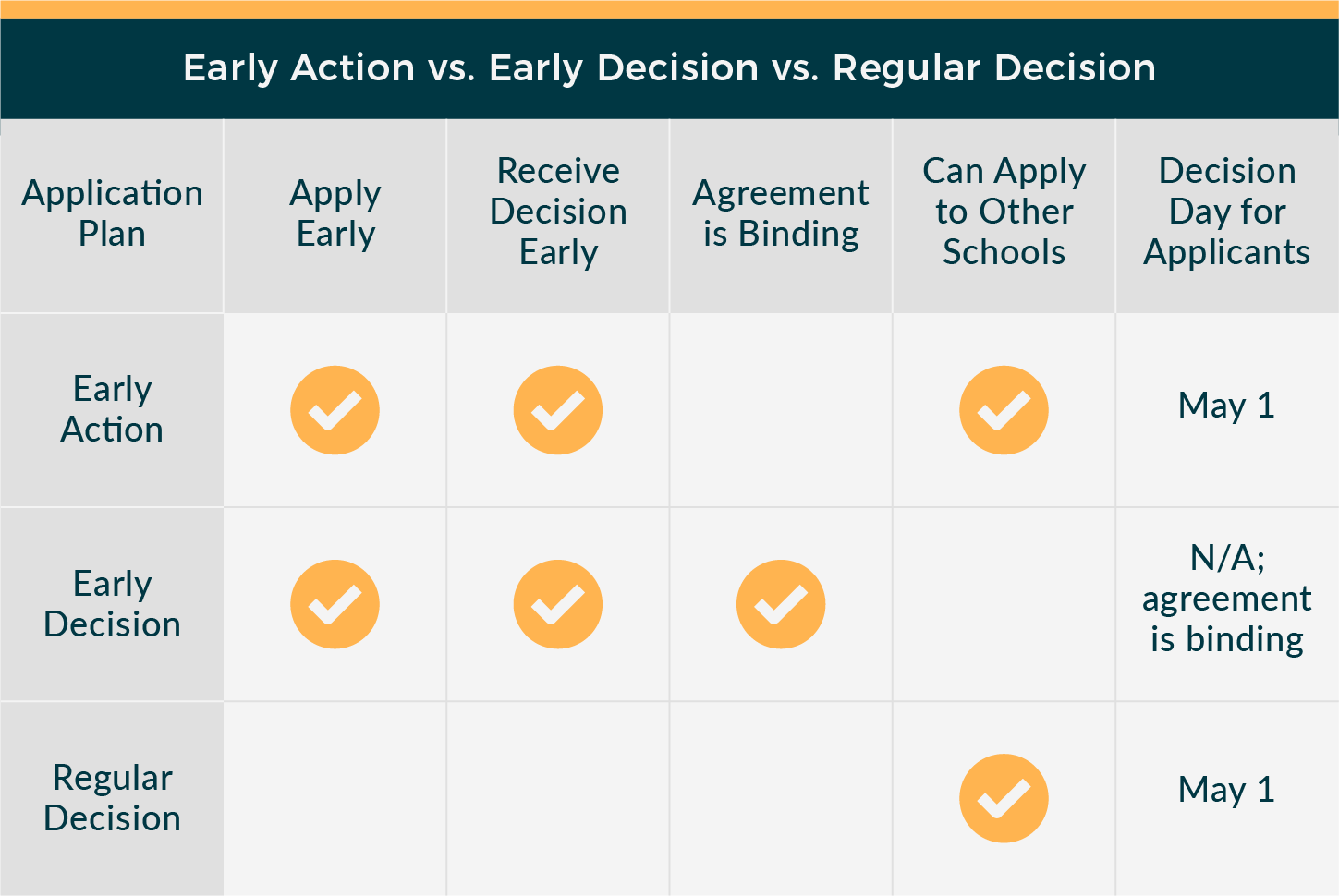
Crucially, “Early Action” is typically non-binding. This means that while a student receives an early acceptance, they are not obligated to enroll in that university. This non-binding nature is a significant financial advantage. It allows students to explore their financial aid package from an EA institution without commitment, while still waiting for other Regular Decision offers and their corresponding financial aid packages. This flexibility provides leverage, enabling families to compare the full spectrum of financial options before making a final enrollment decision by the standard May 1st deadline. It minimizes the risk of committing to a school before fully understanding its financial implications relative to other available options, a common concern with binding Early Decision programs.
Navigating Regular Decision for Optimal Financial Outcomes
While Early Action offers its own set of financial advantages, the Regular Decision timeline also presents unique opportunities for strategic financial planning and securing a college education efficiently.
Maximizing Merit Scholarship Applications
Regular Decision applicants often have more time to cultivate an even stronger application profile, which can be beneficial for merit scholarship consideration. A few extra months might allow for improved standardized test scores, additional extracurricular achievements, or a more polished essay. While institutional merit scholarships might be competitive, a stronger overall application can make a student more attractive for broader university-wide or departmental merit awards. Furthermore, the extended timeline provides ample opportunity to research and apply for a wider array of external scholarships—those offered by private organizations, foundations, and community groups. Many of these scholarships have application windows that align perfectly with the RD timeline, allowing students to dedicate focused effort on securing non-repayable funds.
Time for Refined Financial Planning and Cost Analysis
The extended period afforded by Regular Decision applications can be a blessing for families needing more time for detailed financial planning. This includes time to thoroughly complete the Free Application for Federal Student Aid (FAFSA) and potentially the CSS Profile, ensuring accuracy and optimizing federal and institutional aid eligibility. It also allows for a more comprehensive financial audit: evaluating savings, exploring loan options, understanding potential tax implications of education expenses, and devising a multi-year funding strategy. Families can meticulously use net price calculators on university websites to estimate costs more accurately and analyze the long-term return on investment (ROI) for various institutions and majors, making a choice that aligns with both academic aspirations and financial prudence.
Broader Acceptance Pool, Broader Financial Aid Comparisons
Applying Regular Decision typically means applying to a larger number of schools, which can lead to a broader range of acceptance letters and, consequently, a more diverse set of financial aid offers. While the offers come later, having a wider array of options can be incredibly powerful for comparison. Families can line up several offers side-by-side, scrutinizing each school’s financial aid package, including grants, scholarships, work-study, and loan components. This allows for a holistic evaluation of which institution provides the most financially appealing pathway to a degree, helping to minimize future student loan debt and maximize the value received for the educational investment. This broader comparison pool often leads to a more strategically sound financial decision, ensuring the chosen path is both academically enriching and economically viable.
Weighing the Financial Pros and Cons: A Strategic Decision
Choosing between Early Action and Regular Decision isn’t just about applying sooner or later; it’s a strategic financial maneuver that should align with a family’s unique economic situation and educational funding goals.
Risk Assessment: Financial Certainty vs. Flexibility
For some families, the financial certainty offered by Early Action is paramount. Knowing by December or January what one or more institutions are willing to contribute can significantly reduce anxiety and allow for proactive financial adjustments. This certainty can be a psychological and practical relief, allowing families to plan the rest of their finances around a known educational expense. However, the risk here is potentially missing out on a better offer from a school applied to via Regular Decision, simply because the EA offer was available sooner.
Conversely, Regular Decision offers maximum flexibility. Families aren’t locked into an early offer and can wait to see all available options. This flexibility is ideal for those who anticipate changes in their financial situation, need more time to prepare financial aid documents, or wish to compare a wider array of institutional aid packages before committing. The trade-off is the delayed certainty and the compressed timeframe for making a final financial decision once all offers arrive in spring. The best choice depends on whether a family prioritizes early clarity or broad comparison opportunities.

Impact on Student Loan Debt and Long-Term ROI
The choice of application timeline can indirectly influence the amount of student loan debt incurred and the long-term return on investment of a college degree. By strategically utilizing Early Action to compare financial aid offers or Regular Decision to secure additional scholarships, families can directly reduce their reliance on student loans. Minimizing debt at the outset significantly impacts a graduate’s financial freedom post-college, affecting their ability to save, invest, purchase a home, or pursue further education.
Ultimately, the decision of Early Action versus Regular Decision is a critical financial planning decision. It’s an investment decision with potentially life-altering implications. Understanding how each timeline impacts financial aid, scholarship opportunities, and the overall financial picture empowers students and families to make choices that align with their financial well-being and long-term economic aspirations. Through careful analysis and strategic application, higher education can truly be an accessible and valuable investment.
aViewFromTheCave is a participant in the Amazon Services LLC Associates Program, an affiliate advertising program designed to provide a means for sites to earn advertising fees by advertising and linking to Amazon.com. Amazon, the Amazon logo, AmazonSupply, and the AmazonSupply logo are trademarks of Amazon.com, Inc. or its affiliates. As an Amazon Associate we earn affiliate commissions from qualifying purchases.