
In the rapidly evolving landscape of modern finance, few topics have generated as much debate, excitement, and confusion as the rise of digital assets. For the average investor looking to diversify their portfolio, the terminology can often feel like a barrier to entry. You will frequently hear the terms “Bitcoin” and “cryptocurrency” used interchangeably in news headlines and financial reports, but for those interested in the mechanics of wealth building and asset allocation, understanding the distinction between the two is critical.
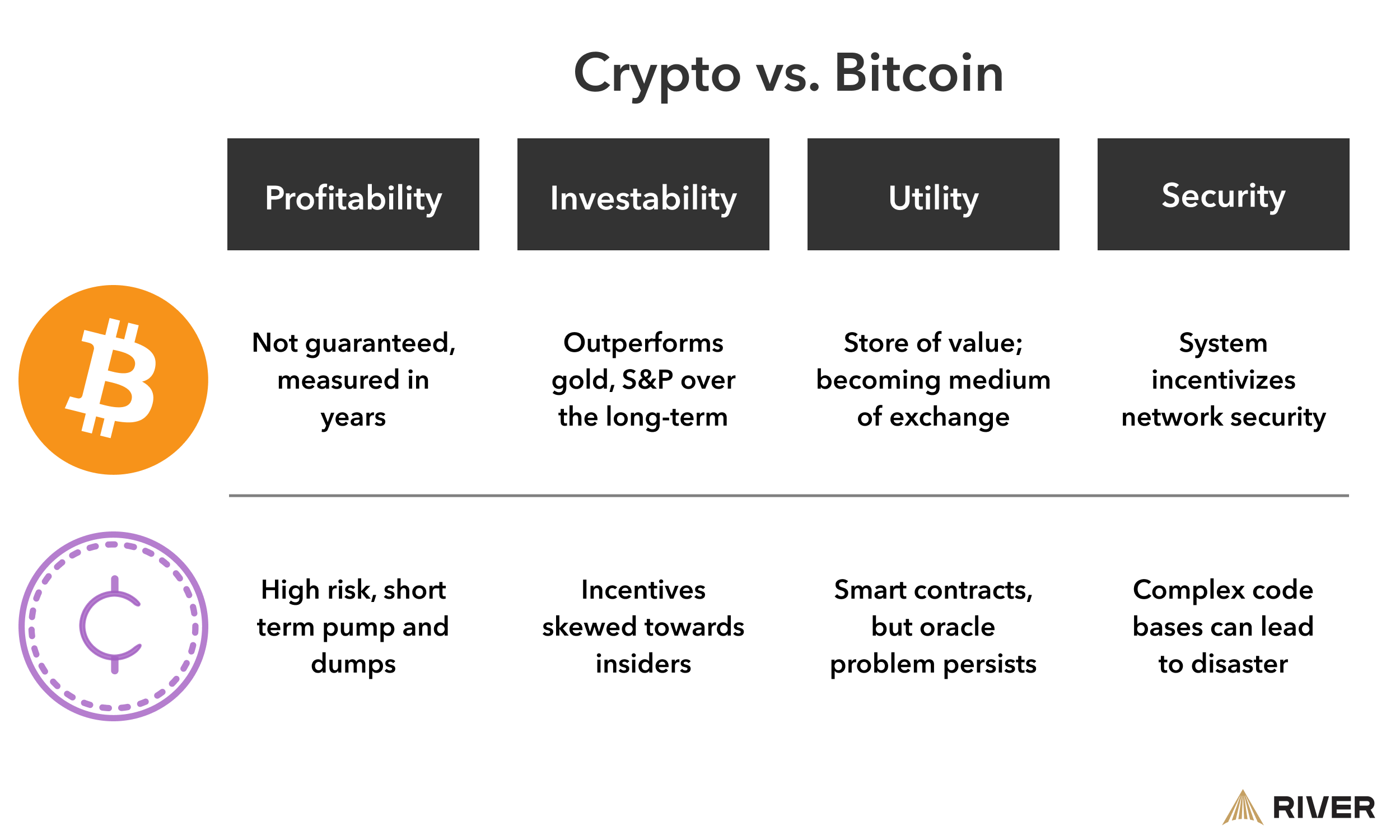
To put it simply: Bitcoin was the first cryptocurrency, but it is far from the only one. If we compare the digital asset market to the traditional stock market, Bitcoin is akin to the blue-chip pillar—the “Gold” or the “S&P 500” of the space—while “crypto” is the overarching category that includes everything from revolutionary financial infrastructure to speculative niche tokens.
Understanding the Digital Gold Standard: Why Bitcoin Stands Alone
Bitcoin was introduced in 2009 by an anonymous entity known as Satoshi Nakamoto. It was designed as a peer-to-peer electronic cash system, but over the last decade, its primary identity in the financial world has shifted. Today, institutional investors and retail savers alike view it primarily as a “Store of Value” (SoV).
The Genesis of Decentralized Finance
Before Bitcoin, digital money always required a central intermediary—a bank or a payment processor like PayPal—to verify transactions and prevent “double-spending.” Bitcoin solved this through a decentralized ledger called the blockchain. By using a “Proof of Work” consensus mechanism, it allowed for a transparent, immutable record of ownership that no single government or corporation could control. This independence from central banking systems is exactly what makes it a unique asset class in the realm of personal finance.
Scarcity and the 21 Million Cap
One of the most significant differences between Bitcoin and the broader crypto market—and certainly between Bitcoin and fiat currencies like the US Dollar—is its hard-coded scarcity. There will only ever be 21 million Bitcoins. This “monetary policy” is controlled by code, not by a committee of central bankers. For the investor, this represents a hedge against inflation. While a government can print more currency, devaluing your savings, the supply of Bitcoin remains fixed. This characteristic is why it is frequently referred to as “Digital Gold.”
The Broader Crypto Ecosystem: Beyond Simple Value Transfer
While Bitcoin was designed to be a form of money, “cryptocurrency” as a broader category encompasses thousands of different projects, each with varying goals, technologies, and economic models. If Bitcoin is the internet’s currency, the broader crypto market represents the internet’s entire financial and computational infrastructure.
Smart Contracts and Ethereum’s Influence
The biggest leap in the “crypto” space occurred with the launch of Ethereum in 2015. While Bitcoin’s blockchain was designed to track the movement of a single asset, Ethereum introduced “smart contracts”—self-executing contracts with the terms of the agreement directly written into lines of code.
This birthed the “Altcoin” (alternative coin) market. These are cryptocurrencies that do more than just store value; they power decentralized applications (dApps). When you invest in “crypto” outside of Bitcoin, you are often investing in the utility of a specific network. You might be betting on the future of decentralized insurance, global supply chain tracking, or even decentralized social media.
Altcoins, Stablecoins, and Governance Tokens
The crypto umbrella includes several distinct sub-sectors that serve different financial purposes:
-
Stablecoins: Digital assets pegged to the value of a stable reserve, like the US Dollar. These are used for liquidity and as a safe haven from market volatility without exiting the digital ecosystem.
-
Governance Tokens: Assets that grant holders the right to vote on the future development of a specific financial protocol.
-
Utility Tokens: Coins required to access a specific service or platform within a digital ecosystem.
Understanding these distinctions is vital because the risk profile of a “stablecoin” is fundamentally different from the risk profile of a high-growth “utility token.”
Key Differences for the Modern Investor

For those managing their own investments, the distinction between Bitcoin and the general crypto market comes down to risk, volatility, and use case.
Market Volatility and Risk Profiles
Bitcoin is often seen as the “entry-level” digital asset. While it is volatile compared to the bond market or large-cap stocks, it is significantly more stable than the majority of the crypto market. In financial terms, Bitcoin has a higher “liquidity” and a more established “market cap.”
The broader crypto market, particularly newer or smaller coins, offers the potential for higher returns but carries a much higher risk of total capital loss. Many cryptocurrencies are experimental; they are startups in digital form. While a successful “altcoin” might outperform Bitcoin during a bull market, it is also much more likely to drop 90% or more during a market correction.
Utility vs. Store of Value
When you buy Bitcoin, you are essentially buying into the idea of a global, decentralized, scarce asset. Your investment thesis is based on its adoption as a global reserve asset.
When you buy “crypto”—such as Solana, Cardano, or Chainlink—your investment thesis is based on the technology. You are betting that their specific blockchain will become the industry standard for developers. This is the difference between investing in “Gold” (the asset) and “Tech Stocks” (the companies building the tools).
Building a Diversified Digital Portfolio
As digital assets become a permanent fixture in the financial landscape, the question for most is no longer if they should invest, but how they should allocate. A sophisticated financial strategy usually involves distinguishing between Bitcoin and other cryptocurrencies to balance growth with stability.
Asset Allocation Strategies
Many institutional frameworks suggest a “Core and Satellite” approach. In this model, Bitcoin serves as the “Core”—the stable foundation of the digital portfolio. Because of its institutional adoption (including the approval of Spot Bitcoin ETFs), it is viewed as a long-term hold.
The “Satellite” portion consists of a diversified selection of other cryptocurrencies. These are the higher-risk, higher-reward plays. An investor might allocate 70% of their digital asset exposure to Bitcoin for capital preservation and 30% to various “crypto” projects to capture the growth of the decentralized web (Web3).
The Role of Regulation in Financial Growth
Another key difference lies in regulatory clarity. In the eyes of many regulatory bodies, such as the SEC in the United States, Bitcoin is often classified as a commodity (similar to oil or wheat). This provides a level of legal certainty that many other cryptocurrencies do not yet have. Many other tokens are currently under scrutiny to determine if they should be classified as securities (like stocks). For the investor, this means that Bitcoin typically carries less “regulatory risk” than the broader crypto market.

The Future of Money: Integration into Traditional Finance
The line between “crypto” and “traditional money” is blurring. We are entering an era where traditional financial institutions are utilizing the technology behind cryptocurrency to streamline their operations. This is known as the tokenization of real-world assets (RWAs).
In the coming years, we may see real estate, private equity, and even government bonds traded as “crypto” tokens on a blockchain. In this scenario, the distinction becomes even clearer: Bitcoin remains the independent, decentralized money of the system, while “crypto” provides the technological rails upon which all other financial assets move.
For anyone looking to navigate the 21st-century financial world, recognizing that Bitcoin and crypto are different is the first step toward digital literacy. Bitcoin is the revolution of money; cryptocurrency is the revolution of finance and technology. By understanding the unique value propositions of each, investors can better position themselves to capitalize on the greatest shift in wealth management since the invention of the stock exchange. Whether you seek the “digital gold” properties of Bitcoin or the “venture capital” opportunities of the broader crypto ecosystem, clarity on these differences is the ultimate tool for financial success.
aViewFromTheCave is a participant in the Amazon Services LLC Associates Program, an affiliate advertising program designed to provide a means for sites to earn advertising fees by advertising and linking to Amazon.com. Amazon, the Amazon logo, AmazonSupply, and the AmazonSupply logo are trademarks of Amazon.com, Inc. or its affiliates. As an Amazon Associate we earn affiliate commissions from qualifying purchases.