
In the world of global marketing and brand strategy, few case studies are as compelling—and as frequently misunderstood—as the distinction between Butter Chicken and Chicken Tikka Masala. To the uninitiated consumer, they represent a similar “product category”: creamy, tomato-based Indian curries. However, from a brand strategy perspective, these two dishes represent entirely different market entries, origin stories, and consumer positioning strategies.
Understanding the difference between Butter Chicken and Tikka Masala is not merely a culinary exercise; it is a lesson in how brands evolve through cultural adaptation, geographic scaling, and market-driven innovation. One is an “Organic Heritage Brand,” rooted in a specific time and place, while the other is a “Market-Disruptor Brand,” engineered to satisfy the specific demands of a foreign demographic.

Identity and Origin: The Power of the Heritage Brand vs. The Innovation Brand
Every strong brand begins with an origin story. The narrative behind a product often dictates its perceived value and its relationship with the consumer. In the case of these two dishes, their origins define their brand identities.
Butter Chicken: The Organic Evolution of a Culinary Identity
Butter Chicken, known traditionally as Murgh Makhani, is a quintessential “Heritage Brand.” Its origin is traced back to a specific entity: the Moti Mahal restaurant in Delhi during the 1940s. Like any iconic corporate identity, it was born out of a need to solve a problem—specifically, how to prevent tandoori chicken from drying out.
The brand identity of Butter Chicken is built on “Authenticity” and “Institutional Legacy.” It represents the post-partition culinary innovation of India. Because it has a documented “Founder” (Kundan Lal Gujral), it carries the weight of a legacy brand, similar to how Ford or Chanel leans on their historical roots to justify their market position. Its brand promise is consistency, tradition, and a direct link to the source.
Chicken Tikka Masala: The Strategic Innovation of the “Global” Brand
In contrast, Chicken Tikka Masala is the ultimate example of “Market-Driven Innovation.” While its exact origins are debated, the most prominent brand narrative places its birth in Glasgow, Scotland, in the 1970s. Legend has it that a chef added a creamy tomato soup base to dry chicken tikka to appease a customer who found the meat too dry.
Unlike Butter Chicken, Tikka Masala does not rely on ancient tradition. Instead, it relies on “Adaptability.” It is a brand created for the export market. It is a “Fusion Brand” that successfully bridged the gap between Eastern spices and Western palates. In marketing terms, Tikka Masala is a product pivot—taking an existing asset (Tikka) and re-engineering it to meet a specific market’s “Jobs to be Done” (the British desire for gravy-based dishes).
Market Positioning: Selling Authenticity vs. Selling Accessibility
In brand strategy, positioning defines where a product sits in the mind of the consumer. While both dishes occupy the “Premium Comfort” space, they utilize different levers to attract their target audience.
The Localized Marketing Strategy of Tikka Masala
Chicken Tikka Masala is a masterclass in “Localization.” It was famously declared Britain’s national dish by Foreign Secretary Robin Cook in 2001. This represents a total brand takeover. By adapting the flavor profile—making it slightly more acidic and utilizing more vibrant orange food coloring—the brand owners (the UK curry house industry) created a product that felt familiar yet exotic.
From a strategy perspective, Tikka Masala wins on “Accessibility.” It is the “entry-level” brand for those new to the category of Indian food. It removes the friction of “too much heat” or “too much complexity,” offering a standardized, reliable experience across thousands of global touchpoints. It is the “Coca-Cola” of curries: ubiquitous, predictable, and globally recognized.
Leveraging Traditionalism: How Butter Chicken Maintains Premium Status
Butter Chicken positions itself through “Exclusivity and Richness.” While Tikka Masala focuses on being the “everyman’s meal,” Butter Chicken leverages its ingredient list—heavy cream, butter, and a specific blend of aromatics—to position itself as a more indulgent, premium offering.
In the hierarchy of Indian dining brands, Butter Chicken is often priced higher or featured as the “Chef’s Signature.” It uses the “Halo Effect” of the Tandoor (the clay oven). Because the chicken must be marinated and roasted before entering the sauce, the brand communicates a message of “Craftsmanship” and “Process-Heavy Production.” It appeals to the connoisseur who values the complexity of a slow-cooked, balanced flavor profile over the punchy, immediate gratification of Tikka Masala.
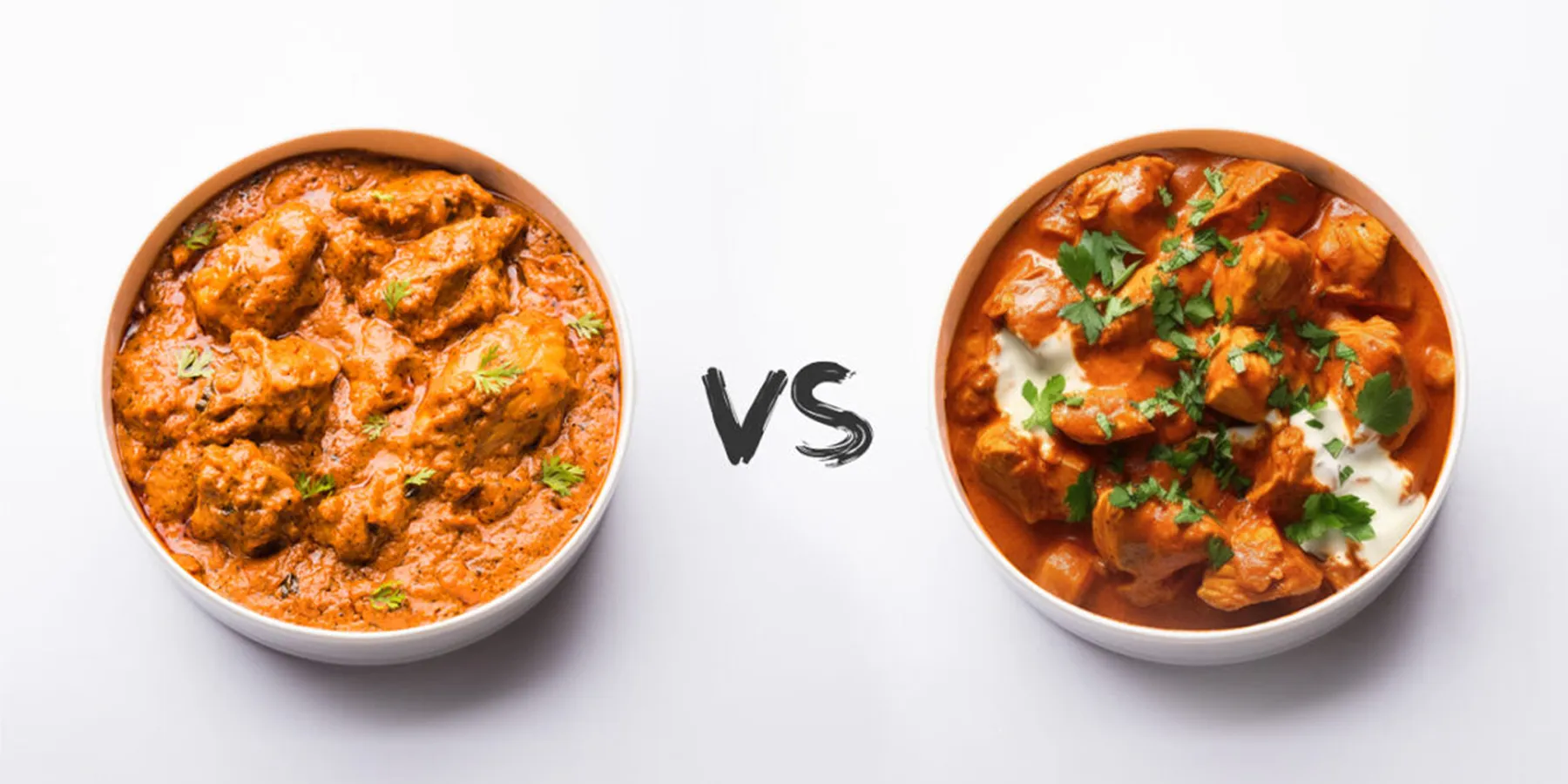
Brand Anatomy: Visuals, Texture, and Consumer Perception
A brand is not just a name; it is a sensory experience. The “Brand Anatomy” of these two dishes involves the visual and tactile cues that signal to the consumer which “product” they are consuming.
Visual Branding: The Role of Color and Consistency
The visual identity of Chicken Tikka Masala is often defined by a vibrant, almost neon orange or red hue. In branding, color triggers psychological responses. The bright orange of Tikka Masala signals “Flavor” and “Zest.” It is a high-visibility brand designed to stand out on a crowded menu or a supermarket shelf.
Butter Chicken, conversely, typically features a more muted, earthy, and deep orange or brownish-red tone. This reflects a brand identity centered on “Natural Ingredients” and “Depth.” The presence of visible butter fat or a silkier sheen communicates “Luxury” and “High Quality.” In the world of design, if Tikka Masala is a bold, modern graphic, Butter Chicken is an oil painting—layered, textured, and rich.
Sensory Branding: Emotional Connection through Flavor Profiles
The “Brand Voice” of a food product is its flavor profile. Chicken Tikka Masala speaks in a “Direct and Tangy” voice. The heavy use of tomato and lemon gives it a brightness that appeals to a wide demographic. It is a “Social Brand”—easy to share, easy to like, and rarely polarizing.
Butter Chicken’s brand voice is “Subtle and Sophisticated.” It relies on the sweetness of tomatoes balanced by the fattiness of dairy, often finished with the distinct aroma of Kasuri Methi (dried fenugreek leaves). This creates a “Niche Emotional Connection.” It is a comfort brand that aims for a deeper, more lingering satisfaction. It doesn’t need to scream for attention because its “Brand Loyalty” is built on the physical sensation of richness.
Lessons in Global Scaling and Product Differentiation
The rivalry—or rather, the coexistence—of Butter Chicken and Chicken Tikka Masala offers vital insights for any corporate entity looking to scale internationally.
Adapting to New Markets without Diluting Core Values
The success of Chicken Tikka Masala proves that “Brand Dilution” isn’t always a negative. Purists might argue that Tikka Masala is not “authentic” Indian food, but from a business perspective, it is a global triumph. It shows that by “translating” a brand’s core values into the local “language” of a new market, you can achieve a level of market penetration that a strictly traditional brand never could.
Companies like McDonald’s or Starbucks use this same “Tikka Masala Strategy.” They keep the core of the brand (fast service, coffee) but adapt the “sauce” (the Teriyaki Burger in Japan, the Matcha Latte in China) to suit local tastes.
Case Study: The “National Dish” Paradox
One of the most interesting branding phenomena is when a product becomes so successful in a new market that it is adopted as part of that market’s own identity. This is the “National Dish Paradox.” By becoming the “British National Dish,” Tikka Masala achieved the ultimate branding goal: it became a “Cultural Icon.”
Butter Chicken, meanwhile, remains the “National Pride” of North Indian cuisine. It hasn’t tried to become British or American; it has forced the world to come to it. This represents a “Destination Brand” strategy. Like Ferrari or Leica, the brand says: “This is who we are, and we are the best at it. If you want this experience, you must meet us on our terms.”

Conclusion: Choosing Your Brand Strategy
When we ask “What’s the difference between Butter Chicken and Tikka Masala?”, we are really asking: “Do we want to be the Heritage Brand or the Innovation Brand?”
- Butter Chicken is the brand of Depth, Legacy, and Craft. It wins by being the best version of a traditional idea. It appeals to the consumer’s desire for “The Real Deal.”
- Chicken Tikka Masala is the brand of Market Fit, Accessibility, and Evolution. It wins by understanding the consumer better than the consumer understands themselves. It appeals to the desire for “Familiar Adventure.”
In any industry—whether tech, finance, or consumer goods—there is room for both. The key to successful brand strategy is knowing which one you are. Are you the Delhi original, standing firm on your history and recipe? Or are you the Glasgow innovator, rewriting the rules to conquer a new world? Both have built empires, one creamy spoonful at a time.
aViewFromTheCave is a participant in the Amazon Services LLC Associates Program, an affiliate advertising program designed to provide a means for sites to earn advertising fees by advertising and linking to Amazon.com. Amazon, the Amazon logo, AmazonSupply, and the AmazonSupply logo are trademarks of Amazon.com, Inc. or its affiliates. As an Amazon Associate we earn affiliate commissions from qualifying purchases.