
In the landscape of modern consumer technology, few sectors have undergone as quiet yet profound a revolution as domestic appliances. For decades, the washing machine was a static piece of hardware, a utilitarian box defined by a single mechanical philosophy. However, as engineering standards have shifted toward high efficiency, water conservation, and fabric longevity, a technological schism has emerged. At the heart of this evolution is the debate between two distinct mechanical systems: the agitator and the impeller.
While both technologies serve the same ultimate goal—removing soil from textiles through a combination of chemical action, heat, and mechanical energy—the physics they employ are fundamentally different. Understanding the difference between an agitator and an impeller is not merely a matter of appliance aesthetics; it is an exploration of fluid dynamics, mechanical stress, and the integration of smart sensors into modern home hardware.

The Engineering of Motion: How Agitators and Impellers Work
To understand the technological divide, one must first look at the mechanical architecture of the wash drum. The difference lies in how the machine moves the load and the water to achieve a clean result.
The Traditional Agitator: Mechanical Friction and High Torque
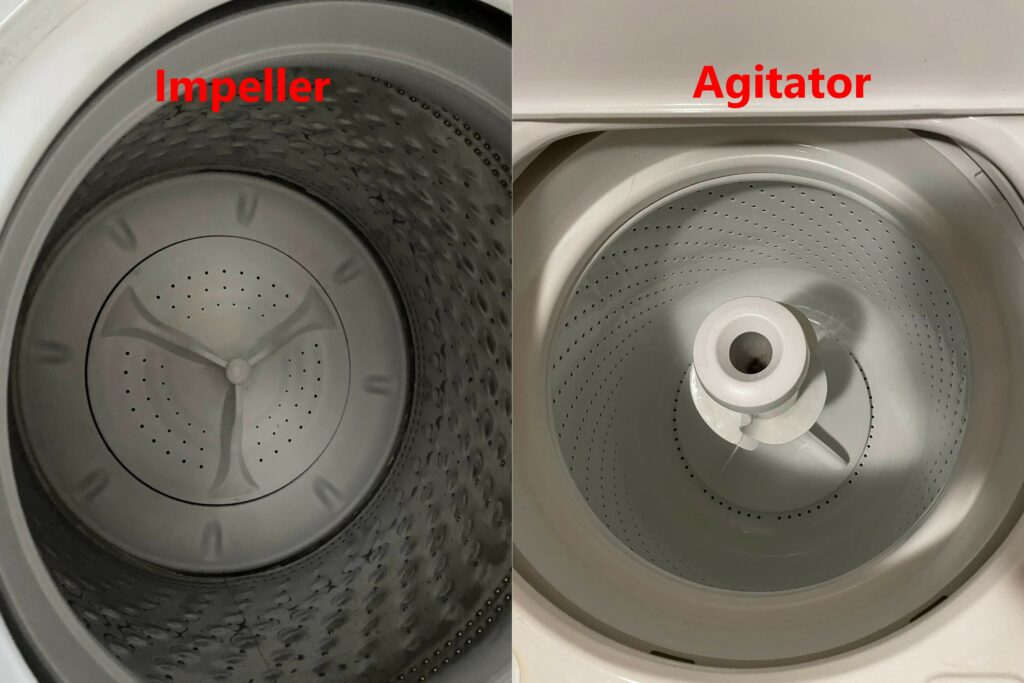
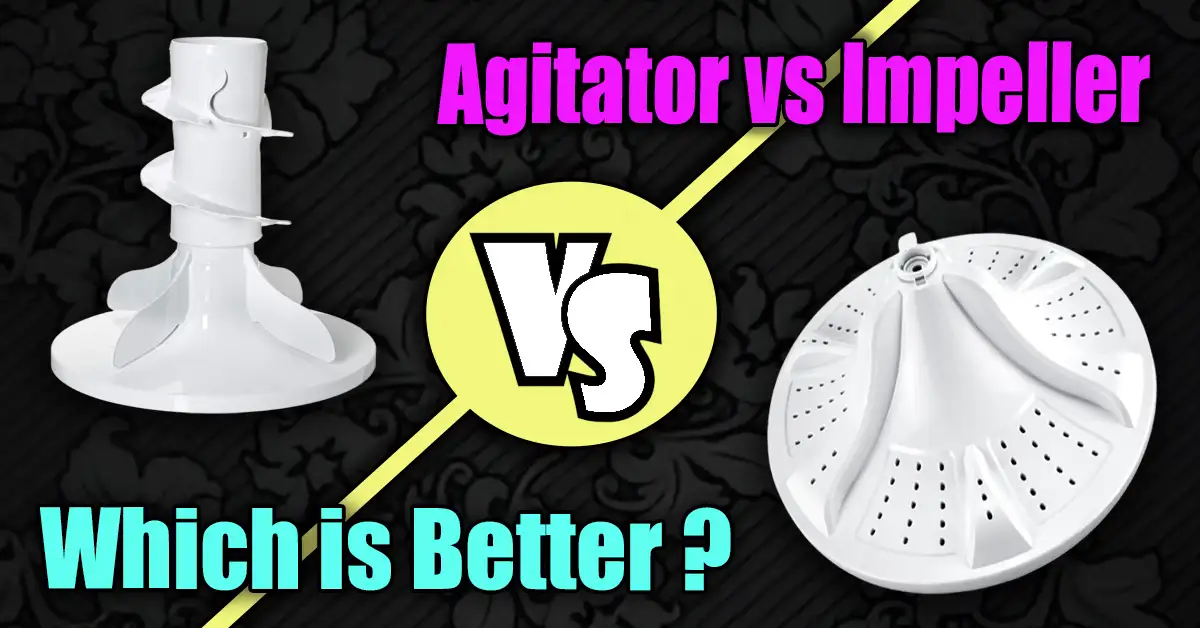
The agitator is the legacy technology of the laundry world, a tall, vertical post located in the center of the washing machine’s drum. This post is equipped with fins or vanes that rotate back and forth, rubbing against the clothes to break up stains.
From an engineering perspective, the agitator relies on mechanical friction. It is designed to physically displace the items within the drum, ensuring that every garment is subjected to a “scrubbing” action. This requires high torque and a robust transmission system to handle the resistance of heavy, water-logged fabrics. Historically, agitators were the gold standard for heavy-duty cleaning because their aggressive motion could dislodge stubborn debris like mud or oil from rugged fabrics like denim and canvas.
The Modern Impeller: Hydrodynamic Displacement
The impeller, by contrast, represents a shift toward fluid dynamics and high-efficiency (HE) engineering. Instead of a central post, an impeller is a low-profile disc or cone located at the bottom of the drum. It features small vanes that spin at high speeds, creating a turbulent current within the wash water.
Rather than rubbing against the clothes directly, the impeller causes the garments to rub against each other. This is known as “wash action.” The impeller’s motion creates a “recirculation” effect, where clothes from the top of the load are pulled down to the center and pushed outward to the edges. This method uses significantly less water because the drum does not need to be fully submerged for the mechanical action to take place. The impeller relies on the velocity of the water and the interaction between fabric fibers rather than the brute force of a plastic vane.
Performance Metrics: Efficiency, Capacity, and Fabric Care
When evaluating these technologies through the lens of modern tech reviews, we must look at the specific performance data. The transition from agitator-based systems to impeller-based systems has been driven largely by environmental regulations and consumer demand for larger capacities.
Capacity and Spatial Optimization
One of the most immediate technological advantages of the impeller is the gain in usable volume. In a traditional top-load machine, the agitator post occupies a significant amount of space in the center of the drum. This creates a physical limitation on the size of the load, particularly for bulky items like comforters or sleeping bags, which can easily become Tangled around the central post.
Impeller-based machines offer a “cleared” drum. By removing the central column, manufacturers can offer larger cubic-foot ratings within the same external dimensions. This spatial optimization allows users to wash larger loads in fewer cycles, which is a key selling point in the high-efficiency appliance market.
Water and Energy Consumption
The impeller is the cornerstone of the High-Efficiency (HE) movement. Because the impeller relies on the interaction of clothes rather than the displacement caused by a submerged post, these machines can operate with a fraction of the water used by traditional agitators.
In a traditional agitator machine, the drum must be filled with enough water to allow the clothes to float freely around the post. An impeller machine uses a “low-water wash” system. It sprays water onto the load and uses the spinning disc at the bottom to circulate a concentrated detergent solution through the fibers. This reduction in water usage has a secondary effect on energy efficiency: less water to move means less strain on the motor during the wash cycle, and less water to heat results in significant energy savings over the lifespan of the appliance.
Fabric Longevity and Mechanical Stress
A critical consideration in modern garment care is the “wear and tear” factor. The aggressive mechanical action of an agitator, while effective for heavy soils, can be taxing on delicate fibers. The constant rubbing against the plastic fins can lead to pilling, stretching, or tearing of thin materials.
The impeller’s “wash action”—where clothes rub against each other—is generally considered gentler. Because the mechanical force is distributed across the entire load rather than concentrated at the point of contact with an agitator, clothes tend to last longer. However, there is a trade-off: in poorly designed impeller systems, clothes can occasionally “bunch” or fail to circulate properly, leading to uneven cleaning. This is where the next layer of technology—sensor integration—becomes vital.
The Digital Layer: Sensors and Smart Control Systems
The hardware difference between an agitator and an impeller is only half the story. In the current era of “Smart Appliances,” the software controlling these mechanical systems has become the true differentiator.
Load Sensing and Adaptive Logic
Modern impeller machines are heavily dependent on sophisticated sensor arrays. Because they use so little water, the margin for error is slim. If the machine detects an unbalanced load or insufficient saturation, it must adjust its rotation patterns in real-time.
High-end impeller models use “Adaptive Wash Technology.” Sensors measure the weight of the load and the resistance against the motor to determine the fabric type and soil level. The onboard processor then calculates the optimal RPM for the impeller and the precise amount of water needed. This level of digital oversight ensures that the lack of a central agitator does not result in a “dead zone” where clothes sit stationary at the top of the drum.
Vibration Control and OOB (Out-of-Balance) Algorithms
Agitator machines, due to their centered mass and high-torque start-ups, are prone to “walking” or vibrating excessively if a load becomes unbalanced. Modern tech has addressed this through electronic vibration control.
In impeller machines, which often feature much higher spin speeds to extract water (compensating for the low-water wash), the risk of imbalance is even higher. To combat this, manufacturers have developed complex OOB (Out-of-Balance) algorithms. These systems use accelerometers to detect the slightest wobble and will automatically pause, add water to redistribute the load, or adjust the spin speed to prevent mechanical damage. This is a prime example of how software is being used to overcome the physical limitations of mechanical hardware.
Making the Choice: Tech Specs for the End User
Choosing between an agitator and an impeller often comes down to the specific use case of the consumer. Neither technology is objectively “better” in every scenario; rather, they represent different engineering priorities.
When to Opt for Agitator Technology
Agitators remain the preferred choice for environments where “heavy-duty” is the primary requirement. For those in manual labor industries, farming, or households with children who frequently produce heavily stained clothing, the mechanical scrubbing of an agitator is difficult to beat. Furthermore, the technology is mechanically simpler, often leading to lower repair costs and a more intuitive user experience for those who prefer “set it and forget it” hardware without complex digital interfaces.
When to Opt for Impeller Technology
The impeller is the choice for the modern, tech-forward household. If the goal is to maximize energy efficiency, reduce utility bills, and preserve the integrity of a diverse wardrobe (from high-performance gym wear to delicate office attire), the impeller is the superior architecture. It is also the better choice for those who frequently wash large, bulky items that would otherwise require a trip to a commercial laundromat.
Conclusion: The Future of Appliance Hardware
The debate between the agitator and the impeller is a microcosm of the broader shifts in technology. We are moving away from brute-force mechanical solutions and toward refined, sensor-driven, and resource-efficient systems. While the agitator remains a reliable workhorse of the 20th century, the impeller represents the precision engineering of the 21st.
As we look toward the future, the line between these two may blur even further. We are already seeing “dual-action” agitators that attempt to mimic impeller currents, and impellers with “power-wash” zones that simulate the scrubbing of an agitator. Ultimately, the integration of AI and more advanced fluid sensors will continue to close the performance gap, ensuring that regardless of the mechanical heart of the machine, the result is a perfect balance of cleanliness, conservation, and care.
aViewFromTheCave is a participant in the Amazon Services LLC Associates Program, an affiliate advertising program designed to provide a means for sites to earn advertising fees by advertising and linking to Amazon.com. Amazon, the Amazon logo, AmazonSupply, and the AmazonSupply logo are trademarks of Amazon.com, Inc. or its affiliates. As an Amazon Associate we earn affiliate commissions from qualifying purchases.