
The world of nail enhancements has evolved dramatically, moving beyond simple polish to sophisticated applications that offer durability, aesthetic versatility, and even protection. At the forefront of this evolution are acrylic nails and gel nails, two popular yet distinct methods that leverage different chemical processes and application technologies. While the end result for many consumers might appear similar – a longer, stronger, and more polished nail – understanding the underlying technology reveals crucial differences in their creation, application, removal, and performance. This exploration delves into the technical distinctions, examining the materials, curing mechanisms, and the innovative science that powers each system, ultimately providing a clearer picture for both enthusiasts and those seeking to understand the technological sophistication behind a flawless manicure.
The Chemical Foundations: Monomers, Polymers, and Photochemistry
The fundamental divergence between acrylic and gel nail systems lies in their core chemical composition and how they transform from a pliable substance into a hardened, durable nail enhancement. This difference dictates everything from application technique to the tools required.
Acrylics: The Polymerization Power of Monomers
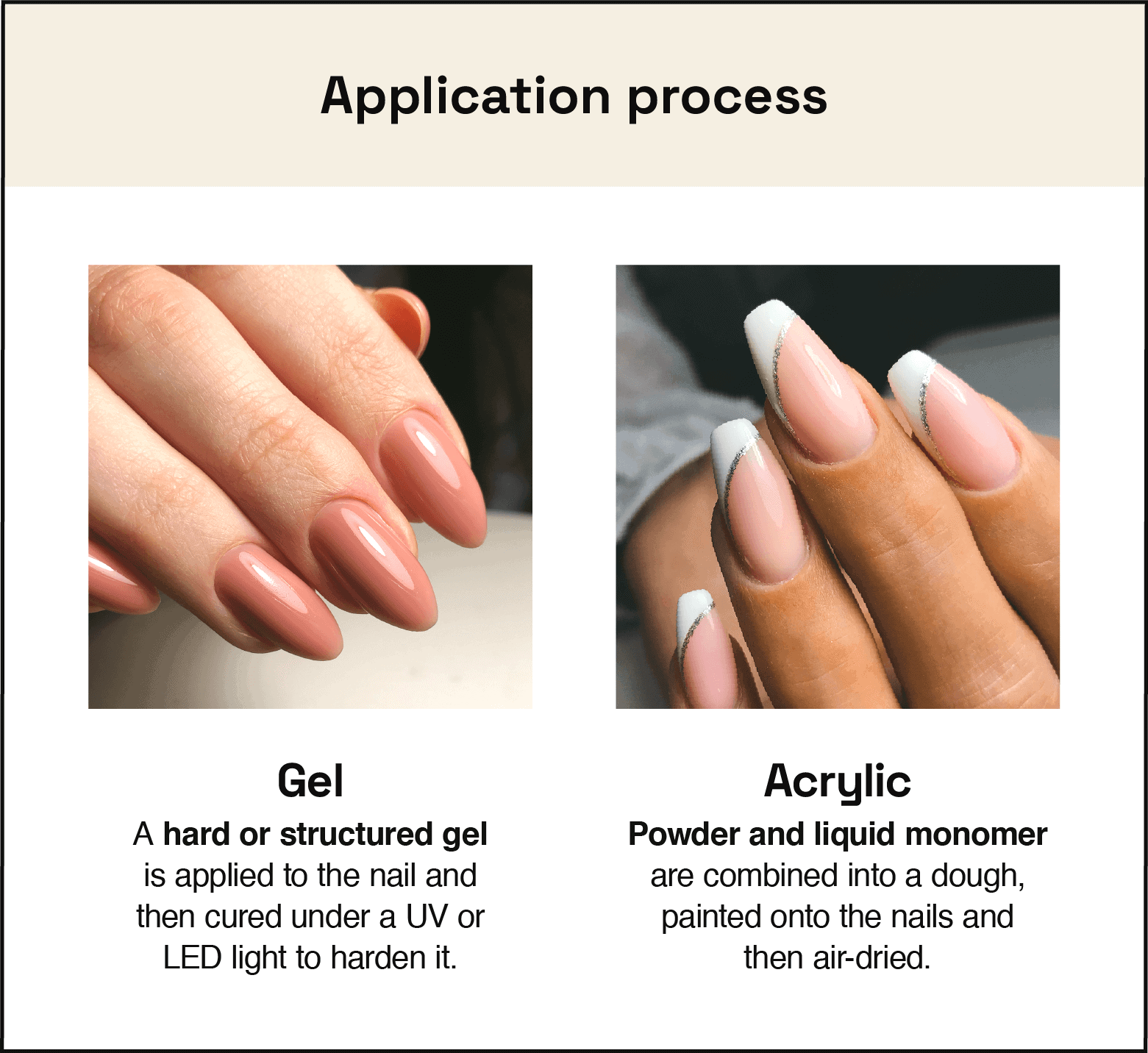
Acrylic nails are typically created using a two-part system: a liquid monomer and a powder polymer. The liquid is usually methyl methacrylate (MMA) or ethyl methacrylate (EMA), while the powder is a polymer of polymethyl methacrylate (PMMA). When these two components are combined, a chemical reaction known as autopolymerization is initiated. This is an exothermic process, meaning it generates heat as it occurs.
The liquid monomer molecules, when exposed to the air and the powder, undergo a chain reaction. The powder acts as an initiator and a filler, providing structure and absorbing excess liquid. As the monomers link together to form long polymer chains, the mixture gradually hardens without the need for external energy input beyond air exposure. This process, while effective, can lead to strong odors due to volatile organic compounds (VOCs) released by the monomers. The hardening time is relatively rapid, typically a few minutes, allowing nail technicians to sculpt and shape the enhancement quickly.
Gels: Photopolymerization and UV/LED Curing
Gel nails, on the other hand, rely on a fundamentally different curing mechanism: photopolymerization. The “gel” itself is a pre-polymerized or oligomeric liquid resin that contains photoinitiators. These photoinitiators are crucial; they are molecules that, when exposed to specific wavelengths of light (usually UV or LED), absorb energy and initiate a polymerization reaction.
Unlike acrylics, gels do not harden spontaneously in air. Instead, they remain in a viscous, uncured state until placed under a UV or LED lamp. The lamp emits photons of light that activate the photoinitiators. These activated initiators then trigger the cross-linking of the oligomers, transforming the liquid gel into a solid, durable plastic matrix. The curing time varies depending on the type of gel and the wattage of the lamp, typically ranging from 30 seconds to a few minutes per layer. This controlled curing process offers greater flexibility during application, allowing for precise placement and shaping before the material solidifies.
Application Technologies: Tools and Techniques for Sculpting and Setting
The distinct chemical properties of acrylics and gels necessitate different application methodologies and specialized tools, highlighting the technological approach to creating each nail enhancement.
Acrylic Application: Sculpting with Brushes and Powders
The application of acrylics is a highly skilled technique that involves artistic manipulation. Nail technicians typically use a specialized brush to pick up a bead of the acrylic mixture – a combination of the liquid monomer and powder polymer. This bead is then applied to the natural nail or a tip/form, and the technician skillfully sculpts it into the desired shape and length. The quick setting time of acrylics means that the technician must work efficiently and with precision to avoid premature hardening.
Key tools in acrylic application include:
- Liquid Monomer: The primary liquid component that initiates the polymerization.
- Polymer Powder: The powdered resin that, when mixed with the monomer, forms the acrylic mass.
- Nail Brushes: Specifically designed with synthetic or natural hairs that allow for optimal pick-up and manipulation of the acrylic bead.
- Nail Tips or Forms: Used to extend the length and shape of the natural nail, which are then covered and integrated with the acrylic.
- Dappen Dishes: Small glass or ceramic dishes used to hold the liquid monomer and to mix the acrylic bead.
The process requires a controlled environment with adequate ventilation to manage the VOCs released during curing. The finished acrylic nail is then filed and shaped to perfection before polish or other finishes are applied.
Gel Application: Layering with Lamps and Precision
Gel application is characterized by a more controlled, layered approach. The gel is typically applied in thin coats directly to the nail, often over a base coat. Each layer of gel must be cured under a UV or LED lamp before the next layer is applied. This method allows for meticulous shaping and ensures that the entire enhancement is thoroughly hardened.

Essential technologies and tools for gel application include:
- Base Coat Gel: A specialized gel applied first to provide adhesion and protection for the natural nail.
- Builder Gels / Hard Gels: Thicker gels used for creating length and structure, often applied with a brush or specialized tool.
- Gel Polish: Thinner, more pigmented gels used for color application, similar to traditional nail polish but requiring curing.
- Top Coat Gel: A final layer of gel that provides a high-gloss finish and protects the manicure from chipping and abrasion.
- UV or LED Lamp: The crucial curing device that emits specific wavelengths of light to activate the photoinitiators in the gel. LED lamps are generally faster and more energy-efficient than traditional UV lamps.
- Nail Brushes (Gel Specific): Brushes designed for gel application are often synthetic and firmer, allowing for precise control of the viscous gel.
The absence of strong odors during application is a significant advantage of gel systems. The precise layering and controlled curing also contribute to a potentially smoother and more refined finish compared to some acrylic applications.
Durability, Maintenance, and Removal: Engineering for Longevity
The technological differences in material science and application directly influence how acrylic and gel nails perform over time, their maintenance requirements, and the methods for their safe removal. Understanding these aspects is key to appreciating the engineering behind long-lasting nail enhancements.
Acrylic Durability and Refill Technology
Acrylics are known for their inherent strength and rigidity. Once polymerized, the acrylic matrix forms a very hard and durable surface. This makes them less prone to bending or breaking under pressure, which is a significant advantage for individuals with active lifestyles or those who frequently engage in manual tasks.
Maintenance for acrylics typically involves fills. As the natural nail grows out, the acrylic enhancement moves forward with it. A fill procedure involves gently filing away the old acrylic from the growth area, applying a new bead of acrylic to blend and reinforce the nail, and then re-filing and shaping. This process leverages the ability of acrylic to bond effectively to existing acrylic material.
Removal of acrylics is generally more invasive. They are typically soaked in acetone, a strong solvent that breaks down the polymer chains. This soaking process can take a considerable amount of time, and gentle filing may be required to assist the removal. The harshness of acetone can also lead to dehydration of the natural nail and surrounding skin.
Gel Durability, Flexibilty, and Removal Innovations
Gel nails offer a different kind of durability. While also strong, they tend to be more flexible than acrylics. This flexibility can be beneficial, as it allows the enhancement to bend slightly with the natural nail, potentially reducing the risk of snapping. The hard gels, in particular, provide significant strength and structure for extensions.
Maintenance for gel nails also involves fills for hard gel enhancements, similar to acrylics, where new gel is applied to the growth area. However, many gel polish applications are designed to be removed rather than filled. Soaking in acetone is also a common removal method for gel polish, though the breakdown process can sometimes be faster than with acrylics. More advanced gel systems offer “peel-off” base coats or are designed to be buffed off gently, minimizing the exposure of the natural nail to solvents.
The development of LED curing technology has significantly improved the efficiency and safety of gel application and removal. LED lamps cure gels much faster than UV lamps and emit less heat, reducing the risk of heat spikes that can cause discomfort. Furthermore, advancements in gel formulas themselves are leading to more resilient, chip-resistant finishes and easier removal processes, reflecting a continuous drive for innovation in nail technology.
Encapsulation and Barrier Technologies
Both acrylic and gel systems can incorporate advanced technological features. Encapsulation, for instance, is a technique where a clear layer of acrylic or gel is applied over a design or colored polish to protect it and provide a smooth, durable finish. This acts as a protective barrier, preventing the embedded elements from wear and tear.
In some cases, specially formulated primers and bonding agents are used in both systems to enhance adhesion and longevity, acting as sophisticated interfaces between the natural nail and the enhancement material. These products are designed at a molecular level to create optimal chemical bonds, further illustrating the scientific underpinnings of modern nail technology.
Conclusion: The Technological Spectrum of Nail Enhancement
The distinction between acrylic and gel nails is far more than cosmetic; it’s rooted in fundamentally different chemical engineering principles and application technologies. Acrylics rely on self-polymerization, a rapid chemical reaction triggered by mixing monomers and polymers, offering robust strength and quick application once mastered. Gels, conversely, utilize photopolymerization, a light-activated process requiring specialized UV or LED lamps to cure, providing greater control during application and a more flexible, often glossier finish with minimal odor.
From the molecular interactions that harden the material to the precise tools and curing devices used, each system represents a unique technological approach to achieving durable and aesthetically pleasing nail enhancements. The ongoing innovation in both acrylic and gel formulations, along with advancements in curing technology, continues to push the boundaries of what is possible in nail care, offering consumers a spectrum of choices defined by their performance, longevity, and the sophisticated science behind their creation. Understanding these technical nuances allows for a more informed appreciation of the modern manicure and the ingenuity that underpins its enduring appeal.
aViewFromTheCave is a participant in the Amazon Services LLC Associates Program, an affiliate advertising program designed to provide a means for sites to earn advertising fees by advertising and linking to Amazon.com. Amazon, the Amazon logo, AmazonSupply, and the AmazonSupply logo are trademarks of Amazon.com, Inc. or its affiliates. As an Amazon Associate we earn affiliate commissions from qualifying purchases.