
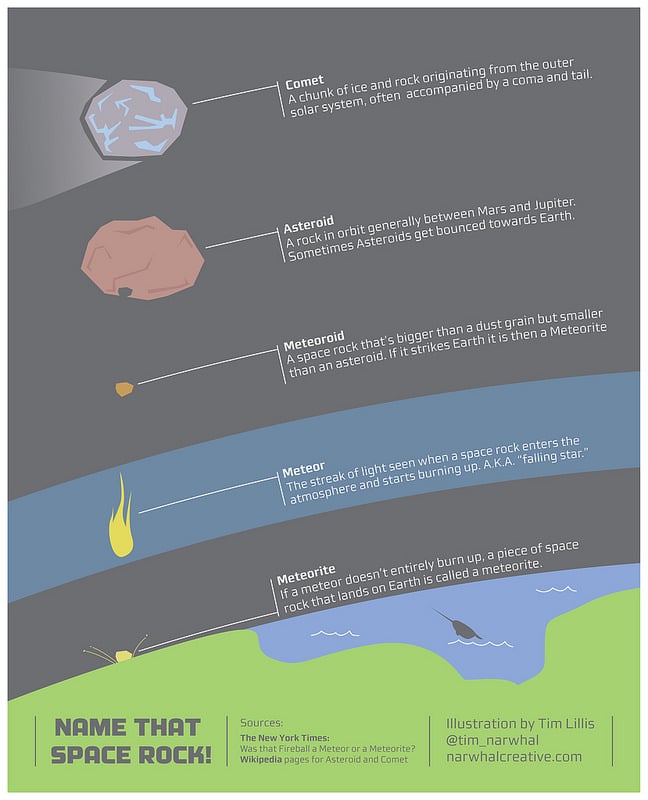
The cosmos teems with a staggering variety of celestial bodies, each offering unique insights into the solar system’s formation and evolution. Among the most enigmatic are comets and asteroids, often mistaken for one another due to their shared status as remnants from the solar system’s early days. While both are small, irregularly shaped objects orbiting the Sun, their fundamental compositions, origins, and behaviors are distinct, differences primarily revealed and understood through sophisticated technological advancements in space exploration, observation, and data analysis.
Unveiling Celestial Distinctions Through Advanced Observational Technology
Modern astronomy relies heavily on cutting-edge technology to peer into the farthest reaches of space, differentiating between these ancient wanderers. The very tools we employ to study them highlight their inherent variances.
Spectroscopy and Compositional Insights
One of the most powerful technological tools in distinguishing comets from asteroids is spectroscopy. Different celestial bodies absorb and emit light at specific wavelengths based on their chemical composition. Advanced telescopes, equipped with high-resolution spectrometers, capture these unique spectral signatures across the electromagnetic spectrum—from visible light to infrared and ultraviolet.
For asteroids, spectral analysis often reveals signatures of silicate minerals, metals like iron and nickel, and sometimes carbonaceous materials, indicating a predominantly rocky or metallic composition. This technology allows scientists to classify asteroids into various types (e.g., C-type for carbonaceous, S-type for stony, M-type for metallic), giving clues about their formation environments.
Comets, in contrast, display different spectral characteristics. As a comet approaches the Sun, its icy components sublimate, forming a tenuous atmosphere called a coma and often a spectacular tail. Spectrometers detect emission lines from volatile compounds such as water vapor, carbon dioxide, methane, ammonia, and various organic molecules in these active regions. Infrared spectroscopy, in particular, is vital for identifying water ice and other frozen volatiles that define a comet’s “dirty snowball” nature. Space-based observatories like the James Webb Space Telescope (JWST) are pushing the boundaries of this technology, providing unprecedented detail on the chemical makeup of cometary nuclei and their outgassing processes, enabling a clearer understanding of their pristine, ice-rich composition.
Imaging and Dynamical Tracking Systems
High-resolution imaging technology is equally critical. Advanced optical telescopes, both ground-based (often utilizing adaptive optics to counteract atmospheric distortion) and space-based (like the Hubble Space Telescope), provide crucial visual evidence. Asteroids typically appear as distinct points of light or, in the case of larger ones, as resolved, inert, rocky bodies with irregular shapes.
Comets, however, often exhibit a dynamic and fuzzy appearance due to their coma and tail activity. Imaging systems track the evolution of these features, which can span millions of kilometers. Multi-wavelength imaging helps visualize the separate dust and ion tails, each responding differently to solar radiation and the solar wind. Digital image processing and sophisticated algorithms are essential for enhancing these faint features against the vast backdrop of space, extracting information on particle sizes, velocities, and tail morphologies.
Beyond visual distinctions, precise dynamical tracking systems, powered by sophisticated orbital mechanics software, are crucial. While both comets and asteroids follow elliptical orbits, cometary orbits are often far more eccentric, taking them from the inner solar system to its distant, icy fringes (the Kuiper Belt or Oort Cloud). Asteroids, conversely, primarily reside in the main asteroid belt between Mars and Jupiter. Tracking software precisely models these paths, predicting close approaches and potential impacts, a distinction vital for planetary defense efforts.
Thermal Emission and Volatile Detection
Thermal imaging technology, particularly in the infrared spectrum, offers another powerful discriminant. The Spitzer Space Telescope, and now JWST, are examples of instruments capable of detecting the heat emitted by celestial bodies.
Asteroids, being rocky, tend to warm up and cool down predictably with solar insolation, emitting thermal radiation characteristic of inert rock. Their surface temperatures vary based on their proximity to the Sun and rotation rate.
Comets, on the other hand, exhibit unique thermal signatures due to sublimation. As ice turns directly into gas, it carries away latent heat, causing the cometary nucleus to remain cooler than an asteroid of similar size at the same distance from the Sun. Furthermore, the outgassing process itself creates a dusty, gaseous envelope that can scatter and re-emit thermal radiation differently. Infrared instruments can detect not only the temperature but also the presence of specific volatile molecules, such as water ice and carbon monoxide, affirming the cometary nature.
Engineering Missions: Tailoring Technology for Diverse Space Objects
The technological challenges and design philosophies behind missions to comets and asteroids differ significantly, reflecting their distinct physical properties and dynamic behaviors.
Asteroid Missions: Robotic Exploration and Sample Return
Missions targeting asteroids prioritize technologies for precise rendezvous, surface interaction, and sample collection from solid, low-gravity bodies. Spacecraft like NASA’s OSIRIS-REx (to asteroid Bennu) and JAXA’s Hayabusa2 (to asteroid Ryugu) exemplify this. Their engineering focuses on:
- Autonomous Navigation and Proximity Operations: Advanced guidance, navigation, and control (GNC) systems, using LIDAR and optical cameras, allow for autonomous maneuvering in the extremely weak gravitational fields of asteroids, minimizing collision risk during close approaches and touchdown.
- Surface Sampling Mechanisms: Robotic arms equipped with specialized sampling heads are designed to collect regolith (surface dust and rocks) from diverse rocky terrains. OSIRIS-REx’s Touch-And-Go (TAG) maneuver involved a nitrogen gas burst to agitate the surface and collect material, while Hayabusa2 used a small projectile to create an artificial crater for subsurface sampling.
- Sample Return Capsules: Technologies for hermetically sealing and safely returning precious asteroid samples to Earth, protecting them from contamination and the harsh conditions of atmospheric re-entry, are paramount for laboratory analysis.
Comet Missions: Navigating Volatile Environments
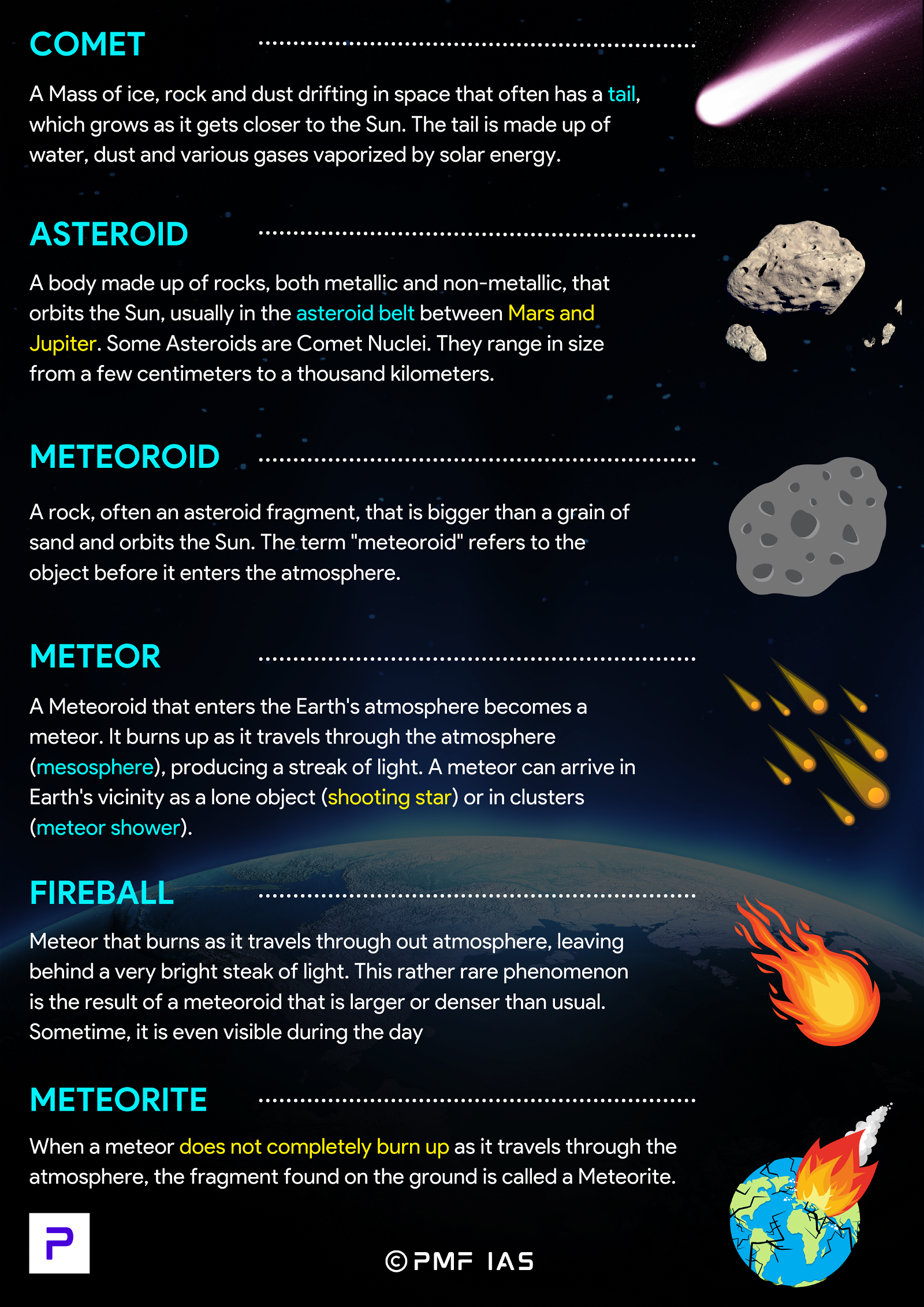
Comet missions, such as ESA’s Rosetta and its Philae lander (to Comet 67P/Churyumov-Gerasimenko), confront an entirely different set of engineering hurdles due to the active, volatile nature of their targets. Key technological adaptations include:
- Dust and Gas Shields: Spacecraft and instrument designs must incorporate robust shielding against high-velocity dust particles ejected from the comet’s nucleus, which can be highly abrasive and damaging.
- Advanced Navigation for Dynamic Objects: Navigating around an active comet requires sophisticated algorithms that can account for unpredictable jets of gas and dust that can subtly alter the comet’s rotation and even its trajectory. Rosetta performed intricate orbital maneuvers around 67P, adjusting for these dynamic changes.
- Volatile Analysis Instrumentation: Instruments onboard comet probes are specifically designed to analyze gas and dust compositions in real-time, often using mass spectrometers and dust analyzers that can differentiate between various volatile species and complex organic molecules released from the nucleus. Philae’s landing technology, though challenging, involved harpoons and ice screws, reflecting the difficulty of anchoring to a low-gravity, icy, and dusty surface.
Propulsion Systems for Deep Space Encounters
The choice of propulsion technology also reflects the different mission profiles for comets and asteroids. Chemical propulsion is often used for high-thrust maneuvers and orbit insertions, but for long-duration, fuel-efficient journeys to distant targets, ion propulsion systems (electric propulsion) are increasingly favored. These systems, which use inert gas (like xenon) accelerated by an electric field, provide continuous low thrust over extended periods, enabling spacecraft to slowly build up incredible speeds and precisely navigate to targets far beyond Earth, whether they be main-belt asteroids or comets originating from the outer solar system.
Planetary Defense: Tailored Tech for Different Threats
The field of planetary defense, concerned with mitigating impact risks from Near-Earth Objects (NEOs), must account for the distinct characteristics of comets and asteroids.
Detection and Characterization Technologies
Advanced survey telescopes like Pan-STARRS and the upcoming Vera C. Rubin Observatory utilize vast fields of view and rapid scanning capabilities to detect and track NEOs. Sophisticated image processing software identifies moving objects against star fields, calculating preliminary orbits.
While effective for detecting both, their performance differs:
- Asteroid Detection: Ground-based optical telescopes are highly effective at discovering and tracking asteroids, which are typically slow-moving relative to Earth and reflect sunlight steadily. Radar astronomy (e.g., using facilities like the defunct Arecibo Observatory and Goldstone Deep Space Communications Complex) provides incredibly precise measurements of asteroid orbits, sizes, shapes, and rotational states, even for objects too small or distant for detailed optical imaging.
- Comet Detection: Long-period comets, originating from the Oort Cloud, pose a greater challenge. They often approach the inner solar system from unpredictable directions and at very high velocities, allowing little lead time for detection and characterization. Their active comas can also obscure the nucleus, making precise sizing difficult.
Mitigation Strategies and Their Technological Underpinnings
Should an impact threat be identified, the technological response would be tailored to the object type:
- Asteroid Deflection: The kinetic impactor technique, demonstrated by NASA’s DART (Double Asteroid Redirection Test) mission, is a viable strategy for deflecting asteroids. This technology involves crashing a spacecraft into an asteroid to alter its velocity and hence its orbital path. The precise targeting, navigation, and impact physics simulations involved are highly advanced. Other concepts include “gravity tractors,” where a spacecraft uses its own minuscule gravitational pull to slowly tug an asteroid off course over time, requiring ultra-precise station-keeping technology.
- Comet Deflection: Deflecting a comet presents significantly greater technological challenges. Their high velocities mean that even a small change in velocity requires a much larger impulse. Their volatile nature could also complicate kinetic impact attempts, potentially fragmenting the comet rather than deflecting it cleanly. Long-period comets offer very little warning time, making any pre-emptive mission nearly impossible with current technology. More speculative technologies like laser ablation or nuclear detonation (for very large, imminent threats) are sometimes discussed, but these involve substantial engineering and political complexities.
Resource Utilization: Differentiated Technological Approaches
The concept of extracting resources from space (In-Situ Resource Utilization, ISRU) hinges on the distinct compositions of asteroids and comets, requiring specialized technologies.
Asteroid Mining: Extracting Metals and Water
Asteroids are prime targets for mining metals and water. Metallic asteroids (M-types) are rich in iron, nickel, cobalt, and potentially platinum-group metals, vital for manufacturing in space or rare materials on Earth. Carbonaceous asteroids (C-types) contain significant amounts of water ice, hydrated minerals, and organic compounds. Technologies under development include:
- Robotic Drilling and Excavation: Autonomous robots capable of drilling into solid rock, excavating regolith, and processing materials in the vacuum and microgravity of space.
- Metallurgical Processing: Technologies for separating and refining metals using techniques like solar furnaces for melting, or chemical processes (e.g., carbothermal reduction) suitable for space environments.
- Water Ice Extraction: Systems designed to heat volatile-rich asteroid material and capture the released water vapor, followed by electrolysis to produce hydrogen and oxygen for rocket propellant or life support.

Cometary Resources: The Quest for Volatiles
Comets, being primarily “dirty snowballs,” are envisioned as vast reservoirs of water and other volatiles. While more challenging to access due to their volatile activity and unpredictable nature, comets could be critical for establishing self-sufficient outposts or fuel depots in deep space. Technologies required would be highly specialized:
- Cryogenic Processing: Systems designed to efficiently capture, condense, and store vast quantities of super-cold water vapor and other gases (methane, ammonia, carbon dioxide) released from a comet’s nucleus.
- Low-Gravity Surface Operations: Robotics and anchoring systems robust enough to operate on a highly porous, extremely low-gravity, and potentially dusty icy surface, where traditional drilling might be difficult.
- Propellant Production: Advanced electrolysis units optimized for converting vast quantities of cometary water into hydrogen and oxygen propellants, potentially enabling interplanetary travel without needing to launch all fuel from Earth.
In conclusion, while both comets and asteroids are invaluable relics of the solar system’s past, they are fundamentally different. It is through the relentless innovation in technological tools—from advanced spectroscopy and imaging to sophisticated mission engineering and planetary defense systems—that humanity continues to unravel their secrets, differentiating these celestial neighbors with ever-increasing precision and insight.
aViewFromTheCave is a participant in the Amazon Services LLC Associates Program, an affiliate advertising program designed to provide a means for sites to earn advertising fees by advertising and linking to Amazon.com. Amazon, the Amazon logo, AmazonSupply, and the AmazonSupply logo are trademarks of Amazon.com, Inc. or its affiliates. As an Amazon Associate we earn affiliate commissions from qualifying purchases.