
The universe, in its vast and enigmatic expanse, holds wonders that continue to push the boundaries of human comprehension. Among these celestial marvels, black holes stand out as objects of profound mystery and immense gravitational power. For decades, the allure of these cosmic enigmas has spurred scientific inquiry, driving innovation in observational astronomy and computational astrophysics. The question of proximity, “What’s the closest black hole to Earth?”, is not merely an academic curiosity; it represents a tangible goal for our technological endeavors, offering the potential for unprecedented insights into the fundamental nature of gravity and spacetime.
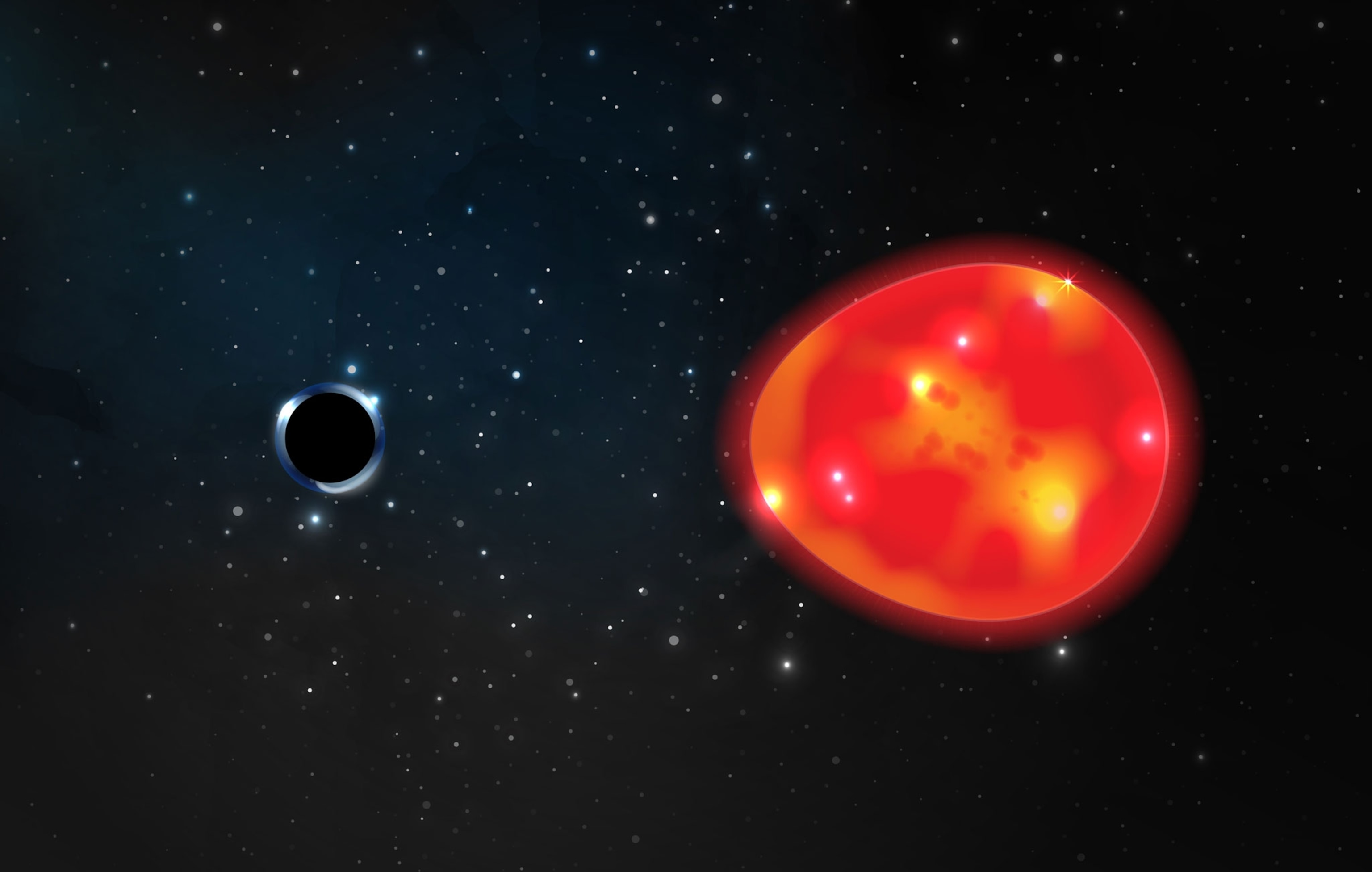
The quest to locate and characterize black holes has evolved dramatically, transitioning from theoretical predictions to direct observation, and now, to increasingly precise measurements. This journey is inextricably linked to advancements in technology, as each new discovery, each refined understanding, is a testament to the sophisticated tools and analytical methods we’ve developed. From the intricate designs of ground-based observatories to the orbital precision of space telescopes, and the powerful algorithms that sift through mountains of data, technology is the bedrock upon which our knowledge of these distant, yet undeniably present, cosmic entities is built.
The Technological Arsenal for Black Hole Detection
Pinpointing celestial objects as elusive as black holes requires a sophisticated and multi-faceted technological approach. Black holes, by their very nature, do not emit light, making their direct detection impossible. Instead, scientists rely on the indirect evidence of their gravitational influence on surrounding matter and light. This reliance has fueled a relentless pursuit of more sensitive instruments, more powerful telescopes, and more advanced observational techniques. The very definition of “closest” is, in essence, a technological achievement, defined by the limits of our current observational capabilities.
Observational Technologies: Ears and Eyes in the Cosmos
The primary tools for detecting black holes are advanced telescopes, both ground-based and space-borne, each with unique strengths tailored to different observational needs.
Ground-Based Observatories: The Titans of Terrestrial Astronomy
Ground-based observatories, often colossal in scale, are at the forefront of astronomical observation. The development of adaptive optics, for instance, has been revolutionary, allowing astronomers to overcome the atmospheric distortion that blurs images, providing sharper views of the cosmos. Large optical telescopes, such as the Gran Telescopio Canarias or the planned Extremely Large Telescope, with their massive mirrors, gather vast amounts of light, enabling the detection of faint signals from distant objects.
Radio telescopes, such as the Atacama Large Millimeter/submillimeter Array (ALMA) or the upgraded Very Large Array (VLA), play a crucial role in detecting the radio waves emitted by gas and dust falling into black holes. These waves are generated as matter is heated to extreme temperatures in accretion disks, a hallmark of active black hole systems. Interferometry, a technique that combines signals from multiple telescopes to create a virtual telescope of much larger aperture, has been instrumental in achieving the resolution necessary to study the immediate environments of black holes. The Event Horizon Telescope (EHT), a global network of radio telescopes, famously achieved the first direct image of a black hole’s shadow, a monumental feat of technological synchronization and data processing.
Space Telescopes: Unveiling the Universe Beyond Earth’s Veil
Space telescopes offer a distinct advantage: they are unhindered by Earth’s atmosphere, providing clearer and more comprehensive views across the electromagnetic spectrum.
X-ray Telescopes: Many black holes are detected through their intense X-ray emissions. As matter spirals into a black hole, it forms an accretion disk that becomes incredibly hot, radiating powerfully in X-rays. Telescopes like the Chandra X-ray Observatory and the upcoming Athena mission are specifically designed to detect these high-energy photons. Their ability to pinpoint the source of these X-rays allows astronomers to infer the presence of a compact, massive object like a black hole.
Infrared and Optical Telescopes: While black holes themselves are dark, the stars and gas surrounding them emit light. Space telescopes like the Hubble Space Telescope and the James Webb Space Telescope (JWST) can observe these emissions in infrared and optical wavelengths. JWST, with its unprecedented sensitivity, is capable of detecting infrared radiation from very distant or obscured objects, potentially revealing stellar-mass black holes in crowded stellar environments or even intermediate-mass black holes that have eluded detection.
Gravitational Wave Detectors: Perhaps the most paradigm-shifting technological advancement in black hole detection has been the advent of gravitational wave observatories. LIGO (Laser Interferometer Gravitational-Wave Observatory) and Virgo, and more recently KAGRA, are designed to detect the faint ripples in spacetime caused by the most cataclysmic events in the universe, such as the merger of two black holes. These detectors, with their incredibly precise laser interferometry, have opened a new window into the universe, allowing us to “hear” black holes colliding and providing direct measurements of their masses and spins.
Computational Power and Data Analysis: Making Sense of the Cosmic Data Deluge
The sheer volume of data generated by modern telescopes is staggering. Extracting meaningful scientific information from this deluge requires immense computational power and sophisticated data analysis techniques, all of which fall squarely within the realm of advanced technology.
Algorithmic Prowess: Unveiling the Unseen
Modern astrophysics relies heavily on complex algorithms and machine learning to identify patterns, distinguish signals from noise, and model the behavior of celestial objects.
Data Reduction and Calibration: Raw data from telescopes are noisy and often affected by instrumental artifacts. Advanced software pipelines are used to reduce, calibrate, and clean this data, making it suitable for scientific analysis. This process involves sophisticated statistical methods and often utilizes the collective computational power of distributed computing networks.
Signal Processing and Feature Extraction: Identifying the subtle signatures of a black hole within vast datasets is a formidable challenge. Techniques such as Fourier analysis, wavelet transforms, and pattern recognition algorithms are employed to isolate and characterize these signals. For gravitational wave data, specialized algorithms are used to detect the characteristic “chirp” signals produced by merging black holes, differentiating them from terrestrial or instrumental noise.
Simulations and Modeling: To interpret observations and test theoretical models, astronomers use sophisticated computer simulations. These simulations model the dynamics of accretion disks, the formation of jets, and the evolution of binary black hole systems. The increasing power of supercomputers allows for more detailed and realistic simulations, enabling scientists to compare observational data with theoretical predictions and refine their understanding of black hole physics.
Machine Learning and Artificial Intelligence (AI): AI is increasingly being integrated into the data analysis process. Machine learning algorithms can be trained to automatically identify potential black hole candidates in large surveys, classify different types of astronomical signals, and even predict the outcomes of black hole mergers. This not only accelerates the discovery process but also helps uncover subtle correlations that might be missed by human analysis.
The Search for the Closest Black Hole: A Technological Race Against Distance
The question of the closest black hole to Earth is a dynamic one, constantly being refined as our observational capabilities improve. Historically, candidates for the closest black hole have been identified, only to be later revised or superseded by new discoveries. This ongoing refinement is a direct consequence of technological advancements.
Past and Present Candidates: Milestones in Proximity
For a long time, the black hole candidate Cygnus X-1 was considered a prime contender, though it remains relatively distant. More recently, V616 Monocerotis (also known as A0620-00) was identified as one of the closest known black holes, a binary system where a stellar-mass black hole orbits a Sun-like star. However, the title of “closest black hole to Earth” has seen significant shifts.
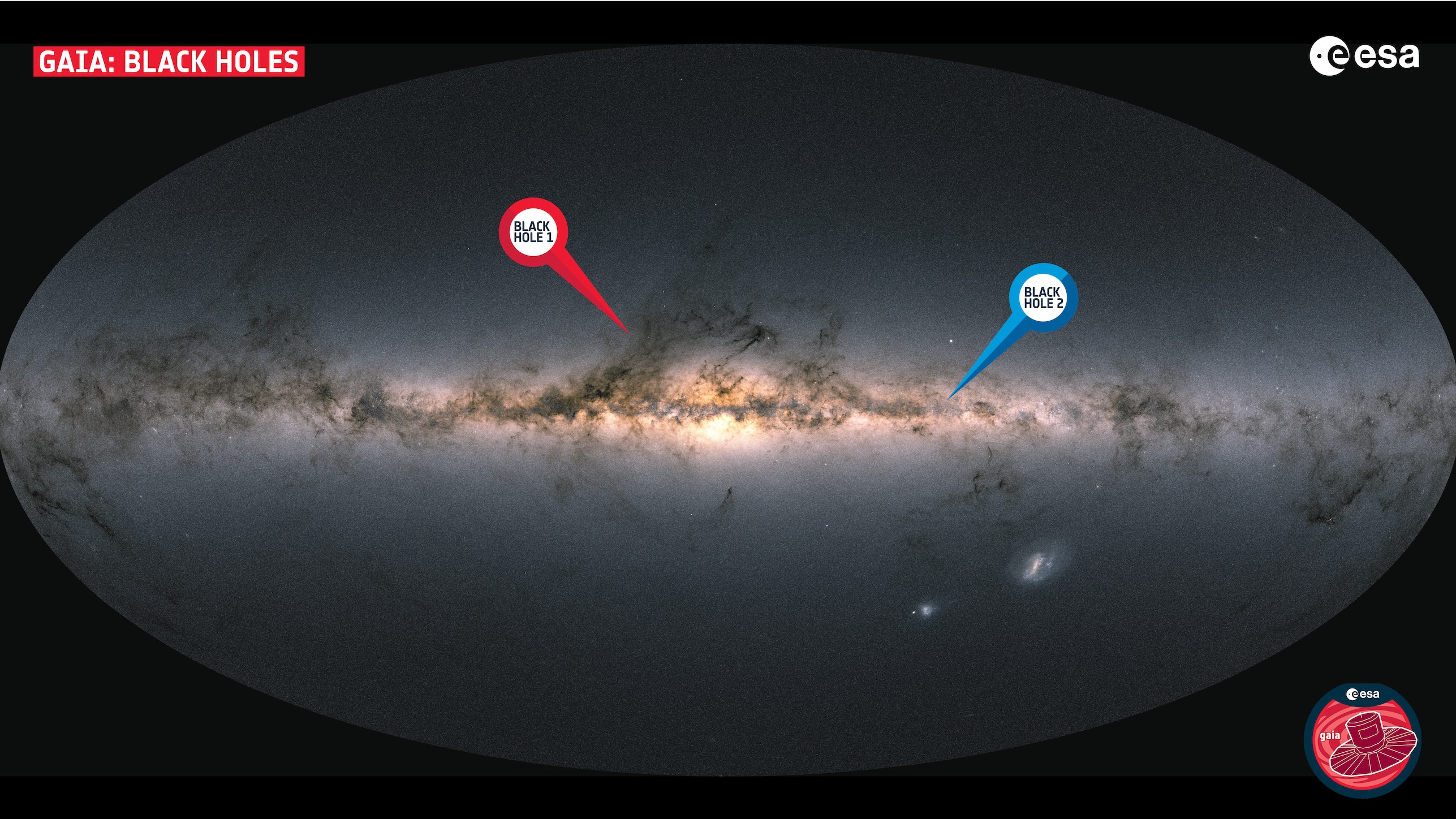
In 2020, a discovery rocked the astronomical community. A stellar-mass black hole, designated Gaia BH1, was identified at an astonishingly close distance of approximately 1,560 light-years from Earth. This discovery was made possible by the European Space Agency’s Gaia mission, a space observatory meticulously mapping the positions and motions of billions of stars in our galaxy. Gaia BH1 was detected not by direct observation of the black hole itself, but by the subtle gravitational tug it exerted on a companion star, causing the star’s orbit to deviate in a predictable manner. The absence of any observable light from the compact object indicated its black hole nature. This discovery highlights the power of astrometry and precise stellar motion tracking, a purely technological endeavor.
More recently, there have been further contenders and refinements. The black hole candidate Gaia BH2, located approximately 3,800 light-years away, was identified in 2023, also through its gravitational influence on a companion star observed by the Gaia mission. While farther than Gaia BH1, its discovery further underscores the effectiveness of this technological approach.
It’s crucial to understand that the definition of “closest” is always a snapshot in time, dependent on the limitations of our observational technology. As telescopes become more sensitive, as our data analysis algorithms become more refined, and as new observational techniques are developed, we may discover even closer black holes. The ongoing mission of Gaia, for example, continues to provide a wealth of data that will undoubtedly lead to further discoveries of black hole candidates in our galactic neighborhood. Furthermore, the increasing sensitivity of gravitational wave detectors may also allow us to identify individual stellar-mass black holes that are currently beyond our reach, potentially revealing closer systems through their subtle gravitational influences on nearby stars or through their interactions with other cosmic phenomena. The technological race to understand our immediate cosmic environment is far from over.

Future Prospects: The Next Technological Leap
The search for the closest black hole is not a static pursuit; it is a dynamic and evolving frontier driven by continuous technological innovation. Future advancements promise to push the boundaries of our detection capabilities even further.
Next-Generation Telescopes: Future ground-based telescopes, such as the Square Kilometer Array (SKA), with its unprecedented sensitivity in radio wavelengths, and advanced optical/infrared telescopes, will be able to detect fainter signals and resolve finer details. Similarly, proposed space missions focusing on X-ray and gravitational wave astronomy will offer even greater precision and reach.
Enhanced Gravitational Wave Astronomy: The next generation of gravitational wave detectors, like the Laser Interferometer Space Antenna (LISA), will be able to detect a broader range of gravitational wave frequencies and map the universe in unprecedented detail. This could lead to the discovery of stellar-mass black holes that are too distant or too quiet to be detected by current instruments.
AI-Driven Discovery: The continued development of AI and machine learning will revolutionize data analysis. These tools will become even more adept at identifying subtle signals, classifying objects, and even predicting the existence of undiscovered black holes based on complex correlations in astronomical data. This will allow us to efficiently sift through the exponentially growing datasets from future observatories.
The pursuit of the closest black hole is a testament to humanity’s insatiable curiosity and our remarkable ability to engineer tools that expand our perception of the universe. Each technological leap brings us closer to answering fundamental questions about these enigmatic objects, solidifying our understanding of gravity, spacetime, and our place within the grand cosmic tapestry. The journey is as much about the destination as it is about the innovative technologies that enable us to embark on it.
aViewFromTheCave is a participant in the Amazon Services LLC Associates Program, an affiliate advertising program designed to provide a means for sites to earn advertising fees by advertising and linking to Amazon.com. Amazon, the Amazon logo, AmazonSupply, and the AmazonSupply logo are trademarks of Amazon.com, Inc. or its affiliates. As an Amazon Associate we earn affiliate commissions from qualifying purchases.