
In an era of economic volatility and shifting market dynamics, the quest for financial security has evolved beyond simply tucking cash under a mattress. The question of how to best save money is no longer a matter of mere frugality; it is a strategic discipline that combines behavioral psychology, technological leverage, and sophisticated asset allocation. To master the art of saving is to master the art of intentional living, ensuring that every dollar earned is positioned to provide the maximum possible utility for both your present security and your future freedom.
The reality of modern finance is that saving is rarely about the “big wins” or the one-time windfalls. Instead, the most effective saving strategies are built upon a foundation of consistency and the systematic elimination of financial friction. By understanding the mechanisms of cash flow and the psychological triggers that lead to impulse spending, individuals can transition from a state of reactive spending to one of proactive wealth building.
Mastering the Psychological Foundation of Saving
The most significant barrier to saving is rarely a lack of income; it is the presence of psychological friction. Human beings are biologically wired for instant gratification, a trait that served our ancestors well but wreaks havoc on a modern savings account. To save money effectively, one must first re-engineer their environment to make saving the path of least resistance.
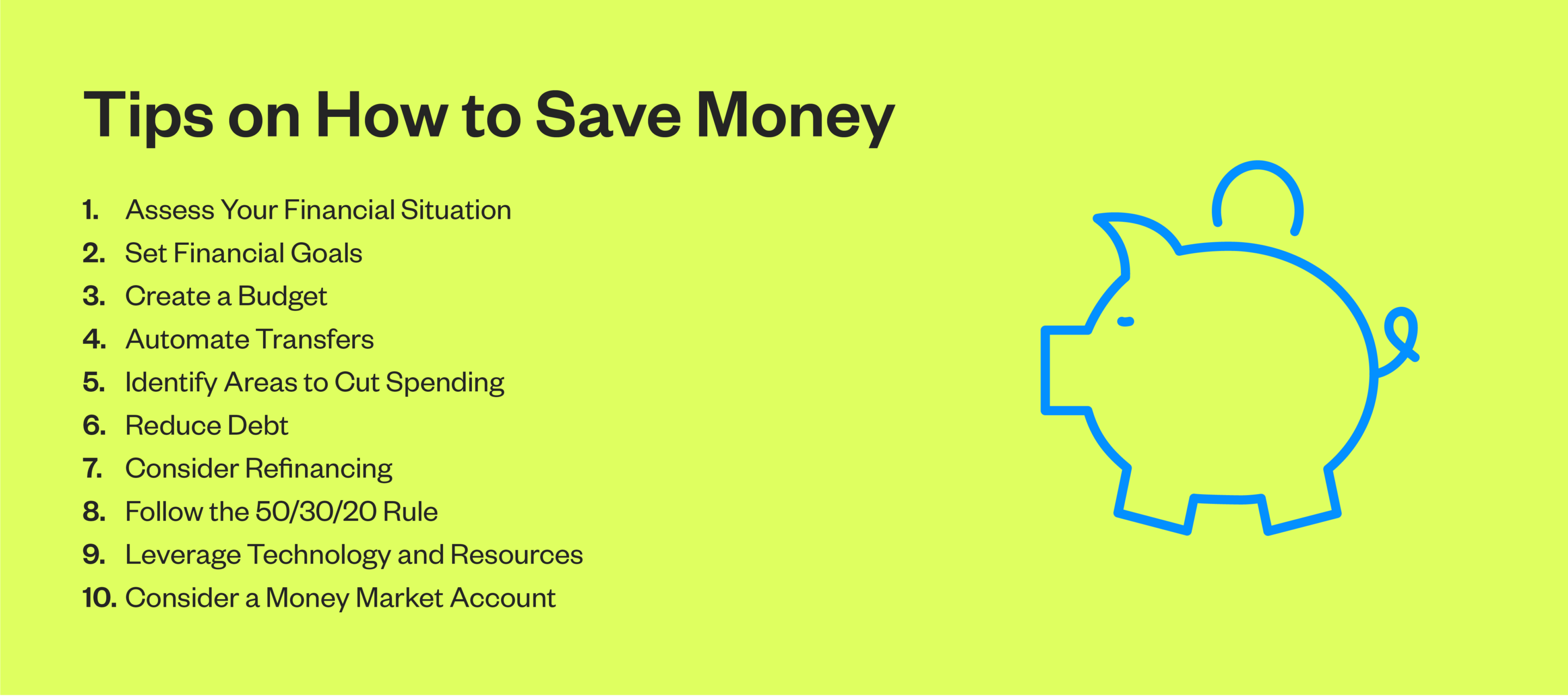
The Power of Automation and “Paying Yourself First”
The single most effective tactic for consistent saving is the “Pay Yourself First” model. This approach flips the traditional budgeting equation on its head. Instead of spending money and saving what is left over—which is usually nothing—you treat your savings as your primary, non-negotiable expense.
By setting up an automated transfer that moves a predetermined percentage of your paycheck directly into a high-yield savings account or an investment vehicle the moment it hits your bank, you remove the element of choice. When the money is gone before you have a chance to see it in your checking account, you naturally adjust your lifestyle to fit the remaining balance. This automation bypasses the need for willpower, which is a finite resource that often fails us at the end of a long work week.
Combatting Lifestyle Inflation
Lifestyle inflation, or lifestyle creep, is the silent killer of wealth. As professional skills grow and salaries increase, there is a natural tendency to upgrade one’s surroundings—moving into a larger apartment, financing a newer vehicle, or frequenting more expensive restaurants. While some lifestyle improvement is a legitimate reward for hard work, uncontrolled inflation ensures that your savings rate remains stagnant regardless of how much you earn.
The best way to combat this is to implement a “percentage-based” split for all raises and bonuses. For instance, for every dollar of a salary increase, commit 50% to your savings and investment accounts and allow yourself to enjoy the other 50%. This allows for a better quality of life while simultaneously accelerating your journey toward financial independence.
Strategic Budgeting Frameworks for Maximum Efficiency
A budget is not a restriction; it is a blueprint for your priorities. Without a framework, money tends to evaporate through “micro-transactions”—small, recurring costs that seem insignificant individually but create a massive drain on your net worth over time.
The 50/30/20 Rule: A Balanced Approach
For those seeking a straightforward yet effective framework, the 50/30/20 rule provides an excellent baseline. This system allocates 50% of your after-tax income to “Needs” (housing, utilities, groceries), 30% to “Wants” (dining out, entertainment, hobbies), and 20% to “Savings and Debt Repayment.”
The genius of this system lies in its flexibility. It acknowledges that life requires both responsibility and enjoyment. However, the “best” way to save often involves optimizing the “Needs” category to be even lower—perhaps 40%—to allow the savings rate to climb to 30% or higher. The more you can compress the “Needs” and “Wants” categories without sacrificing your mental well-being, the faster your wealth will compound.
Zero-Based Budgeting
For those who want granular control, zero-based budgeting is the gold standard. In this system, every single dollar of income is assigned a specific job before the month begins. Total Income minus Total Expenses (including savings) must equal zero.
This method forces you to confront the reality of your spending. If you want to spend an extra $200 on a weekend getaway, that money must be explicitly taken from another category, such as your clothing budget or dining out fund. This level of intentionality eliminates “leakage”—that mysterious $300 that seems to disappear from bank accounts every month without any clear record of where it went.
High-Yield Accounts and the Emergency Fund
Saving is not just about the amount; it is about where that amount resides. Keeping your entire savings in a traditional checking account is a strategic error, as inflation will steadily erode its purchasing power. The baseline for any saver should be a High-Yield Savings Account (HYSA). These accounts, often offered by online-only banks, provide interest rates significantly higher than traditional brick-and-mortar institutions.

The first goal of any saving strategy should be the establishment of an emergency fund—typically three to six months of essential living expenses. This fund acts as financial insurance, preventing you from having to dip into long-term investments or high-interest credit card debt when the unexpected occurs, such as a medical emergency or sudden job loss.
Optimizing Large Expenses and Lifestyle Engineering
While skipping a five-dollar latte might feel like a victory, it is a drop in the bucket compared to the “Big Three” expenses: housing, transportation, and food. To save money at scale, one must focus on these high-impact areas.
The Housing Leverage
Housing is typically the largest monthly expense. Saving money in this category often requires unconventional thinking. This might include “house hacking”—renting out a spare room or a basement suite to offset mortgage costs—or simply choosing to live in a slightly smaller space in a more affordable neighborhood. Even a $300 monthly reduction in housing costs, when invested over 30 years at a 7% return, results in nearly $350,000.
Transportation and the Total Cost of Ownership
A vehicle is a depreciating asset that incurs costs far beyond the monthly loan payment. Insurance, maintenance, fuel, and registration can easily double the cost of ownership. The most effective savers often opt for reliable, used vehicles purchased in cash, avoiding the high interest rates and rapid depreciation associated with new cars. Alternatively, in urban environments, leveraging public transit or cycling can eliminate the need for a car entirely, reclaiming thousands of dollars annually.
Culinary Strategy and Resourcefulness
Food spending is the most common area where budgets spiral out of control. The best way to save here is not through deprivation, but through systemic planning. Bulk purchasing, meal prepping, and prioritizing seasonal produce can reduce grocery bills by 30-50%. Furthermore, viewing dining out as a curated “event” rather than a default solution for a busy schedule can save hundreds of dollars a month without diminishing the quality of one’s social life.
Leveraging Financial Tools and the Power of Compounding
In the modern landscape, technology is a powerful ally for the disciplined saver. From apps that track every cent to platforms that automate the investment of spare change, the “best” way to save involves integrating these tools into your daily routine.
The Fintech Ecosystem
Applications like YNAB (You Need A Budget) or Monarch Money provide real-time visibility into financial habits. These tools allow you to categorize spending automatically and visualize your progress toward specific goals. Furthermore, cash-back apps and browser extensions can provide a modest but consistent rebate on necessary purchases. However, the caveat is to use these tools to save on what you were already going to buy, rather than using a “deal” as an excuse for an unnecessary purchase.
Shifting from Saving to Investing
Ultimately, the best way to save money for the long term is to stop “saving” in the traditional sense and start “investing.” Once an emergency fund is established, any additional savings should be put to work in the market.
Through the power of compound interest, money saved in your 20s or 30s is exponentially more valuable than money saved in your 50s. Utilizing tax-advantaged accounts like a 401(k), IRA, or HSA allows your savings to grow tax-free or tax-deferred. Over decades, the difference between a 1% interest rate in a savings account and a 7-10% return in a diversified index fund is the difference between a modest retirement and true generational wealth.
Scaling Savings Through Revenue Expansion
There is a hard floor on how much you can cut from your budget; you will always need food, shelter, and clothing. However, there is no ceiling on how much you can earn. The most sophisticated saving strategy involves a dual-track approach: aggressive cost management and aggressive income expansion.
The Side Hustle and Skill Acquisition
In the digital economy, the barriers to entry for generating additional income have never been lower. Whether through freelance consulting, e-commerce, or the creator economy, a “side hustle” can provide a dedicated stream of income that is earmarked exclusively for savings. If your primary job covers your living expenses, 100% of your secondary income can be funneled into wealth-building vehicles.
Investing in yourself—attaining new certifications, mastering high-value skills like data analysis or strategic marketing, or improving your negotiation tactics—is the highest-return “saving” strategy available. A $5,000 investment in a specialized course that leads to a $20,000 salary increase is a 400% return in the first year alone.
Conclusion: The Philosophy of Intentionality
The best way to save money is not found in a single tip or a secret app. It is found in the adoption of a “wealth-first” mindset. It requires the discipline to distinguish between what we value and what we simply want in the moment. By automating the basics, optimizing the large expenses, leveraging technology, and constantly looking for ways to expand the gap between income and outgo, saving becomes an effortless byproduct of a well-designed life.
True financial freedom is not about having the most money; it is about having the most options. Every dollar you save today is a brick in the fortress of your future independence, providing you with the security to take risks, the freedom to choose your work, and the peace of mind to enjoy the journey.
aViewFromTheCave is a participant in the Amazon Services LLC Associates Program, an affiliate advertising program designed to provide a means for sites to earn advertising fees by advertising and linking to Amazon.com. Amazon, the Amazon logo, AmazonSupply, and the AmazonSupply logo are trademarks of Amazon.com, Inc. or its affiliates. As an Amazon Associate we earn affiliate commissions from qualifying purchases.