
Determining the “best” Pokémon game is a complex endeavor, particularly when viewed through the lens of technology. Each generation has pushed the boundaries of its respective hardware, introducing new gameplay mechanics, graphical advancements, and innovative features that have shaped the franchise’s enduring appeal. From the monochromatic pixels of the Game Boy to the sprawling 3D landscapes of the Nintendo Switch, the evolution of Pokémon games is a testament to iterative software design and adapting to changing technological capabilities.
The Evolution of Pokémon Gaming Technology
The journey of Pokémon games mirrors the progression of handheld and console technology itself. Understanding this trajectory is crucial to appreciating the technical merits and ambitious shortcomings of various titles.
Early Innovations and Handheld Dominance
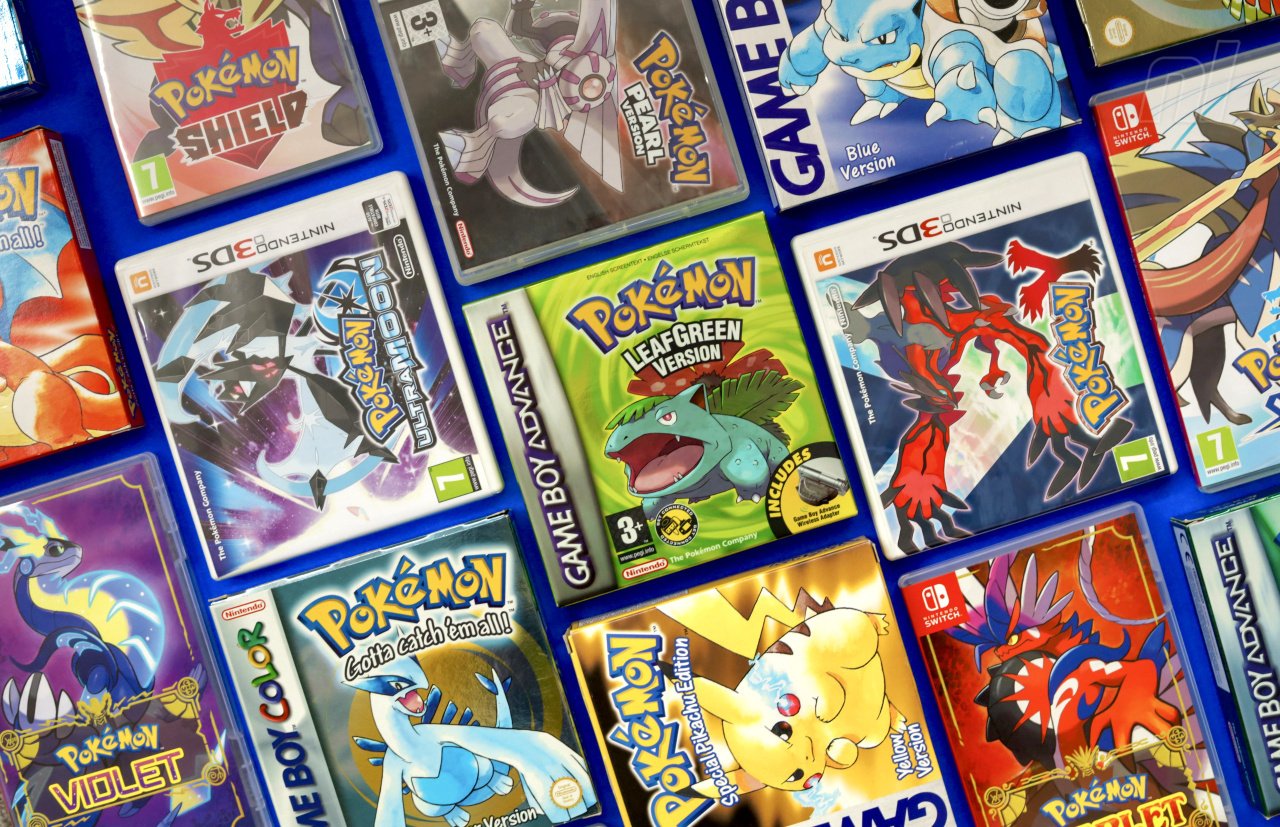
The original Pokémon Red and Blue (1996 in Japan, 1998 in North America) for the Game Boy were groundbreaking. Their technical achievement lay not in graphical fidelity, but in their sophisticated creature capture and battling systems, linked by the revolutionary Link Cable for trading and battling. This simple yet profound peer-to-peer connectivity laid the foundation for social gaming. Pokémon Gold and Silver (1999/2000) for the Game Boy Color further pushed limits with a real-time day/night cycle, a robust breeding system, and an impressive two-region map, demonstrating how complex systems could be integrated into limited hardware. The move to the Game Boy Advance with Ruby and Sapphire (2002/2003) brought color sprites, double battles, and abilities, significantly expanding strategic depth and visual appeal within the GBA’s more powerful 32-bit architecture.
Bridging Generations and Expanding Worlds
The Nintendo DS era, beginning with Diamond and Pearl (2006/2007), marked a significant leap. Leveraging the DS’s dual screens and touch capabilities, these games integrated touch-based menus, Wi-Fi connectivity for global trading and battling, and rudimentary 3D elements in battle animations and certain environments. This was the first time players could truly interact with trainers worldwide, a massive step for an intrinsically social game. Black and White (2010/2011) showcased the DS’s full potential, featuring dynamic camera angles, fully animated sprites, and a more mature narrative, alongside robust online infrastructure for features like the Pokémon Global Link. The technical sophistication of these titles on a handheld device was remarkable, optimizing for smooth performance and rich detail within the hardware constraints.
The Leap to Fully 3D Environments
With the Nintendo 3DS, Pokémon X and Y (2013) represented a monumental shift. The franchise fully embraced 3D models for all Pokémon and environments, a change that required a complete overhaul of assets and animation pipelines. This generation introduced Mega Evolution, adding a new layer of real-time transformation to battles, and significantly improved online functionality. The hardware also allowed for smoother framerates and more detailed character models, albeit with some performance dips when 3D effects were enabled. Sun and Moon (2016) refined this 3D approach, offering more expressive character animations, an immersive Hawaiian-inspired region, and cinematic cutscenes, showcasing further optimization and artistic refinement on the 3DS.
Open Worlds and Modern RPG Integration
The Nintendo Switch era ushered in the most significant technological transformations. Pokémon Sword and Shield (2019) introduced the “Wild Area,” a semi-open-world zone with dynamic weather and visible Pokémon, hinting at a future direction. While criticized for certain graphical elements and a perceived lack of polish compared to other Switch titles, it demonstrated the ambition to integrate larger, more immersive environments. Pokémon Legends: Arceus (2022) was a true paradigm shift, embracing an open-zone design with real-time Pokémon interactions, stealth mechanics, and a revamped battle system that blended action RPG elements with traditional turn-based combat. This title tested the Switch’s capabilities, offering a unique visual style that prioritized gameplay fluidity over hyper-realism. Finally, Pokémon Scarlet and Violet (2022) made the boldest move yet: a fully open-world experience with non-linear progression. While lauded for its freedom and innovation, it also faced widespread criticism for significant technical issues, including low frame rates, pervasive bugs, and graphical pop-in, highlighting the challenges of scaling a beloved franchise to modern open-world expectations on current hardware.
Dissecting Gameplay Mechanics and Software Design
Beyond raw graphical power, the “best” Pokémon game often excels in its underlying software design, particularly regarding gameplay mechanics and user experience.
Core RPG Loop and Strategic Depth
The fundamental software architecture of Pokémon games revolves around a meticulously designed RPG loop: capture, train, battle. The introduction of abilities (Gen 3), Natures (Gen 3), and more complex stat distribution (IVs/EVs) added layers of strategic depth that required careful algorithm implementation and database management. The balance of elemental types, move sets, and stat distributions ensures a complex rock-paper-scissors dynamic that remains compelling. The best games in the series often refine this core loop, introducing new elements like Z-Moves or Tera Types without fundamentally breaking the intricate balance that has been honed over decades.
Quality of Life Improvements and Accessibility
Modern Pokémon games have made significant strides in user experience, driven by software updates and design choices. Features like the Exp. Share being an optional toggle (pre-Gen 6) or always-on (Gen 6 onwards), the removal of HMs in favor of Ride Pokémon, and streamlined PC box management are all design decisions implemented via software to make the game more accessible and less tedious. The user interface (UI) and user experience (UX) have also evolved, with clearer battle information, intuitive navigation, and faster menu transitions, all contributing to a more enjoyable play experience. The technical execution of these QoL features often dictates how well they are received.

Technical Performance and Optimization
This is an area where modern Pokémon games have faced increasing scrutiny. While earlier titles were constrained by hardware, they often ran remarkably smoothly within those limits. Newer games, particularly on the Switch, have struggled with optimization. Scarlet and Violet, for instance, presented an ambitious open world, but its technical performance issues – including unstable frame rates, visual glitches, and frequent pop-ins – detracted significantly from the experience. This highlights the critical importance of robust engine development, efficient asset loading, and rigorous quality assurance in delivering a polished product, especially when scaling up game scope. The “best” game isn’t just about what it attempts to do technologically, but how well it executes those ambitions.
Innovation vs. Tradition: Finding the Balance
The tension between introducing novel gameplay systems and adhering to established traditions is a constant in the Pokémon series. The “best” games often strike a successful balance, leveraging new technology to enhance existing formulas or boldly forging new paths.
Pushing the Boundaries
Pokémon Legends: Arceus stands out as a prime example of leveraging technology for innovation. Its open-zone design, real-time capture mechanics, and revised battle initiation system fundamentally changed the Pokémon gameplay loop. This was a deliberate software design choice to break from convention, offering a fresh perspective on the world of Pokémon. The technical challenge was creating a seamless experience where players could transition between exploration and battle without loading screens, demanding efficient world streaming and intelligent AI pathing for wild Pokémon. While not graphically groundbreaking, its unique art style and polished core mechanics made it a technical and creative success in its deviation.
The Appeal of Remakes and Enhanced Versions
Remakes like Omega Ruby and Alpha Sapphire (3DS) or Brilliant Diamond and Shining Pearl (Switch) showcase how modern technology can revisit and enhance classic experiences. These games use updated graphics engines, introduce quality-of-life improvements, and sometimes integrate new post-game content or mechanics. The technical challenge here is often translating pixel art into 3D models while retaining the original aesthetic and gameplay feel, requiring careful art direction and engine capabilities. When done well, they offer a nostalgic experience with modern polish, demonstrating the longevity of core gameplay designs.
Community Reception and Technical Critiques
Player communities are quick to identify both technical triumphs and failures. Games like Black 2 and White 2 are often lauded for their technical polish on the DS, offering a refined experience with minimal bugs and a strong suite of features. Conversely, titles suffering from performance issues, like Scarlet and Violet, often face significant backlash. This feedback loop is crucial for developers, as it highlights the direct impact of technical implementation on player enjoyment and a game’s long-term reputation. The “best” game, from a tech perspective, is often one that not only innovates but also delivers a stable and optimized experience.
The Contenders for “Best” in a Technological Context
Considering the interplay of innovation, technical execution, and refined mechanics, several titles stand out as strong contenders for the “best” Pokémon game.
-
Pokémon Gold/Silver/Crystal (Game Boy Color): This generation was a technical marvel for its time. Introducing a real-time clock, breeding, two expansive regions, and new Pokémon types, it maximized the Game Boy Color’s capabilities, delivering an unprecedented amount of content and sophisticated game systems within severe hardware limitations. Its interconnected world felt vast and alive.
-
Pokémon Black 2/White 2 (Nintendo DS): Representing the pinnacle of the traditional Pokémon formula on the DS, these games boasted fully animated sprites, dynamic camera angles, a refined battle system, and an incredible amount of post-game content. The technical optimization was exceptional, providing a smooth and feature-rich experience that perfectly balanced innovation with tradition, leveraging the DS’s hardware to its fullest.
-
Pokémon Legends: Arceus (Nintendo Switch): While not without its graphical quirks, Arceus took a monumental technical and design risk that paid off. Its open-zone exploration, real-time Pokémon interactions, and action-RPG elements successfully reimagined the core gameplay loop. It proved that the franchise could evolve beyond its turn-based roots, delivering a truly fresh experience that felt well-optimized for its unique visual style and gameplay mechanics on the Switch. It innovated meaningfully without falling victim to pervasive technical issues.
-
Pokémon Scarlet/Violet (Nintendo Switch): This entry is a bittersweet contender. Its ambitious open-world design, non-linear progression, and new mechanics like Tera types showcase significant technological ambition. The freedom and scale were unprecedented for the series. However, the pervasive technical issues – including significant performance problems, glitches, and a general lack of polish – severely hindered its potential. While conceptually a leap forward, its execution serves as a cautionary tale of pushing hardware limits without sufficient optimization. It’s a game that demonstrates both the potential and the pitfalls of current-gen Pokémon development.

The Future of Pokémon Games: A Tech Perspective
The trajectory of Pokémon games is inextricably linked to technological advancements. Future titles will likely continue to leverage more powerful hardware to deliver increasingly immersive and complex experiences.
Learning from the challenges of Scarlet and Violet, future iterations will ideally balance ambitious open-world designs with meticulous technical optimization. This means more stable frame rates, improved graphical fidelity, and seamless world streaming. We can expect further refinements in online integration, offering more robust multiplayer options for battling, trading, and cooperative exploration. The potential for more advanced AI, procedural generation for environmental variety, and perhaps even experimental integration with augmented reality (AR) or virtual reality (VR) technologies could redefine how players interact with the Pokémon world. The “best” Pokémon game of tomorrow will be one that not only innovates in gameplay but also excels in its technical delivery, providing a stable, visually appealing, and deeply engaging experience that lives up to the expectations of a global audience.
aViewFromTheCave is a participant in the Amazon Services LLC Associates Program, an affiliate advertising program designed to provide a means for sites to earn advertising fees by advertising and linking to Amazon.com. Amazon, the Amazon logo, AmazonSupply, and the AmazonSupply logo are trademarks of Amazon.com, Inc. or its affiliates. As an Amazon Associate we earn affiliate commissions from qualifying purchases.