
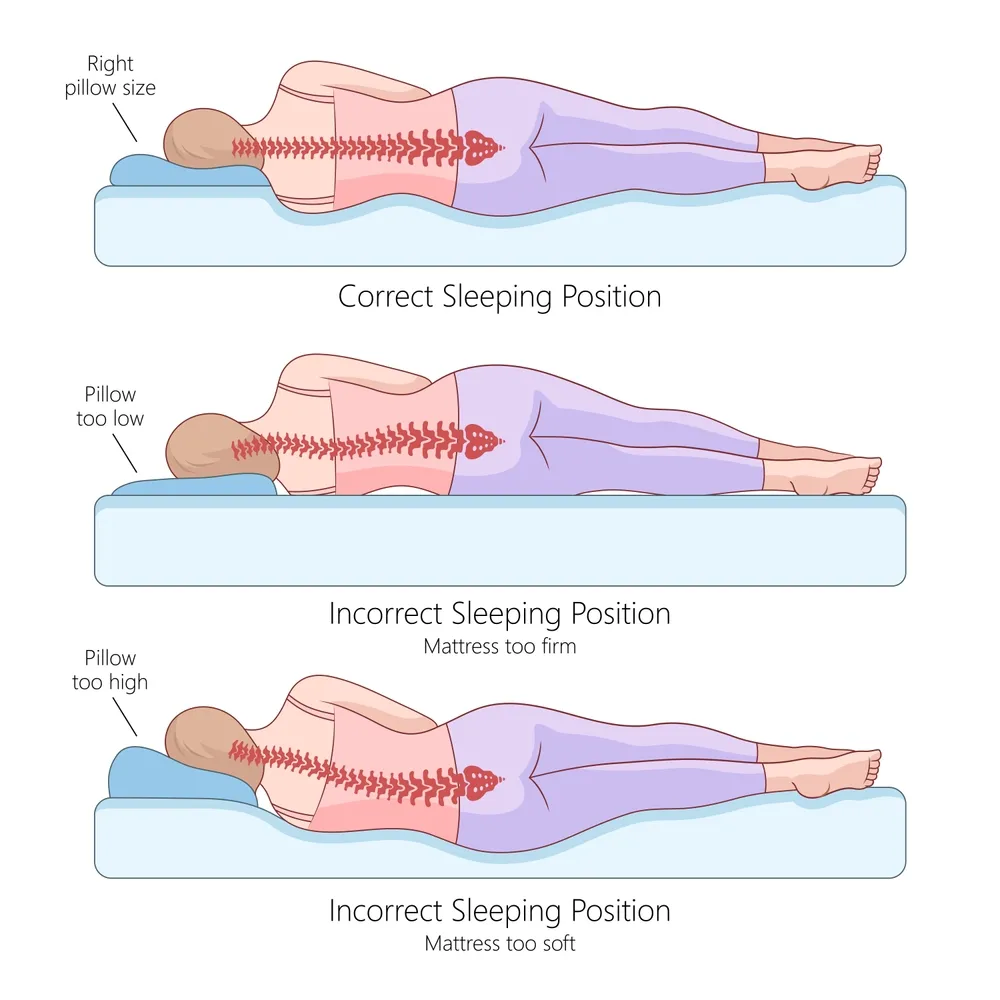
The quest for the perfect mattress is no longer a matter of subjective comfort or a simple “soft versus firm” debate. For side sleepers—who represent the majority of the population—the challenge is a complex engineering problem. Side sleeping creates concentrated pressure points at the shoulders and hips while requiring the mattress to fill the gap at the waist to maintain spinal alignment. Solving this requires a deep dive into material science, mechanical engineering, and the burgeoning field of sleep technology. When we ask what the best mattress for a side sleeper is, we are really asking which technological stack can best manage the physics of lateral recumbent positioning.

The Engineering of Pressure Relief: High-Tech Materials for Lateral Alignment
For a side sleeper, the mattress acts as a mechanical interface between the body and the bed frame. The primary goal is pressure redistribution. If a surface is too rigid, the protruding points (shoulders and hips) bear the brunt of the body’s weight, leading to circulatory issues and joint pain. Conversely, if it is too soft, the torso sinks, causing a “C-curve” in the spine. Modern tech has addressed this through advanced polymer chemistry and zoned construction.
Memory Foam 2.0: Open-Cell and Gel-Infused Polymers
The original visco-elastic foam, developed by NASA, was a breakthrough in pressure relief, but it had significant technical drawbacks, primarily heat retention and a “stuck” feeling. Today’s side sleepers benefit from Memory Foam 2.0. This involves a structural shift at the molecular level, utilizing open-cell architectures that allow for greater airflow.
Furthermore, the integration of gel-infused polymers and copper-infused foams has changed the game. These materials are engineered to have high thermal conductivity, drawing heat away from the body. For side sleepers, who have more surface area contact with the mattress than back sleepers, managing this microclimate is essential for staying in deep sleep stages. From a technical standpoint, the “best” mattress often utilizes a multi-density stack where the top layer has a lower Indentation Load Deflection (ILD) rating to contour to the shoulder, while the transition layer has a higher ILD to prevent bottoming out.
Smart Zoning and Targeted Support Systems
One of the most significant technological advancements in mattress design is “zoning.” Instead of a uniform slab of material, high-end mattresses for side sleepers now feature digitally mapped zones. Using pressure-mapping sensors during the R&D phase, engineers have identified that the middle third of the mattress requires more reinforcement to support the lumbar region, while the areas under the shoulders need to be more compliant.
In foam-based systems, this is achieved through laser-cutting channels into the foam to vary the surface tension. In hybrid systems, it involves using different gauges of steel coils. By placing thinner, more flexible coils under the shoulder and thicker, high-tensile coils under the hips, the mattress creates a personalized ergonomic environment that keeps the spine in a neutral, horizontal plane—a feat of mechanical precision that was impossible two decades ago.
Integrated Sleep Tech: The Rise of Smart Mattresses and Biometric Sensors
The mattress is no longer a passive object; it is becoming a node in the Internet of Things (IoT). For side sleepers, who often shift positions or struggle with limb numbness, smart mattresses offer real-time adjustments that traditional beds cannot match.
AI-Driven Surface Adjustments
The cutting edge of sleep tech involves mattresses equipped with air-chamber arrays and AI-driven processors. These systems utilize ballistocardiography (BCG) sensors embedded beneath the comfort layer to monitor heart rate, respiratory rate, and movement. When the system detects a side sleeper is experiencing high pressure on the shoulder—indicated by frequent micro-movements—the AI can trigger a localized deflation of air bladders to soften that specific area.
This “active” support means the mattress adapts to the user, rather than the user having to adapt to the mattress. For side sleepers, this technology solves the “firmness paradox.” You can have a firm mattress for spinal support that instantly softens when you roll onto your side, managed by algorithms that learn your sleep patterns over time.
Active Cooling and Thermal Regulation
Side sleepers often suffer from “sleeping hot” because their bodies are deeply embedded in the mattress layers to achieve pressure relief. Tech-integrated mattresses now feature active cooling systems. These range from integrated fans that circulate air through the internal layers to hydro-powered systems that circulate temperature-controlled water through a thin grid.
Sophisticated thermal sensors can detect an increase in skin temperature and automatically lower the mattress temperature to keep the user within the “thermoneutral zone.” This is critical for side sleepers, as it prevents the restless tossing and turning often caused by the heat-trapping nature of contouring materials.
Hybrid Construction: The Mechanical Advantage for Side Sleepers
While all-foam mattresses offer excellent contouring, many side sleepers prefer the “dynamic response” of a hybrid system. A hybrid mattress is a piece of complex mechanical engineering that combines the pressure-relieving properties of polymers with the structural integrity of steel.
Precision-Engineered Pocketed Coils
The “best” mattress for a side sleeper often hinges on the coil count and the coil geometry. Modern hybrid mattresses use individually pocketed coils, which function as independent suspension units. Unlike traditional interconnected coils, pocketed coils allow for “point elasticity.” This means that when a side sleeper’s shoulder pushes down, only the coils directly beneath it compress, leaving the surrounding coils to support the neck and waist.
Advanced manufacturing techniques now allow for “nested” coil patterns and “dual-stage” coils. A dual-stage coil features a softer top section for immediate comfort and a firmer lower section for deep-seated support. This progressive resistance is the holy grail for side sleepers, providing a soft landing for the joints and a firm foundation for the skeleton.
Dynamic Response Layers
A common complaint among side sleepers on traditional memory foam is the “quicksand” effect, which makes it difficult to change positions. Tech-forward brands have solved this by introducing “responsive” layers, often made of specialized latex or high-resiliency (HR) polyfoams.
These materials have a high “rebound” rate. When you move, the material immediately returns to its original shape, providing a tactile assist to the sleeper. For side sleepers, this reduces the energy expenditure required to shift positions during the night, leading to more restorative sleep. The integration of these materials requires precise calibration of “push-back” force to ensure it doesn’t create new pressure points.
Evaluating Technical Specifications for Side-Sleeping Optimization
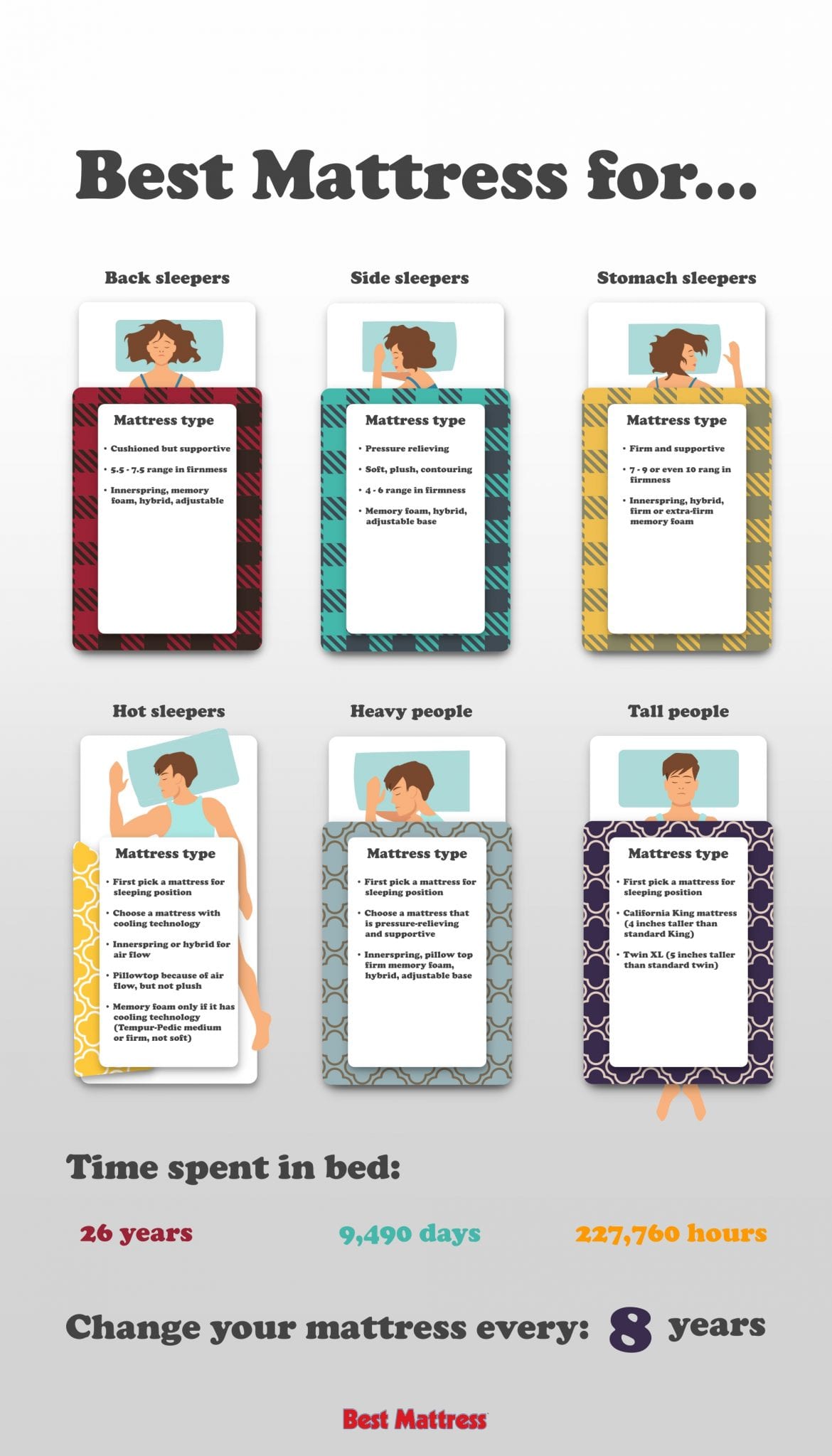
When navigating the market, side sleepers should look past marketing jargon and focus on technical specifications. The “best” mattress is defined by data points like density, ILD, and gauge.
Data-Driven Selection: Density vs. Durability
For foam layers, density is measured in pounds per cubic foot (PCF). A side sleeper needs high-density foams (typically 4.0 to 5.0 PCF for memory foam) to ensure the material doesn’t degrade under the concentrated weight of the hips and shoulders. Low-density foams may feel comfortable in a showroom but will lose their “memory” and support properties within months, leading to spinal misalignment.
In the world of springs, the “gauge” refers to the thickness of the wire. A lower gauge (like 13 or 14) indicates a thicker, firmer wire, while a higher gauge (15 or 16) is thinner and more flexible. Side sleepers typically benefit from a zoned gauge system: 16-gauge coils under the shoulders for maximum “give” and 14-gauge coils under the lumbar for maximum lift.
The Future of Sleep: Personalization and Durability
As we look toward the future, the best mattress for side sleepers will likely be fully customizable. We are already seeing the emergence of modular mattresses where individual “quadrants” can be swapped out based on the user’s biometric data. If a user gains weight or develops a shoulder injury, they can replace a specific 3D-printed polymer insert to change the support profile of the bed.
Furthermore, the industry is moving toward “circular tech”—mattresses designed with components that are not only high-performing but also fully recyclable. The engineering challenge of the next decade is maintaining the extreme performance required for side-sleeper pressure relief while utilizing sustainable, bio-based materials that match the durability of traditional petroleum-based foams.
In conclusion, finding the best mattress for a side sleeper is an exercise in identifying the right technological solutions for a specific set of physical constraints. Whether it is through the use of AI-adjusted air chambers, zoned coil systems, or high-conductivity thermal polymers, the modern mattress is a high-tech tool designed to optimize human recovery. For the side sleeper, the “best” choice is the one that leverages these engineering advancements to achieve the perfect balance of pressure dissipation and structural support.
aViewFromTheCave is a participant in the Amazon Services LLC Associates Program, an affiliate advertising program designed to provide a means for sites to earn advertising fees by advertising and linking to Amazon.com. Amazon, the Amazon logo, AmazonSupply, and the AmazonSupply logo are trademarks of Amazon.com, Inc. or its affiliates. As an Amazon Associate we earn affiliate commissions from qualifying purchases.