
In the contemporary digital landscape, we are constantly submerged in “data.” We discuss big data, data analytics, and data privacy as if they are monolithic entities. However, beneath the massive datasets that power global economies and artificial intelligence lies a singular, fundamental unit: the datum. To understand the complexities of modern software engineering, geographic information systems (GIS), and machine learning, one must first grasp the concept of the datum. It is the atomic element of information, the reference point upon which all digital structures are built. Without a clearly defined datum, the vast oceans of information we navigate daily would lack context, orientation, and accuracy.

Technically, a “datum” is a single piece of information, the singular form of “data.” In the realms of computing and engineering, however, its definition expands to represent a fixed reference point, surface, or coordinate system from which other measurements or quantities are derived. Whether it is a single bit in a database or a complex mathematical model of the Earth’s shape used for GPS, the datum provides the necessary framework to turn raw numbers into meaningful intelligence.
The Core Definition: Beyond the Plurality of Data
While the word “data” has become a collective noun in common parlance, the technical distinction of the “datum” remains vital for specialists. In computer science and information theory, a datum is the smallest unit of a specific context. It is the individual value residing in a specific field of a database or a single variable in a block of code. However, the significance of the datum extends far beyond simple nomenclature; it represents the “ground truth” for digital systems.
The Singular Unit in Data Science and Logic
In data science, a datum is the foundational building block of an observation. If we consider a dataset tracking the temperature of a server farm, a single temperature reading at a specific timestamp is a datum. On its own, a solitary datum might seem insignificant, but its integrity is paramount. In high-stakes environments like financial algorithmic trading or autonomous vehicle navigation, the corruption of a single datum can lead to systemic failure.
From a logical perspective, the datum is the input that initiates a process. In the world of software development, developers must define the “data type” for every datum. Whether it is an integer, a boolean, or a floating-point number, the definition of the datum determines how the CPU interacts with it. This precision ensures that the machine interprets the information correctly, preventing “buffer overflows” or “logic errors” that could compromise digital security.
The Geodetic Datum in Modern GIS
One of the most critical applications of the term occurs in Geomatics and Geographic Information Systems (GIS). Here, a datum is a mathematical model that approximates the shape of the Earth to enable accurate mapping. Because the Earth is not a perfect sphere—it is an oblate spheroid with irregular gravitational fluctuations—cartographers and tech companies must use a “geodetic datum” as a reference.
The most famous of these is WGS 84 (World Geodetic System 1984), which serves as the reference datum for the Global Positioning System (GPS). When your smartphone identifies your location, it is calculating your position relative to this specific datum. If the software were to switch to a different datum—such as NAD83 (North American Datum of 1983)—without proper conversion, your coordinates could shift by several meters. In the world of precision tech, such as drone delivery or self-driving cars, this shift is the difference between a successful operation and a catastrophic collision.
The Role of the Datum in Artificial Intelligence and Machine Learning
The explosion of Artificial Intelligence (AI) has brought the importance of the datum back to the forefront of technology trends. AI models, particularly Large Language Models (LLMs) and computer vision systems, are trained on billions of datums. The quality of the output is directly proportional to the accuracy and labeling of each individual datum within the training set.
Input Precision and Model Integrity
In the training phase of a neural network, each datum serves as a weight-adjusting signal. If a developer is training an AI to recognize medical anomalies in X-rays, every single image (the datum) must be meticulously categorized. A “noisy” datum—one that is incorrectly labeled or contains corrupted information—can introduce bias or inaccuracy into the entire model.
This has led to the rise of “Data-Centric AI,” a movement within the tech industry that prioritizes the quality of the individual datum over the complexity of the algorithm. By focusing on refining the datum, engineers can build more robust AI tools that require less computational power and produce more reliable results. It is the digital equivalent of ensuring every brick is perfectly formed before attempting to build a skyscraper.
From Raw Datum to Actionable Intelligence
The journey from a raw datum to actionable intelligence involves layers of transformation. In IoT (Internet of Things) ecosystems, sensors generate a constant stream of datums—humidity levels, motion detection, light intensity. These individual units are often processed at the “edge” (on the device itself) to filter out irrelevant information.
Only the significant datums are sent to the cloud for further analysis. This process, known as data distillation, highlights the importance of the datum’s “meta-context.” A datum is useless unless we know where it came from, when it was recorded, and what unit of measurement it uses. In modern tech stacks, metadata is the glue that binds a datum to its purpose, allowing software to aggregate thousands of points into a coherent trend analysis.
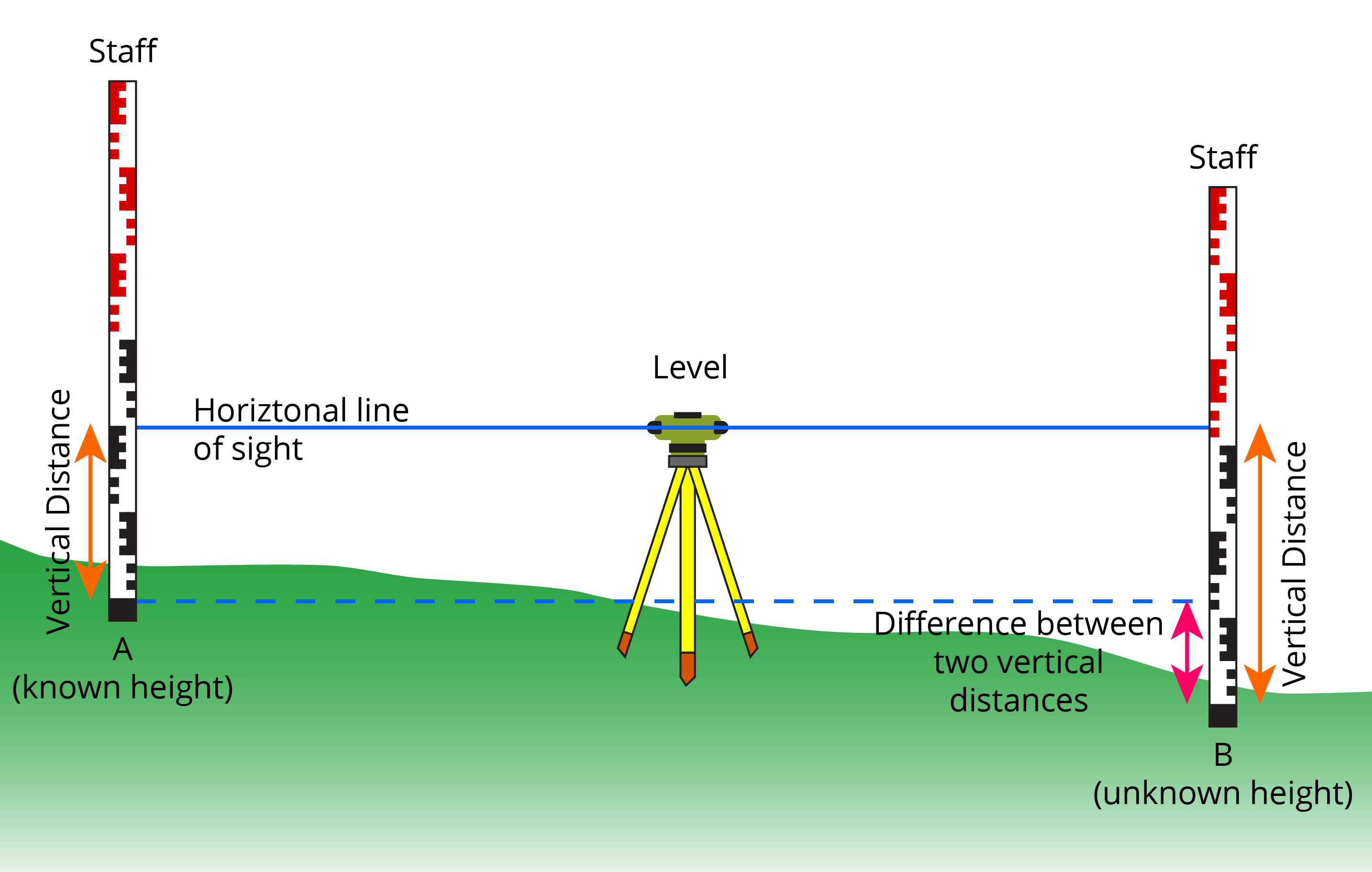
Vertical and Horizontal Datums: Navigating Digital Realities
In engineering and hardware design, datums are categorized into horizontal and vertical planes to manage three-dimensional space. This is essential for everything from augmented reality (AR) apps to the manufacturing of high-end gadgets like foldable smartphones.
How GPS and Satellite Tech Rely on Reference Points
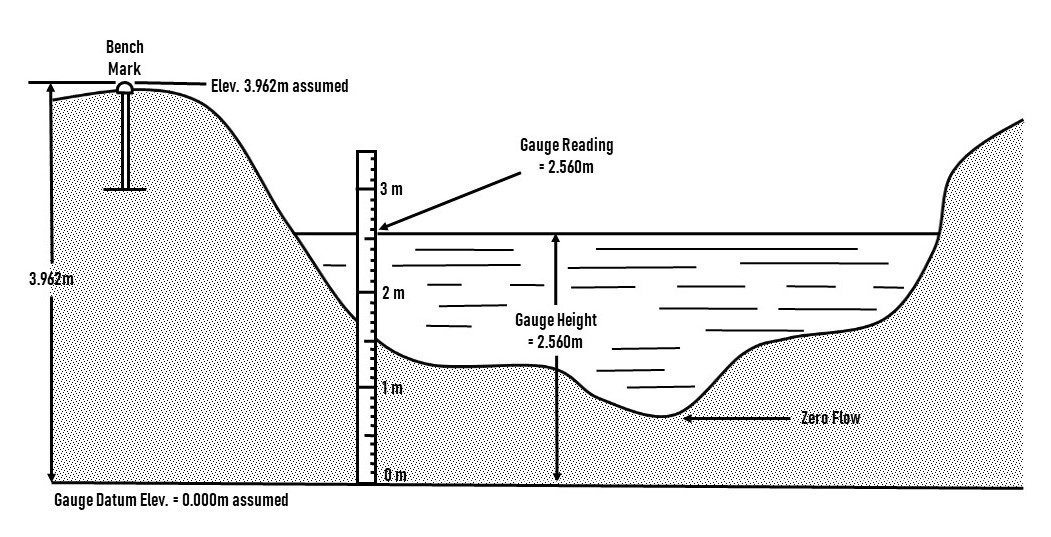
Horizontal datums are used to measure positions on the Earth’s surface (latitude and longitude), while vertical datums measure elevations or depths. For the tech industry, these datums are the invisible grids that make location-based services possible. When an AR application “places” a digital object on a real-world table, it is utilizing a local datum established by the device’s sensors (LiDAR and accelerometers).
If the device loses its reference datum, the digital object “drifts,” breaking the immersion. This “spatial anchoring” is the next frontier of mobile computing, as companies like Apple and Meta race to create “world-scale” AR. This requires a unified global datum that allows different devices to see the same digital objects at the same physical coordinates.
The Shift Toward Dynamic Datums in Autonomous Systems
We are currently transitioning from static datums to dynamic or “time-dependent” datums. The Earth’s crust is constantly moving due to tectonic plate shifts. For traditional maps, this didn’t matter much. However, for a self-driving car that needs centimeter-level precision to stay in a lane, a datum that was calculated ten years ago is no longer accurate.
Modern tech infrastructure is moving toward “Active Datums,” which are updated in real-time using global navigation satellite system (GNSS) stations. This allows software to compensate for the physical movement of the Earth, ensuring that the digital map remains perfectly aligned with the physical world. This is a massive leap in software engineering, requiring high-speed data processing and low-latency communication.
The Datum in Digital Security: Ensuring Integrity at the Atomic Level
In the realm of digital security, the datum is the point of origin for trust. Cybersecurity protocols are designed to protect the integrity of the datum, ensuring that information has not been tampered with during transit or storage.
Data Immutability and Hashing
Blockchain technology and distributed ledgers are essentially systems for creating an “immutable datum.” Once a datum (a transaction record) is entered into the block and hashed, it cannot be changed without altering every subsequent block in the chain. This creates a permanent, verifiable reference point.
In a wider sense, cryptographic hashing turns any datum into a unique string of characters. If even a single bit (the smallest possible datum) is changed, the resulting hash changes entirely. This is the foundation of digital signatures and secure software updates. When your operating system verifies a download, it is checking the integrity of the datum against a known secure reference.
Protecting the Single Source of Truth
The concept of the “Single Source of Truth” (SSOT) is a pillar of corporate IT strategy. It dictates that for every datum, there should be only one authoritative location where it is stored and managed. When datums are duplicated across different systems without a central reference, “data rot” occurs. One database might show a customer’s address as “Street A,” while another shows “Street B.”
Tech leaders solve this by implementing Master Data Management (MDM) systems. These systems identify the “Golden Datum”—the most accurate, up-to-date version of a piece of information. By protecting this single unit, companies ensure that their AI tools, analytics, and customer-facing apps are all operating on the same reality.
The Future of the Datum: Quantum Computing and Beyond
As we look toward the future of technology, the nature of the datum is set to change again. In classical computing, the fundamental datum is the bit (0 or 1). In quantum computing, the fundamental unit is the qubit, which can exist in multiple states simultaneously due to superposition.
This shift will redefine how we process information. A quantum datum contains exponentially more potential information than a classical one. This will allow us to solve complex problems—like molecular modeling for new drugs or breaking advanced encryption—that are currently impossible. However, the requirement for a “reference” remains. Quantum systems require extreme precision and isolation to maintain “coherence,” making the management of the quantum datum the greatest technical challenge of the 21st century.
The evolution of the datum—from a simple mark on a map to a complex qubit—reflects the trajectory of human progress. It is the anchor of our digital existence. By understanding the datum, we better understand the systems that govern our world, from the phones in our pockets to the satellites orbiting overhead. In the end, all of technology is simply the art of organizing, protecting, and interpreting the humble datum.
aViewFromTheCave is a participant in the Amazon Services LLC Associates Program, an affiliate advertising program designed to provide a means for sites to earn advertising fees by advertising and linking to Amazon.com. Amazon, the Amazon logo, AmazonSupply, and the AmazonSupply logo are trademarks of Amazon.com, Inc. or its affiliates. As an Amazon Associate we earn affiliate commissions from qualifying purchases.