
The fundamental building blocks of matter, atoms, have long been considered the smallest indivisible particles. For centuries, scientific inquiry was satisfied with this understanding. However, as our observational power and theoretical frameworks have evolved, we’ve delved deeper into the subatomic realm, uncovering a universe of particles that dwarf even the atom in their minuscule dimensions. This exploration isn’t just an academic pursuit; it has profound implications for the bleeding edge of technological advancement, from quantum computing to novel materials and advanced diagnostic tools.
The Quantum Realm: A Universe of the Infinitesimal
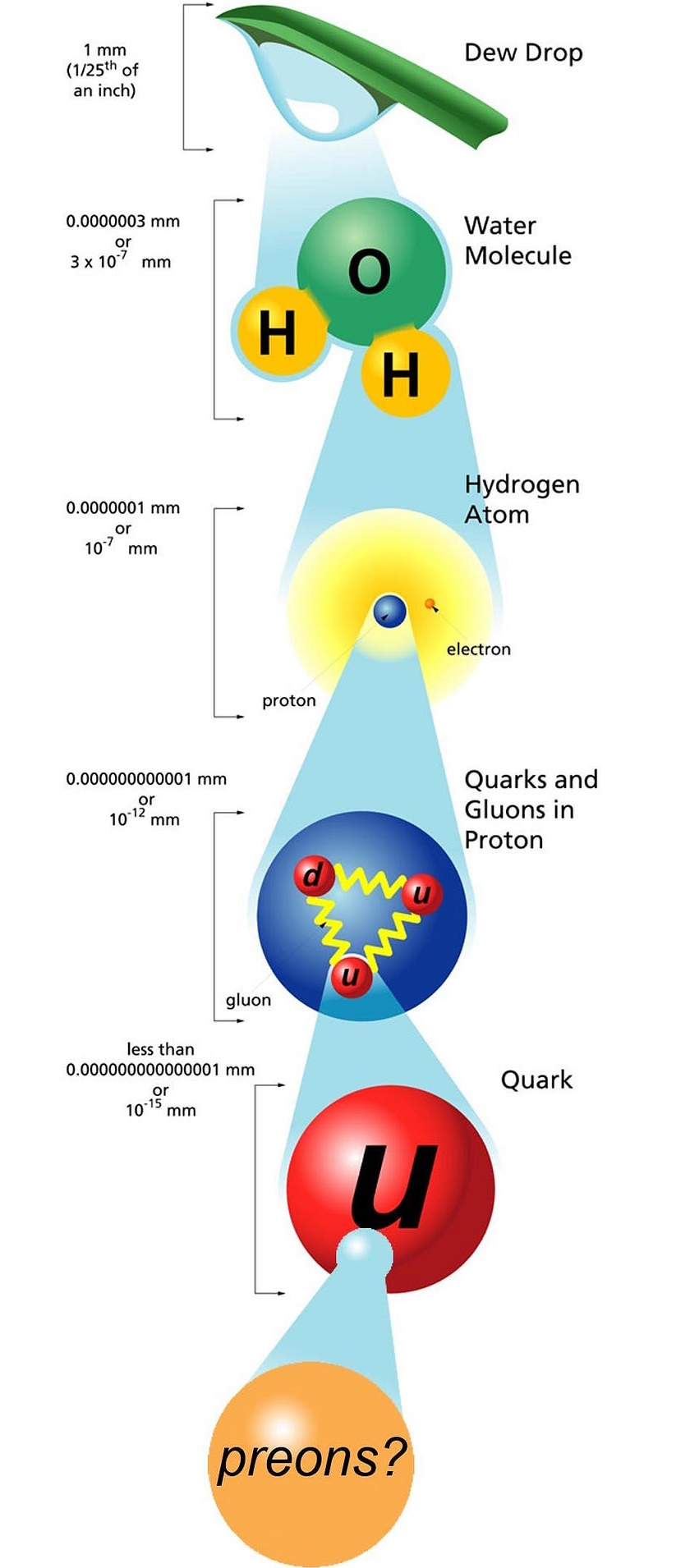
The journey into the subatomic world begins with understanding that atoms themselves are not solid, indivisible spheres. Instead, they are complex systems composed of even smaller constituents. The discovery of the electron by J.J. Thomson in 1897 shattered the notion of the atom as indivisible, revealing a negatively charged particle with a mass far less than that of the atom itself. Following this, Ernest Rutherford’s gold foil experiment led to the discovery of the nucleus, a dense, positively charged core containing protons. Later, the neutron was discovered, completing the basic atomic model.

Particles Within the Atom
Within the atom, we find a hierarchy of subatomic particles, each with its own unique properties and significance.
Electrons: The Lightweights
Electrons are fundamental particles, meaning they are not composed of smaller constituents. They possess a negative electric charge and orbit the atomic nucleus. Their mass is approximately 1/1836th that of a proton, making them incredibly lightweight. The behavior and interactions of electrons are central to chemistry and the development of electronic devices. Their low mass and ability to move freely in conductors are the basis of electricity, the very foundation of modern technology. Understanding electron flow is crucial for designing efficient circuits, developing faster processors, and creating advanced sensor technologies.
Protons and Neutrons: The Nucleus’s Core
Protons and neutrons, collectively known as nucleons, reside in the atom’s nucleus. Protons carry a positive electric charge, while neutrons have no charge. While they are significantly more massive than electrons, they too are not fundamental particles.
Quarks: The Building Blocks of Nucleons
Protons and neutrons are, in fact, composite particles made up of even smaller entities called quarks. There are six types, or “flavors,” of quarks: up, down, charm, strange, top, and bottom. Protons are composed of two up quarks and one down quark, while neutrons are made of one up quark and two down quarks. Quarks are held together by the strong nuclear force, mediated by particles called gluons. The study of quarks and gluons falls under the umbrella of quantum chromodynamics (QCD), a key theory in particle physics. Understanding quark confinement and the behavior of these fundamental constituents is vital for advanced particle accelerators and the development of theoretical models that could lead to unforeseen technological breakthroughs.
Beyond the Standard Model: Exotic Particles
The Standard Model of particle physics describes the fundamental particles and forces that govern our universe. However, the ongoing quest for knowledge has revealed phenomena and particles that extend beyond this model, hinting at even deeper layers of reality.
Neutrinos: The Elusive Travelers
Neutrinos are fundamental particles with almost no mass and no electric charge. They interact very weakly with other matter, making them incredibly difficult to detect. Billions of neutrinos pass through us every second, originating from sources like the sun and supernovae. While their mass is incredibly small, understanding neutrino oscillations and their properties is crucial for cosmology and the potential development of neutrino-based communication systems, offering a glimpse into communication methods that could traverse vast distances and even penetrate dense materials.
Higgs Boson: The Mass Giver
The Higgs boson, discovered at the Large Hadron Collider (LHC), is a fundamental particle associated with the Higgs field. This field permeates the universe and gives other fundamental particles their mass. Without the Higgs field, particles like electrons and quarks would be massless and unable to form the atoms that make up everything we know. The precise understanding of the Higgs boson’s interactions and properties is key to refining our models of fundamental physics and could unlock new avenues in energy generation or the manipulation of mass itself, albeit at a very theoretical level for now.
The Subatomic Frontier: Implications for Future Technologies
The exploration of what lies beyond the atom isn’t merely an intellectual exercise; it’s a vital precursor to groundbreaking technological advancements that will shape our future. The ability to understand, manipulate, and harness these incredibly small particles and forces is the cornerstone of next-generation innovation.
Quantum Computing: Harnessing Quantum Phenomena
Quantum computing represents a paradigm shift in computational power, leveraging quantum mechanical phenomena like superposition and entanglement. Unlike classical computers that use bits representing 0 or 1, quantum computers use qubits that can represent both 0 and 1 simultaneously, and combinations thereof. This exponential increase in computational capability opens doors to solving problems currently intractable for even the most powerful supercomputers.
Qubits and Superposition
The fundamental units of quantum information, qubits, are often realized using subatomic particles like electrons or photons. The ability of these particles to exist in a superposition of states—meaning they can be in multiple states at once—is what grants quantum computers their immense power. Manipulating these quantum states requires exquisite control over individual particles and their interactions. Technologies like superconducting circuits and trapped ions are being developed to house and control these qubits, pushing the boundaries of precision engineering and quantum control.
Entanglement and Quantum Gates
Entanglement, a phenomenon where two or more particles become linked in such a way that they share the same fate, regardless of the distance separating them, is another key quantum principle. Entangled qubits can perform computations far more complex than independent qubits. Developing stable and scalable entangled systems is a significant engineering challenge, requiring a deep understanding of quantum mechanics at the particle level. Quantum gates, analogous to logic gates in classical computers, are implemented by precisely manipulating the quantum states of qubits, often through the interaction with subatomic particles or carefully calibrated laser pulses. The development of fault-tolerant quantum computers hinges on our ability to control and orchestrate these quantum phenomena with unparalleled accuracy, a direct consequence of understanding the behavior of particles far smaller than an atom.
Advanced Materials Science: Designing at the Atomic and Subatomic Level
Our increasing ability to probe and manipulate matter at the subatomic level is revolutionizing materials science, allowing for the design of materials with unprecedented properties.
Nanotechnology and Quantum Dots
Nanotechnology, the manipulation of matter on an atomic, molecular, and supramolecular scale, often operates within the realm where quantum effects become dominant. Quantum dots, for instance, are tiny semiconductor crystals whose electronic properties are determined by their size, which can be as small as a few nanometers. Their ability to emit specific wavelengths of light when excited makes them invaluable in displays, solar cells, and biomedical imaging. The precise control over their size and composition, down to the arrangement of atoms and electrons, allows for tailored optical and electronic characteristics.
Graphene and 2D Materials
Graphene, a single layer of carbon atoms arranged in a hexagonal lattice, is another testament to the power of subatomic-level design. Its exceptional strength, electrical conductivity, and thermal properties stem directly from the quantum mechanical behavior of its electrons. The exploration of other two-dimensional materials, derived from stacking or isolating atomic layers, promises further revolutionary applications in electronics, energy storage, and filtration, all contingent on understanding the interactions at the atomic and subatomic level.
High-Energy Physics and Fundamental Discoveries
The ongoing quest to understand the fundamental constituents of the universe, driven by experiments at facilities like the LHC, not only expands our theoretical knowledge but also fosters the development of cutting-edge technologies.
Particle Detectors and Accelerators
The development of advanced particle detectors and accelerators relies heavily on understanding the behavior of subatomic particles. These machines, designed to collide particles at extremely high energies, require sophisticated magnetic fields, precise timing mechanisms, and sensitive detection systems capable of capturing the fleeting signatures of exotic particles. The engineering challenges involved in building and operating these complex systems push the boundaries of materials science, cryogenics, vacuum technology, and data processing, often leading to spin-off technologies with applications in medicine, industry, and security.
Future Accelerators and Unforeseen Discoveries
Future particle accelerators are envisioned to probe even smaller scales and higher energies, potentially uncovering new fundamental particles or forces. These ambitious projects require further advancements in our understanding of quantum field theory and the development of novel technologies for particle manipulation and detection. The history of science is replete with examples of fundamental discoveries made in pursuit of basic knowledge that later found unexpected and transformative technological applications. The continued exploration of the subatomic realm, far smaller than an atom, is certain to yield such future breakthroughs.
The Unfolding Mystery: What Lies Beneath?
The journey into the infinitesimal is far from over. While we have identified particles far smaller than the atom, the questions surrounding their fundamental nature and interactions continue to drive scientific inquiry. The exploration of the subatomic realm is a testament to human curiosity and our relentless pursuit of understanding the universe at its most fundamental level.
The Search for a Unified Theory
Physicists are actively pursuing a “theory of everything” that would unify all fundamental forces and particles, including gravity, which is not yet fully integrated into the Standard Model. This quest involves exploring concepts like string theory, which posits that fundamental particles are not point-like but rather tiny vibrating strings, and loop quantum gravity. These theoretical frameworks suggest an even more granular structure to reality, where the very fabric of spacetime might be quantized into discrete units. The implications of such a unified theory for technology are speculative but could potentially lead to entirely new ways of manipulating energy and matter.
The Role of Dark Matter and Dark Energy
Cosmological observations reveal that ordinary matter, the stuff that makes up atoms and everything we can see, constitutes only about 5% of the universe. The remaining 95% is composed of dark matter and dark energy, mysterious entities whose nature remains largely unknown. While these are not particles in the conventional sense that we can directly observe and manipulate, their gravitational influence and cosmic expansion effects are undeniable. Understanding their properties could unlock new frontiers in physics and potentially lead to technologies that harness these as-yet-unseen forces, profoundly altering our understanding of physics and enabling future technological revolutions that are currently beyond our imagination. The very smallness of these concepts, in their elusive and pervasive nature, reminds us that the universe holds secrets far grander than the mere structure of an atom.
aViewFromTheCave is a participant in the Amazon Services LLC Associates Program, an affiliate advertising program designed to provide a means for sites to earn advertising fees by advertising and linking to Amazon.com. Amazon, the Amazon logo, AmazonSupply, and the AmazonSupply logo are trademarks of Amazon.com, Inc. or its affiliates. As an Amazon Associate we earn affiliate commissions from qualifying purchases.