
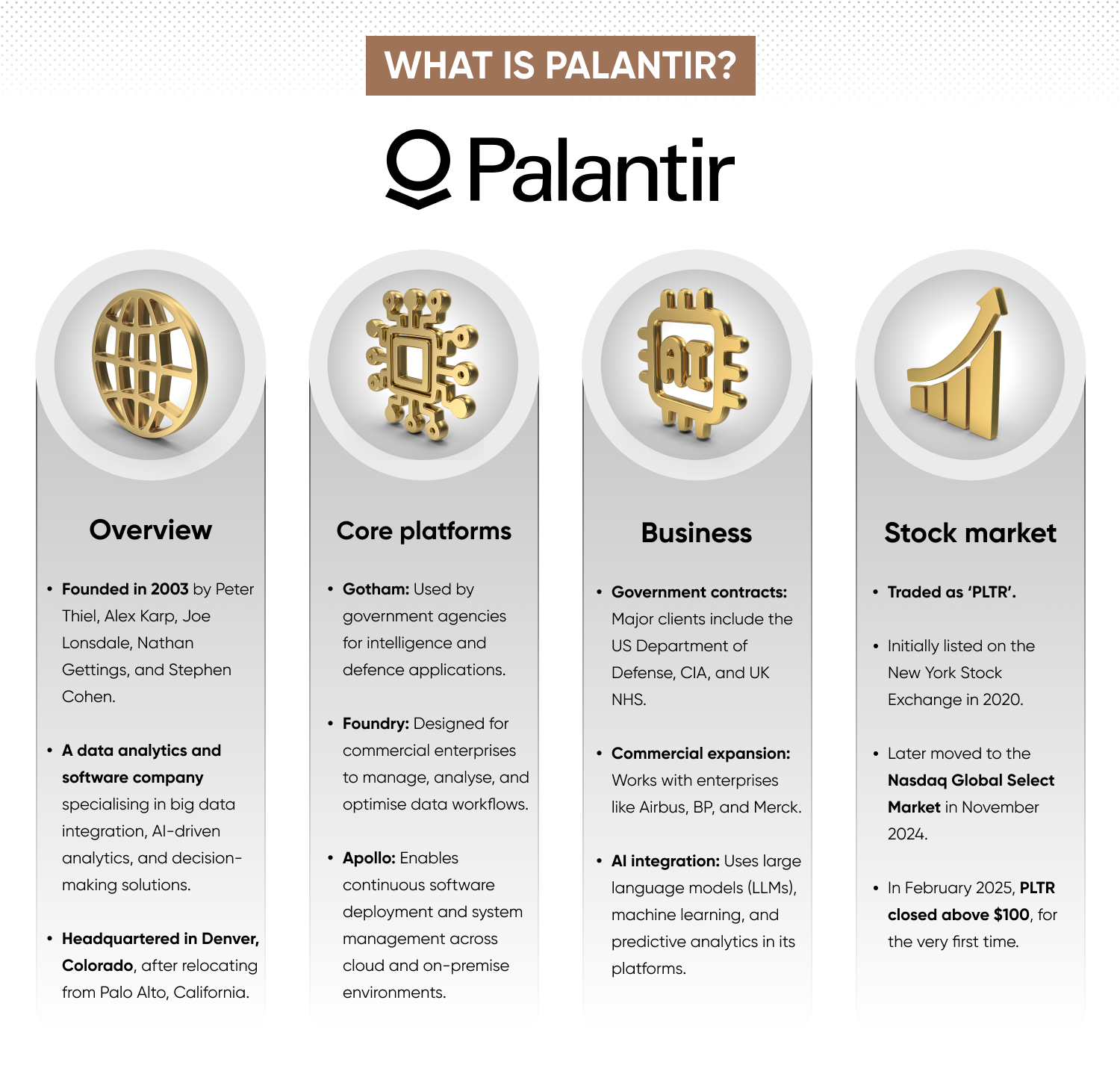
In the landscape of big data and enterprise software, few names carry as much mystique or weight as Palantir Technologies. Founded in 2003 by a group of investors and engineers—including Peter Thiel and Alex Karp—the company emerged from the necessity of the post-9/11 era. At its core, Palantir is not a data collector or a social media giant; it is a software company that builds platforms for integrating, managing, and securing massive volumes of disparate data.
To understand Palantir is to understand the shift from simple data storage to “operational intelligence.” For decades, organizations have struggled with “data silos”—information trapped in isolated departments, incompatible formats, or legacy systems. Palantir provides the digital glue that binds these silos together, allowing organizations to ask complex questions of their own data and receive actionable answers in real-time. Whether it is a counter-terrorism unit tracking illicit financial flows or a global manufacturer optimizing a supply chain, Palantir’s technology acts as the central nervous system for modern decision-making.
The Architecture of Insight: Gotham, Foundry, and Apollo
Palantir’s ecosystem is primarily built around three flagship platforms, each designed to solve specific challenges in data processing and deployment. While they share a common DNA of security and scalability, their applications range from the tactical edge of military operations to the boardrooms of Fortune 500 companies.
Gotham: The Intelligence Layer for Defense and Security
Gotham was Palantir’s first major product, designed primarily for the intelligence community and defense agencies. The platform’s strength lies in its ability to find “needles in haystacks.” In a typical Gotham environment, the software ingests petabytes of data—satellite imagery, financial transactions, communications logs, and human intelligence—and maps the relationships between these points.
The software visualizes this data as a network of entities (people, places, things, and events). By using Gotham, analysts can perform link analysis to identify hidden connections, such as the relationship between a specific bank account and a known threat actor. Its “top-down” approach is built for investigative workflows, where the goal is to uncover a specific narrative or prevent a specific threat.
Foundry: Operationalizing Enterprise Data
While Gotham serves the world of intelligence, Foundry was built for the commercial sector. It addresses the “data mess” that plagues large corporations. In a modern airline, for example, data about fuel consumption, crew scheduling, maintenance logs, and passenger bookings might all live in different systems that don’t talk to each other.
Foundry creates a unified “digital twin” of the organization. It integrates these disparate sources into a cohesive environment where non-technical users—such as operations managers or supply chain analysts—can run simulations and make decisions. If a hurricane hits a major shipping hub, Foundry can show a logistics company exactly which shipments are affected and suggest the most cost-effective rerouting options instantly.
Apollo: The Continuous Delivery Engine
Apollo is the underlying infrastructure that powers both Gotham and Foundry. In the world of software engineering, deploying updates across thousands of different environments—on-premise servers, private clouds, and remote edge devices—is a logistical nightmare. Apollo automates this process.
It acts as an independent orchestration layer that ensures software is always updated, secure, and functional, regardless of where it is hosted. This is particularly crucial for Palantir’s government clients, who may need the software to run on a disconnected laptop in a remote desert or a secure server inside a windowless bunker.
The Power of the “Ontology”: Moving Beyond Rows and Columns
The true technological breakthrough of Palantir lies in its “Ontology.” Most data platforms treat information as a collection of tables, rows, and columns. For a human to make sense of this, they must understand the underlying database schema. Palantir flips this model on its head.
The Palantir Ontology is a semantic layer that sits on top of integrated data. It translates technical data into real-world objects and actions. Instead of looking at a “CustomerID” in a SQL table, a user sees a “Customer.” Instead of a “TransactionDate,” they see a “Purchase.” By defining these objects and the relationships between them, Palantir allows the software to reflect the actual business or mission.
This approach has two massive advantages:
-
Accessibility: It democratizes data. A nurse in a hospital or a mechanic on a factory floor can interact with the data using the language of their daily work, rather than needing a degree in data science.
-
Actionability: Because the Ontology defines how things are related, it allows for “write-back” capabilities. When a user makes a decision in Palantir—such as approving a loan or changing a production schedule—that decision can be pushed back into the source systems, closing the loop between analysis and action.
Palantir and the AI Revolution: The Artificial Intelligence Platform (AIP)
With the rise of Large Language Models (LLMs) and generative AI, the tech world has faced a new challenge: how to use these powerful tools without compromising security or hallucinating incorrect facts. Palantir’s response to this is AIP (Artificial Intelligence Platform).
AIP is designed to bring the power of LLMs into the secure, structured environment of the Palantir Ontology. While a standard AI might give a generic answer based on public internet data, AIP accesses an organization’s private, integrated data to provide specific, context-aware insights.
Bridging LLMs with Secure Operations
The primary concern for enterprises using AI is “leakage”—the risk that proprietary data will be used to train public models or be accessed by unauthorized users. AIP solves this by applying Palantir’s rigorous security protocols to the AI layer. Every query made by the AI and every piece of data it accesses is governed by existing permissions and is fully auditable.
Practical Applications in Logic and Action
In a military context, AIP can assist commanders by summarizing incoming intelligence reports and suggesting tactical responses based on available resources. In a commercial context, it can help a retail manager identify why a specific product is underperforming and automatically draft an email to the supplier to adjust the next order. By connecting the “brain” of the AI to the “body” of the organization’s operational data, AIP moves AI from a chatbot novelty to a core business tool.
Security, Ethics, and the Future of Big Data
No discussion of Palantir is complete without addressing its approach to digital security and data privacy. Because the company works with some of the most sensitive data on the planet, its software is built with a “privacy-by-design” philosophy. This is often misunderstood in public discourse, where the company is sometimes characterized as a surveillance entity.
Fine-Grained Access Controls
Palantir does not own the data it processes; its customers do. The platforms include robust access control mechanisms that ensure users only see the data they are legally authorized to see. Every action taken within the software—every search, every click, every modification—is recorded in an immutable audit log. This level of transparency is designed to prevent the abuse of power and to ensure that data usage complies with legal frameworks like GDPR or HIPAA.
The Landscape of Digital Sovereignty
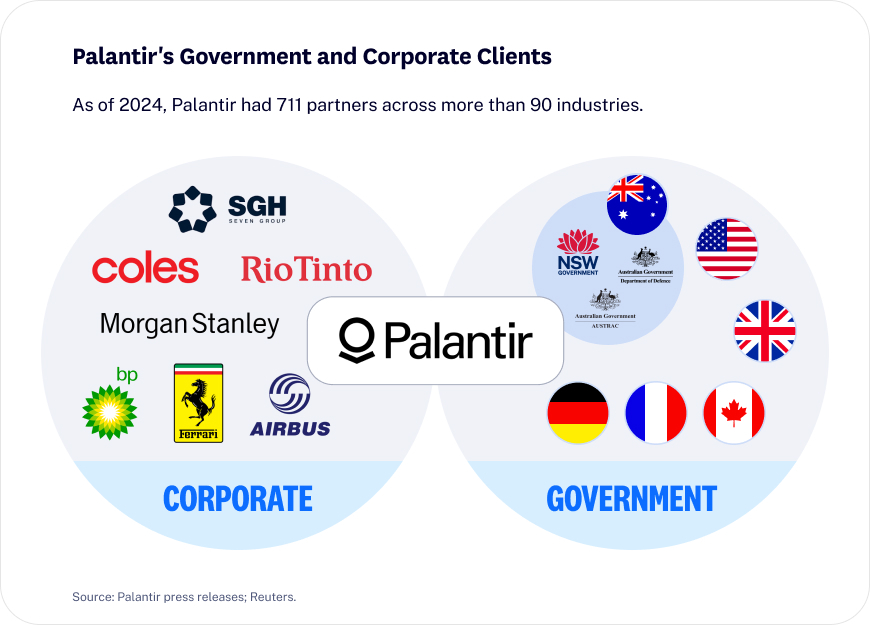
As geopolitical tensions rise, the concept of “digital sovereignty” has become a priority for nations. Governments want to ensure that their critical infrastructure and national security data are managed by platforms that share their democratic values. Palantir has positioned itself as a partner to Western liberal democracies, emphasizing that its technology is built to protect the rule of law.
This mission-driven approach has made Palantir a staple in modern governance. During the COVID-19 pandemic, for instance, the UK’s National Health Service (NHS) used Palantir to manage the complex logistics of vaccine distribution. By integrating data on infection rates, supply chain availability, and hospital capacity, the NHS was able to ensure that vaccines were delivered where they were needed most, saving countless lives.
Conclusion: The New Standard for Enterprise Software
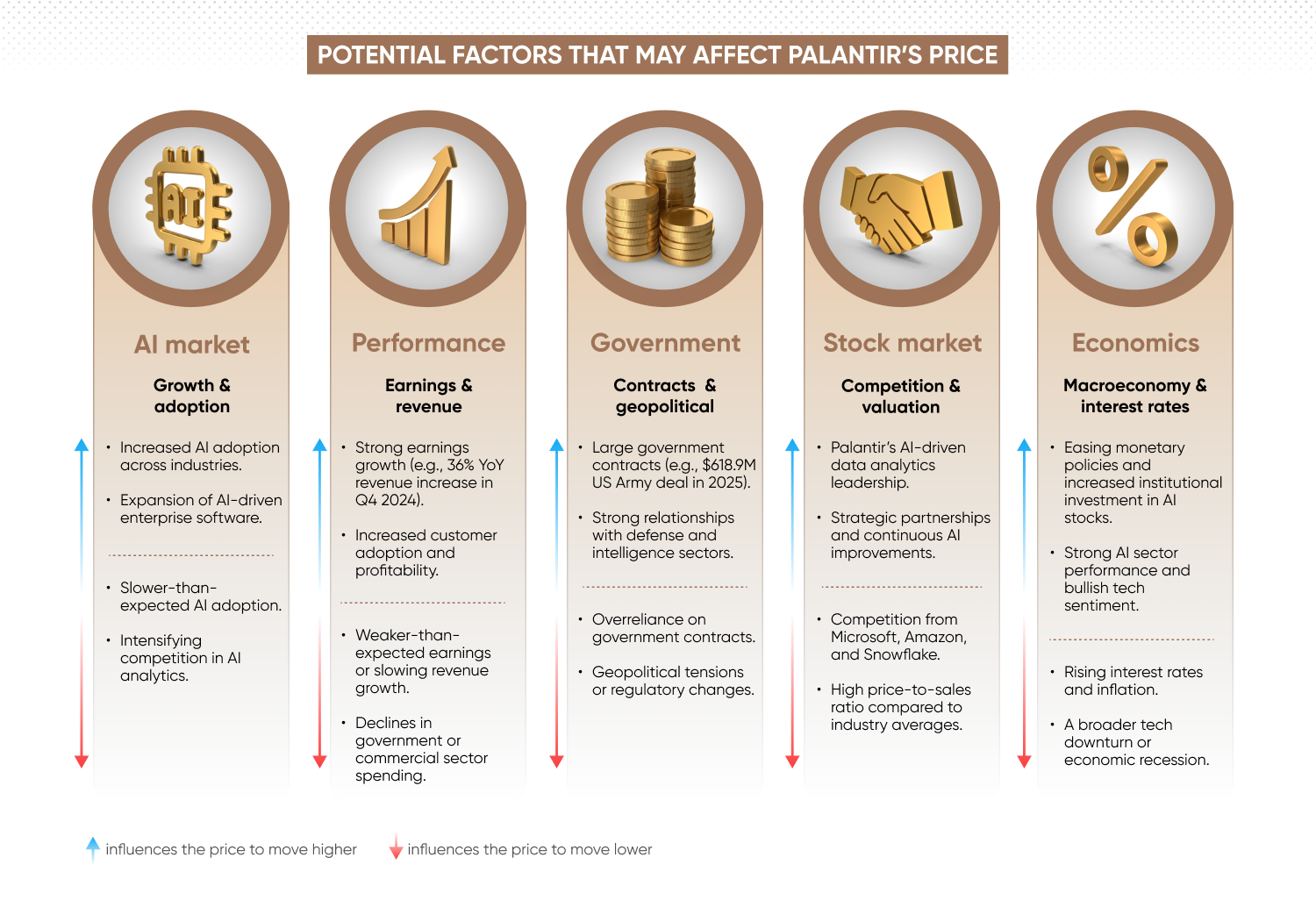
What is Palantir? It is more than just a data analytics company. It is a fundamental layer of the modern technological stack that enables organizations to make sense of a chaotic world. By focusing on the integration of data, the creation of a meaningful ontology, and the secure application of artificial intelligence, Palantir has redefined what software can do.
In an era where the volume of data is growing exponentially, the challenge is no longer how to store information, but how to use it effectively. Palantir’s platforms provide the tools to turn raw data into a competitive advantage, a tactical edge, or a lifesaving intervention. As we move further into the age of AI and automated decision-making, the principles of security, integration, and human-in-the-loop intelligence that Palantir champions will likely become the standard for every major institution on the planet.
aViewFromTheCave is a participant in the Amazon Services LLC Associates Program, an affiliate advertising program designed to provide a means for sites to earn advertising fees by advertising and linking to Amazon.com. Amazon, the Amazon logo, AmazonSupply, and the AmazonSupply logo are trademarks of Amazon.com, Inc. or its affiliates. As an Amazon Associate we earn affiliate commissions from qualifying purchases.