
The transition from traditional paper-based systems to a digital-first financial environment has significantly altered how taxpayers interact with the Internal Revenue Service (IRS). For the modern taxpayer, the question is no longer just about how much is owed, but how to execute that payment with the highest degree of security, speed, and record-keeping accuracy. Online payments have become the gold standard for tax compliance, offering immediate confirmation and reducing the risk of lost mail or processing delays. Navigating the various portals and platforms provided by the Treasury Department requires a clear understanding of the tools available, the financial implications of each method, and the strategic advantages of digital settlement.

The Evolution of Tax Payments: Why Going Digital is the Gold Standard
For decades, the standard method for settling a tax liability involved writing a physical check, attaching it to a payment voucher, and relying on the postal service for timely delivery. This process was fraught with potential points of failure, including manual data entry errors by IRS clerks and the inherent uncertainty of “postmark dates.” Today, the IRS has streamlined its digital infrastructure, providing several robust paths for individuals and business owners to settle their obligations electronically.
The primary advantage of paying online is the immediate creation of a digital paper trail. In the world of personal finance and business accounting, documentation is the ultimate defense against audits or late-payment disputes. When a payment is made online, the taxpayer receives an instant confirmation number. This number is a legally recognized receipt that the funds have been initiated, providing peace of mind that a check sitting in a sorting facility never could. Furthermore, digital payments allow for precise cash flow management, enabling taxpayers to schedule payments for a future date, ensuring that funds remain in interest-bearing accounts until the moment they are legally required by the government.
Exploring the Primary Channels for Online IRS Payments
The IRS offers multiple portals for payment, each designed to cater to different financial needs, tax types, and levels of technical comfort. Selecting the right channel depends on whether you are paying as an individual or a business, your preferred source of funds, and whether you require advanced scheduling features.
IRS Direct Pay: The Individual’s Preferred Choice
IRS Direct Pay is arguably the most efficient tool for individual taxpayers. It allows for the direct transfer of funds from a checking or savings account (ACH transfer) without the need for a prior registration or the creation of a permanent account. This makes it ideal for one-time balance-due payments or quarterly estimated tax payments.
To use Direct Pay, the taxpayer must verify their identity using information from a previous year’s tax return. Once verified, the system allows the user to select the reason for payment (e.g., “1040 – Income Tax”), the specific tax year, and the amount. The system is free to use, and because it pulls directly from a bank account, there are no processing fees involved. It is important to note, however, that Direct Pay has a daily limit on the number of payments and the total dollar amount, making it less suitable for high-net-worth individuals making multi-million dollar settlements.
EFTPS: The Professional and Business Standard
The Electronic Federal Tax Payment System (EFTPS) is a more robust, registration-based service provided by the U.S. Department of the Treasury. While Direct Pay is designed for simplicity, EFTPS is designed for scale and oversight. It is mandatory for many businesses that exceed certain payroll tax thresholds, but it is also available to individuals who want a higher level of control over their payment history.
EFTPS requires a formal enrollment process, which includes receiving a Personal Identification Number (PIN) via physical mail—a security measure that adds a layer of protection but requires advanced planning. Once enrolled, users can schedule payments up to 365 days in advance and access a comprehensive 16-month history of all federal tax payments made through the system. For those managing complex business finances or multiple tax obligations, EFTPS provides a centralized hub that simplifies the reconciliation process during annual audits.
Digital Wallets and Card Payments: Speed at a Premium
For taxpayers who prefer to use credit cards, debit cards, or digital wallets like PayPal and Click to Pay, the IRS utilizes third-party payment processors. While the IRS does not charge a fee for these services, the processors do. These convenience fees generally range from 1.82% to 1.98% for credit cards and a flat fee of around $2.00 to $2.50 for debit cards.
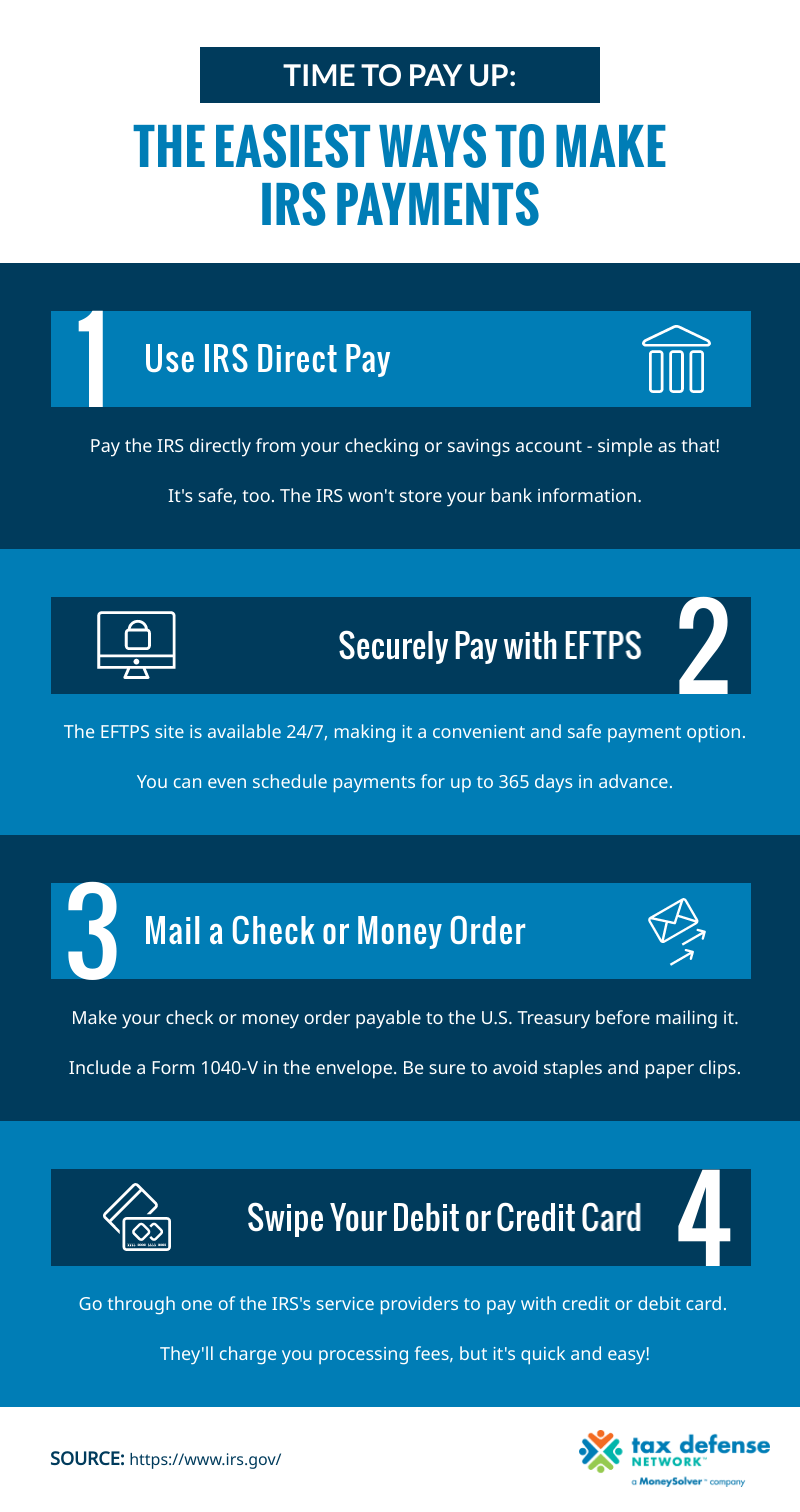
From a financial strategy perspective, paying by credit card can be a double-edged sword. For some, the ability to earn credit card rewards, points, or cashback might offset a portion of the processing fee. For others, using a credit card provides a short-term financing bridge if cash flow is tight at the time the tax bill is due. However, if the balance on the credit card is not paid off immediately, the high interest rates of the card will quickly dwarf any tax penalties the IRS might have assessed for a late payment.
A Step-by-Step Procedural Guide to Online Tax Settlement
Successfully making an IRS payment online requires attention to detail to ensure the funds are applied to the correct account and tax year. Following a standardized procedure minimizes the risk of administrative errors that could lead to unnecessary notices or penalties.
First, gather all necessary documentation, including your Social Security Number (SSN) or Individual Taxpayer Identification Number (ITIN), and your most recent tax return for identity verification. If you are paying via Direct Pay, you will need to choose the “Make a Payment” option on the IRS website. You will be prompted to select the “Tax Category” (typically “1040”), the “Reason for Payment” (such as “Balance Due,” “Estimated Tax,” or “Extension”), and the “Tax Period for Payment” (the specific year).
Second, enter the payment amount and the date you wish the funds to be withdrawn. If you are using a bank account, you will need your routing number and account number. It is critical to double-check these numbers; a single digit error can result in a “returned payment,” which the IRS treats as a non-payment, often resulting in a dishonored check penalty.
Third, once the information is submitted, save the confirmation page. This is your proof of payment. It is advisable to print a PDF of the confirmation and store it digitally alongside your tax return for that year. The IRS system will also send an email confirmation if requested, which serves as an additional layer of verification.
Strategic Financial Management: Using Digital Payments to Optimize Cash Flow
Online payments are more than just a convenience; they are a tool for sophisticated financial management. By leveraging the timing and transparency of digital portals, taxpayers can better manage their liquidity and avoid the “tax season crunch.”
Managing Quarterly Estimated Payments
For freelancers, contractors, and business owners, the IRS requires quarterly estimated tax payments. Missing these deadlines or underpaying can result in significant penalties. Online tools like EFTPS and Direct Pay allow these taxpayers to set up a recurring schedule or reminders. By calculating the expected annual liability and dividing it into four installments, individuals can avoid large, lump-sum hits to their cash flow in April. Digital systems make it easy to adjust these payments in real-time if business income fluctuates unexpectedly during the year.
Mitigating Penalties Through Timely Digital Filings
The IRS is notoriously strict regarding deadlines. A payment sent by mail on the due date is technically on time, but if it is lost or delayed, the taxpayer bears the burden of proof. Digital payments eliminate this ambiguity. Because the IRS receives the data instantaneously, even a payment made at 11:59 PM on the deadline day is considered timely. This provides a crucial buffer for those who may be waiting on final year-end statements or K-1 forms before finalizing their payment amounts.
Security, Privacy, and Record-Keeping in a Digital-First Environment
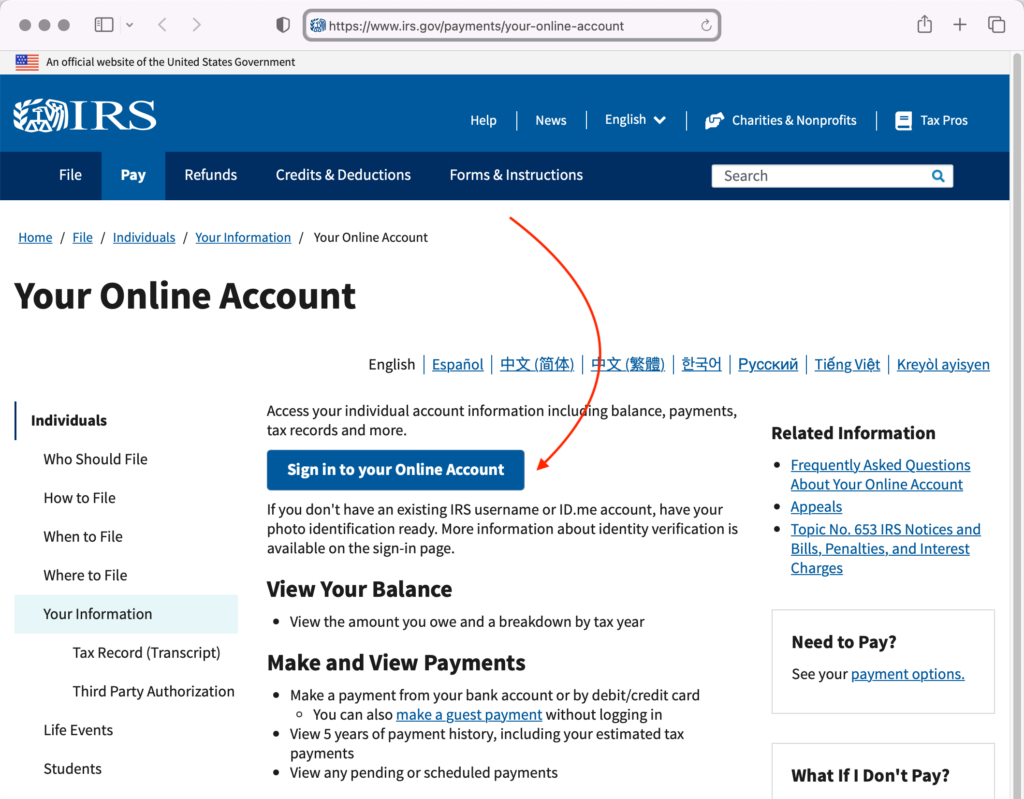
In an era of increasing cyber threats, the security of financial transactions with the IRS is a paramount concern. The IRS uses high-level encryption and multi-factor authentication (especially within the “IRS Online Account” and EFTPS portals) to protect taxpayer data. However, the responsibility for security also lies with the user.
Taxpayers should always ensure they are on the official “.gov” website before entering sensitive information. Phishing scams often use fraudulent websites that mimic the IRS payment portal to steal bank account details. Furthermore, utilizing the “IRS Online Account” feature allows taxpayers to view their overall balance, see their payment history, and even view key data from their most recently filed tax return. This holistic view of one’s tax health is essential for long-term financial planning.
By integrating online payment methods into a broader personal finance strategy, taxpayers move away from a reactive stance toward a proactive, organized approach to their federal obligations. Whether through the simplicity of Direct Pay or the robust tracking of EFTPS, the shift to digital tax settlement represents a significant leap forward in financial efficiency and security. In the modern economy, mastering these digital tools is not just a matter of convenience—it is a cornerstone of responsible financial management.
aViewFromTheCave is a participant in the Amazon Services LLC Associates Program, an affiliate advertising program designed to provide a means for sites to earn advertising fees by advertising and linking to Amazon.com. Amazon, the Amazon logo, AmazonSupply, and the AmazonSupply logo are trademarks of Amazon.com, Inc. or its affiliates. As an Amazon Associate we earn affiliate commissions from qualifying purchases.