
The streaming landscape has undergone a radical transformation over the last decade, transitioning from a niche convenience to the primary mode of global media consumption. At the center of this shift is Paramount+, a platform that represents more than just a library of legacy content and new originals. To understand what is truly “on” Paramount now, one must look past the marquee titles and examine the sophisticated technological ecosystem that enables high-definition delivery, personalized user experiences, and robust digital security across millions of concurrent devices.
The modern Paramount+ application is a masterclass in software engineering, cloud computing, and data science. It is no longer enough to simply host video files; a competitive streaming service must optimize for varying bandwidths, diverse hardware profiles, and an increasingly demanding user base that expects instantaneous loading and seamless navigation.
The Architecture of Paramount+: From Backend to Bitrate
The core of the Paramount+ experience lies in its backend infrastructure. Unlike the early days of digital video, modern streaming relies on a complex web of Content Delivery Networks (CDNs) and cloud-based microservices. When a user hits “play,” a series of invisible technological handshakes occurs within milliseconds.
Content Delivery Networks and Edge Computing
To minimize latency—the delay between a user’s request and the start of the video—Paramount utilizes a distributed network of servers. By placing content physically closer to the user through edge computing, the platform reduces the distance data must travel over the open internet. This is particularly critical for “What’s on Paramount Now” in the context of live sports. High-profile events like the Super Bowl or UEFA Champions League matches require massive throughput capabilities. The platform uses dynamic load balancing to shift traffic across various server clusters, ensuring that a surge in viewership in one geographic region does not degrade the experience for others.
Adaptive Bitrate Streaming (ABS)
One of the most vital software components of the platform is Adaptive Bitrate Streaming. The Paramount+ app continuously monitors the user’s internet connection in real-time. If the bandwidth drops—perhaps due to another device on the network starting a heavy download—the player automatically switches to a lower-resolution stream (lower bitrate) to prevent buffering. This transition is designed to be invisible to the user, prioritizing continuity of playback over pixel density when necessary. Conversely, when a stable high-speed connection is detected, the software ramps up to 4K UHD, leveraging codecs like HEVC (High-Efficiency Video Coding) to deliver stunning visuals without overwhelming the hardware.
Navigating the Interface: UI/UX and Algorithmic Discovery
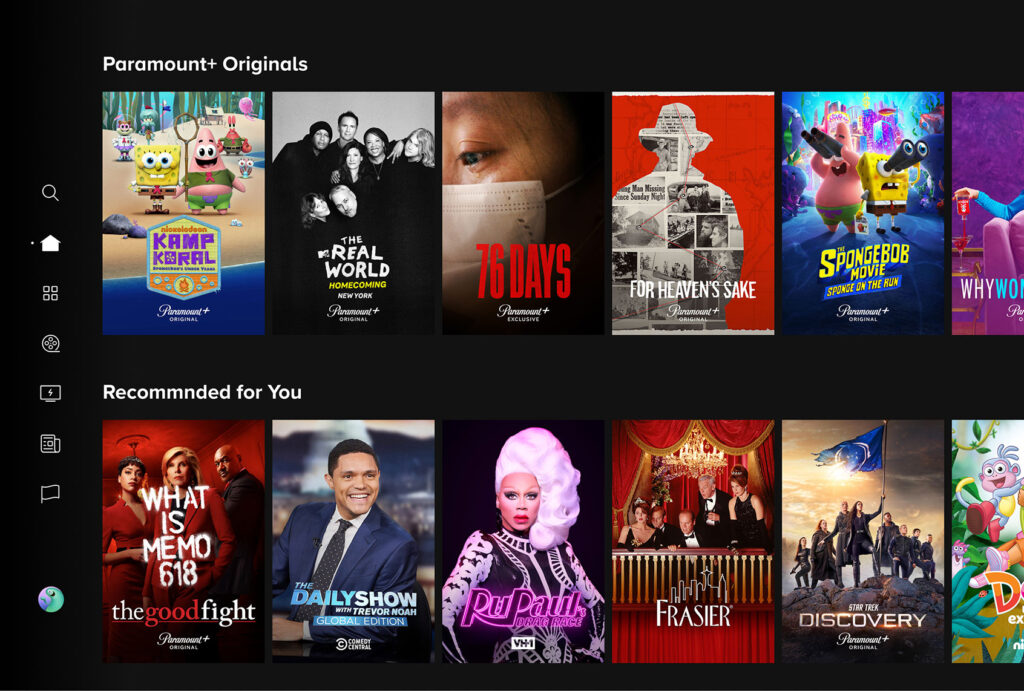
What users interact with on the surface is a highly polished User Interface (UI) built on modern web frameworks and native mobile code. The goal of the UI is to reduce “choice paralysis,” using sophisticated algorithms to curate content based on individual viewing habits.
The Recommendation Engine
The “What’s on Paramount Now” section is not the same for every user. Behind the scenes, a machine learning model analyzes petabytes of data to predict what a subscriber might want to watch next. This engine takes into account various signals: genres watched, time spent on specific titles, the time of day, and even the type of device being used. These AI tools are constantly being refined through A/B testing, where different segments of the user base are shown different layouts or recommendation logic to see which leads to higher engagement and longer session times.
Cross-Platform Synchronization and State Management
A significant technical challenge in the streaming space is maintaining a consistent “state” across multiple devices. If a user starts a movie on their smart TV and finishes it on their smartphone during a commute, the software must sync the exact timestamp and user preferences instantaneously. Paramount+ utilizes a robust cloud-based state management system that updates in real-time. This requires a highly optimized API (Application Programming Interface) layer that can handle millions of small, frequent data writes without lagging or creating data conflicts between devices.
Device Compatibility and Hardware Integration

The diversity of the hardware ecosystem presents a unique challenge for software developers. Paramount+ must perform reliably on everything from a high-end PlayStation 5 to a five-year-old budget smartphone or a low-powered streaming stick.
Native vs. Hybrid App Development
To achieve high performance, the platform often employs native development for different operating systems (iOS, Android, tvOS, Roku OS). Native apps can tap directly into the device’s hardware acceleration features, such as the GPU for video decoding. This results in smoother animations within the UI and more efficient battery usage on mobile devices. For other platforms, hybrid frameworks allow for faster deployment of updates, ensuring that new features—like improved search functionality or updated categories—reach all users simultaneously regardless of their hardware.
Enhancing the Visual and Auditory Experience
The tech stack on Paramount+ now supports advanced audiovisual standards that were once reserved for physical media. For users with compatible hardware, the platform serves content in Dolby Vision and HDR10. These technologies expand the color gamut and contrast ratio, providing a more cinematic experience. On the audio side, the integration of Dolby Atmos creates a spatial audio environment. The software must be intelligent enough to detect the capabilities of the connected soundbar or home theater system and deliver the appropriate audio stream, whether it is standard stereo or a full 7.1.4 immersive mix.
Security, Privacy, and Digital Rights Management (DRM)
In the digital age, “what’s on” a platform must be protected against piracy while ensuring user data remains secure. This involves a sophisticated layer of security protocols that operate behind every stream.
Digital Rights Management (DRM) Systems
Paramount+ utilizes industry-standard DRM solutions like Widevine (for Android and Chrome), FairPlay (for Apple devices), and PlayReady (for Microsoft ecosystems). These tools encrypt the video stream and require a secure digital key to unlock it for playback. This ensures that the high-value content—ranging from blockbuster films to live news—cannot be easily intercepted or redistributed illegally. The integration of these DRM systems must be seamless; if the handshake between the server and the device’s “Secure Enclave” fails, the user is met with an error code rather than a video.
Identity Management and Account Security
Protecting user accounts is a top priority for digital security. The platform implements modern authentication protocols, including OAuth 2.0, to manage logins safely. Furthermore, the use of encrypted databases ensures that sensitive information, such as payment details and viewing history, is protected from external breaches. As digital threats evolve, the platform periodically updates its security certificates and moves toward more secure methods of verification, such as two-factor authentication (2FA) and biometric login options on mobile devices.
The Future of Streaming Tech: AI and Beyond
As we look at what is currently on Paramount and where the technology is heading, several emerging trends stand out. The integration of Artificial Intelligence is moving beyond simple recommendations into the realm of content optimization and even interactive experiences.
AI-Driven Content Optimization
Paramount is exploring the use of AI to automate the “tagging” of content. Instead of humans manually entering metadata, AI can scan a film to identify specific actors, locations, and even emotional beats. This creates a much more granular search database, allowing users to find content based on very specific queries. Additionally, AI-powered upscaling is becoming a factor, where machine learning algorithms can enhance the quality of older, standard-definition legacy content to look sharper on modern 4K displays.
Low-Latency Streaming for Live Events
For live sports, the “holy grail” of streaming technology is achieving “sub-second latency.” Currently, most streaming services have a delay of 20 to 60 seconds compared to a traditional cable broadcast. Paramount is investing in technologies like LL-HLS (Low-Latency HTTP Live Streaming) and WebRTC to bridge this gap. This tech is crucial for features like real-time betting integration or social viewing, where a delay could spoil a goal or a game-winning play for someone following along on social media.
Interactive and Shoppable Media
We are also beginning to see the rise of interactive layers within the streaming app. This includes the ability to pull up player stats during a live game or identify an actor’s outfit via “shoppable” overlays. These features require a complex integration of real-time data feeds and e-commerce APIs, transforming the viewing experience from a passive activity into an interactive digital environment.
In conclusion, “What’s on Paramount Now” is a multifaceted question. On the surface, it is a collection of world-class entertainment. Beneath the hood, however, it is a sophisticated technological engine driven by cloud infrastructure, machine learning, and advanced video engineering. As the competition for digital attention intensifies, the winner will not only be the one with the best stories but the one with the most robust, secure, and innovative technology stack. Paramount+ continues to push the boundaries of what is possible in the digital space, ensuring that the “what” of streaming is always supported by a cutting-edge “how.”
aViewFromTheCave is a participant in the Amazon Services LLC Associates Program, an affiliate advertising program designed to provide a means for sites to earn advertising fees by advertising and linking to Amazon.com. Amazon, the Amazon logo, AmazonSupply, and the AmazonSupply logo are trademarks of Amazon.com, Inc. or its affiliates. As an Amazon Associate we earn affiliate commissions from qualifying purchases.