
The landscape of Information Technology (IT) is no longer moving in incremental steps; it is leaping forward through a series of foundational shifts that are redefining how businesses operate and how individuals interact with the digital world. As we navigate through this year, the focus has shifted from mere digital transformation to the optimization of intelligence, the decentralization of infrastructure, and the fortification of security in an increasingly volatile digital ecosystem. From the pervasive integration of generative artificial intelligence to the silent but critical advancements in quantum-resistant cryptography, the following developments represent the cutting edge of what is new in IT technology.
The Generative AI Renaissance and the Era of Autonomous Agents
The most visible shift in the IT sector remains the explosion of Artificial Intelligence (AI), specifically Generative AI (GenAI). However, the “new” element is the transition from experimental chatbots to deeply integrated enterprise tools and autonomous agents.
From Large Language Models to Multi-modal Intelligence
Early iterations of GenAI were largely text-based. Today, the industry is moving toward multi-modal intelligence—systems that can simultaneously process and generate text, images, audio, and video. This allows for more intuitive IT support systems, where an AI can “see” a server rack configuration through a technician’s camera and provide real-time troubleshooting overlays. This multi-modality is also revolutionizing software development, where AI assistants can now interpret UI/UX design files and automatically generate the corresponding front-end code with high fidelity.
The Rise of Autonomous Agents
Beyond simple prompt-and-response mechanisms, we are seeing the rise of autonomous AI agents. Unlike traditional bots, these agents are designed to achieve high-level goals by breaking them down into smaller tasks, using external tools, and self-correcting. In an IT operations context (AIOps), these agents can autonomously monitor network traffic, identify a potential security breach, isolate the affected nodes, and draft a detailed incident report for human review—all without direct intervention. This shift from “AI as a tool” to “AI as a teammate” is fundamental to the new IT paradigm.
Small Language Models (SLMs) and On-Device AI
While massive models like GPT-4 dominate headlines, a significant trend in IT is the development of Small Language Models (SLMs). These models are optimized to run locally on hardware—laptops, smartphones, and edge devices—without needing a constant cloud connection. This addresses two major concerns in the IT world: latency and data privacy. By processing data on-device, enterprises can leverage AI capabilities while ensuring that sensitive corporate data never leaves the local environment.
Cybersecurity’s New Frontier: Zero Trust and Quantum Resilience
As technology evolves, so do the threats. The IT security landscape is currently undergoing its most significant transformation in a decade, driven by the need to defend against AI-powered attacks and the looming reality of quantum computing.
The Maturity of Zero Trust Architecture
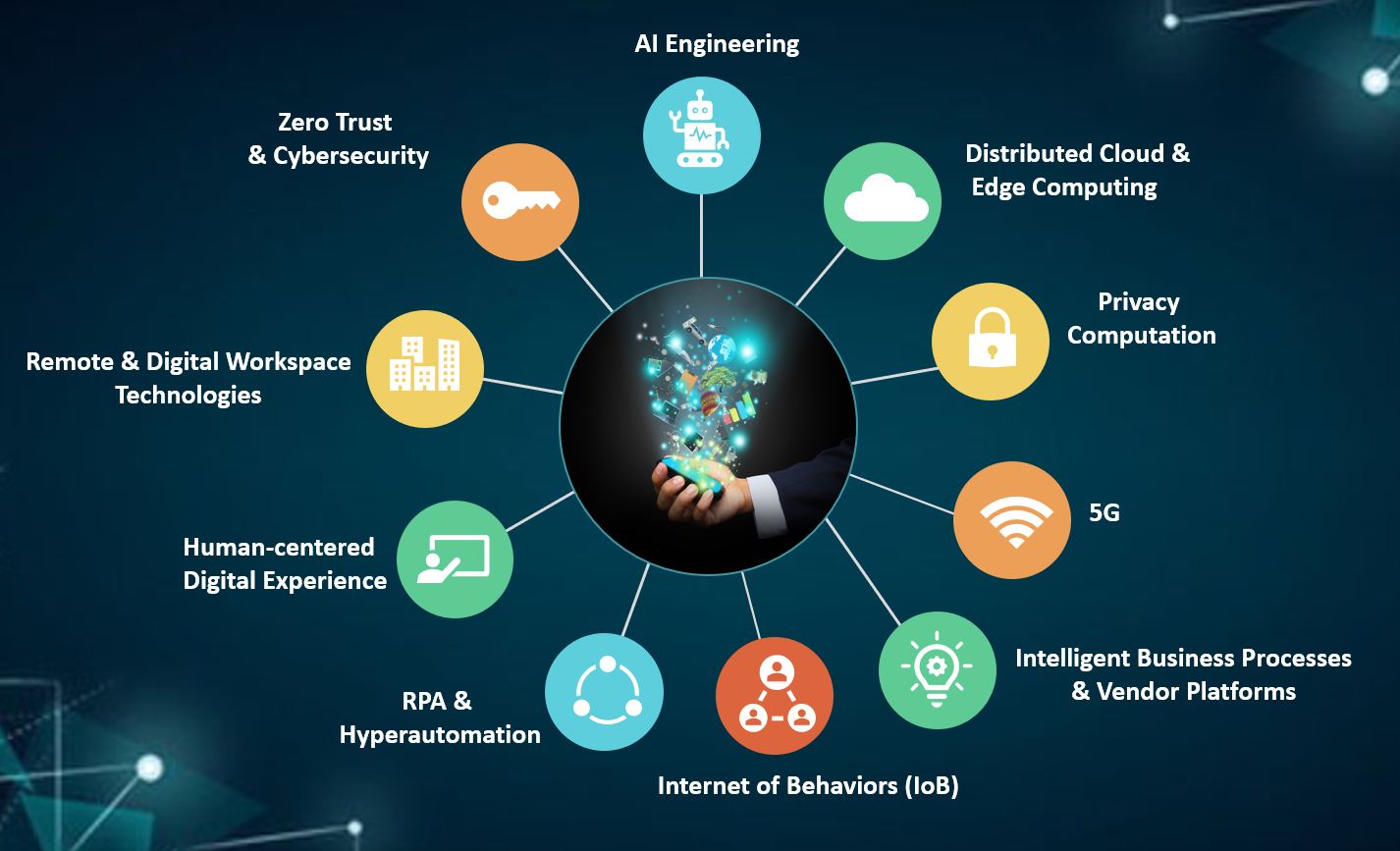
The “trust but verify” model is officially obsolete. In its place, Zero Trust Architecture (ZTA) has become the gold standard. The core philosophy—”never trust, always verify”—is now being implemented through micro-segmentation and Identity and Access Management (IAM) systems that use behavioral biometrics. Instead of a simple password, the system now analyzes how a user types, their location, and their typical access patterns to grant or deny entry in real-time. This continuous authentication is the primary defense against credential theft and lateral movement within a network.
Preparing for the “Q-Day” with Post-Quantum Cryptography
Quantum computing, while still in its developmental stages, poses an existential threat to current encryption methods (such as RSA and ECC). The “new” in IT security is the active transition to Post-Quantum Cryptography (PQC). The National Institute of Standards and Technology (NIST) has begun finalizing algorithms designed to withstand the processing power of a future quantum computer. Forward-thinking IT departments are now conducting “quantum readiness” audits, identifying where encrypted data is stored and planning the migration to these new, resilient standards to prevent “harvest now, decrypt later” attacks.
AI-Driven Threat Detection and Response
The battle between hackers and security teams has become an “AI vs. AI” conflict. Modern Extended Detection and Response (XDR) platforms now utilize machine learning to predict attacks before they happen. By analyzing trillions of data points across global networks, these systems can identify “signals” of a zero-day exploit or a coordinated ransomware campaign in its earliest stages, allowing IT teams to patch vulnerabilities before they are exploited.
Decentralized Infrastructure: The Convergence of Edge Computing and 5G
The traditional model of centralized cloud computing is being challenged by the need for speed and the sheer volume of data generated by Internet of Things (IoT) devices. This has led to the rapid advancement of Edge Computing and its synergy with 5G/6G connectivity.
The Move Toward Distributed Cloud
Rather than sending every byte of data to a central data center hundreds of miles away, IT infrastructure is moving to the “edge”—the physical location where data is generated. This is critical for applications that require near-zero latency, such as autonomous vehicles, remote robotic surgery, and real-time industrial automation. The new development here is the “distributed cloud,” where the cloud provider’s services are physically located in various locations, including on-premise, while the management remains centralized.
Private 5G Networks for the Enterprise
While 5G is a consumer buzzword, its real impact is in private enterprise networks. Organizations are now deploying their own private 5G networks to provide high-speed, low-latency connectivity across large campuses, factories, or mines. This allows for a density of connected devices that Wi-Fi simply cannot support, enabling “Smart Factories” where thousands of sensors and robots communicate in real-time without the risk of interference or bandwidth congestion.
Software-Defined Everything (SDx)
The physical hardware of networking is becoming secondary to the software that controls it. Software-Defined Networking (SDN) and Software-Defined Storage (SDS) allow IT administrators to manage complex infrastructures through a single software interface. This “programmable infrastructure” allows for unprecedented flexibility, enabling a network to automatically reconfigure itself to prioritize traffic for a critical video conference or a massive data backup based on predefined policies.
Sustainable IT: Engineering a Greener Digital Footprint
Sustainability is no longer a peripheral concern for IT departments; it is a core technical requirement. As the energy demands of massive AI models and data centers skyrocket, the industry is turning to “Green IT” innovations.
Energy-Efficient Data Center Design
Modern data centers are moving beyond traditional air conditioning. Liquid cooling—where a specialized coolant is circulated directly near the heat-producing components—has become a standard for high-performance computing environments. Furthermore, we are seeing the rise of “carbon-aware computing,” where non-critical workloads are automatically scheduled to run during times when the local power grid is being supplied by renewable energy sources like wind or solar.
The Circular Economy of Hardware
The “take-make-waste” model of IT hardware is being replaced by circularity. Major hardware vendors are now designing servers and devices that are modular, making them easier to repair, upgrade, and eventually recycle. This reduces e-waste and minimizes the carbon footprint associated with manufacturing new hardware. IT asset disposition (ITAD) has evolved from a simple disposal service into a sophisticated strategy for reclaiming and repurposing rare-earth metals and components.
Sustainable Software Engineering
There is a growing movement toward “Green Code.” This involves optimizing software at the foundational level to require less processing power, which in turn consumes less electricity. By choosing more efficient programming languages and streamlining algorithms, developers can significantly reduce the energy consumption of applications running at scale.
Spatial Computing and the Next Phase of Human-Computer Interaction
The way we interact with information is shifting from flat screens to three-dimensional spaces. This transition, often referred to as Spatial Computing, is creating new opportunities for training, visualization, and remote collaboration.
The Integration of AR and VR in Professional Workflows
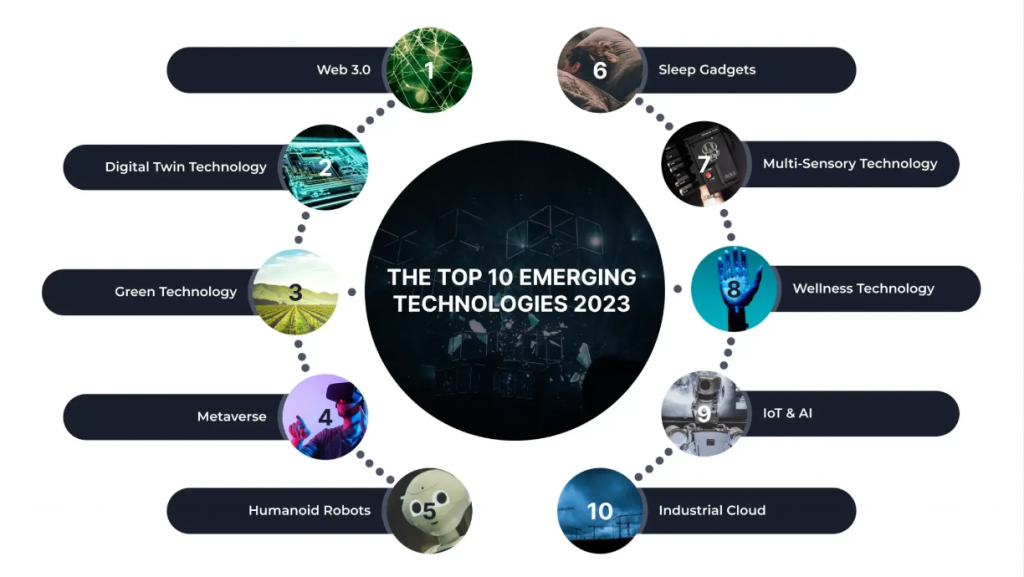
Augmented Reality (AR) and Virtual Reality (VR) have moved out of the gaming sphere and into the IT enterprise. Technical teams are using AR headsets to visualize complex network topologies or to overlay digital twin data onto physical hardware during maintenance. This “phygital” approach allows for faster training and reduces the margin of error in complex technical tasks.
Digital Twins and Real-Time Simulation
A digital twin is a virtual representation of a physical object or system. The latest advancement in this field is the integration of real-time IoT data with these twins. In an IT context, this means a company can have a live, 3D model of its entire global data center footprint. They can simulate a power failure or a massive traffic spike in the digital twin to see exactly how the physical system would react, allowing for predictive maintenance and highly accurate disaster recovery planning.
The Evolution of the Digital Workplace
As remote and hybrid work become permanent fixtures, IT technology is evolving to make these experiences more immersive. From “holographic” teleconferencing to persistent virtual offices where distributed teams can collaborate on a shared 3D whiteboard, the focus is on reducing “Zoom fatigue” and fostering more natural human interaction. These tools are being built on high-bandwidth, low-latency foundations, ensuring that the technology stays out of the way of the creative process.
In conclusion, the current state of IT technology is defined by the convergence of intelligence, security, and efficiency. As AI moves from a novelty to a core operational layer, and as infrastructure becomes more decentralized and sustainable, the role of the IT professional is being elevated. We are no longer just managing hardware and software; we are orchestrating complex, intelligent ecosystems that are the literal backbone of the modern world. Staying ahead of these trends is not just about adopting new gadgets; it is about understanding the fundamental shift in how digital value is created and protected.
aViewFromTheCave is a participant in the Amazon Services LLC Associates Program, an affiliate advertising program designed to provide a means for sites to earn advertising fees by advertising and linking to Amazon.com. Amazon, the Amazon logo, AmazonSupply, and the AmazonSupply logo are trademarks of Amazon.com, Inc. or its affiliates. As an Amazon Associate we earn affiliate commissions from qualifying purchases.