
In the landscape of higher education, the transcript is more than a record of academic effort; it is a financial document. Every letter grade and every credit earned serves as a metric for evaluating the return on investment (ROI) for students, parents, and lenders. Among the various symbols found on a modern transcript, the “CR” or “Credit” designation has emerged as a significant tool for academic strategy. While traditionally viewed through a pedagogical lens, understanding what CR means for grades requires a rigorous analysis of personal finance, financial aid eligibility, and the long-term valuation of a degree in the competitive labor market.
Navigating the Mechanics of “Credit” (CR) in Academic Portfolios
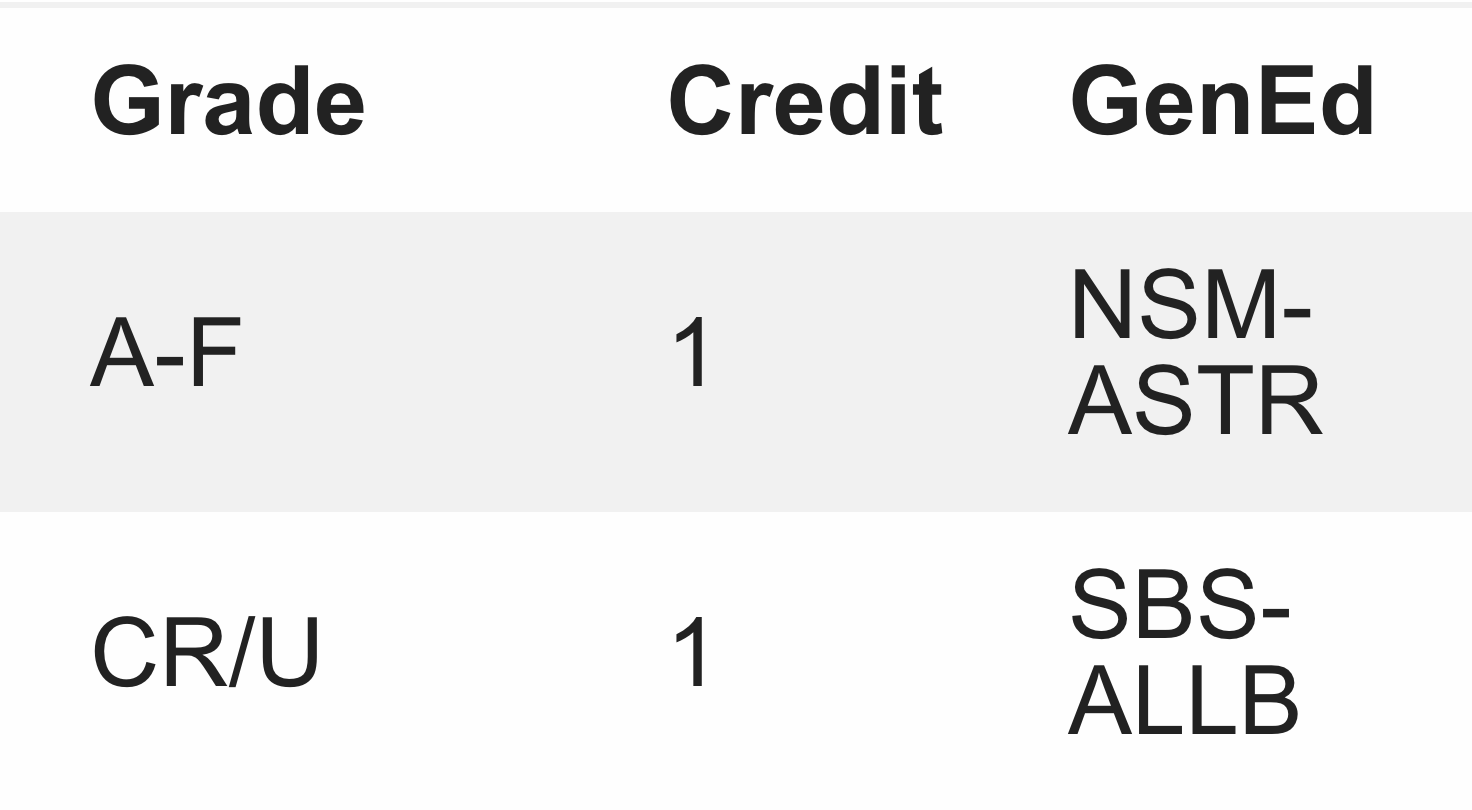
At its most fundamental level, a CR grade indicates that a student has met the minimum requirements to earn credit for a course without that course impacting their cumulative Grade Point Average (GPA). Unlike a traditional letter grade (A through F), which offers a variable yield on the student’s academic standing, the CR grade is a binary outcome. It confirms the acquisition of credit hours while neutralizing the volatility that a lower letter grade might introduce to a student’s GPA.
The Rise of Binary Grading Systems
The adoption of CR/NC (Credit/No Credit) or P/F (Pass/Fail) systems has accelerated in response to economic and social disruptions. From a financial perspective, this shift represents a move toward risk mitigation. When a student opts for a CR grade, they are essentially “hedging” their GPA. If a student is performing at a “C” level in a difficult elective, taking a letter grade would lower their overall GPA, potentially devaluing their academic portfolio. By opting for a CR, they preserve their GPA while still moving closer to graduation—the ultimate liquidity event of the educational process.
The Distinction Between CR and Traditional GPA
It is essential to distinguish between “earned credits” and “quality points.” Most financial aid formulas and scholarship committees look at both. While a CR adds to the total number of credits earned, it contributes zero quality points to the GPA calculation. For a student with a 3.8 GPA, a CR grade is a neutral asset. However, for a student looking to raise their GPA to meet a certain financial threshold—such as a 3.0 requirement for a corporate internship or a 3.5 for a merit scholarship—a CR grade represents a missed opportunity to increase their “academic equity.”
The Impact of CR Grades on Financial Aid and Institutional Funding
The relationship between academic performance and capital flow is governed by a set of rules known as Satisfactory Academic Progress (SAP). For any student utilizing federal loans, Pell Grants, or work-study programs, the CR grade is a double-edged sword that must be managed with the precision of a portfolio manager.
Satisfactory Academic Progress (SAP) and the Credit Buffer
To maintain eligibility for federal financial aid in the United States, students must meet three primary criteria: a minimum GPA, a minimum completion rate (the “Pace” component), and a maximum timeframe for degree completion.
A CR grade is highly beneficial for the “Pace” component of SAP. Financial aid offices typically require students to complete at least 67% of the courses they attempt. Because a CR counts as a completed course, it prevents a student from falling into “financial aid warning” status, which could result in a total loss of funding. In this context, the CR grade acts as a protective buffer, ensuring the continued flow of capital necessary to fund the student’s education.
Impact on Merit-Based Funding and Private Grants
While federal aid is often focused on completion, private and institutional merit scholarships are focused on excellence. Many high-value scholarships have strict GPA floors. A student who anticipates a “B-” in a rigorous course might choose a CR to prevent their GPA from dipping below a 3.5 threshold. However, investors in education—such as scholarship boards—are becoming increasingly savvy. Some private foundations treat a “CR” as a “C” for the purposes of their internal calculations, or they may require a supplemental letter explaining why the student opted out of a standard grade. This lack of transparency can create a “valuation gap,” where the student believes their transcript is protected, but the funder perceives a hidden risk.
Assessing the ROI: How CR Grading Influences Long-Term Earning Potential

The ultimate goal of investing in a degree is to maximize lifetime earning potential. In this regard, the CR grade must be evaluated as a “signaling” device to future employers and graduate school admissions committees.
Signaling Theory and the Recruitment Market
In the world of high-finance, management consulting, and engineering, recruiters often look for “transparency of performance.” A transcript filled with CR grades can signal to an employer that a candidate is risk-averse or potentially hiding mediocre performance in core subjects. This is known as “adverse selection.” If an employer has two candidates with 3.9 GPAs, but one has 120 graded units and the other has 90 graded units and 30 “CR” units, the employer may value the first candidate higher, viewing their GPA as a more “stable” and “vetted” asset.
Graduate School as a Secondary Investment
For students planning to pursue an MBA, JD, or MD, the CR grade can complicate the ROI of their undergraduate years. Many graduate programs, particularly in law and medicine, recalculate an applicant’s GPA using their own formulas. The Law School Admission Council (LSAC), for example, has specific protocols for how they interpret non-standard grades. If a “CR” is given in a situation where a student could have chosen a letter grade, it may be viewed with skepticism. From a business finance perspective, the “cost” of a CR grade in a prerequisite course might be the need to retake the class later at a higher tuition rate to prove competency, effectively doubling the initial investment.
The Opportunity Cost of the CR Option: A Strategic Analysis
In finance, opportunity cost is the loss of potential gain from other alternatives when one alternative is chosen. When a student chooses a CR grade, they are making a strategic trade-off.
Mitigating the Risk of a GPA Drop
The primary benefit of a CR is the mitigation of downside risk. If a student is at risk of receiving a “D” or an “F,” the CR (or a “No Credit” outcome) prevents a catastrophic hit to their GPA. A single “F” in a four-unit course can take semesters of “A” grades to recover from. In this scenario, the CR is a form of insurance. The “premium” paid for this insurance is the loss of any potential GPA gain if the student had over-performed and earned a “B” or an “A.”
The Cost of Retaking Courses: A Comparative Analysis
One must also consider the “burn rate” of tuition dollars. If a student receives a “No Credit” (NC) instead of a “D,” they must pay to retake the course. However, many programs do not allow students to count a “D” toward their major requirements. Strategically, taking a CR/NC option allows a student to exit a failing investment early without damaging their overall GPA. If the student can reallocate those study hours to other courses where they have a higher “yield” (potential for an A), the net effect on their academic portfolio may be positive, despite the lost tuition on the single course.
Corporate Tuition Reimbursement and the Financial Risk of Non-Standard Grading
For many working professionals, the cost of education is offset by corporate tuition reimbursement programs. These programs are essentially contracts between an employer (the investor) and an employee (the asset).
Employer Policies and Contractual Fine Print
Many corporate policies are explicitly tied to letter grades. For instance, a company might reimburse 100% for an “A,” 80% for a “B,” and 0% for anything below a “C.” The introduction of a “CR” grade often puts the employee in a legal and financial gray area. If the corporate policy does not explicitly mention “Credit” grades, the human resources department may default to a non-payment status. For an employee taking an expensive executive MBA course, a CR grade could lead to an out-of-pocket loss of thousands of dollars.

The Shift Toward Competency-Based Valuation
As the “Money” side of education evolves, some forward-thinking corporations are moving toward competency-based models where “Credit” is actually preferred. These organizations value the certificate of mastery over the specific grade. However, until this becomes the global standard, students must treat the CR option as a potential breach of contract with their reimbursement providers.
In conclusion, “CR” is not merely a grade; it is a financial instrument used to manage academic risk and protect the value of a degree. While it offers significant benefits in terms of GPA protection and financial aid “Pace” compliance, it carries hidden costs in terms of signaling, future admissions, and reimbursement eligibility. A student who views their education through the lens of a financial manager will use the CR option sparingly and strategically, ensuring that every mark on their transcript contributes to a high-yield professional future.
aViewFromTheCave is a participant in the Amazon Services LLC Associates Program, an affiliate advertising program designed to provide a means for sites to earn advertising fees by advertising and linking to Amazon.com. Amazon, the Amazon logo, AmazonSupply, and the AmazonSupply logo are trademarks of Amazon.com, Inc. or its affiliates. As an Amazon Associate we earn affiliate commissions from qualifying purchases.