
In the landscape of personal finance, the concept of “value” is often viewed through the lens of acquisition: how much something costs to buy. However, a more sophisticated financial perspective prioritizes the back end of the ownership cycle—the residual value. Whether you are looking to upgrade your vehicle, refresh your professional tech stack, or rotate a luxury asset, understanding your trade-in value is essential for maintaining a healthy balance sheet.
Trade-in value represents the amount a dealer or retailer is willing to credit you for your used item toward the purchase of a new one. While it is rarely the highest possible price you could get for an asset, it offers a blend of liquidity, convenience, and potential tax advantages that make it a cornerstone of strategic financial planning. To master the art of the trade-in, one must understand the mechanics of depreciation, the psychology of the marketplace, and the timing of the economic cycle.

Understanding the Financial Mechanics of Trade-In Value
The first step in determining your trade-in value is acknowledging the gap between “market price” and “wholesale value.” When you see a used car or a refurbished laptop for sale, you are looking at the retail price. Your trade-in value will almost always be lower than this figure because the business acquiring your asset must account for reconditioning costs, marketing, storage, and a profit margin upon resale.
The Depreciation Curve
Every asset follows a depreciation curve, but these curves are not uniform. Luxury vehicles, for instance, often face a steep “cliff” in value the moment they leave the lot, sometimes losing 20% of their value in the first year. In contrast, certain high-demand electronics or specialized machinery may hold their value more steadily before dropping off when the next generation of technology is released. Monitoring where your asset sits on this curve allows you to time your trade-in to avoid the periods of most rapid value loss.
Fair Market Value vs. Trade-In Credit
Fair Market Value (FMV) is what a private buyer would pay you in an open market. The trade-in value is typically 10% to 25% lower than FMV. This difference is often referred to by financial advisors as the “convenience tax.” You are essentially paying the dealer to handle the paperwork, the cleaning, and the risk of the item not selling. However, in many jurisdictions, this “tax” is offset by actual tax savings. For example, if you trade in a vehicle worth $20,000 against a $50,000 purchase, you may only be required to pay sales tax on the $30,000 difference, effectively narrowing the gap between trade-in and private sale values.
Strategic Asset Management: Vehicles and Heavy Equipment
For most households and small businesses, the vehicle is the most significant trade-in asset they will ever manage. Because of the high dollar amounts involved, a variance of even 5% in trade-in valuation can represent thousands of dollars in lost or gained equity.
Leveraging Documentation for Higher Returns
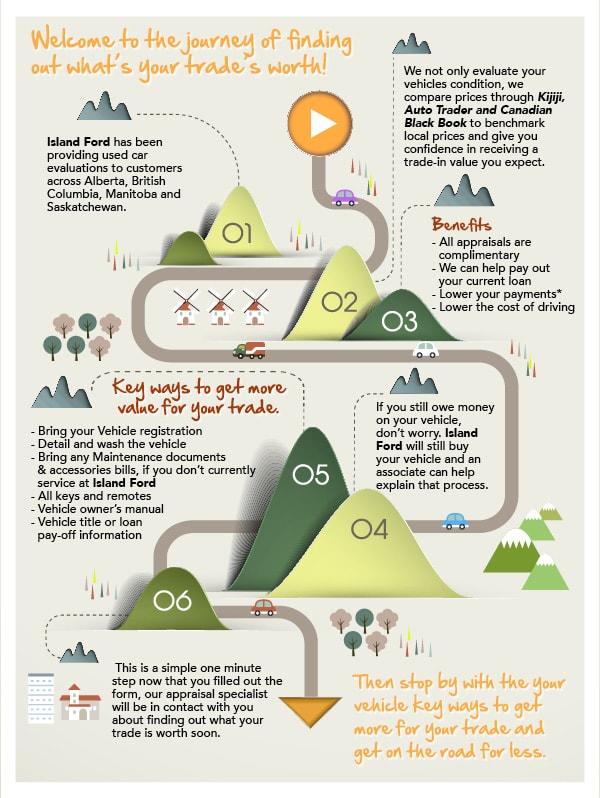
One of the most overlooked aspects of protecting trade-in value is the “paper trail.” From a financial perspective, a well-documented asset is a lower-risk asset. If you can provide a complete service history, original receipts, and warranty records, you remove the uncertainty for the dealer. This allows them to offer a higher trade-in price because they have a lower “risk premium” attached to the transaction. In the eyes of the appraiser, a vehicle with a digital service record is significantly more valuable than an identical model with a mystery maintenance history.
The Impact of Condition and Reconditioning
Dealers use a standardized grading system—usually ranging from “Poor” to “Excellent.” It is a common mistake to assume your asset is in excellent condition. Statistically, less than 5% of trade-ins truly meet the “excellent” criteria. Financially, it is often worth investing a small amount in “curb appeal” before seeking a valuation. Professional detailing for a car or a screen replacement for a device can often yield a 2x or 3x return on the cost of the repair by bumping the asset up into a higher valuation bracket.
Timing the Market Cycles
Trade-in values are sensitive to seasonal demand. For example, four-wheel-drive vehicles often command a premium in the late autumn, while convertibles see a spike in value during the spring. Similarly, the end of the fiscal year or the end of a calendar month can be an advantageous time for a trade-in, as dealerships may be more aggressive in their valuations to meet sales quotas or clear inventory for new models.
The Tech Ecosystem: Managing Digital Assets
In the modern economy, “What’s my trade-in value?” is a question asked as frequently about smartphones and laptops as it is about cars. Tech companies like Apple, Samsung, and Google have built robust trade-in ecosystems designed to lock consumers into their respective hardware cycles.
The Psychology of Ecosystem Retention
From a personal finance standpoint, tech trade-ins function as a form of “deferred discount.” Companies offer high trade-in values not necessarily because the old hardware is valuable to them, but because it lowers the barrier to entry for the newest model. This keeps the user within the ecosystem, ensuring continued revenue from app stores, cloud storage, and subscription services. When evaluating these offers, it is vital to calculate the “Net Cost of Ownership”—the total price of the new device minus the trade-in credit, spread over the months you intend to own it.
Bulk Trade-Ins for Small Businesses
For business owners, managing a fleet of devices requires a more clinical approach to trade-in value. Many enterprises now utilize “Lifecycle Management” services. Instead of running hardware into the ground, businesses trade in their entire fleet every three years. This ensures that the devices still have significant residual value, which is then used to subsidize the next upgrade. This creates a predictable, recurring capital expenditure (CapEx) rather than an unpredictable series of emergency replacement costs.
Negotiation Tactics for the Modern Consumer
Obtaining the best trade-in value requires a shift in mindset from a “seller” to a “negotiator.” You are not just getting rid of an old item; you are providing the dealer with inventory that they can profit from.
The Power of Multiple Appraisals
In the digital age, there is no excuse for entering a negotiation with only one data point. Use online valuation tools—such as Kelley Blue Book for cars or Gazelle for electronics—to establish a baseline. However, the most powerful tool is a written “Instant Cash Offer” from a third party. If a competitor is willing to buy your asset for a specific price, most dealers will match or beat that price to secure the sale of the new product.
The “Two-Step” Negotiation Strategy
One of the most effective financial maneuvers is to separate the trade-in from the purchase. Negotiate the price of the new asset first as if there is no trade-in involved. Once you have reached a firm “out-the-door” price, introduce the trade-in. This prevents the dealer from “hiding” a low trade-in offer by giving you a discount on the new item, or vice versa. By treating them as two separate transactions, you ensure you are getting the maximum value on both sides of the ledger.
Long-Term Wealth Building and Resale Mindset
Ultimately, maximizing trade-in value starts the day you acquire an asset, not the day you decide to get rid of it. Sophisticated investors and savvy consumers buy with the end in mind.
Brand Choice and Value Retention
Certain brands are renowned for their value retention. In the automotive world, brands like Toyota and Porsche consistently top the charts for high residual value. In the world of high-end horology, a Rolex might actually appreciate, while a fashion watch loses 90% of its value instantly. Choosing assets that are known for high trade-in value is a proactive financial strategy that reduces your long-term cost of living.

Maintenance as an Investment
We often view maintenance as an expense, but it is more accurately described as a protection of equity. Every oil change, software update, or protective case is a small investment in the future trade-in value of the asset. When it comes time to ask, “What’s my trade-in value?” the answer will be a direct reflection of how well you managed that asset during its tenure in your possession.
By viewing every major purchase as a temporary holding in a broader portfolio, you can turn the cycle of consumption into a cycle of wealth preservation. The trade-in value is not just a number on a contract; it is a vital tool for liquidity, a hedge against inflation, and a bridge to your next financial milestone. Understanding, protecting, and negotiating this value is a hallmark of financial literacy in the 21st century.
aViewFromTheCave is a participant in the Amazon Services LLC Associates Program, an affiliate advertising program designed to provide a means for sites to earn advertising fees by advertising and linking to Amazon.com. Amazon, the Amazon logo, AmazonSupply, and the AmazonSupply logo are trademarks of Amazon.com, Inc. or its affiliates. As an Amazon Associate we earn affiliate commissions from qualifying purchases.