
Interest rates are the invisible engine of the global economy. They dictate the cost of our homes, the growth of our savings, and the feasibility of our business ventures. Yet, for many consumers, the question “What’s my interest rate?” often yields a confusing array of numbers, acronyms, and fine print. Understanding your interest rate is not merely a matter of knowing a single percentage; it is about understanding the price of money, the level of risk you represent to a lender, and the broader economic climate in which you operate.
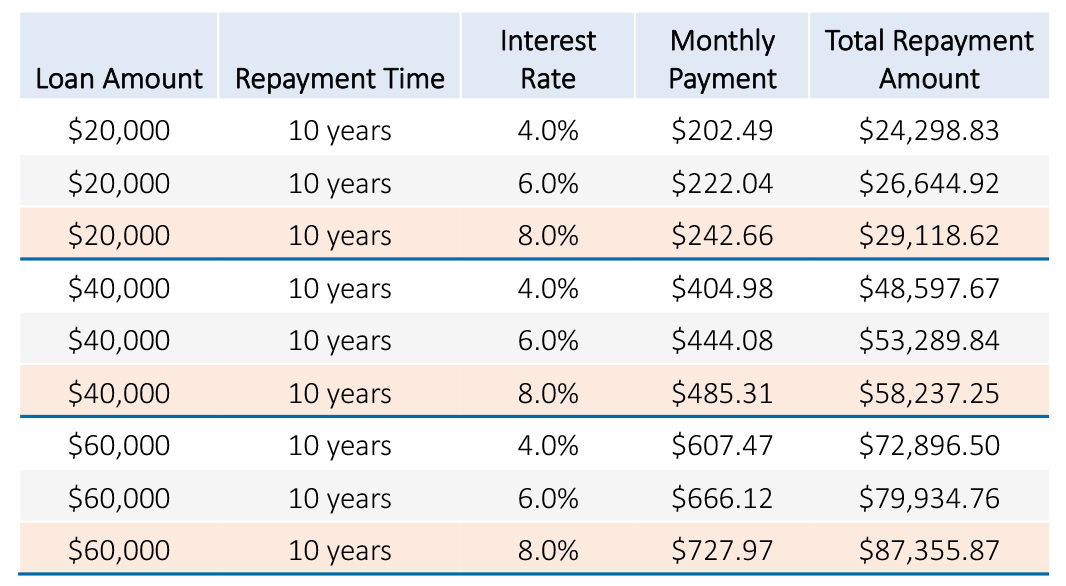
In the realm of personal finance, your interest rate is the most significant variable in determining your long-term financial health. Whether you are looking at a mortgage, a car loan, or a high-yield savings account, the rate you receive determines how much of your hard-earned money stays in your pocket and how much is transferred to a financial institution. This guide provides a deep dive into the mechanics of interest rates, the factors that influence what you are offered, and how you can position yourself to secure the most favorable terms possible.
Decoding the Basics: What Exactly is an Interest Rate?
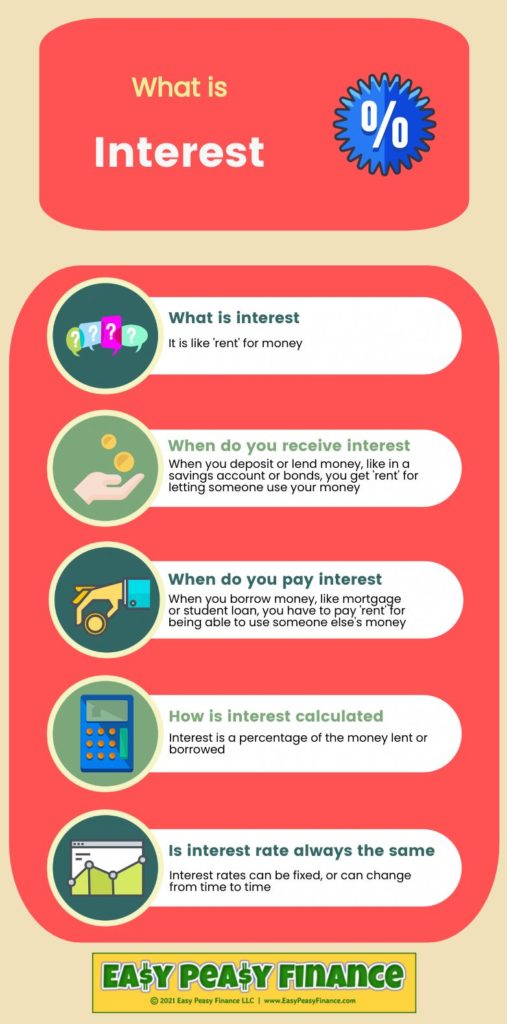
At its simplest level, an interest rate is the amount a lender charges a borrower for the use of assets, expressed as a percentage of the total amount loaned. From the perspective of the borrower, it is the cost of debt. From the perspective of the saver or investor, it is the return on capital. However, the simplicity ends there, as the financial industry utilizes several different ways to calculate and present these rates.
Nominal vs. Effective Interest Rates
The nominal interest rate is the “headline” rate—the number you see in bold on a loan agreement or a bank’s marketing materials. It does not account for the effects of compounding or additional fees. The effective interest rate, however, provides a more accurate picture. Because interest often compounds daily, monthly, or quarterly, the actual amount you pay or earn over a year is usually higher than the nominal rate suggests. For savers, this is often expressed as the Annual Percentage Yield (APY), which reflects the total amount of interest earned in a year based on compounding. For borrowers, the most critical number is the Annual Percentage Rate (APR).
The Significance of the APR
The Annual Percentage Rate (APR) is perhaps the most important figure for any borrower to understand. Unlike a simple interest rate, the APR includes not only the interest charges but also other costs such as loan processing fees, mortgage insurance, and points. When you ask, “What’s my interest rate?” on a mortgage or an auto loan, the lender may give you a base rate of 6%, but the APR might be 6.5%. That 0.5% difference represents the “hidden” costs of borrowing. Comparing APRs across different lenders is the only way to ensure you are looking at an “apples-to-apples” comparison of the total cost of credit.
The Architecture of Your Personal Rate: Why You Pay What You Pay
Lenders do not assign interest rates at random. Instead, they use complex algorithms and risk-assessment models to determine the likelihood that a borrower will repay the debt. Your personal interest rate is essentially a reflection of the risk you pose to the financial institution.
The Power of the Credit Score
In the United States and many other modern economies, the FICO score (or similar credit scoring models) is the primary determinant of your interest rate. This three-digit number summarizes your entire financial history, including your payment consistency, the length of your credit history, and your total debt load.
A borrower with a “Prime” score (typically above 740) is seen as low-risk and will be offered the lowest available market rates. Conversely, a borrower with a “Subprime” score (below 620) may find themselves paying double or triple the interest rate of a prime borrower—if they are approved at all. Over the life of a 30-year mortgage, the difference between a 7% interest rate and a 4% interest rate can amount to hundreds of thousands of dollars.
Debt-to-Income Ratio and Loan-to-Value
Beyond your credit score, lenders look at your Debt-to-Income (DTI) ratio. This measures how much of your monthly gross income goes toward paying existing debts. A high DTI suggests that you are overleveraged and may struggle to make payments if your income fluctuates, leading lenders to charge a higher interest rate to compensate for that risk.
Similarly, the Loan-to-Value (LTV) ratio plays a role, particularly in secured loans like mortgages and car notes. If you are buying a $500,000 home and putting down $100,000 (20%), your LTV is 80%. If you only put down 3%, your LTV is 97%. A higher LTV represents a higher risk for the lender because there is less equity in the asset, which often results in a higher interest rate or the added requirement of private mortgage insurance (PMI).
Fixed vs. Variable: Strategies for Different Financial Seasons
When determining your interest rate, you must also choose the structure of that rate. The choice between a fixed and a variable (or floating) rate is a choice between certainty and potential savings.
The Stability of Fixed Rates
A fixed-rate loan maintains the same interest rate for the entire life of the loan. This is the gold standard for long-term planning. If you secure a 30-year fixed mortgage at 5%, your monthly principal and interest payment will remain exactly the same in year 25 as it was in year one, regardless of what happens to the economy. Fixed rates protect borrowers from “interest rate risk”—the danger that rates will rise and make their debt more expensive. This is particularly advantageous in an inflationary environment where the value of the currency decreases, but your debt payment remains static.

The Risk and Reward of Variable Rates
Variable or adjustable rates (such as those found on ARMs or credit cards) are tied to an underlying index, such as the Prime Rate or the Secured Overnight Financing Rate (SOFR). These rates typically start lower than fixed rates, which can be enticing for borrowers. However, they are subject to periodic adjustments.
Choosing a variable rate is essentially a bet on the future of the economy. If interest rates fall, your monthly payment decreases. If they rise, your payment could skyrocket, potentially leading to “payment shock.” Variable rates are often appropriate for short-term financing or for borrowers who plan to sell or refinance an asset before the first adjustment period occurs. However, they require a higher degree of financial literacy and a buffer in your budget to handle potential increases.
The Invisible Hand: How the Global Economy Influences Your Wallet
Even if you have a perfect credit score and no debt, you cannot control the “base rate” from which all personal interest rates are derived. This is dictated by the macroeconomic environment and the policy decisions of central banks.
Central Bank Policy and the “Risk-Free” Rate
The Federal Reserve (in the US) and other central banks influence interest rates by setting the target range for the federal funds rate—the rate at which banks lend to each other overnight. When the Fed raises rates to combat inflation, the cost of borrowing for banks goes up. To maintain their profit margins, banks pass these costs on to consumers in the form of higher rates on credit cards, mortgages, and personal loans.
Conversely, in an effort to stimulate a sluggish economy, central banks may lower rates. This makes borrowing cheaper, encouraging businesses to expand and consumers to spend. When you ask “What’s my interest rate?” in 2024 versus 2020, the answer is vastly different not because of your personal behavior, but because the global interest rate environment has shifted.
Inflation and Purchasing Power
Inflation is the ultimate driver of interest rate trends. Lenders must charge enough interest to compensate for the fact that the money they are repaid in the future will have less purchasing power than the money they lent out today. If inflation is running at 4%, a lender charging a 3% interest rate is actually losing money in real terms. Therefore, as inflation expectations rise, interest rates inevitably follow.
Practical Steps to Optimize Your Rates and Build Wealth
Understanding your interest rate is the first step, but the ultimate goal is to optimize it. Minimizing the interest you pay and maximizing the interest you earn is the fastest way to build wealth.
Strategies for Borrowers: Refinancing and Negotiation
If you are currently paying a high interest rate on a loan, you are not necessarily stuck with it forever. Refinancing allows you to take out a new loan with better terms to pay off an old one. This is common in the mortgage market, but it can also apply to student loans and auto loans.
Before asking a lender for a lower rate, take six months to aggressively improve your credit score. Pay down revolving credit card balances to lower your credit utilization and ensure every payment is made on time. Once your score has jumped, you can approach your current lender or a competitor with a much stronger hand to negotiate a lower rate.
Strategies for Savers: The Magic of Compounding
On the flip side of the coin, high interest rates are a boon for savers. For over a decade, interest rates on savings accounts were near zero, meaning money sitting in the bank was actually losing value due to inflation. Today, high-yield savings accounts (HYSA) and Certificates of Deposit (CD) offer rates that allow for genuine capital preservation and growth.
To maximize your interest income, look for accounts that offer daily compounding. The frequency with which interest is added back to your principal significantly impacts your long-term yield. By consistently reinvesting your interest, you trigger the “snowball effect” of compound interest, where you eventually earn interest on your interest, leading to exponential growth of your wealth over time.
Conclusion: Taking Control of the Numbers
“What’s my interest rate?” is more than a question for a loan officer; it is a fundamental inquiry into your financial status. By understanding the components of APR, the impact of your credit behavior, the differences between fixed and variable structures, and the influence of the global economy, you move from being a passive participant in the financial system to an active manager of your capital.
In a world where small percentages lead to massive differences in lifestyle and legacy, the pursuit of a lower borrowing rate and a higher savings rate is one of the most productive uses of your time. Mastery of your interest rates is, in many ways, mastery of your financial future.
aViewFromTheCave is a participant in the Amazon Services LLC Associates Program, an affiliate advertising program designed to provide a means for sites to earn advertising fees by advertising and linking to Amazon.com. Amazon, the Amazon logo, AmazonSupply, and the AmazonSupply logo are trademarks of Amazon.com, Inc. or its affiliates. As an Amazon Associate we earn affiliate commissions from qualifying purchases.