
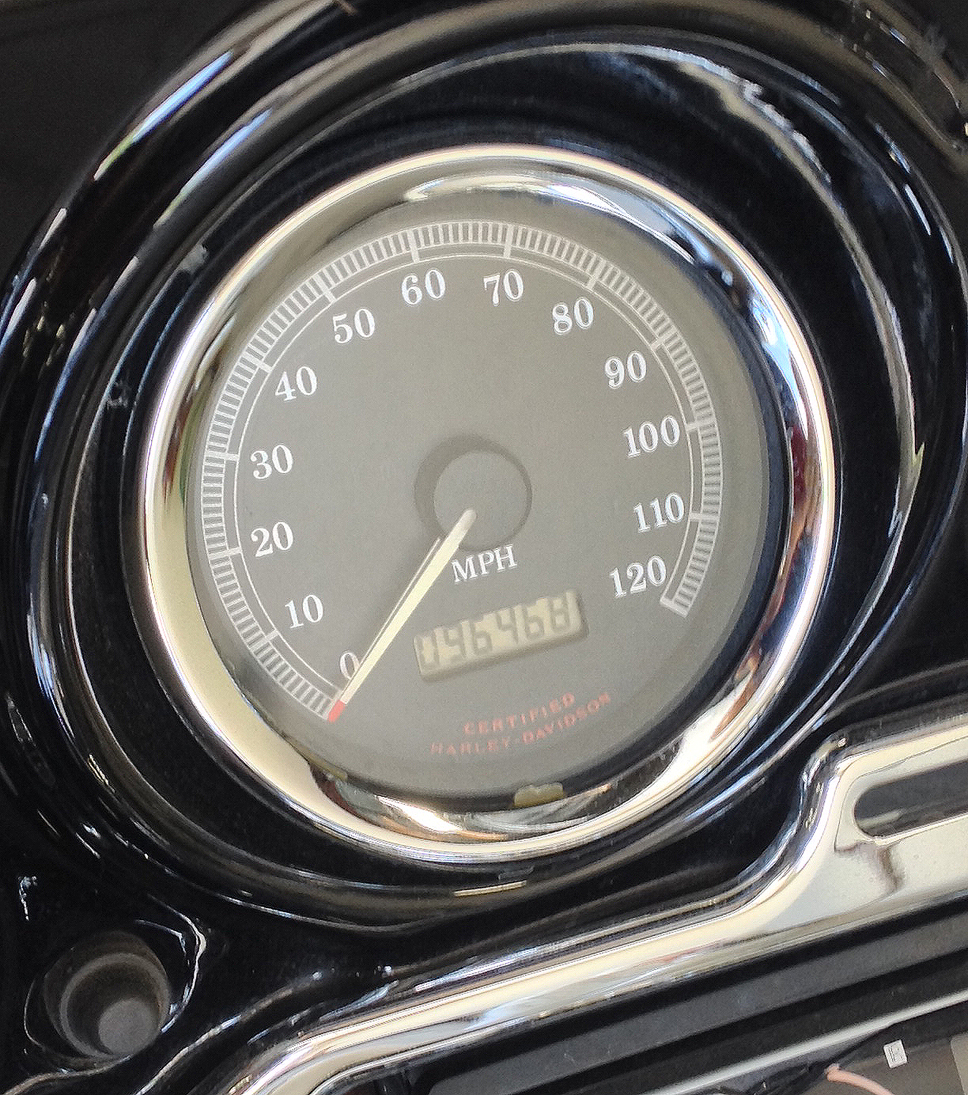
In the world of personal finance and asset management, few purchases evoke as much emotional debate as the motorcycle. For some, it is a lifestyle choice; for others, a savvy commuting tool. However, from a purely fiscal perspective, a motorcycle is a depreciating asset whose value is intrinsically tied to a single, fluctuating metric: the odometer. The question of “what’s high mileage for a motorcycle” is less about mechanical failure and more about the economic threshold where the cost of ownership intersects with the rapid decline of resale value.

Understanding high mileage requires a shift in perspective. While a car might be considered “broken in” at 50,000 miles, a motorcycle with the same reading is often viewed by the market as being at the end of its financial life. To make informed investment decisions—whether you are buying, selling, or maintaining—you must understand the financial mechanics behind these numbers.
Understanding the Depreciation Curve of High-Mileage Motorcycles
In the realm of personal finance, depreciation is the most significant “silent killer” of wealth. Motorcycles experience a depreciation curve that is far more aggressive than that of most passenger vehicles. This is primarily due to the market perception of longevity and the niche nature of the product.
The “Magic Numbers” in the Resale Market
In the secondary market, certain psychological barriers dictate the price of a motorcycle. The first major threshold is often 10,000 miles. For high-performance sportbikes, crossing this line can result in a 15–20% drop in valuation, regardless of the machine’s actual condition. The second, more formidable barrier is 20,000 to 25,000 miles. At this stage, the pool of potential buyers shrinks significantly, as the “high mileage” label becomes firmly attached.
From an investment standpoint, the 30,000-mile mark is often seen as the “cliff.” Beyond this point, the asset’s value tends to plateau at a low baseline. If you are looking to minimize capital loss, the strategic move is often to exit the asset before it hits these psychological milestones. Conversely, for a buyer looking for a high-utility, low-cost entry point, purchasing an asset that has already “fallen off the cliff” can be a shrewd move, as the steepest part of the depreciation has already occurred.
How Category and Brand Dictate Value Retention
Not all miles are created equal on a balance sheet. A touring motorcycle, such as a Honda Goldwing or a BMW R1250RT, is designed for long-distance travel. In these cases, 50,000 miles might be considered “middle-aged” rather than “high mileage.” The market reflects this; these bikes retain a higher percentage of their MSRP at higher odometer readings compared to a 600cc supersport bike.
Understanding the brand’s market position is crucial. High-end brands with strong corporate identities and robust service networks often command a premium even at higher mileages. When calculating the projected ROI or resale value, one must factor in the “brand tax”—the reality that a Harley-Davidson with 40,000 miles may still command a higher resale price than a lesser-known brand with half the mileage, simply due to market demand and brand equity.
The Total Cost of Ownership (TCO) Analysis
When evaluating high-mileage motorcycles, a savvy investor looks beyond the sticker price. The Total Cost of Ownership (TCO) includes insurance, fuel, and, most importantly, scheduled maintenance. In the motorcycle world, maintenance is not a linear cost; it is cyclical and often exponential.
Maintenance Thresholds and Sunk Costs
High-mileage motorcycles often approach what are known as “major service intervals.” For many modern bikes, a significant valve clearance check or a timing belt replacement occurs every 15,000 to 20,000 miles. These services can cost upwards of $800 to $1,500 depending on the complexity of the engine.
If you purchase a motorcycle at 18,000 miles for a “bargain” price, but it requires a $1,200 service at 20,000 miles, your cost basis has shifted unfavorably. In financial terms, this is an overlooked liability. When a bike reaches high mileage, these major service costs can occasionally exceed 25% of the bike’s total market value. At this juncture, owners face a “sunk cost” dilemma: do they invest more capital into an aging asset, or do they liquidate it at a loss to avoid further maintenance liabilities?
High Mileage vs. Poor Maintenance: The Hidden Expenses
From a financial security standpoint, a high-mileage bike with a documented service history is often a safer asset than a low-mileage bike that has sat idle. Seals dry out, tires age out (becoming a “zombie” expense where they look good but are unsafe), and fluids degrade.
When auditing a potential motorcycle purchase, the “paper trail” serves as the due diligence report. A bike with 40,000 miles and a stack of receipts represents a managed risk. A bike with 5,000 miles and no history is a speculative gamble. For those focusing on long-term personal finance, the goal is always to minimize the “unforeseen expense” variable.
Strategic Investing: Is a High-Mileage Bike a Smart Financial Move?
While “high mileage” usually carries a negative connotation, it can represent a strategic opportunity for those who understand market inefficiencies. In the world of side hustles and alternative investments, flipping or utilizing high-mileage motorcycles can be a viable path to income.
Arbitrage Opportunities in the Used Market
Market inefficiency occurs when the perceived value of an asset is lower than its actual utility. Many riders are terrified of the 50,000-mile mark. This fear creates a buyer’s market. An investor who understands mechanical longevity can acquire these “devalued” assets at a fraction of their utility value.
For example, if a motorcycle with 50,000 miles can reliably provide another 30,000 miles of commuting for a $2,000 investment, the “cost per mile” becomes incredibly low compared to financing a new $15,000 machine. This is a classic “value investing” approach applied to physical goods: buying an unloved asset with strong fundamentals.
Insurance and Financing Implications for Older Assets
One must also consider the friction of financing and insuring high-mileage motorcycles. Most traditional lenders are hesitant to finance bikes over a certain age or mileage, or they may charge predatory interest rates to compensate for the risk. This often forces high-mileage transactions into the “cash-only” category.
From a cash-flow perspective, buying a high-mileage bike outright eliminates monthly debt obligations, which is a cornerstone of sound personal finance. Furthermore, insurance premiums for high-mileage, lower-value bikes are significantly cheaper. If the asset is lost or stolen, the financial “hit” is contained, whereas a new, financed bike could leave the owner “underwater” on their loan if the insurance payout doesn’t cover the remaining balance.
Calculating the Break-Even Point: Repair vs. Replacement
Every asset has a lifecycle. In business finance, we look at the point where the cost of maintaining an old machine exceeds the cost of a new one (including the opportunity cost of downtime). For a motorcycle, this is the “Break-Even Point.”
The Rule of Diminishing Returns
As a motorcycle climbs into the 60,000 to 80,000-mile range, components like suspension shocks, radiators, and fuel pumps begin to fail. Unlike oil changes, these are “end-of-life” repairs. If a rider spends $3,000 over two years to keep a $2,500 bike on the road, they have violated the rule of diminishing returns.
The professional approach is to track every dollar spent on the asset. When the annual maintenance cost exceeds 50% of the asset’s current market value, it is usually time to divest. By treating the motorcycle as a line item on a balance sheet rather than an emotional attachment, you can make the cold, hard decision to sell before the asset becomes a financial “black hole.”
Liquidating a High-Mileage Asset
Selling a high-mileage motorcycle requires a different marketing strategy. You are no longer selling “prestige” or “newness”; you are selling “reliability” and “documented care.” To maximize your exit price, you must provide proof of the asset’s health—compression tests, service logs, and recent upgrades.
In the world of finance, transparency reduces risk for the buyer, which allows the seller to command a higher price. Even a bike with 100,000 miles can be sold profitably if the “business case” for its continued operation is presented effectively.

Conclusion
In summary, “high mileage” for a motorcycle is not a fixed number but a moving target dictated by market psychology, brand positioning, and maintenance cycles. For the average consumer, 25,000 to 30,000 miles marks the beginning of the “high mileage” financial category, where depreciation slows but maintenance risks increase.
By applying the principles of Total Cost of Ownership, depreciation analysis, and value investing, you can navigate the motorcycle market not just as a rider, but as a savvy financial manager. Whether you are avoiding the “depreciation cliff” of a new bike or exploiting the arbitrage of a well-maintained high-mileage machine, the goal remains the same: maximizing the utility of every dollar spent on two wheels.
aViewFromTheCave is a participant in the Amazon Services LLC Associates Program, an affiliate advertising program designed to provide a means for sites to earn advertising fees by advertising and linking to Amazon.com. Amazon, the Amazon logo, AmazonSupply, and the AmazonSupply logo are trademarks of Amazon.com, Inc. or its affiliates. As an Amazon Associate we earn affiliate commissions from qualifying purchases.