
In the complex world of personal finance, investing, and global economics, certain terms are used so frequently that their fundamental meanings are often taken for granted. One such term is “denomination.” While the word carries various meanings in religious or sociological contexts, in the realm of money, it serves as the foundational architecture for how we measure, trade, and store value. Understanding denomination is not merely an academic exercise; it is a practical necessity for anyone looking to navigate the nuances of currency management, bond investing, and the burgeoning landscape of digital assets.
At its simplest, a denomination is the face value of a financial instrument, such as a banknote, coin, or bond. However, the implications of how value is denominated stretch far beyond the numbers printed on a piece of paper. It affects consumer psychology, international trade, and the stability of entire national economies.
The Core Concept: Defining Denomination in Modern Currency
The most visible application of denomination is in the physical currency we use daily. Central banks around the world issue coins and banknotes in specific denominations to facilitate transactions of varying sizes. This system is designed for efficiency, ensuring that the “medium of exchange” is portable and divisible.
The Units of Exchange
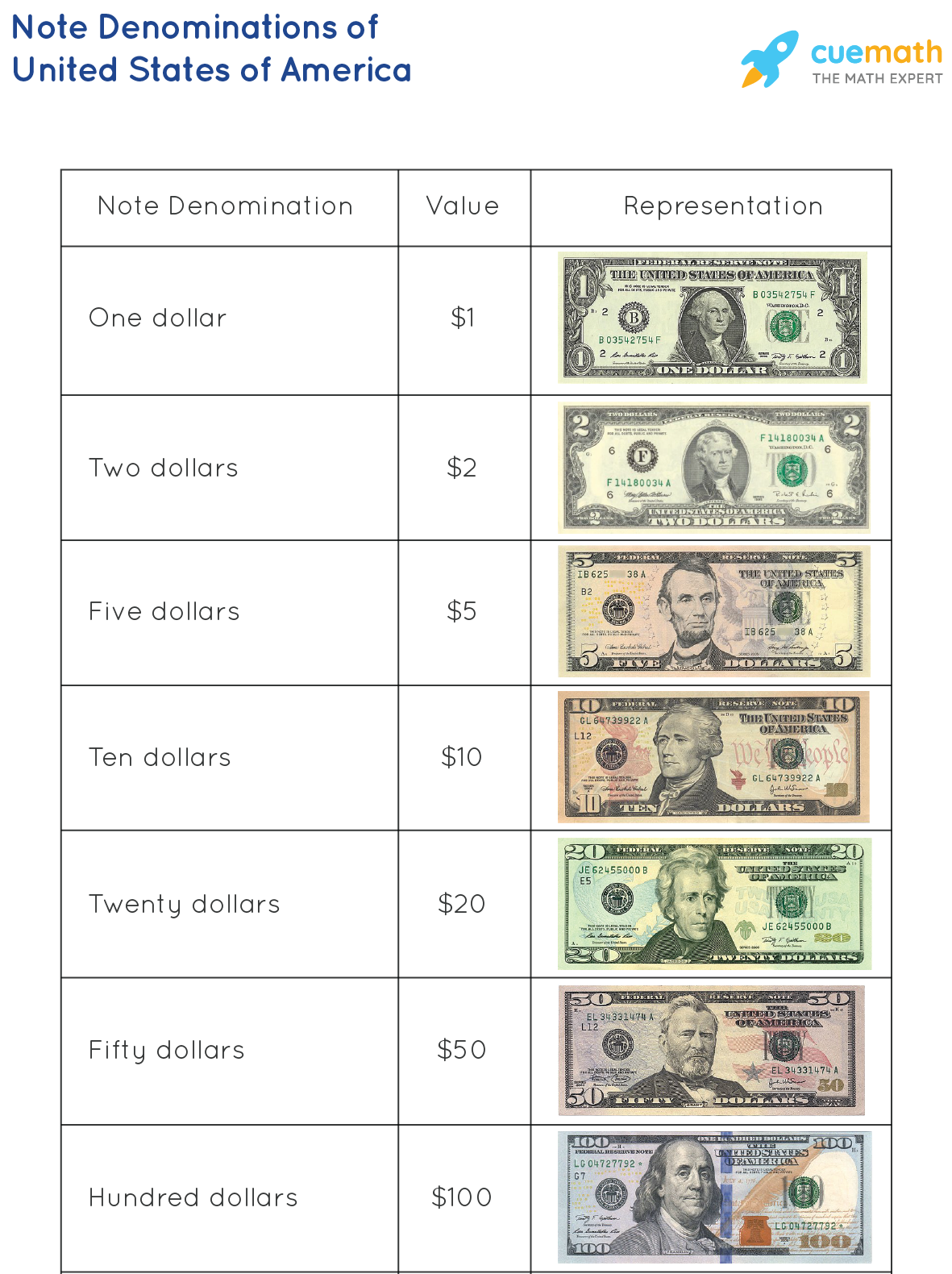
Most modern currencies follow a logical progression of denominations, often based on a 1-2-5 series (e.g., $1, $2, $5, $10, $20, $50, $100). This mathematical structure is intentional. It allows any specific amount of money to be paid using a minimum number of notes or coins. From a personal finance perspective, these units dictate how we perceive liquid wealth. The choice of which denominations a government prints can also signal economic health. For instance, the absence of high-value notes may be a strategy to combat illicit activities, while the introduction of extremely high denominations is often a harbinger of hyperinflation.
Fractional Denominations and Purchasing Power
Denomination isn’t limited to whole numbers. Fractional denominations—cents, pence, or centimes—allow for precise pricing. However, as inflation erodes purchasing power, these smaller denominations often lose their utility. Many countries have phased out their smallest coins (like the penny in Canada) because the cost of minting them exceeds their face value. Understanding the relationship between denomination and purchasing power is crucial for long-term financial planning, as it highlights how the “nominal value” of a denomination remains static even as its “real value” declines.
Denomination in Investment and Financial Instruments
In the world of investing, denomination takes on a slightly different but equally vital role. Here, it refers to the “par value” or the base unit in which an asset is priced and traded. This is particularly relevant for fixed-income securities and corporate equities.
Bonds and Par Value
When an investor purchases a bond, they are essentially lending money to an entity (a government or corporation) in exchange for periodic interest payments and the return of the bond’s face value at maturity. This face value is the bond’s denomination. Most corporate bonds are issued in denominations of $1,000, while government bonds can vary significantly.
The denomination is critical because it determines the “coupon” or interest payment. If a bond has a 5% coupon and a $1,000 denomination, it pays $50 annually. For individual investors, the denomination acts as a barrier to entry; high-denomination bonds (sometimes $10,000 or $100,000) are often reserved for institutional investors, whereas “mini-bonds” or fractional bond platforms allow retail investors to participate at lower denomination levels.
Stock Par Value and Share Splits
In the equity markets, “par value” is a largely vestigial concept for common stock, often set at a fraction of a cent for legal reasons. However, the “market denomination”—the price per share—is highly relevant. When a company’s share price becomes too high (a high denomination), it may become “unaffordable” for small investors. To remedy this, companies perform stock splits. By splitting one $1,000 share into ten $100 shares, the company reduces the denomination of its “unit of ownership,” theoretically increasing liquidity and making the stock more accessible to a broader range of participants.
The Role of Denomination in Global Economics and Trade

On a macro level, denomination refers to the currency in which a contract, debt, or trade is settled. This is a cornerstone of international business finance and geopolitics.
Currency Pairings and Forex
In the Foreign Exchange (Forex) market, every trade involves two denominations. When we say a contract is “denominated in USD,” we mean that the United States Dollar is the standard of value used for that specific transaction. Most global commodities, such as oil and gold, are denominated in U.S. Dollars. This gives the U.S. significant economic leverage, as other nations must hold dollar reserves to facilitate trade. For a business owner engaged in importing or exporting, the denomination of their contracts is a primary source of “currency risk.” If a European company signs a contract denominated in Dollars and the Euro weakens, the cost of that contract in their local currency rises significantly.
Redenomination and Sovereign Stability
When a country experiences extreme inflation, the denominations of its currency can become unmanageable. We have seen historical examples where a loaf of bread cost billions of units of local currency. In such cases, governments often perform a “redenomination.” This involves stripping zeros from the currency—for example, exchanging 1,000 “Old Pesos” for 1 “New Peso.” While redenomination does not inherently change the value of the money or fix the underlying economic issues, it simplifies accounting, restores a sense of psychological stability, and reduces the physical burden of carrying massive amounts of cash.
Practical Applications: Managing Your Personal Finances
For the average individual, the concept of denomination influences behavior in subtle but powerful ways. Financial psychology often explores how the physical or numerical representation of money changes our spending habits.
Cash Management and Liquidity
Effective cash management often involves choosing the right denominations for your needs. For travelers, carrying small denominations of local currency is essential for tips and small purchases where change might not be available. For those practicing “cash stuffing” (a popular budgeting technique), specific denominations are used to categorize spending—putting $50 in a “groceries” envelope and $20 in an “entertainment” envelope. This physical partitioning of denominations helps create a tangible boundary for discretionary spending.
The “Denomination Effect”
Behavioral economics has identified a phenomenon known as the “Denomination Effect.” Studies suggest that people are less likely to spend a single large denomination (like a $100 bill) than an equivalent amount in smaller denominations (five $20 bills). The $100 bill feels like “real money” or a “store of value,” and there is a psychological barrier to “breaking” it. Conversely, smaller notes are perceived as “petty cash” and are spent more impulsively. Understanding this can be a powerful tool for personal savings; by keeping your emergency fund in larger denominations, you might be less tempted to dip into it for non-essential purchases.
The Future of Denomination: Digital Assets and Cryptocurrencies
As we transition into an increasingly digital economy, the concept of denomination is undergoing a radical transformation. Digital currencies and cryptocurrencies do not have physical constraints, allowing for denominations that were previously impossible.
Satoshis and Gwei: The New Micro-Denominations
Bitcoin, the most well-known cryptocurrency, has a high unit price, often reaching tens of thousands of dollars. This makes “1 BTC” a very large denomination. To facilitate smaller transactions, Bitcoin is divided into “Satoshis” (100 million Satoshis equal 1 Bitcoin). Similarly, the Ethereum network uses “Gwei” to calculate transaction fees. These micro-denominations allow for “micro-payments”—the ability to send fractions of a cent across the globe instantly. This shift represents a move away from the rigid 1-2-5 series of paper money toward a system of infinite divisibility.
Central Bank Digital Currencies (CBDCs)
Governments are also exploring Central Bank Digital Currencies. Unlike decentralized crypto, CBDCs would be digital versions of the national denomination (like a Digital Dollar). The shift to digital denominations could allow for “programmable money,” where certain denominations are earmarked for specific uses, such as stimulus payments that can only be spent on essentials. While this offers efficiency, it also changes the fundamental nature of how we interact with the units of value provided by the state.
Conclusion: Why Denomination Matters
Whether you are a retail investor looking at the par value of a bond, a traveler exchanging currency at an airport, or a saver trying to resist the urge to spend, denomination is the lens through which you view financial value. It provides the structure necessary for commerce and the psychological benchmarks that guide our spending and saving.
By understanding the mechanics of denomination—from the “Denomination Effect” in our wallets to the complexities of dollar-denominated global debt—we become more sophisticated participants in the economy. In an era where the form of money is shifting from paper to pixels, the concept of the “unit of value” remains the one constant. Respecting the denomination is the first step toward mastering the money it represents.
aViewFromTheCave is a participant in the Amazon Services LLC Associates Program, an affiliate advertising program designed to provide a means for sites to earn advertising fees by advertising and linking to Amazon.com. Amazon, the Amazon logo, AmazonSupply, and the AmazonSupply logo are trademarks of Amazon.com, Inc. or its affiliates. As an Amazon Associate we earn affiliate commissions from qualifying purchases.