
The concept of “inequality” in mathematics might conjure images of textbooks filled with symbols like <, >, ≤, and ≥. While these are indeed the cornerstones, the true essence of an inequality stretches far beyond abstract mathematical expressions. It’s about understanding relationships of difference, about defining boundaries, and about representing real-world scenarios where things aren’t always perfectly equal. In a world increasingly driven by data, technology, and financial decisions, a solid grasp of inequalities is not just an academic exercise; it’s a fundamental tool for navigating complexity and making informed choices.

This article will delve into the world of mathematical inequalities, exploring their fundamental definitions, how they differ from equations, and crucially, how these concepts permeate and inform the very domains that shape our modern lives: Technology, Brand, and Money. We’ll see how the abstract language of inequalities translates into tangible applications, from the algorithms powering our AI tools to the financial strategies that drive business growth.
The Building Blocks: Understanding Mathematical Inequalities
At its core, an inequality in mathematics is a statement that compares two quantities and asserts that they are not equal. Unlike an equation, which posits an exact equivalence (e.g., $2+2=4$), an inequality describes a relationship where one side is either greater than, less than, greater than or equal to, or less than or equal to the other.
Beyond the Greater Than and Less Than Symbols
The most common symbols we encounter are:
- < (less than): This symbol indicates that the quantity on the left is smaller than the quantity on the right. For example, $5 < 10$ is a true statement because 5 is indeed less than 10.
- > (greater than): This symbol signifies that the quantity on the left is larger than the quantity on the right. For instance, $15 > 8$ is true because 15 is greater than 8.
- ≤ (less than or equal to): This symbol means the quantity on the left is either smaller than or exactly equal to the quantity on the right. So, $7 le 7$ is true, as is $3 le 9$.
- ≥ (greater than or equal to): Conversely, this symbol indicates the quantity on the left is either larger than or exactly equal to the quantity on the right. $10 ge 10$ is true, and $20 ge 12$ is also true.
- ≠ (not equal to): This symbol simply states that two quantities are not the same. $3 neq 5$ is a true statement.
The Crucial Distinction: Equations vs. Inequalities
The fundamental difference lies in the nature of the relationship they describe.
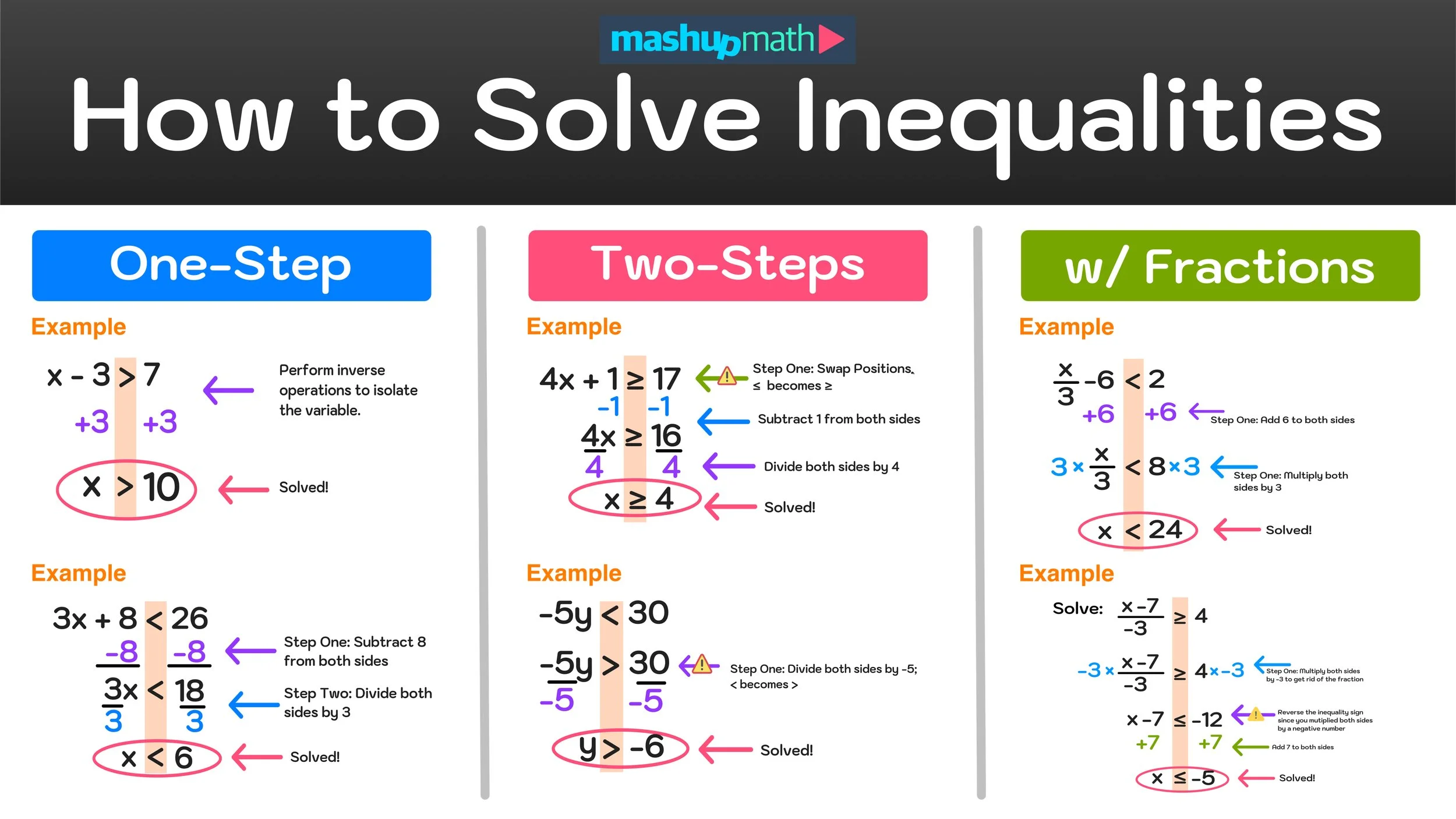
- Equations aim to find a specific value or set of values that make the statement true. For example, in the equation $x + 5 = 10$, there is only one solution: $x = 5$. It’s a point of perfect balance.
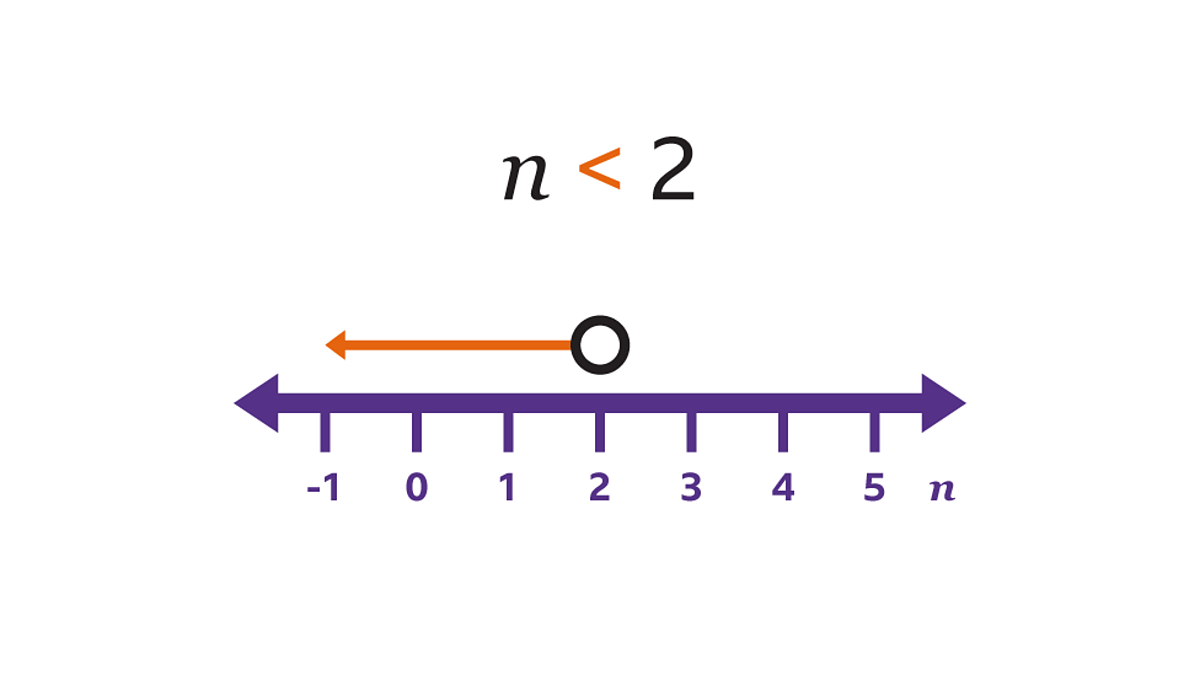
- Inequalities, on the other hand, typically define a range of possible values. If we consider the inequality $x + 5 > 10$, the solution is not a single number but an infinite set of numbers. In this case, any value of $x$ greater than 5 will satisfy the inequality. This range is often visualized on a number line, with an open or closed circle at the boundary point and a line extending in the direction of the solution set.
This distinction is vital. In many real-world applications, we are not looking for a single, precise answer, but rather for conditions that must be met, or for ranges that are acceptable or desirable.
Inequalities in the Realm of Tech: Shaping Our Digital Landscape
The world of technology is inherently built on logic, efficiency, and the management of vast amounts of data. Inequalities are not just theoretical constructs; they are the silent architects behind many of the tools and systems we use daily.
AI and Machine Learning: Defining Performance and Constraints
Artificial intelligence (AI) and machine learning (ML) are at the forefront of technological innovation. The development and deployment of AI models rely heavily on the mathematical principles of optimization, which often involve inequalities.
- Model Training: During the training phase of an ML model, algorithms aim to minimize an error or loss function. This minimization process often involves checking if the current error is less than a predefined threshold for acceptable performance. Conversely, if the error is greater than a certain tolerance, the model needs further adjustment. These are explicit inequality constraints.
- Decision Boundaries: In classification tasks, AI models create “decision boundaries” to separate different categories of data. These boundaries can be represented by inequalities. For example, a model might classify an email as spam if a certain score is greater than a particular value.
- Resource Management: AI systems often operate within finite resource constraints. For instance, a cloud computing platform running multiple AI workloads will have inequalities defining the maximum CPU usage, memory allocation, or network bandwidth available for each task. A task might be allocated resources only if its requested amount is less than or equal to the available capacity.
- Algorithmic Efficiency: When developing new algorithms, engineers often analyze their time and space complexity. The Big O notation, a fundamental tool in computer science, uses inequalities to describe how the performance of an algorithm scales with the input size. We often strive for algorithms where the complexity is less than a certain growth rate (e.g., $O(n log n)$ is better than $O(n^2)$).
Software Development and Digital Security: Setting the Standards
The principles of inequality are woven into the fabric of software development and cybersecurity.
- Validation and Error Handling: When users input data into applications, software must validate that the input meets certain criteria. For example, a password might need to be of a minimum length, meaning the length must be greater than or equal to a specific number. Age verification often requires an age to be greater than or equal to 18. If these conditions are not met, an error is triggered.
- Performance Benchmarking: Software performance is often measured against benchmarks. A new version of an application is considered an improvement if its execution time is less than the execution time of the previous version under identical conditions.
- Access Control and Permissions: In digital security, access to sensitive data or system functions is governed by permissions. A user’s authorization level must be greater than or equal to the required level to access a resource. Access is denied if the authorization is less than the requirement.
- Data Integrity: Ensuring data integrity involves checks to make sure data hasn’t been corrupted. This might involve checksums where the calculated checksum must be equal to the stored checksum, or in some error detection mechanisms, a difference greater than a certain tolerance might indicate corruption.
Apps and Gadgets: User Experience and Functionality
Even the apps on our phones and the gadgets we use are influenced by inequalities.
- Battery Life Indicators: When your phone’s battery is critically low, the icon turns red, indicating the remaining charge is less than a critical percentage (e.g., 20%). This is a direct visual representation of an inequality informing user action.
- Screen Display and Resolution: The resolution of a screen defines the number of pixels. When displaying content, the dimensions of the content must often fit within these pixel constraints, meaning the content’s width is less than or equal to the screen’s width, and its height is less than or equal to the screen’s height.
- App Performance Thresholds: Developers set performance thresholds for their apps. If an app’s responsiveness drops below a certain level, it might trigger a performance warning or even a crash. This is governed by inequalities related to response times being greater than acceptable limits.
Inequalities in the World of Brand: Building Reputation and Customer Loyalty
While perhaps less immediately obvious than in technology, the principles of inequality play a subtle yet significant role in how brands are perceived, managed, and how they build lasting relationships with their customers.
Brand Strategy and Identity: Setting the Bar
A strong brand identity is about setting clear expectations and consistently delivering on them. Inequalities help define these standards and measure adherence.
- Quality Standards: Brands often establish internal quality standards for their products or services. The perceived quality of a product from a customer’s perspective must be greater than or equal to the brand’s stated quality benchmark to maintain satisfaction. If it falls below this, brand reputation suffers.
- Customer Satisfaction Metrics: Net Promoter Score (NPS) and customer satisfaction (CSAT) scores are often benchmarked. A brand aims for its scores to be consistently greater than those of its competitors or previous periods. A score less than a target might indicate a need for strategic intervention.
- Brand Promise Fulfillment: The core of brand trust is fulfilling the brand promise. If a brand promises speed, its service delivery time must be less than a certain threshold. If it promises durability, its products must last greater than or equal to a specified duration. Any deviation where the delivered value is less than the promised value erodes credibility.
Marketing and Reputation Management: Navigating Perceptions
Marketing efforts aim to influence perceptions, and reputation management is about safeguarding those perceptions.
- Competitive Positioning: In marketing campaigns, brands often compare themselves to competitors. They might highlight how their product’s features are greater than a competitor’s, or how their pricing is less than a competitor’s. These are explicit uses of inequalities to communicate value.
- Sentiment Analysis: Social media monitoring and sentiment analysis tools use algorithms to gauge public opinion. A brand’s positive sentiment score needs to remain greater than a negative sentiment score. If negative mentions begin to outnumber positive ones (i.e., negative sentiment becomes greater than positive sentiment), it signals a reputational crisis.
- Crisis Management Thresholds: Brands have predefined thresholds for what constitutes a crisis. For example, if the number of customer complaints about a specific issue within a 24-hour period becomes greater than a certain number, it automatically triggers the crisis management protocol.
Design and Case Studies: Defining Excellence
Even in the creative and analytical fields of design and case studies, inequalities are present.
- Usability Testing: When designing user interfaces, the time it takes for a user to complete a task should ideally be less than a certain acceptable time. If it’s greater than this threshold, the design needs refinement.
- A/B Testing Results: Marketing teams use A/B testing to compare different versions of an ad or webpage. They declare a winner if one version achieves a conversion rate that is statistically greater than the other.
- Case Study Success Metrics: Case studies often showcase achievements. A successful case study will demonstrate that key performance indicators (KPIs) like sales revenue, customer acquisition cost, or website traffic have improved by a percentage greater than a predefined benchmark.
Inequalities in the World of Money: From Personal Finance to Business Growth
The domain of money is perhaps where the practical application of inequalities is most evident and impactful. From managing our personal budgets to the complex financial markets, understanding relationships of greater than, less than, and equal to is fundamental.
Personal Finance: Budgeting, Saving, and Investing
For individuals, managing money effectively is a constant exercise in navigating inequalities.
- Budgeting: A budget is a clear representation of inequalities. Your spending in each category must be less than or equal to the allocated amount. If you spend more than your budget, you’ve overspent. Savings goals involve ensuring that the amount saved is greater than or equal to a target.
- Debt Management: The amount of debt owed needs to be managed. Ideally, your income should be greater than your expenses, allowing you to pay down debt. If your expenses are greater than your income, you are accumulating more debt.
- Investment Goals: When investing, individuals set risk tolerance levels. They might only invest in assets where the potential return is greater than a certain percentage, or where the risk of loss is less than a predefined acceptable level. Retirement planning involves ensuring your accumulated assets are greater than or equal to your projected living expenses in retirement.
Online Income and Side Hustles: Maximizing Returns
The pursuit of additional income often involves optimizing processes and outcomes.
- Profitability: For any business or side hustle, the revenue generated must be greater than the costs incurred to be profitable. If costs are greater than revenue, the venture is losing money.
- Efficiency and Throughput: To increase online income, individuals often focus on improving efficiency. The number of sales or clients served per hour should be maximized. If a new strategy leads to a number of sales greater than the previous strategy, it’s deemed successful.
- Gig Economy Platforms: In the gig economy, workers might choose tasks based on their earning potential. They might accept a task if the payout is greater than or equal to a certain hourly rate they’ve set for themselves.
Business Finance and Financial Tools: Strategic Decision Making
Businesses operate on complex financial models where inequalities are used for strategic planning and risk assessment.
- Break-Even Analysis: A business needs to achieve revenue greater than or equal to its total costs to break even. Any revenue less than costs results in a loss.
- Profit Margins: Businesses aim for healthy profit margins, meaning the profit generated is a significant percentage greater than the cost of goods sold.
- Credit and Loan Approvals: Lenders assess a borrower’s financial health. A credit score needs to be greater than a certain threshold for loan approval. A debt-to-income ratio must be less than a specific percentage to indicate financial stability.
- Financial Forecasting: Businesses use financial tools to forecast future performance. These forecasts often involve setting targets, such as sales revenue needing to be greater than a previous year’s performance by a certain percentage, or operating expenses needing to be less than a certain percentage of revenue.
- Valuation and Investment: In mergers and acquisitions, company valuations are crucial. A potential buyer will only proceed if the perceived value of the target company is greater than or equal to the asking price, considering potential synergies and future growth.
Conclusion: The Ubiquitous Power of Inequality
From the intricate algorithms that power our technological advancements to the strategic decisions that build successful brands and the fundamental principles of financial management, inequalities are an ever-present and indispensable part of our world. They provide the framework for understanding limits, setting goals, measuring progress, and making informed choices in an environment that is rarely perfectly balanced. Recognizing and understanding these mathematical relationships allows us to better navigate the complexities of our tech-driven, brand-conscious, and financially interconnected lives, empowering us to make smarter decisions and achieve our objectives.
aViewFromTheCave is a participant in the Amazon Services LLC Associates Program, an affiliate advertising program designed to provide a means for sites to earn advertising fees by advertising and linking to Amazon.com. Amazon, the Amazon logo, AmazonSupply, and the AmazonSupply logo are trademarks of Amazon.com, Inc. or its affiliates. As an Amazon Associate we earn affiliate commissions from qualifying purchases.