
In the dynamic landscape of professional networking and digital content, understanding key performance indicators (KPIs) is paramount. On platforms like LinkedIn, an “impression” stands as a fundamental metric, offering a crucial window into the visibility and reach of your content and profile. Far more than a mere vanity metric, an impression is a technical count that signals how often your digital presence has appeared before users, providing the foundational data for analyzing your online impact within the platform’s intricate algorithms. Grasping its precise definition, how it’s calculated, and its various applications across LinkedIn is essential for anyone looking to navigate this professional network effectively, whether for personal branding, content distribution, or business development.
The Core Definition: What LinkedIn Impressions Represent
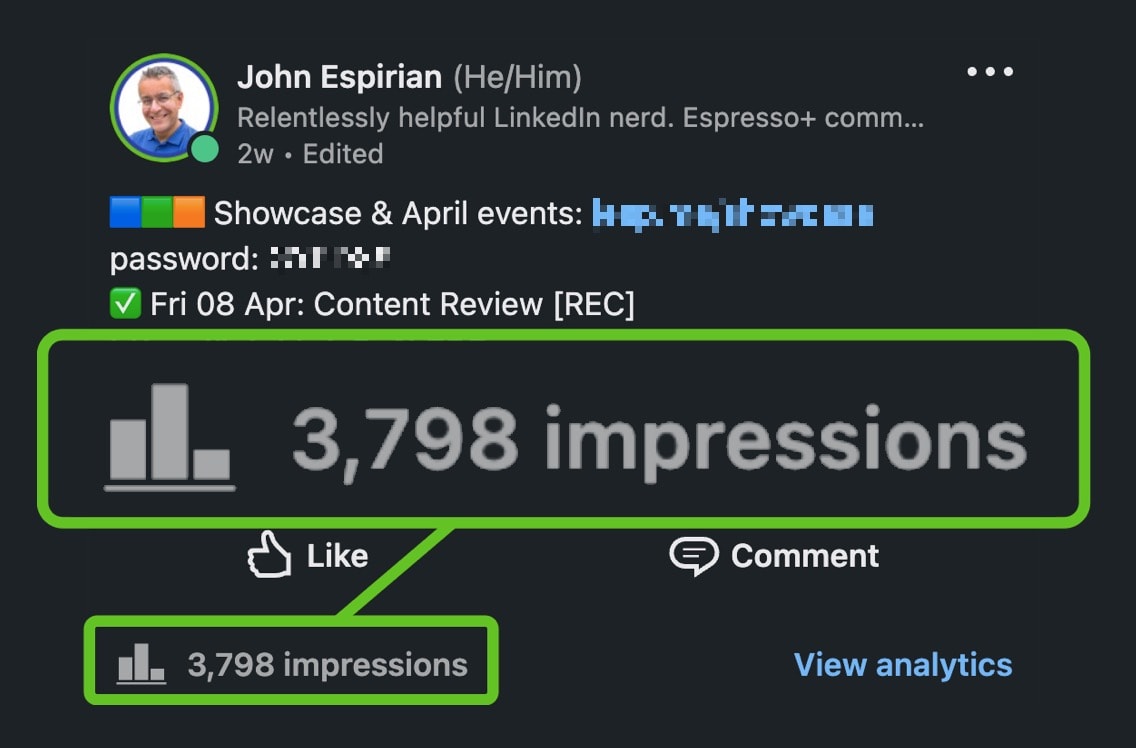
At its heart, an impression on LinkedIn signifies a single instance where your content, profile, or ad has been displayed to a user. This metric is a direct measure of exposure, indicating that your digital asset has had the opportunity to be seen. It doesn’t necessarily mean the content was actively engaged with, clicked on, or even fully absorbed; rather, it confirms that the platform’s system presented it to a user’s screen.
The Fundamental Metric of Visibility
Think of an impression as a digital “ping”—a notification to you, the content creator or profile owner, that the LinkedIn algorithm has successfully delivered your item to a user’s feed, search results, or dedicated section. It’s the first step in the engagement funnel, preceding actions like likes, comments, shares, or clicks. High impression counts suggest that your content is being widely distributed by LinkedIn’s systems, implying good algorithmic favor or effective targeting for paid campaigns. Conversely, low impressions might indicate challenges in content discoverability, audience relevance, or distribution strategy.
How LinkedIn Counts an Impression
LinkedIn’s methodology for counting an impression is largely consistent with industry standards for digital advertising and content platforms. An impression is typically logged when content loads within a user’s visible browser window or application screen. This means that a user doesn’t have to scroll down to see your entire post; merely having it appear on their screen for any duration, even if only partially visible, can count as an impression. Multiple views by the same user can also contribute to the total impression count if the content is displayed to them on different occasions (e.g., seeing a post in their feed, then again in a shared notification, and then revisiting the profile where it’s posted). This nuanced counting method emphasizes the cumulative exposure over unique viewership.
Distinguishing Impressions from Other Metrics
It’s critical not to conflate impressions with other related, yet distinct, LinkedIn metrics to avoid misinterpreting your performance data.
- Reach: While closely related, reach refers to the number of unique users who saw your content. If one user sees your post five times, that counts as five impressions but only one reach. Reach quantifies individual audience breadth, while impressions measure total exposure events.
- Views: This term can be ambiguous but often relates to video views (a user watches a video for a minimum duration) or sometimes similar to impressions for articles. For videos, a “view” requires active engagement, unlike an impression. For profiles, “views” specifically mean users who actively clicked on and navigated to your profile page.
- Clicks: A click signifies direct user interaction with a link, image, or call to action within your content. Every click implies an impression, but not every impression leads to a click. Clicks are a deeper form of engagement than impressions, indicating active interest.
Understanding these distinctions is vital for dissecting your analytics. High impressions with low clicks, for example, might suggest that while your content is seen, it isn’t compelling enough to prompt further interaction.
Types of Impressions Across LinkedIn
Impressions aren’t a monolithic metric; they manifest differently depending on the specific asset or campaign being tracked on LinkedIn. The platform provides analytics for various elements, each with its own impression count.
Post Impressions (Organic vs. Paid)
This is perhaps the most common type of impression. When you share an update, an article, a video, or an image on your personal profile or a company page, the number of times that post is displayed in users’ feeds, search results, or directly on your profile page contributes to its post impressions.
- Organic Impressions: These are impressions generated purely through the LinkedIn algorithm’s natural distribution, based on factors like engagement, connections, and content relevance. They represent the inherent discoverability of your content without monetary investment.
- Paid Impressions: When you promote a post through LinkedIn Ads, these impressions are the result of your advertising spend, targeting specific audiences. Paid impressions reflect the reach bought through a campaign. Analyzing both organic and paid impressions helps to understand the effectiveness of content strategies and ad spend independently.
Profile Impressions
Your personal LinkedIn profile can also accrue impressions. This metric counts how many times your profile has appeared in search results (when someone searches for a profession, skill, or name), in “People You May Know” suggestions, or in other LinkedIn features where your profile summary is shown to users. High profile impressions indicate that your professional presence is discoverable and being surfaced by LinkedIn’s algorithms, which is crucial for job seekers, recruiters, and network builders.
Company Page Impressions
For businesses and organizations, company page impressions track how often their dedicated page appears in search results, LinkedIn’s “Companies You May Know” feature, or when employees share company content. This metric is fundamental for brand awareness and indicates the visibility of a company’s official presence on the platform.
Ad Campaign Impressions
Beyond promoted posts, LinkedIn offers various advertising formats (e.g., Text Ads, Dynamic Ads, Message Ads). For all these, ad campaign impressions track the total number of times these advertisements are displayed to target audiences. This is a primary metric for evaluating the reach and initial exposure of any advertising effort on the platform.
The Technical Mechanics of Impression Tracking

The journey from content creation to a logged impression involves a complex interplay of algorithms, user behavior, and platform architecture. Understanding these mechanics provides deeper insight into how impressions are generated and why some content performs better than others.
Algorithm’s Role in Distribution
LinkedIn’s proprietary algorithm acts as the gatekeeper and distributor of content. When you post, the algorithm immediately assesses its relevance, timeliness, engagement potential, and the strength of your network. It then begins to distribute it to a small segment of your connections. Based on the initial engagement (likes, comments, shares, clicks), the algorithm decides whether to expand its distribution to a wider audience, including second and third-degree connections, or users with similar interests. Each time your content is placed in front of a user by this algorithmic process, an impression is recorded. The more favorably the algorithm views your content, the broader its distribution, and consequently, the higher its impression count.
Factors Influencing Impression Counts
Several technical and behavioral factors can significantly impact the number of impressions your content receives:
- Content Quality and Engagement: Posts that quickly garner likes, comments, and shares signal to the algorithm that the content is valuable and relevant, prompting wider distribution.
- Network Size and Activity: A larger, more active network naturally provides more initial exposure points for your content.
- Hashtag Usage: Relevant and popular hashtags can place your content in topical feeds, increasing its discoverability beyond your immediate network.
- Posting Time: Posting when your target audience is most active on LinkedIn can maximize initial engagement and algorithmic favor.
- Content Format: Videos, carousels, and polls often have higher engagement rates than plain text, which can lead to greater algorithmic distribution.
- Recency: LinkedIn’s feed prioritizes newer content, meaning older posts naturally accrue fewer new impressions over time unless consistently re-engaged with.
Understanding the Analytics Dashboard
LinkedIn provides robust analytics dashboards for both personal profiles and company pages, where you can monitor your impression data. These dashboards break down impressions by post, time period, and often by demographic insights of the viewers. For company pages, detailed breakdowns of follower growth, visitor demographics, and content performance, including impression trends, are available. For individual users, the “Analytics & Tools” section offers insights into post impressions, profile views, and search appearances. Regularly reviewing these dashboards is essential for tracking performance, identifying trends, and making data-driven adjustments to your content strategy.
Why Impressions Matter in a Digital Ecosystem
While impressions are a top-of-funnel metric, their importance cannot be overstated. They are the bedrock upon which all other forms of engagement and impact are built.
Measuring Content Visibility and Distribution
Impressions directly quantify how effectively your content is cutting through the noise and reaching your target audience on LinkedIn. They serve as a primary indicator of your content’s organic reach and the effectiveness of any paid promotion. For a job seeker, high profile impressions mean their professional summary is appearing frequently in recruiter searches. For a content creator, high post impressions mean their thought leadership is getting widespread exposure.
Informing Content Strategy (from a data perspective)
Analyzing impression data is crucial for refining your content strategy. By comparing impression counts across different types of posts, topics, and formats, you can discern what resonates most with the LinkedIn algorithm and your audience. If certain topics consistently yield higher impressions, it suggests these are areas where your content is most discoverable and valuable to the platform’s users. This data-driven approach allows you to optimize your content calendar, refine your messaging, and improve overall performance. For instance, if video posts consistently get more impressions than text-only updates, you might pivot towards more video content.
Benchmarking Performance Against Platform Norms
Impression data allows you to benchmark your performance against your past efforts and, indirectly, against industry or platform averages. While direct competitor data isn’t always available, understanding your own impression trends can help you set realistic goals for growth. Consistently increasing impressions signal a healthy and growing presence, indicating that your content strategy is aligning well with LinkedIn’s distribution mechanisms and audience interests. It provides a tangible measure of your evolving digital footprint on the platform.
Optimizing for Higher Impressions
To maximize your visibility on LinkedIn and, consequently, your impression counts, a strategic approach rooted in understanding the platform’s technicalities is key.
Utilizing Relevant Hashtags and Keywords
LinkedIn’s search functionality and algorithmic distribution heavily rely on keywords and hashtags. Incorporating relevant industry-specific hashtags (e.g., #AI, #DigitalMarketing, #FutureofWork) makes your content discoverable to users following those topics, extending its reach beyond your immediate network. Similarly, crafting posts with keywords that your target audience or recruiters might search for can significantly boost your content’s chances of appearing in search results and feeds. Think about what terms describe your expertise or the solution your content offers.
Engaging with the Algorithm (consistency, format diversity)
The LinkedIn algorithm favors active, consistent users. Regularly posting high-quality, relevant content keeps your profile and company page in the algorithmic spotlight. Varying your content formats—interspersing text posts with videos, carousels, polls, and articles—can also increase impressions. Different formats appeal to different users and can perform better at different times, helping you capture a wider audience and signal content diversity to the algorithm. For instance, native video uploads often receive preferential treatment, leading to higher impressions.
Timing Your Posts for Maximum Visibility
The “when” of posting is almost as important as the “what.” Analyze your audience’s activity patterns using LinkedIn’s analytics to identify peak engagement times. Posting when your target demographic is most active increases the likelihood of immediate engagement, which then signals to the algorithm that your content is valuable and should be distributed more widely. This early surge in activity can significantly boost initial impressions and set your post up for sustained visibility. Experiment with different times and days to find what works best for your specific audience and content type.
aViewFromTheCave is a participant in the Amazon Services LLC Associates Program, an affiliate advertising program designed to provide a means for sites to earn advertising fees by advertising and linking to Amazon.com. Amazon, the Amazon logo, AmazonSupply, and the AmazonSupply logo are trademarks of Amazon.com, Inc. or its affiliates. As an Amazon Associate we earn affiliate commissions from qualifying purchases.