
In today’s hyper-connected world, the seamless flow of information is as essential as electricity. Whether you’re working from a bustling co-working space, enjoying a coffee shop’s Wi-Fi, or managing a complex corporate network, a silent yet crucial piece of technology orchestrates your connection: the access point. While often invisible, its function is fundamental. But what exactly is an access point, and how does it fit into the grander scheme of our digital lives, impacting everything from our personal productivity to the operational efficiency of businesses?
This article delves into the world of access points, exploring their core functionalities, different types, and their vital role across the diverse landscapes of technology, brand building, and financial management. We’ll demystify this often-overlooked component and illuminate its significance in shaping our digital experiences and opportunities.

The Gateway to the Network: Understanding the Core Function of an Access Point
At its heart, an access point (AP) is a networking hardware device that creates a Wireless Local Area Network (WLAN), commonly known as Wi-Fi, in a specified area. Think of it as a bridge, a translator, and a dispatcher all rolled into one. Its primary job is to connect wireless devices – such as laptops, smartphones, tablets, and smart home gadgets – to a wired network. Without an access point, your wireless devices would be isolated islands, unable to communicate with the internet or with each other beyond their immediate Bluetooth range.
Bridging Wireless and Wired Worlds
The fundamental principle behind an access point is its ability to convert data signals. Wireless devices communicate using radio waves, while wired networks, like the Ethernet cables that plug into your router, use electrical signals. The access point receives the radio wave signals from your wireless device, converts them into electrical signals, and sends them to the wired network (typically a router or a switch). Conversely, when data comes from the wired network destined for your wireless device, the access point receives it, converts it into radio waves, and transmits it wirelessly. This bi-directional conversion is the magic that allows your phone to fetch emails or your laptop to stream a video.
Facilitating Device Communication
Beyond connecting to the broader wired network, access points also enable communication between wireless devices within the same network. This is crucial for tasks like file sharing between computers, printing wirelessly to a network printer, or streaming media to a smart TV. The access point acts as a central hub, ensuring that all connected wireless devices can “see” and interact with each other, as well as the resources available on the wired network.
The Role in Network Expansion
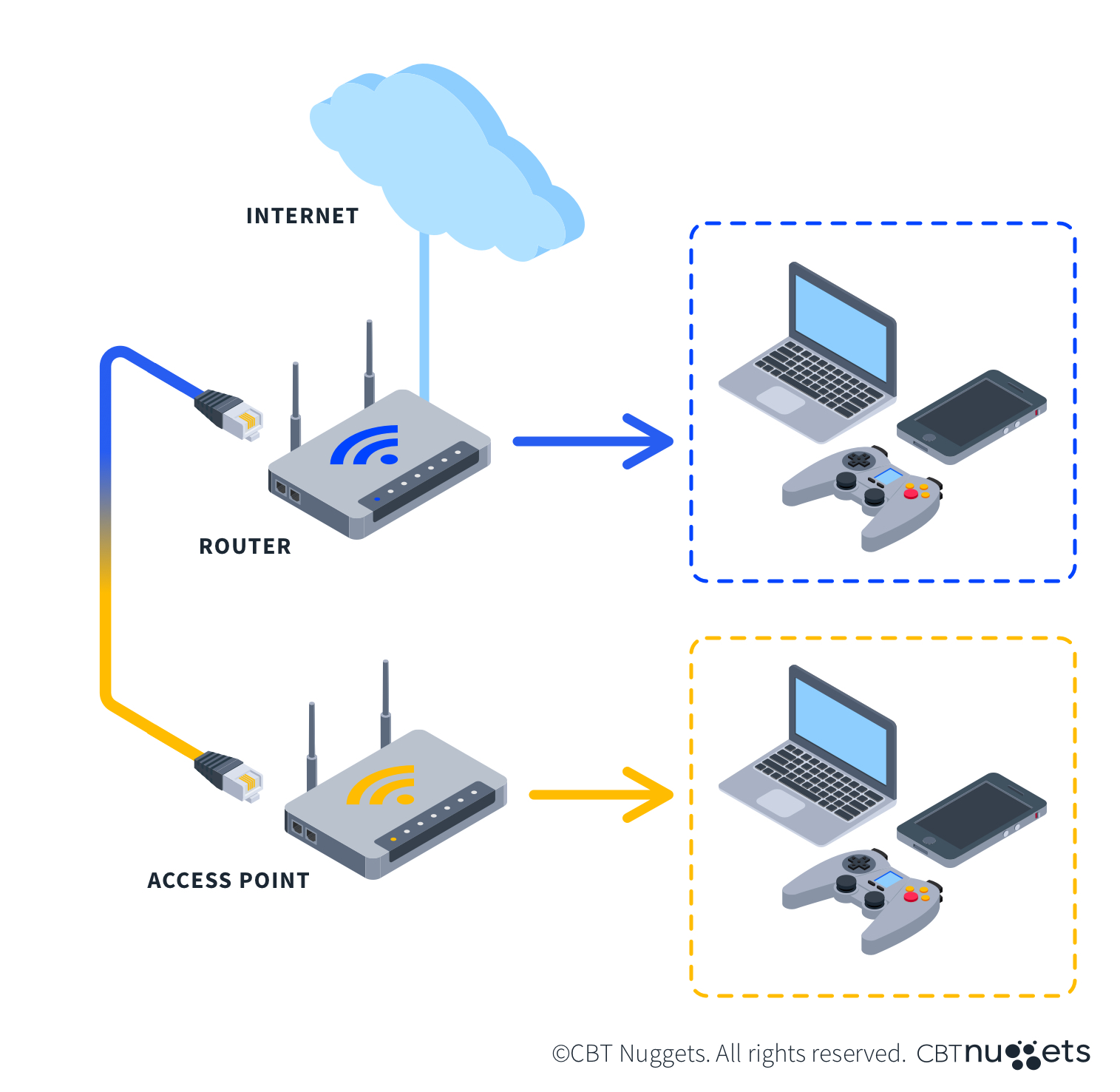
For larger wired networks, access points are indispensable for extending wireless coverage. A single router, while capable of broadcasting Wi-Fi, has a limited range. To cover a larger office building, a sprawling campus, or a multi-story home, multiple access points are strategically deployed. These APs are typically connected back to the main wired network infrastructure (often via Ethernet cables), effectively creating a unified, seamless wireless network that users can roam within without losing connection. This is known as a “wireless mesh” or “single SSID” network, where your device automatically connects to the strongest AP as you move.
Types of Access Points: Tailoring Connectivity to Your Needs
The world of access points isn’t monolithic. Different environments and requirements necessitate various types of APs, each with its own strengths and optimal use cases. Understanding these distinctions is key to deploying the right solution for your specific needs.
Standalone Access Points: The Plug-and-Play Solution
These are the most straightforward type of access point. They are self-contained units that you typically connect to a router or switch via an Ethernet cable, and they immediately begin broadcasting a Wi-Fi signal. Standalone APs are often used to extend Wi-Fi coverage in a home or small office where a single router’s range isn’t sufficient. They are generally easy to set up and configure, making them popular for less complex networking needs. Many home routers actually have a built-in access point function, effectively serving as both a router and an AP.
Controller-Based Access Points: Orchestrating Enterprise-Level Networks
In larger organizations with dozens or even hundreds of access points, managing each unit individually becomes an overwhelming task. This is where controller-based APs shine. These APs are managed by a central network controller, which can be a dedicated hardware appliance or a software-based solution. The controller centralizes the configuration, monitoring, and management of all connected APs. This allows IT administrators to:
- Deploy settings consistently: Push out Wi-Fi security protocols, network names (SSIDs), and access policies to all APs simultaneously.
- Monitor network performance: Track signal strength, user connections, and potential interference across the entire wireless infrastructure.
- Implement security updates: Ensure all APs are running the latest firmware for enhanced security.
- Manage roaming: Optimize the handover of wireless devices between APs as users move throughout the coverage area.
This centralized management is crucial for maintaining a stable, secure, and performant wireless network in enterprise environments.
Cloud-Managed Access Points: Flexibility and Scalability

A more modern approach, cloud-managed access points offer the benefits of centralized control without the need for on-premises hardware controllers. These APs connect to a cloud-based management platform. This offers significant advantages for businesses with multiple locations or those seeking high scalability and flexibility. From the cloud platform, administrators can:
- Access and manage APs from anywhere: Providing remote management capabilities.
- Easily scale the network: Adding new APs to the network is often as simple as plugging them in and assigning them to the cloud account.
- Benefit from automatic updates: Firmware updates and security patches are often managed through the cloud platform.
- Reduce upfront hardware costs: Eliminating the need for expensive on-site controllers.
Cloud-managed APs are ideal for businesses that need agile and easily scalable wireless solutions, often found in retail chains, distributed offices, and organizations with remote workforces.
Mesh Wi-Fi Systems: Seamless Coverage for Homes and Small Businesses
Mesh Wi-Fi systems are a popular consumer-oriented solution that utilizes multiple access points working together to create a single, unified Wi-Fi network. These systems typically consist of a main router and several satellite nodes (which are essentially access points). The nodes communicate wirelessly with each other, extending the Wi-Fi signal throughout a home or small office without the need for Ethernet cabling between them. The intelligent software within the mesh system directs devices to the strongest node, ensuring seamless connectivity and eliminating dead zones.
Access Points in the Context of Your Digital Ecosystem
The significance of access points extends beyond mere connectivity, touching upon critical aspects of technology, branding, and even financial implications.
Enhancing Tech Productivity and Security
From a Tech perspective, access points are the bedrock of modern digital productivity. The speed, stability, and security of your Wi-Fi connection directly impact your ability to:
- Work remotely: Seamless access to cloud-based applications, video conferencing, and collaborative tools is paramount for remote and hybrid work models.
- Utilize AI Tools: Many cutting-edge AI tools and platforms are cloud-dependent, requiring a robust and reliable internet connection facilitated by access points.
- Deploy and manage IoT Devices: The growing Internet of Things ecosystem, from smart thermostats to security cameras, relies heavily on stable Wi-Fi provided by access points.
- Ensure Digital Security: Access points are a critical point for implementing network security measures. Properly configured APs with strong encryption (WPA3 is the current standard), secure passwords, and regular firmware updates are essential to prevent unauthorized access, protect sensitive data, and mitigate the risk of cyberattacks. A compromised access point can be a gateway for malicious actors into an entire network.
The Brand’s Wireless Promise: Access as an Experience
For Brand building, the reliability and quality of Wi-Fi access can be a significant differentiator.
- Customer Experience: For businesses like cafes, hotels, and retail stores, providing free, fast, and reliable Wi-Fi is no longer a luxury but an expectation. It enhances the customer experience, encouraging longer stays, increased engagement, and positive word-of-mouth. The brand’s reputation can be directly tied to the quality of its wireless offering.
- Employee Productivity and Collaboration: In corporate environments, efficient wireless access directly impacts employee productivity and internal communication. Seamless collaboration, access to company resources, and quick information sharing contribute to a more effective and engaged workforce.
- Marketing and Data Collection: Well-managed access points can be leveraged for marketing purposes. For example, captive portals (the landing pages you see before accessing public Wi-Fi) can be used to display promotions, collect email addresses for newsletters (with user consent), or direct users to the company website, thereby contributing to brand awareness and lead generation.
Financial Implications of Access Point Deployment and Management
The “Money” aspect of access points is multi-faceted, encompassing initial investment, ongoing costs, and the economic benefits of reliable connectivity.
- Cost of Hardware and Infrastructure: Deploying access points involves an initial investment in the hardware itself, as well as potential costs for networking cables, switches, and installation. For larger deployments, the cost of a central controller or cloud-based management subscription can also be significant.
- Operational Expenses: Ongoing costs include electricity to power the devices, maintenance, and potential IT support for troubleshooting and configuration. Cloud-managed solutions often involve recurring subscription fees.
- Return on Investment (ROI): While there are costs associated with access points, the ROI can be substantial.
- Increased Revenue: In hospitality and retail, improved customer satisfaction and longer dwell times due to good Wi-Fi can translate to increased sales.
- Enhanced Productivity: For businesses, improved employee productivity and streamlined operations due to reliable connectivity can lead to significant cost savings and increased output.
- New Income Streams: Some businesses might offer premium Wi-Fi services for a fee, creating an additional revenue stream.
- Facilitating Online Income: For individuals, a stable home Wi-Fi network is the gateway to online work, freelance opportunities, and e-commerce ventures, directly impacting personal income.
The Future of Access Points: Evolution and Innovation
As technology continues to advance, access points are also evolving. We’re seeing a push towards higher Wi-Fi standards (like Wi-Fi 6E and upcoming Wi-Fi 7) that offer increased speeds, lower latency, and better capacity to handle the ever-growing number of connected devices. Innovations in antenna technology, beamforming (directing Wi-Fi signals towards specific devices), and intelligent network management are making access points more efficient and powerful.
Furthermore, the integration of access points with broader network management systems and security platforms is becoming more sophisticated. The future promises access points that are not only invisible conduits for data but also intelligent nodes contributing to a more secure, efficient, and user-friendly digital experience across all aspects of our lives – from our personal gadgets to the vast networks that power global commerce.
In conclusion, an access point is far more than just a box that broadcasts Wi-Fi. It’s a critical piece of infrastructure that bridges the physical and digital worlds, enabling communication, powering productivity, and shaping experiences. Understanding what an access point is and how it functions is essential for navigating our increasingly connected world and leveraging its full potential.
aViewFromTheCave is a participant in the Amazon Services LLC Associates Program, an affiliate advertising program designed to provide a means for sites to earn advertising fees by advertising and linking to Amazon.com. Amazon, the Amazon logo, AmazonSupply, and the AmazonSupply logo are trademarks of Amazon.com, Inc. or its affiliates. As an Amazon Associate we earn affiliate commissions from qualifying purchases.