
In the early 2000s, the landscape of portable technology was undergoing a radical transformation. While mobile phones were beginning to flirt with color screens and basic internet connectivity, the world of handheld gaming was dominated almost exclusively by one player: Nintendo. However, in 2004, Sony Computer Entertainment decided to disrupt the status quo. They introduced the PlayStation Portable, or PSP, a device that was marketed not just as a gaming console, but as the “Walkman of the 21st century.” To understand what a PSP is, one must look beyond the buttons and screens; it was a high-tech convergence device that paved the way for the modern era of multipurpose mobile gadgets.

At its core, the PSP was a handheld game console, but its technical specifications and multimedia capabilities set it leagues apart from its contemporaries. It represented a bold bet by Sony that consumers wanted a premium, high-fidelity experience in their pockets—a philosophy that continues to influence the design of modern tech, from the Nintendo Switch to the Steam Deck.
The Hardware Engineering of a Portable Powerhouse
When the PSP first debuted, its hardware was considered a marvel of miniaturization. While its primary competitor, the Nintendo DS, focused on innovative dual-screen gameplay and touch input, the PSP focused on raw horsepower. Sony’s goal was to bring the graphical fidelity of the PlayStation 2 into a handheld form factor, a feat many thought impossible at the time.
The Display and Visual Fidelity
The centerpiece of the PSP was its 4.3-inch LCD screen. By today’s standards of OLED and 4K displays, it might seem modest, but in 2004, it was revolutionary. It featured a 16:9 widescreen aspect ratio with a resolution of 480×272 pixels, capable of displaying 16.77 million colors. This was the first time a dedicated handheld device offered a cinematic viewing experience, making it ideal not just for gaming, but for watching feature-length films. The screen’s brightness and clarity were unprecedented, establishing the PSP as the gold standard for portable visual tech during its lifecycle.
The Universal Media Disc (UMD)
One of the most unique—and controversial—aspects of the PSP’s tech stack was the Universal Media Disc (UMD). To accommodate the large file sizes of high-fidelity games and movies, Sony developed a proprietary small-format optical disc. Each UMD could hold up to 1.8 GB of data, encased in a protective plastic shell. This allowed the PSP to run games with complex 3D environments and high-quality FMV (Full Motion Video) sequences that cartridges of the era simply could not handle. While the mechanical nature of the UMD drive led to longer load times and increased battery drain, it was a testament to Sony’s commitment to bringing “big tech” to a small device.
Processing Power and Connectivity
Under the hood, the PSP featured a custom CPU based on the MIPS R4000 architecture, clocked at up to 333MHz. This was paired with 32MB of RAM (later increased to 64MB in newer models) and a dedicated graphics engine. Beyond raw power, the PSP was a pioneer in wireless connectivity. It featured built-in 802.11b Wi-Fi, allowing users to browse the web, play games online through the “Infrastructure” mode, or connect directly to other PSPs via “Ad-hoc” mode. This level of connectivity was a precursor to the hyper-connected mobile ecosystem we live in today.
A Media Center in Your Pocket: Beyond Gaming
Sony’s marketing for the PSP was distinct because it didn’t just target children; it targeted tech-savvy adults and “gadget lovers.” The PSP was designed to be a total media solution, a concept that was quite advanced before the rise of the modern smartphone.
Digital Music and Video Playback
Before the iPhone integrated the iPod’s features, the PSP was already doing it. By utilizing the Memory Stick Duo—a proprietary flash memory format—users could load MP3, AAC, and WAV files onto the device. The PSP’s dedicated “XrossMediaBar” (XMB) interface made navigating music libraries intuitive and sleek. Furthermore, the PSP supported MPEG-4 video playback. Users could convert their own video files or purchase Hollywood movies on UMD. For many tech enthusiasts, the PSP was their first dedicated portable movie player, used on long flights and commutes long before streaming services existed.
The XMB Interface and User Experience
The XrossMediaBar (XMB) was a crucial piece of software engineering that defined the Sony tech experience for a decade. It was a graphical user interface that allowed users to navigate icons horizontally across the screen, which then expanded into vertical lists. The interface was so successful and aesthetically pleasing that Sony later implemented it into the PlayStation 3 and many of their Bravia televisions. It prioritized ease of access to different media types—photo, music, video, and game—reinforcing the idea that the PSP was more than a toy; it was a sophisticated piece of consumer electronics.
Web Browsing and Communication
With its built-in Wi-Fi and a dedicated web browser, the PSP offered a glimpse into a future of portable internet. While the browsing experience was limited by the lack of a touch screen and the hardware’s memory constraints, it allowed for RSS feed subscriptions and basic web surfing. Sony even experimented with communication tools, releasing a GPS attachment and a camera (the Go!Cam) that turned the device into a rudimentary navigation system and digital camera. These modular expansions showcased the PSP’s versatility as a hardware platform.
The Evolution of the PSP Model Lineup
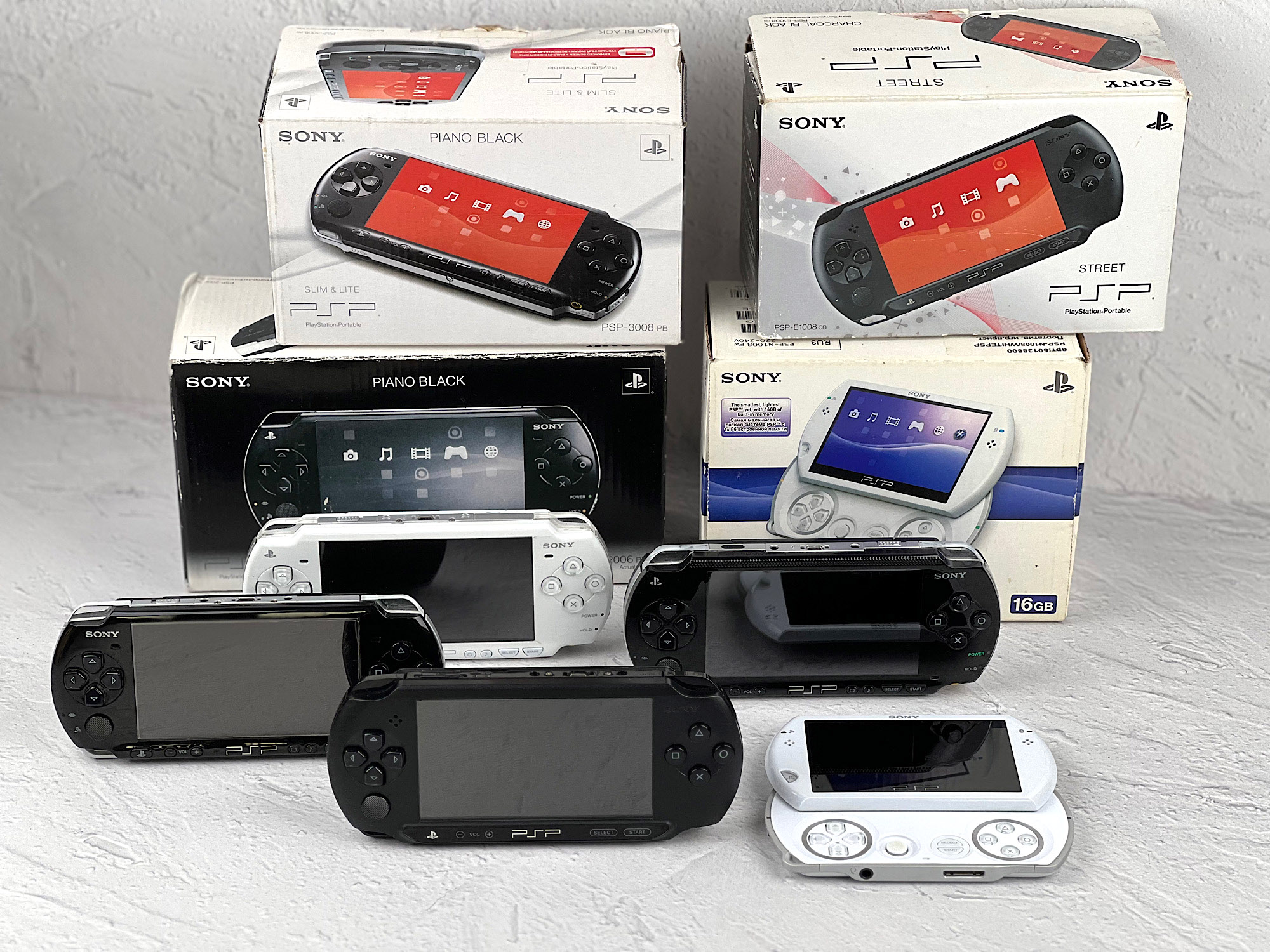
Over its nearly ten-year lifespan, the PSP underwent several hardware revisions, each aiming to refine the tech and address the limitations of the original design. These iterations highlight the rapid pace of technological advancement in the mid-2000s.
PSP-1000: The Original “Phat”
The original model, launched in late 2004 in Japan and 2005 elsewhere, was a sturdy, somewhat heavy device. It featured an IR port (which went largely unused) and the original UMD drive. While beloved for its premium feel, users noted it was a bit bulky for pockets.
PSP-2000 and PSP-3000: Slim, Lite, and Bright
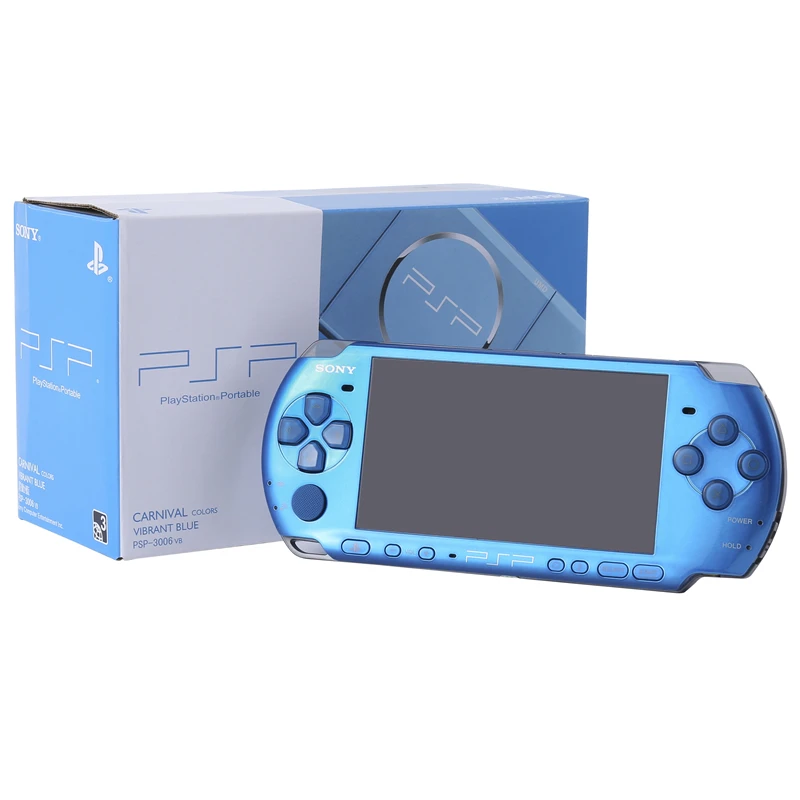
In 2007, Sony released the PSP-2000, often called the “Slim & Lite.” It was 33% lighter and 19% thinner than the original. Sony also doubled the internal RAM to 64MB to improve game loading times. The subsequent PSP-3000, released in 2008, focused on the display. It introduced a “vibrant” LCD screen with an increased color gamut and anti-reflective technology, making it much easier to use in direct sunlight.
The PSP Go: A Digital Pioneer
The most radical shift in the PSP line was the 2009 release of the PSP Go. This model ditched the UMD drive entirely in favor of 16GB of internal flash memory, making it a digital-only device. It featured a sliding screen that hid the controls, making it significantly smaller. While it was arguably ahead of its time—anticipating the move toward digital storefronts—it was met with resistance because users could not play their existing physical UMD libraries on it. However, from a design perspective, the PSP Go was a masterclass in sleek, pocketable tech.
The Homebrew Revolution and Digital Security
One cannot discuss what a PSP is without acknowledging its massive impact on the “Homebrew” and modding community. Because the PSP was a powerful, Wi-Fi-enabled device with a removable storage medium, it became a primary target for tech enthusiasts looking to push the boundaries of what the software could do.
Custom Firmware and System Exploits
Shortly after its release, hackers discovered ways to bypass Sony’s security protocols. This led to the creation of Custom Firmware (CFW). For the tech community, the PSP became a playground for software engineering. Modders created custom applications, including calculators, file managers, and even early versions of voice-over-IP (VoIP) software.
Emulation and the Retro Tech Movement
The PSP’s hardware was powerful enough to emulate a wide range of older systems, from the NES and SNES to the original PlayStation. For many, the PSP became the “ultimate emulation machine.” This legacy lives on today; many of the techniques and software architectures developed for PSP homebrew laid the groundwork for the modern retro-handheld market. It also forced Sony to improve their digital security, leading to a “cat and mouse” game that defined the software update cycle of the era.
The PSP’s Lasting Impact on Modern Gadgetry
The PlayStation Portable was eventually succeeded by the PlayStation Vita, but its influence is felt far beyond Sony’s own ecosystem. When we look at the modern landscape of high-end portable tech, the PSP’s DNA is everywhere.
It proved that there was a market for high-fidelity, adult-oriented portable electronics. It pioneered the idea of a dedicated gaming device that could also function as a primary media hub. Today, when we see devices like the Steam Deck or the ASUS ROG Ally—handheld PCs that prioritize raw specs and high-quality displays—we are seeing the spiritual successors to the PSP’s “power-first” philosophy.
Moreover, the PSP was a precursor to the convergence of devices. Before the smartphone became the “everything device,” the PSP was a bold attempt to combine a camera, a music player, a movie theater, and a gaming console into one sleek package. While it was ultimately a product of its time, its contribution to the evolution of mobile technology is undeniable. The PSP wasn’t just a game console; it was a landmark in the history of portable engineering that proved our digital lives didn’t have to be tethered to a desk or a living room. For tech enthusiasts, the PSP remains a symbol of an era where hardware was daring, experimental, and incredibly powerful.
aViewFromTheCave is a participant in the Amazon Services LLC Associates Program, an affiliate advertising program designed to provide a means for sites to earn advertising fees by advertising and linking to Amazon.com. Amazon, the Amazon logo, AmazonSupply, and the AmazonSupply logo are trademarks of Amazon.com, Inc. or its affiliates. As an Amazon Associate we earn affiliate commissions from qualifying purchases.