
In the world of geology, a mudslide is a rapid, often uncontrollable flow of debris, earth, and water triggered by unstable conditions. In the world of finance, the term “mudslide” serves as a potent metaphor for a specific type of market event: a rapid, cascading devaluation of assets that gains momentum as it falls. Unlike a controlled correction or a standard bear market, a financial mudslide is characterized by a loss of structural integrity in the market, where “support levels” dissolve and selling begets more selling.
Understanding what a mudslide is in a financial context is crucial for investors, business owners, and individuals managing personal wealth. It represents the moment when liquidity dries up and the psychological floor of the market drops, leaving those who are over-leveraged or under-prepared in a precarious position. This article explores the mechanics of these financial cascades, how to identify the warning signs, and the strategies required to protect your capital when the ground begins to shift.

The Anatomy of a Financial Mudslide
A financial mudslide rarely happens in a vacuum. It is usually the result of “saturated” conditions—where the market has been over-saturated with cheap credit, excessive speculation, or over-valuation. When a trigger event occurs, the lack of firm underlying value causes a rapid descent.
Market Liquidity and the Slippery Slope
Liquidity is the “friction” that keeps markets stable. In a healthy market, there are enough buyers and sellers at various price points to ensure that an asset can be sold without causing a massive price swing. A mudslide occurs when liquidity vanishes. As prices start to dip, buyers pull back, waiting for a “bottom” that keeps moving. Without the friction of active buying, the price “slides” down the slope with increasing velocity. This lack of liquidity often turns a minor pullback into a systemic event.
The Domino Effect of Margin Calls
One of the primary drivers of momentum in a financial mudslide is “leverage.” When investors borrow money to buy assets (trading on margin), they are required to maintain a certain level of equity. If the value of those assets drops below a specific threshold, brokers issue margin calls, forcing the investor to either deposit more cash or sell their holdings immediately.
In a mudslide, these forced liquidations put more downward pressure on prices, which triggers further margin calls for other investors. This creates a feedback loop—a literal slide where the falling debris (sold assets) triggers more movement down the hill.
Identifying the Warning Signs of Wealth Erosion
Just as geologists look for cracks in the soil or heavy rainfall as precursors to a landslide, astute financial observers can spot the “unstable terrain” that precedes a market mudslide. Recognizing these signs is the first step in defensive financial management.
Macroeconomic Indicators: The Ground Becomes Unstable
The most common “rainfall” that saturates a financial market is a period of prolonged low interest rates followed by a sudden tightening. When the cost of borrowing rises unexpectedly, the “soil” of the economy—debt-servicing ability—becomes heavy and unstable.
High inflation coupled with stagnant growth (stagflation) often serves as the perfect environment for a mudslide. When corporate earnings can no longer support high stock valuations, the disconnect between price and value becomes a fault line waiting to shift. Investors should keep a close eye on the Yield Curve and Consumer Price Index (CPI) as indicators of whether the economic ground is losing its grip.
Over-Leveraging: Adding Weight to the Slope
On a personal and corporate level, the most significant warning sign is a high debt-to-income or debt-to-equity ratio. In a bull market, leverage acts as an accelerant for gains. However, in a mudslide, that same leverage becomes the weight that pulls the portfolio down.
When you see a trend of “retail euphoria”—where inexperienced investors are borrowing heavily to enter speculative “meme stocks” or high-risk crypto assets—the slope is likely overweighted. This concentration of “weak hands” (investors who lack the capital to hold through volatility) means that even a small tremor can trigger a massive slide.
Risk Management: Building Your Financial Retaining Walls
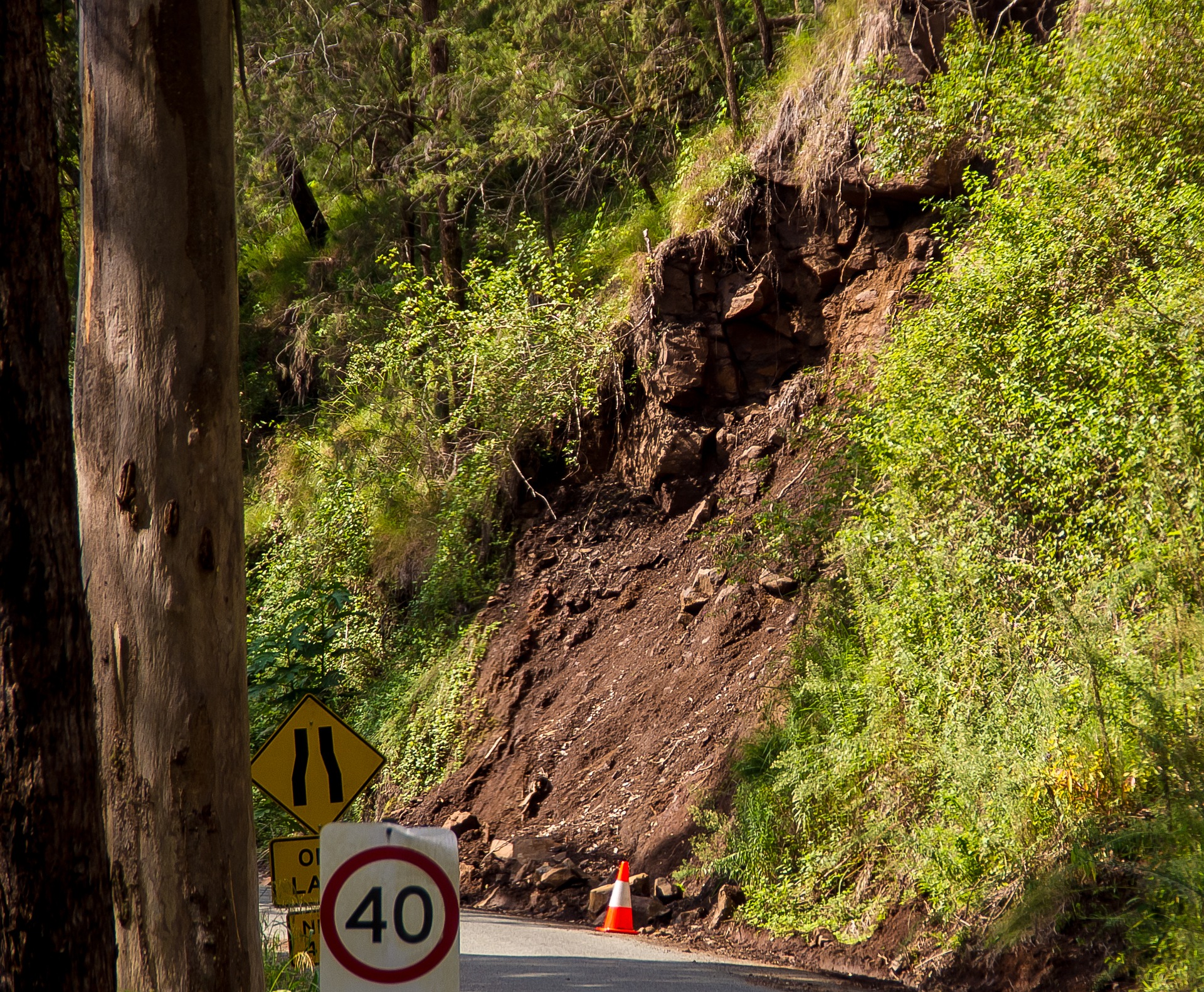
In civil engineering, retaining walls are built to prevent mudslides from reaching infrastructure. In finance, your “infrastructure” is your net worth, and your retaining walls are your risk management strategies. You cannot stop a market mudslide, but you can ensure your finances aren’t buried by it.
Diversification as a Structural Support
The most basic, yet most effective, retaining wall is diversification. A financial mudslide often affects a specific sector first—such as tech in 2000 or real estate in 2008. If your entire net worth is tied up in a single asset class, you are standing directly in the path of the slide.
True diversification involves more than just owning different stocks; it requires holding uncorrelated assets. This might include a mix of equities, fixed-income bonds, precious metals, and cash. When one part of the slope gives way, these uncorrelated assets can provide the stability needed to keep your overall portfolio from collapsing.
The Role of Defensive Assets and Cash Reserves
In the midst of a mudslide, “Cash is King.” Cash is the only asset that provides 100% liquidity when you need it most. Maintaining a robust emergency fund and a percentage of your investment portfolio in cash or cash equivalents (like T-bills) allows you to avoid being a “forced seller.”
Furthermore, defensive assets—such as consumer staples, utilities, or healthcare stocks—tend to act as anchors. These are companies that provide essential services that people need regardless of the economic climate. While they may still lose value during a systemic slide, they typically do not experience the same “liquidity vacuum” as speculative growth stocks.
Personal Debt Mudslides: Breaking the Cycle
While market mudslides affect portfolios, “personal debt mudslides” affect lives. This occurs when a series of small financial setbacks—a medical bill, a car repair, or a missed credit card payment—leads to a cascading failure of one’s personal finances.
The Interest Rate Trap
A personal finance mudslide usually gains speed through high-interest debt. When a consumer carries a balance on a high-interest credit card, the interest itself begins to grow faster than the individual’s ability to pay it off. This is the “gravity” of the financial world. Once the interest payments exceed the monthly disposable income, the individual is in a slide that is nearly impossible to stop without drastic intervention, such as debt restructuring or consolidation.
Strategic De-leveraging
To prevent a personal mudslide, one must practice strategic de-leveraging during “dry” periods (when income is stable). This involves using methods like the “Debt Snowball” (paying off the smallest debts first for psychological wins) or the “Debt Avalanche” (paying off the highest interest rates first to save money). By reducing the “weight” of your debt, you increase your financial “angle of repose”—the steepest angle at which your finances can remain stable without sliding.
The Aftermath: Strategic Recovery in a Post-Slide Economy
Once the “mud” has settled and the market has found a true bottom, the landscape looks different. For the prepared investor, the aftermath of a mudslide is not a time of despair, but a time of immense opportunity.
Assessing the Damage and Rebalancing
The first step after a significant market slide is a cold, hard assessment of the damage. Which assets held their value? Which ones dissolved? This is the time to rebalance your portfolio. Ironically, this often means selling some of your “safe” assets that performed well to buy the “beaten down” quality assets that were unfairly dragged down by the mudslide. This “buying low” is only possible for those who survived the slide with their capital intact.

Long-Term Psychology: Avoiding Future Traps
The most dangerous part of a mudslide isn’t the financial loss; it’s the psychological trauma that prevents investors from participating in the eventual recovery. Many people exit the market at the very bottom of a slide and refuse to re-enter, missing the “relief rally” and the subsequent bull market.
To avoid this, one must view a mudslide as a natural, albeit painful, part of the economic cycle. Markets, like hillsides, need to shed excess weight and speculation occasionally to build a firmer foundation for future growth. By maintaining a professional, detached perspective and focusing on long-term value rather than short-term price movement, you can navigate the next “mudslide” not as a victim, but as a strategic participant in the market’s evolution.
In conclusion, a financial mudslide is a test of structural integrity—both of the markets and of your personal financial strategy. By understanding the triggers of liquidity dry-ups, identifying the warning signs of over-leverage, and building strong defensive walls through diversification and cash reserves, you can protect your wealth from being swept away. In finance, as in nature, those who respect the power of the slide are the ones who survive to see the sun come out again.
aViewFromTheCave is a participant in the Amazon Services LLC Associates Program, an affiliate advertising program designed to provide a means for sites to earn advertising fees by advertising and linking to Amazon.com. Amazon, the Amazon logo, AmazonSupply, and the AmazonSupply logo are trademarks of Amazon.com, Inc. or its affiliates. As an Amazon Associate we earn affiliate commissions from qualifying purchases.