
Finding a new place to live is an exciting milestone, but in today’s competitive rental market, your financial profile is often just as important as your rental history. Property managers and landlords use credit scores as a primary metric to assess the risk of leasing to a prospective tenant. Understanding how this number influences your housing prospects—and knowing what “good” actually means—is the first step toward securing your next home.
Defining the “Good” Credit Score Range
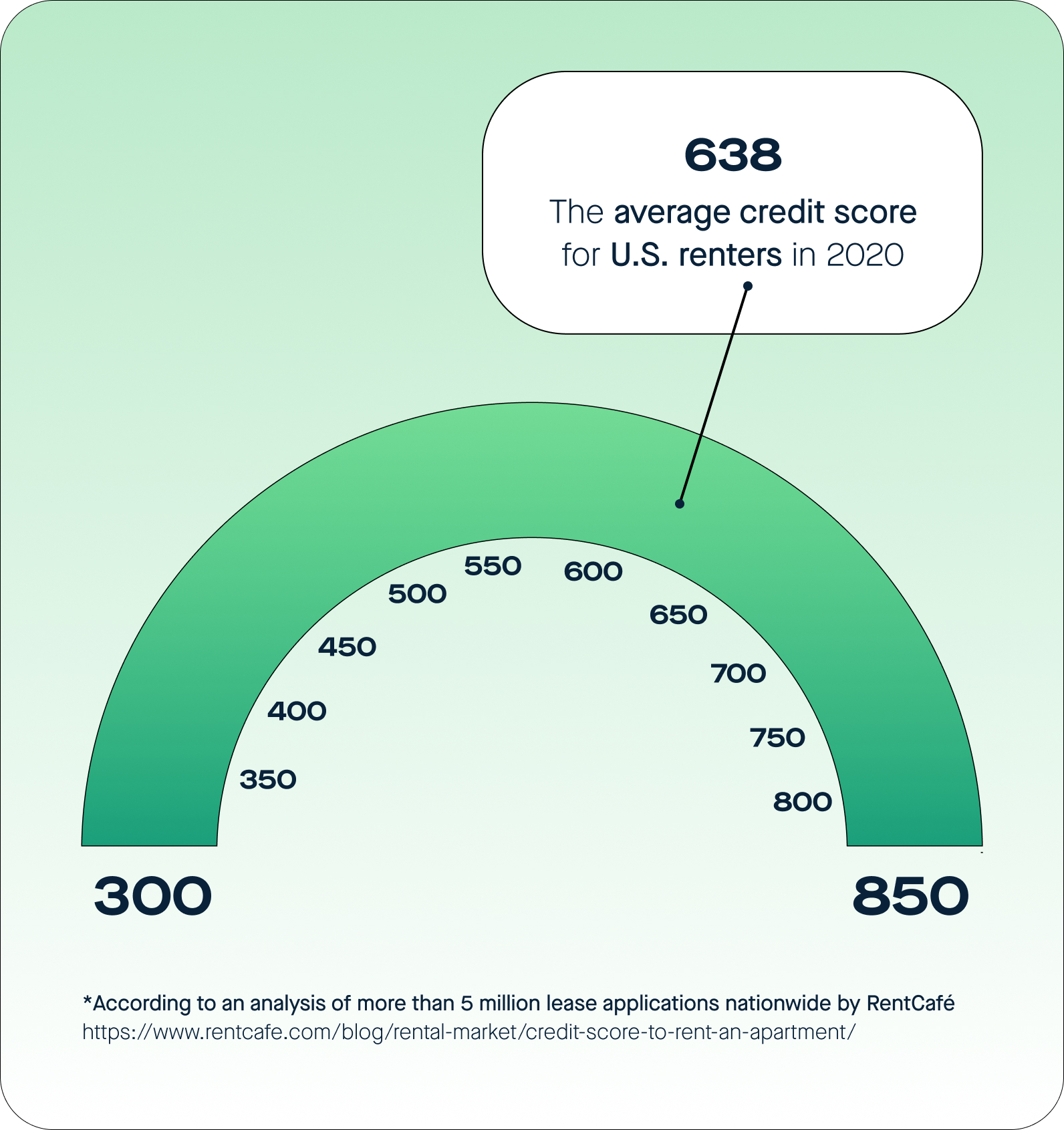
In the world of apartment rentals, credit scoring models typically range from 300 to 850. While every landlord or property management company has its own specific criteria, there are general industry benchmarks that dictate whether an application is approved, denied, or flagged for further review.
The Typical Threshold
For most mid-tier rental properties, a credit score of 650 to 700 is considered “good.” Scores in this range generally signal to a landlord that you are a reliable borrower who manages debt responsibly. When your score sits here, you are likely to pass standard background checks without much friction.
The “Excellent” Advantage
If your score is 750 or higher, you fall into the “excellent” category. In ultra-competitive markets—such as major metropolitan hubs like New York, San Francisco, or London—this range can be a decisive tie-breaker. Landlords often view tenants with scores above 750 as low-risk, which may grant you leverage when negotiating lease terms or deposits.
Navigating the “Fair” or “Poor” Range
Scores between 580 and 649 are typically categorized as “fair.” If your score falls into this bucket, you might still get approved, but you will likely face additional scrutiny. You may be asked to provide a larger security deposit, offer proof of consistent employment, or secure a guarantor to co-sign your lease. Anything below 580 is generally considered “poor” and may require proactive efforts to improve before applying for high-demand rentals.
Why Landlords Care About Your Credit Score
You might wonder why a landlord is so invested in your credit behavior when their primary concern is whether you can pay the monthly rent. The answer lies in the predictive nature of financial history.
Evaluating Financial Responsibility
A credit score is a snapshot of your relationship with money. It reveals whether you pay your bills on time, how much debt you carry compared to your available credit limits, and how long you have been managing your financial affairs. Landlords interpret this data as a proxy for your character as a tenant; a history of missed payments or collections is viewed as a warning sign that rent payments might also be delayed.
The Debt-to-Income (DTI) Connection
While the score itself is a number, landlords are also looking at the underlying data. If you have a decent score but a massive amount of revolving debt, a property manager might worry that you are “house poor”—meaning that once you pay your rent and your monthly credit card installments, you won’t have enough disposable income to live comfortably.
Mitigating Risk
Rental properties are investments, and evictions are costly and time-consuming. By setting a minimum credit score threshold, landlords create an objective, standardized process for filtering out applicants who have a history of financial instability. This reduces the legal and financial risk associated with the eviction process, which can take months to resolve.
How to Improve Your Standing Before You Apply

If you find that your score is lower than you would like, you aren’t necessarily disqualified from renting, but you should take steps to strengthen your profile before you start touring apartments.
Review Your Credit Reports
The first step is to know what a landlord sees. You are entitled to a free copy of your credit report from each of the three major bureaus—Equifax, Experian, and TransUnion—every year. Review these reports for inaccuracies. If you see an old debt that shouldn’t be there or a balance that was reported incorrectly, dispute it immediately. Clearing up errors is the fastest way to see a bump in your score.
Reduce Your Credit Utilization Ratio
Your credit utilization ratio accounts for approximately 30% of your total score. This is the percentage of your total available credit that you are currently using. If your credit limit is $10,000 and you have a balance of $8,000, your utilization is 80%. Aim to keep this ratio below 30%—or ideally, below 10%—to give your score an immediate boost.
Pay Down High-Interest Debt
If you have multiple small balances on credit cards, consider the “debt snowball” or “debt avalanche” methods to pay them off. Reducing the number of open accounts with balances can signal to creditors and future landlords that you are aggressively managing your financial obligations.
Avoid New Credit Inquiries
When you apply for a new credit card or a loan, the lender performs a “hard inquiry,” which can temporarily ding your score. If you know you are going to be apartment hunting in the next six months, avoid applying for new lines of credit to keep your score as stable as possible.
What to Do If Your Score Is Less Than Ideal
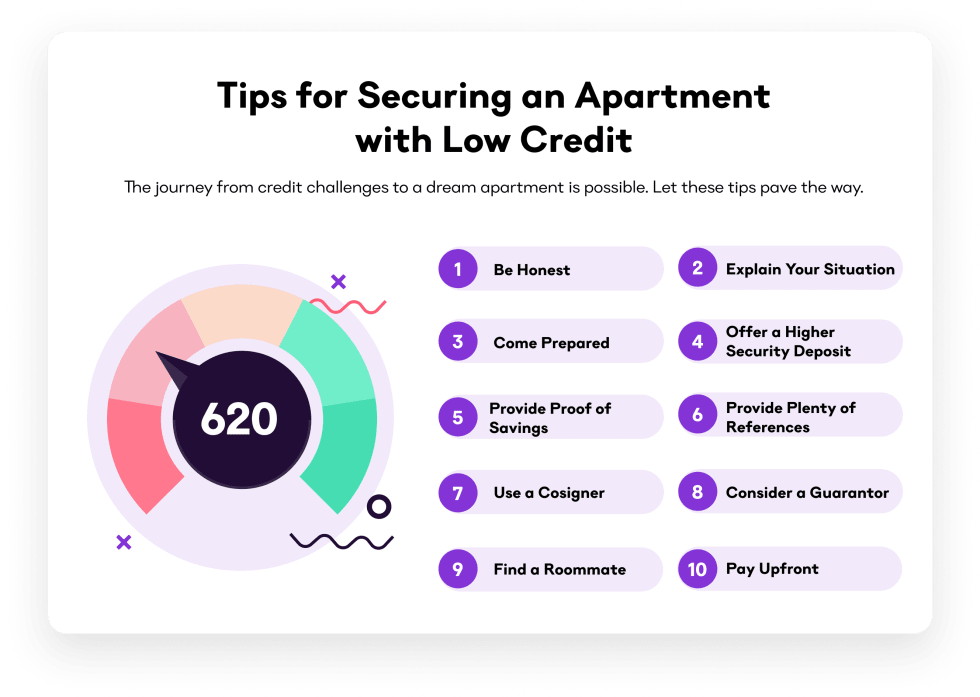
Having a low credit score doesn’t mean you have to stay in your current living situation indefinitely. If your score is holding you back, there are several strategic ways to present yourself as a reliable candidate.
Providing Documentation
If your score is lower due to a one-time medical emergency or a period of unemployment that has since been resolved, be prepared to explain it. Transparency can go a long way. Provide pay stubs, bank statements, or letters of reference from previous landlords who can attest to your consistency in paying rent on time.
The Power of a Co-signer or Guarantor
If you don’t meet the credit threshold, offering a co-signer or a guarantor is the most common workaround. A guarantor is someone (usually a parent or guardian) who agrees to pay the rent if you fail to do so. This provides the landlord with a legal safety net, often rendering your lower credit score irrelevant.
Offer a Larger Deposit
Money talks. If you are confident that you will be a great tenant but your score is lacking, offering to pay a larger security deposit or even a few months of rent upfront can mitigate the landlord’s risk. While this requires more liquid cash, it can often secure an apartment that would otherwise be out of reach.
Target Private Landlords
Property management companies for large apartment complexes are often bound by strict, automated software systems that automatically reject applications below a certain score. Private landlords, however, are often more willing to have a conversation. By communicating directly with the person who owns the property, you have the opportunity to prove your reliability beyond just a three-digit number.
Focus on Proof of Income
Ultimately, landlords want to know that you can afford the rent. If your credit is poor but your income is three times the amount of the monthly rent, you are in a strong position. Ensure you have your tax returns, recent W-2s, and letters of employment ready to demonstrate that your cash flow is more than sufficient to cover your housing costs.
By understanding the mechanics of credit scores and being proactive about your financial reputation, you can navigate the apartment hunt with confidence. Whether you need to boost your score through debt management or leverage your steady income to negotiate, there is almost always a path to landing the apartment you want.
aViewFromTheCave is a participant in the Amazon Services LLC Associates Program, an affiliate advertising program designed to provide a means for sites to earn advertising fees by advertising and linking to Amazon.com. Amazon, the Amazon logo, AmazonSupply, and the AmazonSupply logo are trademarks of Amazon.com, Inc. or its affiliates. As an Amazon Associate we earn affiliate commissions from qualifying purchases.