
In the realm of personal finance and investing, the seemingly simple arithmetic question “what’s 1/4 + 1/4” transcends its mathematical answer of 1/2. It serves as a profound metaphor for the power of incremental gains, strategic allocation, and the cumulative effect of seemingly small financial actions. Far from being a trivial sum, it encapsulates fundamental principles of wealth building, risk management, and the journey towards financial independence. This article delves into how this basic equation illuminates sophisticated financial strategies, demonstrating that the aggregate of deliberate, smaller financial decisions can far outweigh the impact of a single, large one.

Beyond Simple Arithmetic: The Financial Philosophy of Incremental Gains
The immediate answer to “1/4 + 1/4” is straightforward, yet its financial interpretation is anything but. It invites us to look beyond immediate results and appreciate the strategic accumulation of value. In finance, few successes are built on a single grand gesture; rather, they are often the product of consistent, smaller contributions and astute allocations that, when combined, yield significant outcomes. This philosophy is foundational to sustainable wealth creation.
The Illusion of Insignificance: Why Small Steps Matter
Many aspiring investors and savers are daunted by the perceived enormity of financial goals, believing that only large lump sums or dramatic market moves can make a difference. This mindset often leads to inertia, where individuals postpone saving or investing because they feel their current capacity is too small to matter. However, the “1/4 + 1/4” principle argues forcefully against this. Each “quarter” represents a manageable, actionable step – a fractional investment, a disciplined savings contribution, a portion of income allocated to a specific financial goal. Individually, these quarters might seem insignificant, but their combination creates a tangible “half” and, over time, can build towards a much larger “whole.” It’s about recognizing that financial momentum starts with consistent, albeit small, efforts.
Shifting Mindsets: From Grand Gestures to Consistent Actions
True financial acumen lies not in waiting for the perfect market timing or a sudden windfall, but in cultivating a habit of consistent financial action. Imagine a single quarter of your disposable income saved or invested each month. Then imagine another quarter allocated from a side hustle or a reduction in discretionary spending. These two “quarters,” combined, represent a significant boost to your financial trajectory, far beyond what either could achieve in isolation. This mindset shift empowers individuals to take control, understanding that incremental and regular contributions are often more effective than sporadic, larger ones. It fosters discipline, resilience, and a long-term perspective essential for navigating the complexities of personal finance.
The Cumulative Effect: From Two Quarters to a Whole
The beauty of “1/4 + 1/4” is its inherent message of accumulation. It’s not just about summing two fractions; it’s about what happens next. That 1/2, once achieved, becomes the new base for further accumulation. This concept is crucial for understanding how wealth is truly built. It highlights that financial success is a journey of continuous additions and consolidations. What starts as two modest quarters can, through consistent effort and smart financial decisions, grow into multiple wholes, laying the groundwork for substantial wealth. This cumulative effect is the engine of financial growth, demonstrating that patience and persistence are as valuable as initial capital.
Fractional Ownership and Micro-Investments: Aggregating Value
The literal interpretation of “1/4 + 1/4” finds a direct parallel in modern investment vehicles designed to democratize access to high-value assets. Fractional ownership and micro-investing platforms embody the idea that investors don’t need to purchase an entire asset to benefit from its growth; they can acquire smaller “quarters” of it and aggregate them over time.
Democratizing Investment: The Rise of Fractional Shares
Historically, investing in blue-chip stocks or expensive real estate was a privilege reserved for those with substantial capital. The advent of fractional shares has shattered this barrier. Now, investors can buy “1/4” of a share in a high-performing company like Amazon or Google, or “1/4” of a specific ETF. This means that with a modest budget, one can gradually build a diversified portfolio by purchasing small fractions across various assets. The power here lies in accessibility: two “quarters” of different stocks, purchased over time, combine to form a more substantial holding, allowing even small investors to participate in market growth and compound returns effectively.
Building a Diverse Portfolio, One Quarter at a Time
Diversification is a cornerstone of sound investment strategy, yet it often seems out of reach for new investors. Fractional investing changes this paradigm. Instead of pooling money to buy a single share, an investor can allocate “1/4” of their investment capital to one sector (e.g., tech stocks), another “1/4” to another sector (e.g., healthcare), and so on. This approach allows for broad market exposure and risk mitigation from the outset, rather than requiring large sums to achieve diversification. Over time, these individual “quarters” of different asset classes combine to form a robust and resilient portfolio, embodying the “1/4 + 1/4” principle by aggregating distinct pieces of value into a cohesive whole.
Real Estate, Art, and Alternative Assets: Splitting the Pie
Beyond stocks and ETFs, the concept of fractional ownership extends to traditionally illiquid and high-ticket assets such as real estate, fine art, and even rare collectibles. Platforms now exist where individuals can invest in “1/4” or smaller percentages of a commercial property, a masterwork painting, or a vintage wine collection. This allows investors to access asset classes that were once exclusive, spreading their capital across various opportunities and mitigating risk. The combination of these “quarters” from different alternative investments can add unique diversification benefits to an overall portfolio, illustrating how combining distinct, smaller stakes can build significant exposure to diverse and potentially high-performing assets.
Budgeting & Savings: Where Every Quarter Counts
The “1/4 + 1/4” principle is profoundly relevant in personal budgeting and savings, emphasizing that consistent, thoughtful allocation of every portion of income is crucial for financial health and goal attainment. It’s about dissecting your financial inflows and strategically assigning roles to each “quarter.”
Deconstructing Your Income: Allocating Your Financial “Quarters”
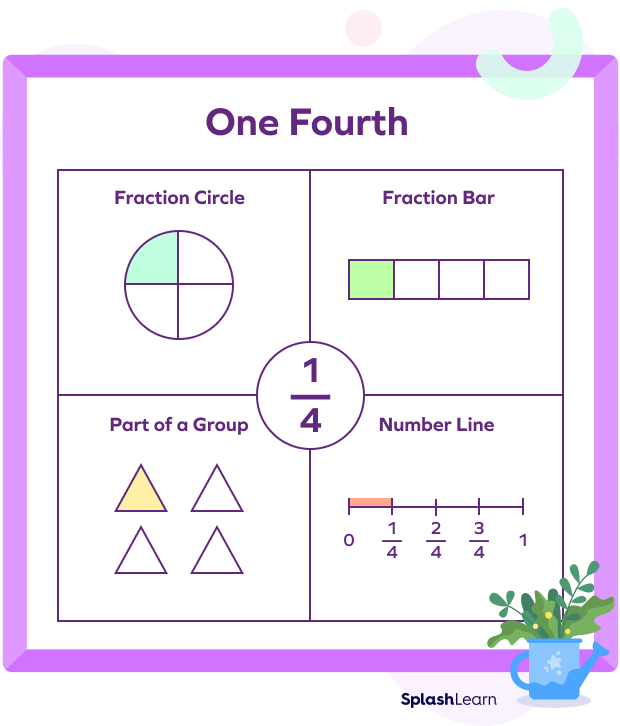
Effective budgeting is essentially an exercise in fractional allocation. Instead of viewing income as a single lump sum, savvy individuals break it down into “quarters” (or other percentages) dedicated to specific purposes. For example, one “quarter” might go to essential living expenses, another “quarter” to debt repayment, a third “quarter” to long-term savings or investments, and the final “quarter” to discretionary spending. The “1/4 + 1/4” here represents combining efforts from different income portions towards a collective goal, such as dedicating 1/4 of your income to rent and another 1/4 to groceries – these two essential “quarters” combine to form half of your necessary expenditure. Understanding how these segments interact and contribute to your overall financial picture is paramount.
The Power of Automation: Consistently Adding Your Quarters
One of the most effective ways to implement the “1/4 + 1/4” savings philosophy is through automation. By setting up automatic transfers, you ensure that a “quarter” of your paycheck consistently goes into savings, and another “quarter” might go into an investment account immediately upon receipt. This removes the temptation to spend money before saving it and ensures that these incremental contributions are made without conscious effort. Over months and years, these automated “quarters” combine into substantial sums, demonstrating the passive yet powerful accumulation that results from disciplined, consistent action. Automation transforms the abstract idea of “1/4 + 1/4” into a tangible, growing financial reality.
Emergency Funds and Goal-Based Savings: The Foundation of Financial Security
The first crucial application of the “1/4 + 1/4” savings approach is often the creation of an emergency fund. Dedicating a consistent “quarter” of your savings efforts each month towards building this fund, perhaps augmented by another “quarter” from an unexpected bonus or tax refund, ensures a safety net is established relatively quickly. Beyond emergencies, this strategy extends to specific financial goals – saving for a down payment, a child’s education, or a dream vacation. Each “quarter” saved becomes a building block, accumulating steadily towards these objectives. The combined force of these dedicated “quarters” provides financial security and empowers the pursuit of future aspirations.
Diversification & Portfolio Building: The Power of Strategic Allocation
In investment strategy, “1/4 + 1/4” is a powerful symbol for diversification and asset allocation. It’s about strategically spreading your investments across different asset classes, sectors, or geographies, ensuring that no single component carries disproportionate risk or holds the sole key to your portfolio’s success.
Spreading Risk: Why Putting All Your Eggs in One Basket is Dangerous
The inherent risk in financial markets dictates that relying on a single investment or asset class is precarious. The “1/4 + 1/4” metaphor advocates for a balanced approach: instead of investing all your capital into one stock, you might allocate “1/4” to equities, “1/4” to bonds, another “quarter” to real estate, and a final “quarter” to commodities or cash. If one “quarter” of your portfolio underperforms, the others can potentially compensate, mitigating overall losses. This strategic division of your investment capital ensures that market volatility in one area doesn’t decimate your entire financial standing.
Asset Allocation Strategies: How Different Quarters Work Together
Effective asset allocation is about understanding the correlation between different types of investments and how they behave under various economic conditions. A common strategy might be to allocate “1/4” of your portfolio to growth stocks for high potential returns, another “1/4” to dividend stocks for income, “1/4” to stable bonds for capital preservation, and the final “1/4” to international markets for global exposure. These different “quarters” are chosen specifically because they tend to perform differently at different times, thus smoothing out portfolio returns. The goal is for these diverse “quarters” to work synergistically, with some thriving when others falter, ensuring overall portfolio resilience.
Rebalancing Your Portfolio: Maintaining the Optimal Mix
Over time, market fluctuations can cause your carefully planned “quarters” to shift in value, altering your original asset allocation. For instance, if your equity “quarter” performs exceptionally well, it might grow to represent more than its initial 25% of your portfolio, potentially increasing your risk exposure. This is where rebalancing comes in. Periodically, you might sell off a portion of the overperforming “quarter” and reinvest it into an underperforming “quarter” to bring your portfolio back to its target allocations. This discipline ensures that your “1/4 + 1/4” strategy remains intact and aligned with your risk tolerance and financial goals, consistently maintaining the desired blend of assets.
Compounding the Quarters: Exponential Growth from Modest Beginnings
Perhaps the most compelling aspect of “what’s 1/4 + 1/4” in finance is its implicit connection to the principle of compound interest. It’s not just about linear addition; it’s about the growth that occurs when those combined quarters themselves start earning returns, and those returns, in turn, earn more returns.
The Eighth Wonder of the World: Understanding Compound Interest
Albert Einstein famously called compound interest the “eighth wonder of the world,” and for good reason. When you save or invest “1/4” of your money, and then another “1/4,” you now have “1/2.” If this “1/2” earns interest or returns, that interest is then added to the principal, and the next interest calculation is based on the larger sum. This process of earning “interest on interest” is what creates exponential growth. The combined “quarters” don’t just add up; they multiply, accelerating wealth creation far beyond what simple addition could achieve. Understanding this fundamental mechanism is key to appreciating the long-term impact of consistent financial contributions.
Time Horizon and Consistency: The Unsung Heroes of Wealth Creation
The power of compounding is directly proportional to two factors: time and consistency. The longer your money (your aggregated “quarters”) remains invested, the more opportunities it has to compound. Similarly, consistent contributions – adding those “1/4” increments regularly – significantly amplify the effect. An investor who consistently adds “1/4 + 1/4” to their portfolio over decades will likely accumulate a far greater sum than someone who invests larger, but inconsistent, amounts over a shorter period. The seemingly small, consistent additions, fueled by time, become the engine of extraordinary wealth creation, turning modest beginnings into substantial fortunes.

From Two Quarters to Financial Independence: A Long-Term Vision
Ultimately, the journey from “1/4 + 1/4” to financial independence is a testament to vision and discipline. It’s about recognizing that every small financial decision, every quarter saved, every fractional investment made, contributes to a larger narrative. These small, deliberate actions, when compounded over a long time horizon, can transform aspirations into reality, funding retirements, educational pursuits, and entrepreneurial ventures. The simplicity of the “1/4 + 1/4” equation belies its profound implications, serving as a constant reminder that financial mastery is not about magic, but about the diligent, intelligent accumulation and growth of individual parts into a powerful, financially secure whole.
aViewFromTheCave is a participant in the Amazon Services LLC Associates Program, an affiliate advertising program designed to provide a means for sites to earn advertising fees by advertising and linking to Amazon.com. Amazon, the Amazon logo, AmazonSupply, and the AmazonSupply logo are trademarks of Amazon.com, Inc. or its affiliates. As an Amazon Associate we earn affiliate commissions from qualifying purchases.