
Navigating the annual tax filing process can often feel like deciphering a complex financial puzzle. Yet, it’s an indispensable aspect of responsible personal finance, ensuring compliance, maximizing eligible refunds, and minimizing liabilities. Far from being a mere chore, tax season presents an opportunity to review your financial health, understand your income streams, and leverage available deductions and credits. The key to transforming this often-daunting task into a streamlined experience lies in meticulous preparation and a clear understanding of the necessary documentation. This comprehensive guide aims to demystify the tax filing requirements, equipping you with the knowledge and actionable insights to confidently prepare your return, whether you choose to use tax software, hire a professional, or tackle it yourself. By understanding what you need to gather, you can save time, avoid common pitfalls, and approach tax season with clarity and control.
Gathering Your Foundational Personal Information
The bedrock of any tax return is your personal and identifying information. Without these core details, your return cannot be accurately processed by the relevant tax authorities. This section outlines the essential personal data required for you and anyone else included on your return.
Personal Identifiers for All Filers
At the very top of your tax preparation checklist should be the collection of crucial identifying details for yourself, your spouse (if filing jointly), and any dependents. This information serves as the primary link between your tax return and your identity in government databases.
- Social Security Number (SSN) or Individual Taxpayer Identification Number (ITIN): This is paramount. Ensure you have the correct SSN or ITIN for yourself, your spouse, and all dependents. Errors here can lead to significant delays or rejection of your return. Keep these numbers secure and only share them through trusted channels.
- Full Legal Name and Date of Birth: Verify that these match the records on file with the Social Security Administration or other issuing bodies. Discrepancies, even minor ones, can trigger issues.
- Current Address: Your most up-to-date mailing address is vital for receiving any correspondence from tax authorities, including notices or refund checks if you haven’t opted for direct deposit.
- Occupation: While not always mandatory for every line on every form, it’s good practice to have your primary occupation ready.
- Bank Account Information (for Direct Deposit/Debit): If you anticipate a refund and wish to receive it quickly, or if you expect to owe taxes and want to pay directly from your bank account, you’ll need your bank’s routing number and your account number. This is the most efficient and secure way to handle tax payments and refunds.
Dependent Information
If you are claiming dependents, whether they are children, relatives, or qualifying individuals, you’ll need specific information for each one to ensure they meet eligibility criteria for various credits and deductions.
- Dependent’s Full Legal Name: As it appears on their Social Security card or official identification.
- Dependent’s Social Security Number (SSN) or ITIN: Essential for claiming child tax credits, credit for other dependents, or educational credits.
- Dependent’s Date of Birth: Often required to verify age-related eligibility for certain benefits.
- Relationship to You: You’ll need to specify how the dependent is related to you (e.g., child, stepchild, grandchild, foster child, sibling, niece/nephew).
- Proof of Residency: For most dependents, they must have lived with you for more than half the year (with exceptions for temporary absences like schooling or illness). While you don’t typically submit proof with your return, it’s crucial to ensure you meet this requirement.
Documenting Your Income Streams
The backbone of your tax return is your income. Every dollar earned, regardless of its source, needs to be accurately reported to the IRS or relevant tax authority. Properly documenting all income streams is critical for calculating your gross income and, subsequently, your tax liability. This section breaks down the common forms you’ll receive that detail your earnings.
Wage and Salary Income (Form W-2)
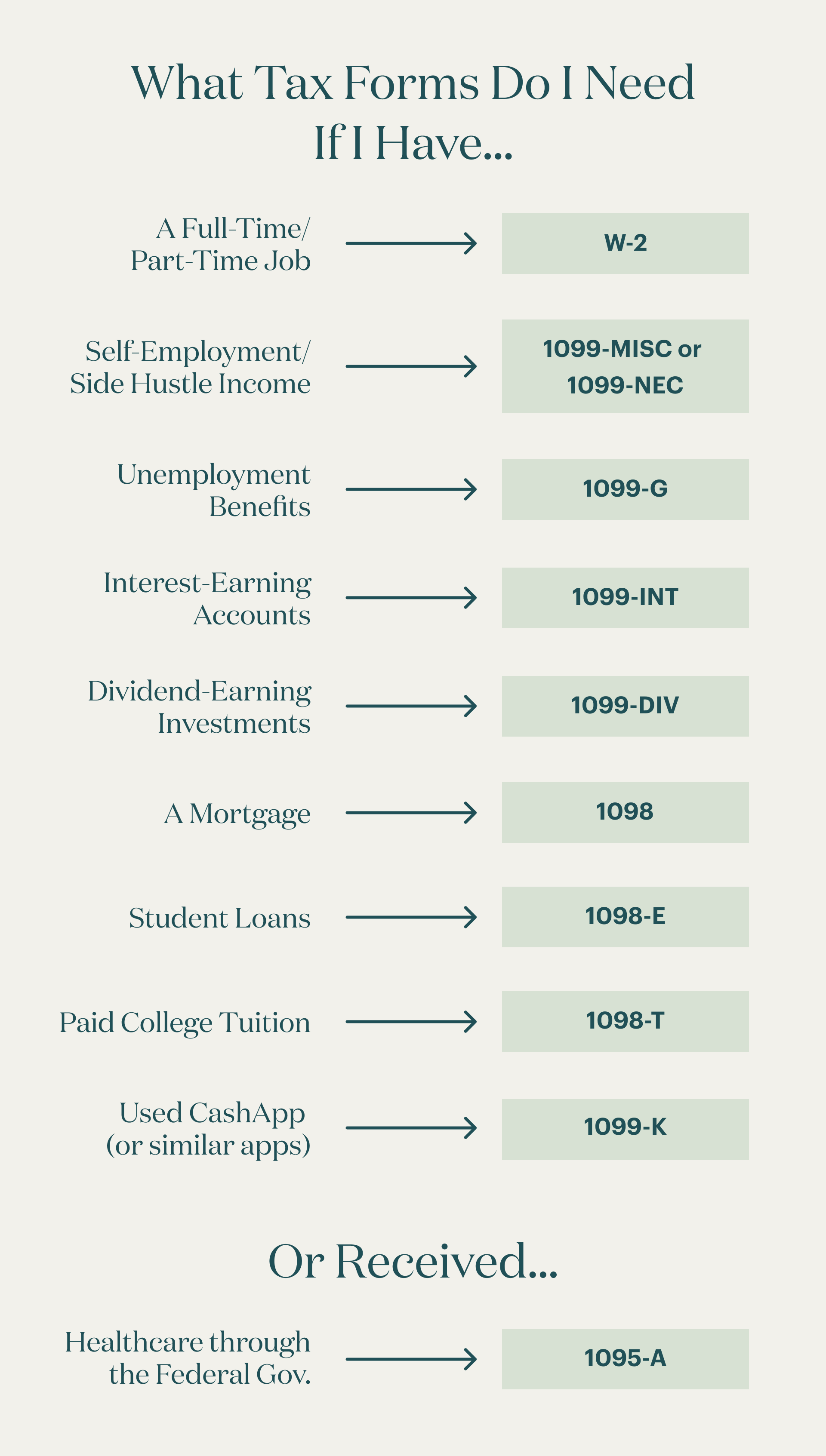
If you are employed by a company, your primary income documentation will be Form W-2, Wage and Tax Statement. Your employer is legally obligated to send this form to you by January 31st of each year.
- What it contains: Your W-2 shows your total wages, salary, tips, and other compensation, along with the federal, state, and local income taxes withheld from your paychecks. It also details contributions to certain retirement plans, health savings accounts (HSAs), and other benefits.
- Why it’s crucial: This form is the definitive record of your employment income and tax withholdings. You must report all W-2 income, even if it’s a small amount. Ensure you have a W-2 from every employer you worked for during the tax year. If you haven’t received a W-2 by early February, contact your employer immediately.
Other Income Reporting Forms (Form 1099 Series)
Beyond traditional wages, many individuals receive income from various other sources, each typically reported on a specific 1099 form. These forms are also generally issued by January 31st.
- Form 1099-NEC (Nonemployee Compensation): This is for independent contractors, freelancers, and self-employed individuals who received payments for services rendered. If you earned $600 or more from a single client or company, they should issue you a 1099-NEC.
- Form 1099-MISC (Miscellaneous Information): While some nonemployee compensation moved to 1099-NEC, this form still reports other types of income, such as rent payments, prizes and awards, and payments to attorneys.
- Form 1099-INT (Interest Income): Received from banks, credit unions, and other financial institutions if you earned $10 or more in interest.
- Form 1099-DIV (Dividends and Distributions): Issued by investment companies for dividends and capital gain distributions from stocks, mutual funds, and other investments.
- Form 1099-B (Proceeds From Broker and Barter Exchange Transactions): Reports capital gains or losses from the sale of stocks, bonds, mutual funds, and other securities. This form is vital for calculating your investment gains or losses.
- Form 1099-R (Distributions From Pensions, Annuities, Retirement or Profit-Sharing Plans, IRAs, Insurance Contracts, etc.): If you received distributions from retirement accounts, this form details the taxable portion.
- Form 1099-G (Certain Government Payments): This includes unemployment compensation, state or local income tax refunds (if you itemized deductions in a prior year), and agricultural payments.
- Form 1099-K (Payment Card and Third Party Network Transactions): Reports payments received through third-party payment networks (e.g., PayPal, Venmo, Stripe) for goods or services. Thresholds for reporting on this form can vary.
- Schedule K-1 (Partner’s Share of Income, Deductions, Credits, etc.): If you are a partner in a partnership, a shareholder in an S corporation, or a beneficiary of a trust or estate, you’ll receive a Schedule K-1 detailing your share of the entity’s income, losses, and deductions. These forms can sometimes arrive later than other 1099s, potentially requiring an extension.
Other Income Sources (Not on Formal Forms)
Some income streams might not be formally reported on a W-2 or 1099 but are still taxable and must be reported.
- Rental Income: If you own and rent out property, you’ll need a detailed summary of your rental income and associated expenses.
- Business Income/Loss (Sole Proprietorship): If you operate a sole proprietorship, you’ll need to compile all your business income and expenses to report on Schedule C (Form 1040).
- Gambling Winnings: Any winnings from lotteries, casinos, racetracks, or other gambling activities are taxable. You might receive a Form W2-G for significant winnings.
- Alimony Received: For divorce or separation agreements executed before 2019, alimony received is taxable.
Maximizing Your Deductions and Credits
Once your income is accounted for, the next critical step in tax preparation is identifying and documenting all eligible deductions and credits. These can significantly reduce your taxable income or directly lower your tax bill, leading to a larger refund or a smaller amount due. Meticulous record-keeping throughout the year is invaluable here.
Itemized Deductions vs. Standard Deduction
Most taxpayers choose between taking the standard deduction (a fixed dollar amount determined by filing status) or itemizing their deductions (listing specific eligible expenses). For itemizing to be beneficial, your total itemized deductions must exceed the standard deduction amount.
- Medical and Dental Expenses: Records of unreimbursed medical, dental, and vision care expenses (including health insurance premiums, doctor visits, prescription drugs) that exceed a certain percentage of your Adjusted Gross Income (AGI).
- State and Local Taxes (SALT): Receipts for state and local income taxes paid or real estate and personal property taxes. There’s a current limitation on the SALT deduction.
- Home Mortgage Interest: Form 1098, Mortgage Interest Statement, from your mortgage lender. This form details the interest paid on your home loan.
- Charitable Contributions: Records of cash contributions (bank statements, cancelled checks, receipts) and non-cash donations (appraisal for large items, detailed lists for smaller donations) to qualified organizations.
- Casualty and Theft Losses: Limited to federally declared disaster areas, requiring documentation of loss and insurance reimbursement.
Education-Related Expenses
Investing in education can lead to valuable tax breaks.
- Form 1098-T (Tuition Statement): Issued by eligible educational institutions, this form reports tuition payments and related expenses. It’s crucial for claiming education credits like the American Opportunity Tax Credit or the Lifetime Learning Credit.
- Student Loan Interest (Form 1098-E): If you paid interest on qualified student loans, your lender should provide this form.
- Receipts for Other Education Expenses: Books, supplies, and equipment required for course enrollment may be deductible or eligible for credit.
Child and Dependent Care Expenses
If you paid for the care of a qualifying child or dependent so you could work or look for work, you may be eligible for the Child and Dependent Care Credit.
- Care Provider Information: The name, address, and Taxpayer Identification Number (TIN) or SSN of your care provider(s).
- Receipts/Records: Documentation of the amounts paid for dependent care.

Retirement Contributions
Contributions to certain retirement accounts can be deductible, lowering your taxable income.
- IRA Contributions: Records of contributions made to a Traditional IRA.
- 401(k), 403(b), etc. Contributions: These are typically reported on your Form W-2.
- Saver’s Credit Eligibility: If you meet certain income thresholds and contribute to a retirement plan, you might be eligible for the Retirement Savings Contributions Credit (Saver’s Credit).
Business Expenses (for Self-Employed)
For self-employed individuals, keeping meticulous records of business expenses is paramount for reducing taxable business income.
- Receipts for Business-Related Purchases: Supplies, equipment, software, office rent, utilities.
- Travel and Entertainment Expenses: Receipts and logs for business travel, meals (subject to limitations), and client entertainment.
- Home Office Expenses: If you use a portion of your home exclusively and regularly for business, records of mortgage interest, property taxes, utilities, and repairs.
- Vehicle Expenses: Mileage logs, fuel receipts, maintenance records if using the actual expense method.
- Health Insurance Premiums: If you’re self-employed and pay for your own health insurance, these premiums may be deductible.
Other Important Financial Documents and Considerations
Beyond income and specific deductions, several other documents and financial activities can impact your tax return. Neglecting these can lead to missed opportunities for savings or compliance issues.
Prior Year’s Tax Return
Your previous year’s tax return is not just a historical document; it’s a valuable resource for the current filing season.
- Carryovers: It contains information on any carryovers for losses, credits, or deductions (e.g., capital loss carryover, charitable contribution carryover) that can be applied to the current year.
- Basis Information: For investments, it helps establish your cost basis, which is essential for calculating gains or losses upon sale.
- Reference: It provides a template for consistent reporting and helps identify any changes in your financial situation from one year to the next.
Estimated Tax Payments Records
If you are self-employed, have significant investment income, or income not subject to withholding, you may be required to make estimated tax payments throughout the year.
- Proof of Payments: Keep records of all federal and state estimated tax payments made, including dates and amounts. This prevents underpayment penalties and ensures you receive credit for taxes already paid.
Health Insurance Information
While the penalty for not having health insurance at the federal level has been eliminated, some states still impose penalties. Additionally, certain health insurance-related documents are essential for claiming premium tax credits or reporting marketplace coverage.
- Form 1095-A (Health Insurance Marketplace Statement): If you purchased health insurance through a state or federal marketplace, this form is crucial for reconciling any advance premium tax credits you received.
- Forms 1095-B and 1095-C: These forms confirm that you had minimum essential coverage. While generally not needed for federal returns anymore, they serve as proof of coverage if ever questioned.
Cryptocurrency Transaction Records
The IRS has intensified its focus on cryptocurrency. If you bought, sold, exchanged, or received cryptocurrency, you need detailed records.
- Purchase and Sale Dates/Amounts: Documentation of when you acquired and disposed of crypto assets.
- Fair Market Value: Records of the fair market value of crypto at the time of transaction.
- Transaction Fees: Any fees incurred during transactions.
- Exchange Statements: Statements from crypto exchanges detailing your activity.
Foreign Bank and Financial Accounts (FBAR)
If you have financial interests in or signature authority over foreign bank accounts or other financial accounts with an aggregate value exceeding $10,000 at any point during the year, you may need to file a FinCEN Form 114, Report of Foreign Bank and Financial Accounts (FBAR), in addition to your tax return.
Preparing for a Smooth Filing Process
With all your documents meticulously organized, the final step involves choosing your filing method and understanding key deadlines. Proactive planning can significantly reduce stress and enhance accuracy.
Choosing Your Filing Method
- Tax Software: Options like TurboTax, H&R Block, and TaxAct guide you through the process, asking questions and populating forms based on your inputs. They are excellent for individuals with straightforward to moderately complex returns.
- IRS Free File: If your Adjusted Gross Income (AGI) is below a certain threshold, you may qualify to use free tax preparation software provided through the IRS Free File program, a partnership between the IRS and leading tax software companies.
- Professional Tax Preparer: For complex financial situations (e.g., owning a business, significant investments, international income), or simply for peace of mind, a Certified Public Accountant (CPA) or Enrolled Agent (EA) can provide expert guidance, ensure compliance, and identify all eligible deductions and credits.
- Volunteer Income Tax Assistance (VITA) / Tax Counseling for the Elderly (TCE): These programs offer free tax help to qualified individuals, including low-to-moderate-income people, the elderly, and those with disabilities.
Key Deadlines
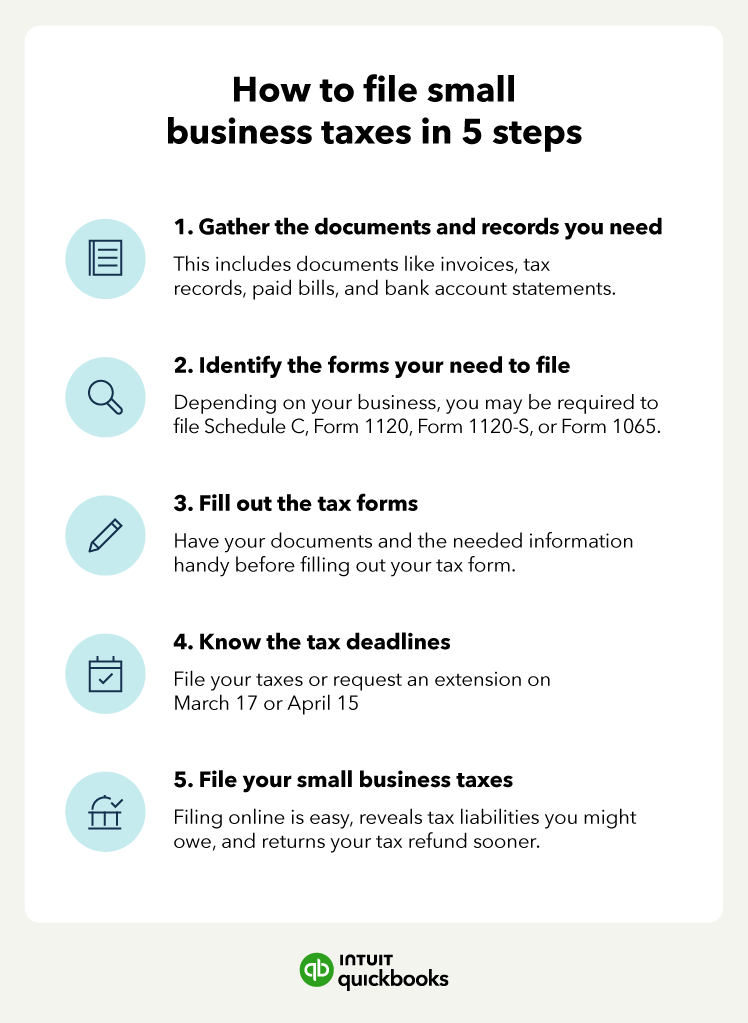
- April 15th (or next business day): The traditional deadline for filing federal income tax returns and paying any taxes due.
- October 15th (or next business day): The deadline for those who filed an extension by April 15th. Remember, an extension to file is not an extension to pay.
- Quarterly Estimated Tax Payments: For those required to make estimated payments, deadlines typically fall on April 15th, June 15th, September 15th, and January 15th of the following year.
- State Deadlines: Be mindful of state income tax deadlines, which may differ from federal deadlines.
Record-Keeping Best Practices
The most effective way to simplify future tax seasons is to implement a robust record-keeping system throughout the year.
- Digital Organization: Create dedicated folders on your computer or cloud storage for tax documents. Scan and save receipts, W-2s, 1099s, and other relevant statements as they arrive.
- Physical Organization: For physical documents, use a labeled folder or accordion file.
- Ongoing Collection: Don’t wait until January. As soon as you receive a tax-related document or make a significant deductible expense, file it away immediately.
- Retention: Keep tax records for a minimum of three years from the date you filed your original return or two years from the date you paid the tax, whichever is later. For complex situations (e.g., property sales, unfiled returns), longer retention periods are advisable.
Conclusion
Filing taxes is an essential annual financial obligation, but it doesn’t have to be a source of stress. By understanding the foundational personal information, diligently documenting all income streams, meticulously tracking potential deductions and credits, and paying attention to other pertinent financial details, you can transform the process into a manageable and even insightful exercise. Proactive preparation, thorough organization, and a clear understanding of the requirements are your most powerful allies. Whether you choose to leverage sophisticated software or enlist the expertise of a professional, having all your necessary documents at hand will streamline the process, ensure accuracy, and empower you to make informed financial decisions. Approach tax season not as a burden, but as an opportunity to reinforce your financial literacy and ensure your fiscal well-being for the year ahead.
aViewFromTheCave is a participant in the Amazon Services LLC Associates Program, an affiliate advertising program designed to provide a means for sites to earn advertising fees by advertising and linking to Amazon.com. Amazon, the Amazon logo, AmazonSupply, and the AmazonSupply logo are trademarks of Amazon.com, Inc. or its affiliates. As an Amazon Associate we earn affiliate commissions from qualifying purchases.