
The invention of the camera is not a singular event tied to a precise date, but rather a fascinating journey of scientific discovery, artistic ambition, and persistent technological refinement that spanned centuries. While the concept of projecting images existed for millennia, the ability to permanently capture and preserve a real-world scene was a monumental leap, profoundly altering how humanity perceived, documented, and interacted with its environment. Pinpointing “the first camera” requires an understanding of what constitutes a camera and a permanent photograph, leading us back to the pioneering efforts of the early 19th century.
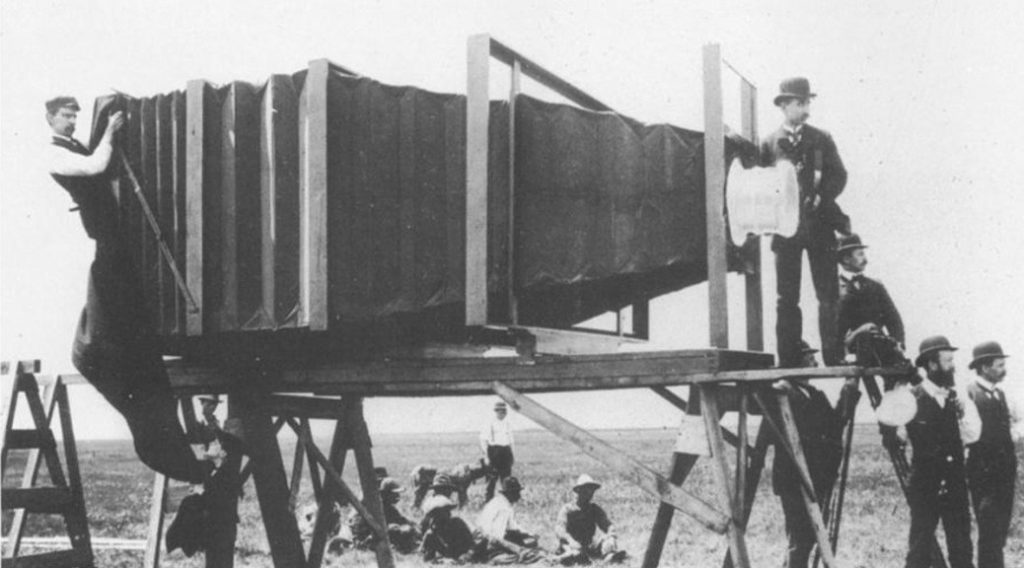
The Dawn of Photography: Pinpointing the First Permanent Image
To understand the birth of the camera, we must first trace the evolution from transient optical phenomena to tangible, lasting images. This journey began long before a permanent photograph was ever conceived.
The Camera Obscura: Precursor to Photography
The foundational principle of the camera – projecting an image through a small aperture – dates back to ancient times. The camera obscura, Latin for “darkened room,” was a phenomenon observed by figures like Mozi (4th century BC), Aristotle (4th century BC), and later extensively studied by Arab scholar Alhazen (10th-11th century AD). It involved a darkened chamber or box with a small hole (pinhole) on one side, through which light from an external scene passed, projecting an inverted image onto the opposite surface.
For centuries, the camera obscura was primarily a tool for observation, a curiosity, and later, an aid for artists and painters to accurately trace perspectives and compositions. Leonardo da Vinci described it in detail, and by the 17th century, portable box-type camera obscuras with lenses (to sharpen the image) and mirrors (to re-invert it) became common. However, these devices merely projected a temporary image; they lacked the crucial element of fixation. The quest for permanence would take centuries more.
Niépce’s Breakthrough: The First Permanent Photograph (1826/1827)
The true breakthrough in creating a permanent image came in the 1820s, thanks to the persistent experiments of French inventor Joseph Nicéphore Niépce. Working in his country estate at Le Gras, Niépce dedicated himself to heliography (sun writing), a process he developed using bitumen of Judea, a light-sensitive asphalt.
After years of trial and error with various substances, Niépce achieved what is widely recognized as the world’s first permanent photograph. Around 1826 or 1827, he set up a camera obscura pointing out of an upstairs window of his workshop. The exposure time was extraordinarily long – estimates range from eight hours to several days – capturing the view from his window. The resulting image, titled “View from the Window at Le Gras,” is blurry and indistinct, but undeniably a direct photograph of reality, fixed onto a pewter plate. This landmark achievement marks the definitive moment when the camera, as a device capable of recording a permanent image, truly came into being. It was the first time an actual camera, rather than just an optical projection device, fulfilled its ultimate purpose.
Daguerreotypes and the Commercialization of Photography
Niépce later partnered with Louis-Jacques-Mandé Daguerre. After Niépce’s death in 1833, Daguerre continued to refine the process, eventually developing the daguerreotype in 1837. This method significantly reduced exposure times (from hours to minutes) and produced much sharper, highly detailed images on polished silver-plated copper sheets.
In 1839, Daguerre’s process was announced to the world by the French government, effectively giving photography to the public. This year is often cited as the birth of practical photography, making it accessible, though still a complex and costly endeavor. The daguerreotype represented the first commercially viable photographic process, sparking a global sensation and laying the groundwork for photography’s eventual widespread adoption. While Niépce created the first photograph, Daguerre made it practical.
Early Photographic Technologies and Their Evolution
Following the daguerreotype, a rapid succession of innovations transformed photography, moving it from a niche scientific curiosity to a burgeoning art form and practical tool. Each new technology built upon its predecessors, addressing limitations and expanding possibilities.
Calotypes and the Rise of Negatives
Almost concurrently with Daguerre, British inventor William Henry Fox Talbot developed his own photographic process: the calotype (or talbotype). Announced in 1841, the calotype produced a translucent paper negative from which multiple positive prints could be made. This was a radical departure from the daguerreotype’s unique, non-reproducible positive image.
The concept of a negative-positive process was revolutionary. It allowed for duplication, editing, and greater flexibility in printing. Although early calotypes suffered from coarser detail compared to daguerreotypes due to the paper fibers, their ability to create multiple prints quickly made them the preferred choice for many, particularly in England. This marked a significant step towards the mass production and distribution of photographic images.
Wet Collodion Plates: Sharper Images, More Effort
The mid-19th century saw another major leap with the invention of the wet collodion process by Frederick Scott Archer in 1851. This method used a glass plate coated with a sticky collodion solution containing light-sensitive halides. The plate had to be sensitized, exposed, and developed while still wet, requiring photographers to carry portable darkrooms or work extremely quickly.
Despite its cumbersome nature, the wet collodion process offered an unprecedented combination of sharpness, detail (surpassing daguerreotypes), and the ability to produce multiple prints (like calotypes, but with superior quality). It gave rise to ambrotypes (positives on glass) and tintypes (positives on metal), which became popular, affordable portrait mediums. For roughly thirty years, wet collodion dominated photography, setting new standards for image quality and pushing the boundaries of what was photographically possible, from landscape to portraiture.
Dry Plates: Paving the Way for Mass Adoption
The biggest inconvenience of the wet collodion process was its “wet” requirement. This limitation severely restricted outdoor and travel photography. The invention of the gelatin dry plate process in the 1870s by Richard Leach Maddox, building on earlier work by others, eliminated this hurdle.

Dry plates came pre-sensitized and could be stored for extended periods before and after exposure, making photography far more convenient and accessible. This innovation freed photographers from their mobile darkrooms, allowing for spontaneous capture and opening up new frontiers for photojournalism, documentary, and amateur photography. The convenience and increasing sensitivity of dry plates laid the essential groundwork for the next monumental phase in photography: its widespread commercialization and democratization.
Photography Enters the Modern Era: Eastman Kodak and Beyond
The late 19th and early 20th centuries witnessed photography’s transformation from a specialized skill to a popular hobby, largely due to advancements in camera design, film technology, and user-friendliness.
The Kodak Moment: Making Photography Accessible
George Eastman, founder of Eastman Kodak Company, played a pivotal role in democratizing photography. In 1888, he introduced the Kodak camera, a simple box camera pre-loaded with a roll of flexible film (another of Eastman’s innovations). Its slogan, “You push the button, we do the rest,” perfectly encapsulated its revolutionary appeal. Users simply took their 100 exposures, sent the entire camera back to Kodak, who developed the film, made prints, and reloaded the camera for a fee.
This moment was revolutionary. It removed the technical complexities of photographic processes from the hands of the amateur, making photography accessible to anyone who could afford the camera and processing. The flexible roll film also replaced bulky glass plates, making cameras smaller and lighter. Eastman’s vision of making photography an everyday activity, not just for professionals, irrevocably changed its trajectory and paved the way for its ubiquity in modern life.
From Film to Digital: A Paradigm Shift
The 20th century saw continuous refinements in film technology, camera optics, and mechanics. Single-lens reflex (SLR) cameras, sophisticated rangefinders, and increasingly versatile lenses offered professionals and serious amateurs unparalleled control and image quality. Color photography, after decades of experimentation, became widely accessible and dominant by the mid-century.
However, the late 20th century heralded another seismic shift: the advent of digital imaging. While the first digital image was scanned in 1957, the first self-contained digital camera, capable of recording images as digital files, was built by Kodak engineer Steven Sasson in 1975. This prototype recorded a black-and-white image onto a cassette tape. It took 23 seconds to capture the image and another 23 seconds to display it on a television.
The commercialization of digital cameras began in the early 1990s, with companies like Canon, Nikon, and Kodak gradually introducing models that recorded images onto memory cards. The technology matured rapidly, offering instant feedback, massive storage capacity, and the ability to easily manipulate and share images digitally.
The Digital Revolution: Sensors, Pixels, and Computational Photography
The transition from film to digital was a full-blown revolution. Chemical processes were replaced by electronic sensors (CCD and CMOS) that converted light into electrical signals, which were then processed into pixels. This allowed for unprecedented flexibility, from adjustable ISO sensitivities to immediate review of images.
The rise of digital also brought computational photography to the forefront. Features like in-camera image stabilization, noise reduction, high dynamic range (HDR) merging, panorama stitching, and even advanced portrait modes (like “bokeh” effects on smartphones) are all forms of computational photography. These techniques use algorithms and multiple exposures to enhance or create images that would be impossible with traditional optical-only methods. The modern smartphone camera, with its multi-lens arrays and powerful processors, is the ultimate testament to the fusion of digital imaging and computational power.
The Technological Impact and Future of Imaging
From its humble beginnings as a projected image to its current role as an omnipresent digital eye, the camera’s technological journey has reshaped our world in profound ways.
How Photography Shaped Science, Art, and Communication
The camera’s impact extends far beyond mere documentation. In science, it provided an invaluable tool for recording experiments, astronomical observations, microscopic views, and medical diagnostics. In art, it challenged traditional painting, creating new genres and influencing artistic movements, while also becoming an art form in its own right. Photography revolutionized communication by allowing mass production of images for newspapers, magazines, and textbooks, bringing distant realities into everyday homes and shaping public opinion. It became indispensable for journalism, advertising, and personal memory keeping. The ability to capture moments in time has profoundly influenced how we understand history, culture, and ourselves.
Miniaturization and Integration: Cameras Everywhere
A key technological trend since the mid-20th century has been the miniaturization of cameras. From large studio models, they shrank to portable consumer devices, then integrated into camcorders, and most significantly, into mobile phones. The modern smartphone camera, often featuring multiple lenses, advanced sensors, and powerful image processing capabilities, has made photography utterly ubiquitous. Millions of images are captured and shared daily, transforming personal communication and social interaction. This integration means that the “camera” is no longer a standalone gadget but a fundamental component of our most personal technological device.
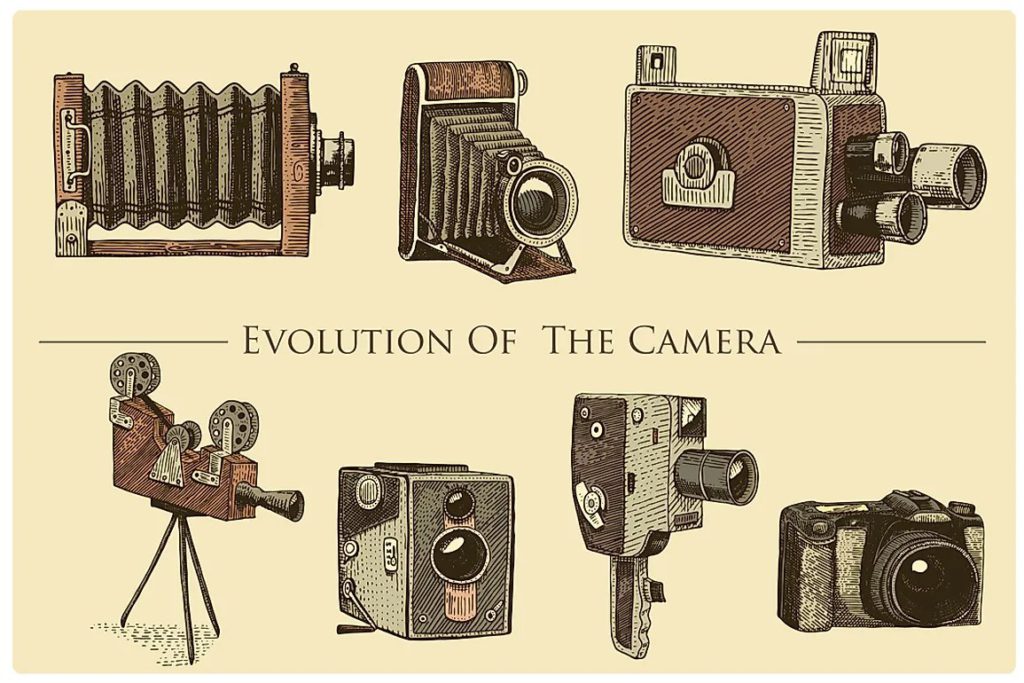
AI, Computational Photography, and the Future of Vision Tech
The future of imaging is undoubtedly digital, computational, and increasingly driven by artificial intelligence. AI-powered algorithms are already enhancing image quality, recognizing faces, categorizing photos, and even generating entirely new images. Computational photography continues to push boundaries, allowing for capabilities like “light field” photography (changing focus after the shot), advanced object tracking, and real-time image manipulation.
Beyond traditional photography, camera technology is central to emerging fields like computer vision, augmented reality (AR), virtual reality (VR), autonomous vehicles, and advanced robotics. Cameras are not just for capturing memories; they are becoming the “eyes” of intelligent systems, allowing machines to perceive and interact with the world around them. The journey from Niépce’s crude pewter plate to the sophisticated, AI-enhanced imaging systems of today and tomorrow is a testament to relentless human innovation and the enduring power of light to tell stories.
The question “what year was the first camera made” takes us back to 1826 or 1827, but the story of the camera is one that continues to unfold, constantly evolving and redefining our relationship with visual information.
aViewFromTheCave is a participant in the Amazon Services LLC Associates Program, an affiliate advertising program designed to provide a means for sites to earn advertising fees by advertising and linking to Amazon.com. Amazon, the Amazon logo, AmazonSupply, and the AmazonSupply logo are trademarks of Amazon.com, Inc. or its affiliates. As an Amazon Associate we earn affiliate commissions from qualifying purchases.