
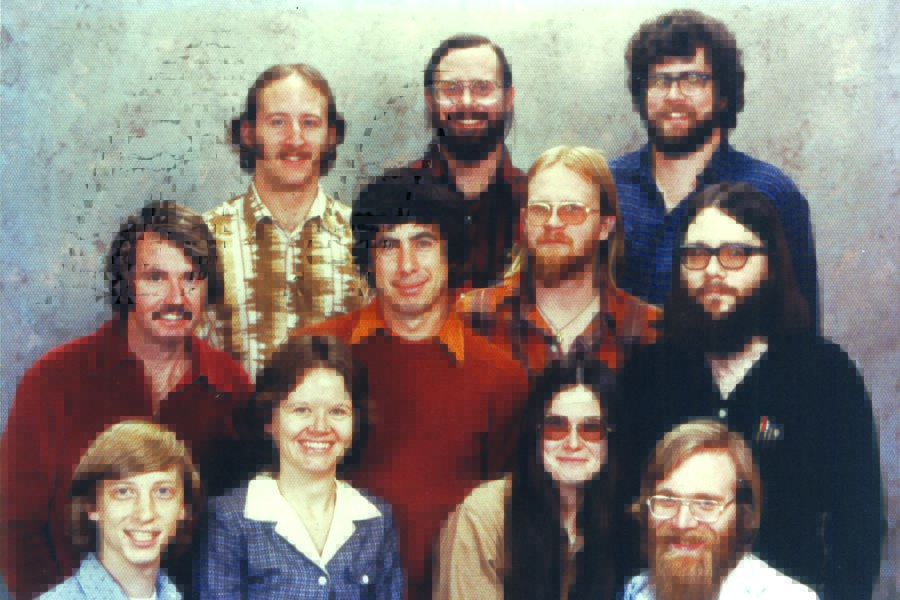
Microsoft Corporation, a name synonymous with personal computing, software innovation, and technological advancement, was officially founded on April 4, 1975. This date marks the genesis of an entity that would fundamentally reshape the digital landscape, democratize access to computing, and lay much of the groundwork for the modern technological world. Co-founded by two visionary childhood friends, Bill Gates and Paul Allen, Microsoft’s inception in Albuquerque, New Mexico, was far more than just the birth of another company; it was a pivotal moment in the unfolding story of information technology.
The 1970s represented a nascent yet electrifying period for computing. Mainframes dominated corporate and institutional environments, largely inaccessible to the average individual. However, the emergence of microprocessors like Intel’s 8080 fueled the dream of personal computing – machines powerful enough for individual use, yet small and affordable. It was into this fertile ground of possibility that Gates and Allen, driven by a shared passion for programming and an acute foresight into computing’s future, planted the seeds of what would become a global technology titan. Their initial foray was not into hardware, but software – recognizing that powerful, user-friendly programs would be the key to unlocking the true potential of these burgeoning personal machines.

This article delves into the significance of Microsoft’s founding year from a purely technological perspective. It explores the immediate context that gave rise to the company, its critical early contributions that set industry standards, and its subsequent evolution into a multifaceted tech behemoth whose influence continues to shape virtually every aspect of our digital lives. By focusing on its technological innovations, strategic pivots, and foundational impact, we can appreciate the enduring legacy of a company born from a simple yet profound vision: “a computer on every desk and in every home.”
The Dawn of a Software Giant: April 4, 1975
The founding of Microsoft in 1975 was not an arbitrary event but a direct, audacious response to a significant technological breakthrough: the release of the MITS Altair 8800. This low-cost microcomputer, often hailed as the first commercially successful personal computer, captivated the imagination of hobbyists and engineers alike. For Bill Gates and Paul Allen, it represented a tangible opportunity to turn their long-held aspirations into reality.
The Altair BASIC Story: A Spark of Innovation
The Altair 8800 was a marvel for its time, but it shipped without any easy-to-use software. Programming it required tedious machine code input via switches. Allen, upon seeing the Altair featured on the cover of Popular Electronics magazine in January 1975, immediately recognized the need for a high-level programming language that would make the machine accessible to a wider audience. He convinced Gates that they could develop an interpreter for BASIC (Beginner’s All-purpose Symbolic Instruction Code) for the Altair. This wasn’t merely a software project; it was a foundational move towards making personal computing practical.
Working feverishly for eight weeks, often through the night, Gates and Allen, with contributions from Monte Davidoff, developed what would become Altair BASIC. Crucially, they did this without physical access to an Altair 8800, relying on a custom-built simulator running on a mainframe at Harvard. Paul Allen famously flew to Albuquerque to demonstrate their interpreter to MITS, the creators of the Altair. The demonstration was a success, leading to MITS licensing their BASIC interpreter and distributing it as “Altair BASIC.” This first product not only provided a user-friendly interface for interacting with the Altair but also demonstrated the immense value of software as a distinct, essential component of the computing experience. It was a clear signal that the future of computing wasn’t just in hardware, but equally in the code that made that hardware useful.
From Albuquerque to Global Dominance: Early Vision
The immediate success of Altair BASIC cemented the need for a dedicated software company. Gates and Allen officially formed Microsoft in Albuquerque to focus on developing programming languages for microcomputers. Their vision was simple yet revolutionary: to create software that would empower hardware. They understood that the nascent personal computing industry would only truly flourish if users could easily program and interact with their machines. This meant not just creating interpreters for BASIC, but also compilers for other languages, and eventually, operating systems.
Albuquerque provided a low-cost environment conducive to a startup, but it was also strategically located near MITS, their first major client. However, the ambition of Microsoft was never constrained by geography. From the outset, Gates and Allen saw a future where software would be a universal requirement, not just a niche product. They began licensing their BASIC interpreter to other hardware manufacturers, effectively standardizing a crucial piece of software infrastructure across multiple early personal computer platforms. This early strategy of broad licensing was a technological and business masterstroke, ensuring Microsoft’s code became ubiquitous even as hardware platforms diversified.
The Entrepreneurial Spirit of Gates and Allen
The founding year also highlights the extraordinary entrepreneurial and technological drive of Gates and Allen. They were young, driven, and possessed an almost prescient understanding of where the computing industry was headed. Gates, with his intense focus on code optimization and business strategy, complemented Allen’s deep technical insight and ability to bridge hardware and software. Their partnership, though sometimes fraught with tension, was incredibly productive, giving birth to a company that would not only survive but thrive amidst the chaotic and rapidly evolving tech landscape of the late 20th century. Their decision to focus solely on software, rather than hardware, allowed them to develop an expertise that would prove invaluable, positioning Microsoft as the go-to provider for the foundational layers of personal computing.
Microsoft’s Pivotal Role in the Personal Computing Revolution
The true impact of Microsoft’s founding year can only be fully appreciated by examining its subsequent contributions, particularly in establishing the software paradigms that defined the personal computing revolution. From the late 1970s through the 1990s, Microsoft effectively wrote much of the operating system and application software rulebook, creating standards that endure even today.
MS-DOS: The Operating System That Changed Everything
Perhaps Microsoft’s most significant early technological coup was its acquisition and subsequent development of what became MS-DOS (Microsoft Disk Operating System). In 1980, IBM was developing its Personal Computer (IBM PC) and needed an operating system. Rather than developing one themselves, IBM approached Microsoft. Gates, realizing the immense opportunity, acquired a simple operating system called QDOS (Quick and Dirty Operating System) from Seattle Computer Products, refined it, and licensed it to IBM as MS-DOS.
This decision was revolutionary on multiple fronts. First, Microsoft negotiated a deal that allowed them to license MS-DOS to other hardware manufacturers, not just IBM. This “clone market” strategy allowed other companies to build IBM PC-compatible machines, and each one needed MS-DOS. This move effectively standardized the PC architecture and, critically, made MS-DOS the dominant operating system for personal computers. Technologically, MS-DOS provided a command-line interface, a file system, and basic services that allowed application programs to interact with the hardware. It was simple, efficient for the hardware of the time, and became the backbone upon which a vast ecosystem of software applications, from word processors to spreadsheets, was built. The ubiquity of MS-DOS laid the groundwork for the future software industry, cementing Microsoft’s position at its core.
Windows: Democratizing Graphical User Interfaces
While MS-DOS was powerful, its command-line interface was intimidating for many users. The rise of graphical user interfaces (GUIs), pioneered by Xerox PARC and popularized by Apple’s Macintosh, showed a clear path towards making computers more accessible. Microsoft responded with Windows. Initially released in 1985, Windows was not a standalone operating system but an operating environment that ran on top of MS-DOS, providing a GUI. Early versions were somewhat clunky, but Microsoft persevered, understanding the paradigm shift GUIs represented.
The release of Windows 3.0 in 1990 and Windows 3.1 in 1992 were significant technological leaps, offering improved memory management, better graphics, and a more stable user experience. However, it was with Windows 95 that Microsoft truly democratized the GUI experience. Windows 95 was a fully integrated operating system, moving beyond DOS as an underlying layer, and introduced features like the Start button, taskbar, and plug-and-play capabilities that are still fundamental to modern computing. This operating system made personal computers vastly easier to use for the average person, ushering in an era of mass adoption. By integrating the operating system with an intuitive graphical interface, Microsoft transformed the personal computer from a specialized tool for enthusiasts into an essential device for homes and businesses worldwide.
Software as a Service: Driving Industry Standards
Beyond operating systems, Microsoft simultaneously built a powerful suite of application software. Microsoft Word and Excel, initially developed for other platforms, gained massive traction on Windows. The bundling of these applications into Microsoft Office further cemented Microsoft’s dominance. Technologically, these applications set standards for productivity software, pushing boundaries in word processing, spreadsheet analysis, and presentation graphics. Their consistent interface across applications reduced the learning curve and fostered a standardized user experience across countless businesses and educational institutions. This created an ecosystem where users expected certain features and functionalities, influencing software development across the industry. Microsoft’s focus on backward compatibility and regular updates ensured a stable and evolving platform for its users, reinforcing its central role in the daily technological lives of millions.
Beyond the Desktop: Expanding Microsoft’s Technological Footprint
While Microsoft’s early history is deeply rooted in personal computing software, the company demonstrated a remarkable ability to adapt and expand its technological focus, moving beyond the desktop to embrace new paradigms and platforms. This adaptability was crucial for its enduring relevance in the rapidly changing tech landscape.
The Internet Era: Navigating New Frontiers
The advent of the World Wide Web in the mid-1990s presented both an opportunity and a challenge for Microsoft. Initially, the company was slow to fully grasp the internet’s transformative power, having focused primarily on standalone desktop applications. However, under Bill Gates’s leadership, Microsoft made a dramatic “Internet tidal wave” shift, integrating internet technologies deeply into its products.
Internet Explorer, initially an add-on, was bundled with Windows, becoming the dominant web browser of the late 1990s. This integration significantly accelerated internet adoption by making web access a native part of the operating system experience. Microsoft also developed server technologies, such as Internet Information Services (IIS), which became a crucial platform for hosting websites and web applications. The company’s embrace of web technologies, including Active Server Pages (ASP) and later .NET, provided developers with powerful tools to build dynamic web experiences, further embedding Microsoft’s influence into the nascent internet infrastructure. This strategic pivot ensured Microsoft remained a central player, extending its technological reach from the desktop to the burgeoning interconnected world.
Enterprise Solutions and Cloud Computing (Azure)
As computing evolved, so did the needs of businesses. Microsoft recognized the immense potential in providing server software, databases, and enterprise resource planning (ERP) systems. Technologies like Windows Server, SQL Server, and SharePoint became staples in corporate IT environments, offering robust and scalable solutions for managing data, networks, and collaborative workspaces.
However, perhaps the most transformative technological shift for Microsoft in recent decades has been its aggressive move into cloud computing with Microsoft Azure. Launched in 2010, Azure initially played catch-up to early cloud pioneers, but under Satya Nadella’s leadership, it has become a formidable competitor to AWS and Google Cloud. Azure provides a vast array of cloud services, including computing power, storage, databases, networking, analytics, machine learning, and IoT solutions. This pivot from primarily selling software licenses to offering subscription-based cloud services marked a fundamental reorientation of Microsoft’s technological strategy. Azure enables businesses of all sizes to scale their operations, develop new applications, and leverage cutting-edge technologies without the need for extensive on-premise hardware, solidifying Microsoft’s role in the backbone of the global digital infrastructure.
Gaming and Hardware: Xbox and Surface Innovations
While software remains Microsoft’s core, the company has also ventured successfully into hardware and specific consumer technology segments. The launch of the Xbox console in 2001 represented a bold move into the competitive video game market. Technologically, Xbox pushed boundaries in console gaming, offering powerful graphics and processing capabilities that rivaled PCs. Xbox Live, its online gaming service, revolutionized multiplayer gaming, setting a standard for integrated online communities.
More recently, Microsoft’s Surface line of devices (laptops, tablets, and all-in-ones) demonstrated its commitment to designing premium hardware that showcases the full potential of Windows. The Surface devices, particularly the Surface Pro, pioneered the 2-in-1 tablet-laptop hybrid category, demonstrating Microsoft’s vision for productive and versatile personal computing. These ventures highlight Microsoft’s capability to innovate not just in software but also in integrating hardware and software to create compelling user experiences, extending its technological influence into diverse consumer markets.
Enduring Legacy and Future Trajectories in Tech
The legacy of Microsoft, dating back to its founding in 1975, is one of continuous technological evolution and adaptation. Its journey from a two-person startup focused on BASIC interpreters to a global technology conglomerate underscores its profound and lasting impact on the digital world.
Contributions to AI and Machine Learning
In the current era, Artificial Intelligence (AI) and Machine Learning (ML) are at the forefront of technological innovation, and Microsoft is a key player. The company has made substantial investments in AI research and development, integrating AI capabilities across its product portfolio, from Azure AI services and cognitive services to AI-powered features in Office 365 and Windows. Its investment in and partnership with OpenAI, the creator of ChatGPT, has placed Microsoft at the cutting edge of generative AI, rapidly incorporating these advanced models into its search engine (Bing Chat/Copilot), operating system (Windows Copilot), and productivity suite.
Technologically, Microsoft’s contributions to AI include developing advanced AI models, making AI infrastructure accessible through Azure, and driving ethical AI research. By democratizing AI tools and services, Microsoft is enabling developers and businesses to build intelligent applications and solutions, thereby accelerating the widespread adoption and practical application of AI across various industries.
Open Source Engagement and Developer Ecosystems
For many years, Microsoft was viewed as an antagonist to the open-source movement. However, under recent leadership, the company has made a significant strategic pivot, embracing and contributing heavily to open-source technologies. From acquiring GitHub, the world’s largest platform for open-source development, to open-sourcing significant portions of its own code (like .NET Core) and actively contributing to Linux, Microsoft has become a major proponent of open-source.
This shift has profound technological implications. It fosters greater collaboration in the developer community, accelerates innovation, and allows Microsoft to tap into a wider pool of talent and ideas. By embracing open standards and technologies, Microsoft strengthens its developer ecosystem, making its platforms and tools more attractive and versatile for a new generation of technologists.
Shaping the Future of Work and Digital Life
From its initial goal of putting a computer on every desk, Microsoft continues to shape the future of work and digital life. Its current suite of products, encompassing cloud computing, AI, productivity software, and communication tools (like Microsoft Teams), is instrumental in defining hybrid work models and digital collaboration. Microsoft’s research into mixed reality with HoloLens, its continued development in quantum computing, and its focus on cybersecurity further illustrate its commitment to exploring and leading in emerging technological frontiers.
The company founded in 1975 with a simple BASIC interpreter has evolved into a powerhouse that impacts everything from how we write documents to how we interact with artificial intelligence. Its journey is a testament to the transformative power of software and the enduring vision that technology, when made accessible and powerful, can fundamentally change the world. The year 1975, therefore, is not just a date on a calendar; it is the origin point of a technological revolution that continues to unfold, guided and shaped by the enduring legacy of Microsoft.
aViewFromTheCave is a participant in the Amazon Services LLC Associates Program, an affiliate advertising program designed to provide a means for sites to earn advertising fees by advertising and linking to Amazon.com. Amazon, the Amazon logo, AmazonSupply, and the AmazonSupply logo are trademarks of Amazon.com, Inc. or its affiliates. As an Amazon Associate we earn affiliate commissions from qualifying purchases.