
The question of “what year was Amazon founded?” is more than a simple historical query; it’s an invitation to explore the foundational technological principles that underpinned the birth of one of the world’s most transformative companies. Amazon was founded in 1994, a pivotal year that stood at the cusp of the internet’s mainstream emergence. This was not merely the launch of a new business but the deliberate creation of a technology-driven enterprise destined to redefine commerce, cloud computing, and consumer expectations through relentless innovation and a deep-seated commitment to leveraging digital advancements.
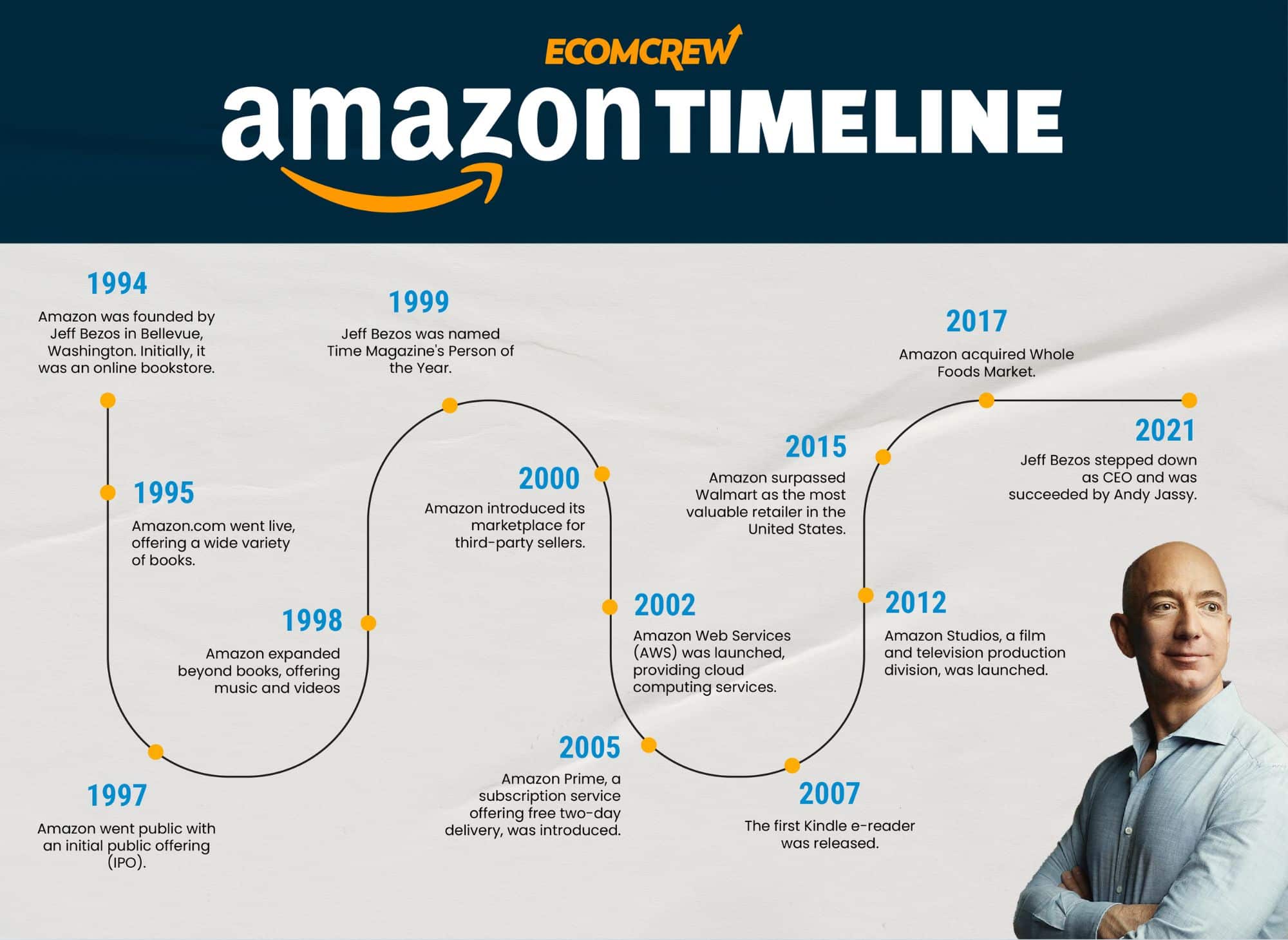
Understanding Amazon’s inception in the mid-nineties requires a journey back to a nascent digital landscape, where dial-up modems were king, graphical web browsers were new, and the concept of buying goods online was still largely science fiction for the average consumer. From its humble beginnings as an online bookstore, Amazon’s trajectory was guided by a profound technological vision laid down by its founder, Jeff Bezos, a vision that prioritized scalability, data, and an unyielding focus on the customer experience through digital means.
The Internet’s Infancy: A Fertile Ground for Innovation
The year 1994 represented a unique confluence of technological readiness and untapped potential. The World Wide Web, though still in its experimental phase, was beginning to capture the imagination of visionaries who saw beyond its academic roots. For Jeff Bezos, this burgeoning digital frontier was not just a new medium for communication; it was a revolutionary platform for commerce, ripe for disruption.
The World Wide Web in 1994: A New Frontier
In 1994, the internet was a wild west, characterized by slow connections, rudimentary websites, and a user base primarily composed of academics and early adopters. Mosaic, one of the first widely available graphical web browsers, had only been released a year prior, making the web accessible to a broader, albeit still niche, audience. E-commerce was virtually non-existent, with security concerns, trust issues, and logistical hurdles posing significant barriers. Yet, it was precisely this nascent environment that offered the greatest opportunity for those bold enough to build foundational technologies. Bezos recognized that the internet’s inherent scalability and global reach could eliminate geographical constraints and inventory limitations that plagued traditional retail. He envisioned a future where technology would enable a seamless, vast marketplace accessible from anywhere.
Identifying the Opportunity: Books as the Ideal Digital Product
Bezos’s methodical approach to identifying his venture involved a comprehensive list of products that could be sold online, eventually narrowing it down to twenty. Books emerged as the prime candidate for several compelling technological and logistical reasons. They were universally desired, non-perishable, and, critically, their vast number (millions of titles) made it impossible for any single physical store to stock them all. This “long tail” phenomenon, later popularized, was a powerful driver. Digitally, a comprehensive database of books could be created, searched, and managed far more efficiently than any physical inventory system. This technological advantage — the ability to offer an unparalleled selection without the physical overhead — was the cornerstone of Amazon’s initial value proposition, demonstrating a tech-first approach to solving a market problem.
Jeff Bezos’s Vision and the Birth of a Tech Startup
Amazon’s origin story is intrinsically linked to Jeff Bezos’s audacious decision to leave a lucrative career on Wall Street and bet everything on the internet’s potential. His vision was not merely to sell books online but to build a technology company that would leverage the internet’s unique capabilities to create an entirely new kind of retail experience.
From Wall Street to Seattle: A Leap of Faith
In 1994, after encountering a statistic indicating the internet’s explosive 2,300% annual growth, Bezos saw a rare, fleeting opportunity to be part of something monumental. He famously quit his job at D.E. Shaw & Co. and, with his wife MacKenzie Scott, drove cross-country to Seattle, chosen for its tech talent pool and lack of sales tax (at the time). This physical relocation was symbolic of a deeper technological shift: moving from the traditional, analog world of finance to the digital, innovative frontier of Silicon Alley (as Seattle was sometimes known in tech circles). Bezos brought with him a disciplined, data-driven mindset, but it was his entrepreneurial zeal and technological foresight that truly set the stage for Amazon.
The Early Tech Stack: Building Earth’s Biggest Bookstore
From a garage in Bellevue, Washington, Amazon began its life. The initial focus was intensely technological: building the infrastructure for an online retail operation from the ground up. This involved creating a robust e-commerce platform that could handle product listings, shopping carts, order processing, and payment gateways — all complex tasks in an era without readily available, off-the-shelf solutions. Bezos and his small team of engineers essentially had to invent or heavily adapt many of the core components of what we now take for granted in online retail. This included database management for millions of book titles, search algorithms to help customers find what they wanted, and a user interface that, while primitive by today’s standards, was revolutionary for its time in its simplicity and functionality. This was pure tech innovation applied to a commercial problem.
Prioritizing Scalability: Engineering for Exponential Growth
One of the most prescient technological decisions made in Amazon’s early days was the unwavering focus on scalability. Bezos understood that if the internet truly grew at the rates predicted, Amazon’s infrastructure would need to handle massive, unforeseen volumes of traffic and transactions. This wasn’t just about adding more servers; it was about designing the underlying architecture with growth in mind. The database systems, the networking, and the application logic were all conceived with the expectation of exponential expansion. This foresight proved critical, allowing Amazon to absorb surges in demand without collapsing, a common pitfall for many early online ventures. This commitment to scalable engineering from day one directly influenced Amazon’s later development of Amazon Web Services (AWS), which grew out of solving its own internal infrastructure challenges at scale.
Pioneering E-commerce and User Experience Technologies
Amazon didn’t just put books online; it redefined how technology could enhance the customer experience in a retail environment. Many features that are now ubiquitous in e-commerce originated or were significantly popularized by Amazon’s early technological implementations.
The Recommendation Engine: A Glimpse into Personalized Computing

One of Amazon’s earliest and most impactful technological innovations was its sophisticated recommendation engine. From very early on, Amazon recognized the power of data to personalize the shopping experience. By analyzing customer purchase history, browsing patterns, and even items in their shopping cart, Amazon’s algorithms could suggest other books or products that a customer might be interested in. This was revolutionary in the mid-90s, offering a level of personalization that no physical bookstore could ever match. It transformed passive browsing into an interactive, tailored journey, demonstrating the immense potential of data analytics and machine learning (even if nascent) to drive engagement and sales. This early foray into personalization laid the groundwork for the AI-driven recommendation systems that dominate digital platforms today.
One-Click Ordering: Streamlining Digital Transactions
In 1999, Amazon patented “1-Click” ordering, a testament to its commitment to technological innovation for customer convenience. This feature allowed registered customers to make purchases with a single click, bypassing the cumbersome multi-step checkout processes common at the time. While seemingly simple, “1-Click” required robust back-end technology to securely store customer payment and shipping information and process transactions instantly. It was a prime example of how Amazon used technology to remove friction from the online buying process, making it faster, easier, and more appealing for consumers, thereby boosting conversion rates and fostering customer loyalty. This patented technology underscored Amazon’s role as a pioneer in developing user-friendly e-commerce interfaces.
Secure Payments and Customer Trust in a New Digital Era
Building trust was paramount in the early days of online commerce. Consumers were understandably wary of submitting credit card details over the internet. Amazon invested heavily in secure socket layer (SSL) technology and other encryption methods to protect customer data. They were among the first to prominently display security assurances on their website, educating customers about the safety of online transactions. This commitment to digital security was a technological imperative, as without it, the entire e-commerce model would have failed to gain traction. By demonstrating a reliable and secure platform, Amazon helped to legitimize online shopping, paving the way for the broader adoption of e-commerce technologies across industries.
The Foundational Principles for Amazon’s Tech Empire
Amazon’s founding in 1994 wasn’t just about launching a website; it was about establishing a set of technological and operational principles that would guide its evolution from an online bookstore to a sprawling tech conglomerate.
Data-Driven Decision Making from Day One
From the very beginning, Amazon was designed to be a data company. Every customer interaction, every purchase, every click was seen as a piece of data that could inform future decisions. This data-driven ethos was embedded in its technological architecture, allowing for constant experimentation, A/B testing, and iterative improvements based on quantifiable results. This approach, uncommon in traditional retail, allowed Amazon to quickly adapt, optimize, and innovate its platform and services with unprecedented agility. It demonstrated an early understanding that technology’s true power lies in its ability to collect, analyze, and act upon information at scale.
Obsession with Customer Experience: A Technological Imperative
Bezos famously described Amazon as “customer-obsessed,” and this obsession was deeply intertwined with its technological development. Every technological innovation, from the recommendation engine to “1-Click” ordering, was designed with the explicit goal of improving the customer experience. This meant building intuitive interfaces, ensuring fast loading times, providing reliable order fulfillment tracking, and developing robust customer service tools. Amazon understood that technology was not an end in itself but a powerful means to serve the customer better, creating a seamless and satisfying journey that would encourage repeat business and foster loyalty.
Fostering a Culture of Experimentation and Reinvention
The mid-90s internet landscape demanded a culture of relentless experimentation. There were no established playbooks for online retail, so Amazon had to constantly test, learn, and iterate. This involved technological agility – the ability to rapidly develop, deploy, and refine new features and services. This iterative approach, combined with a willingness to take calculated risks and learn from failures, became a hallmark of Amazon’s operational and technological DNA. This culture of continuous innovation, born from the necessity of operating in a new digital frontier, would later prove instrumental in its diversification into areas like cloud computing and artificial intelligence.
From Bookstore to Tech Behemoth: The Unfolding Legacy
The foundational technology choices and strategic vision established in 1994 laid the undeniable groundwork for Amazon’s future as a global tech powerhouse. The journey from an online bookseller to a diversified giant was a direct consequence of its early technological DNA.
The Blueprint for AWS: Solving Internal Infrastructure Challenges
Perhaps the most significant long-term technological legacy stemming from Amazon’s early days is the genesis of Amazon Web Services (AWS). The company’s relentless pursuit of scalability and efficiency to handle its rapidly growing e-commerce operations led to the development of sophisticated internal infrastructure. Bezos and his team realized that the robust, distributed computing platform they had built to power Amazon.com could be offered as a service to other businesses. The architectural decisions made in the 1990s and early 2000s to build a flexible, reliable, and scalable platform for online retail directly informed the design principles of AWS, which launched commercially in 2006. This transformation from an internal necessity to a separate, multi-billion-dollar cloud computing business exemplifies Amazon’s deep-seated tech orientation.

Evolving beyond Retail: A Tech-First Diversification Strategy
Amazon’s expansion beyond books, into general merchandise, digital media (Kindle, Prime Video), consumer electronics (Echo, Fire devices), and artificial intelligence (Alexa), was not a random series of ventures. It was a calculated diversification driven by its core technological capabilities and its customer-obsessed philosophy. Each new product or service leveraged Amazon’s prowess in logistics, data analytics, cloud infrastructure, and user experience design. The ability to innovate across such diverse sectors speaks volumes about the adaptable and forward-thinking technological foundation established in 1994.
In conclusion, the answer to “what year was Amazon founded?” – 1994 – is merely the starting point of a much richer story. It marks the birth of a company that was, from its very inception, a technology enterprise committed to harnessing the power of the internet to reshape industries. Amazon’s early focus on scalable architecture, data-driven personalization, user experience optimization, and robust security not only allowed it to survive the dot-com bust but also to thrive and fundamentally alter the landscape of technology and commerce for decades to come. Its journey is a masterclass in how a strong technological vision, executed with relentless innovation, can transform a nascent idea into a global phenomenon.
aViewFromTheCave is a participant in the Amazon Services LLC Associates Program, an affiliate advertising program designed to provide a means for sites to earn advertising fees by advertising and linking to Amazon.com. Amazon, the Amazon logo, AmazonSupply, and the AmazonSupply logo are trademarks of Amazon.com, Inc. or its affiliates. As an Amazon Associate we earn affiliate commissions from qualifying purchases.