
In the intricate world of finance, where every decimal point can represent significant sums, understanding how to accurately calculate a percentage of a percentage is not merely an academic exercise—it’s an essential skill. From evaluating investment returns and navigating complex tax structures to deciphering layered discounts and optimizing budgeting strategies, this mathematical concept underpins countless financial decisions. Far from being a niche calculation, it’s a fundamental tool that empowers individuals and businesses alike to gain deeper insights into their financial health and future prospects.
This guide will demystify the process, demonstrating why a percentage of a percentage is crucial in financial contexts. We’ll break down the core mechanics, explore its diverse applications across personal and business finance, highlight common pitfalls, and equip you with the knowledge to wield this powerful calculation with confidence and precision.
The Core Concept: Deconstructing the “Percentage of a Percentage”
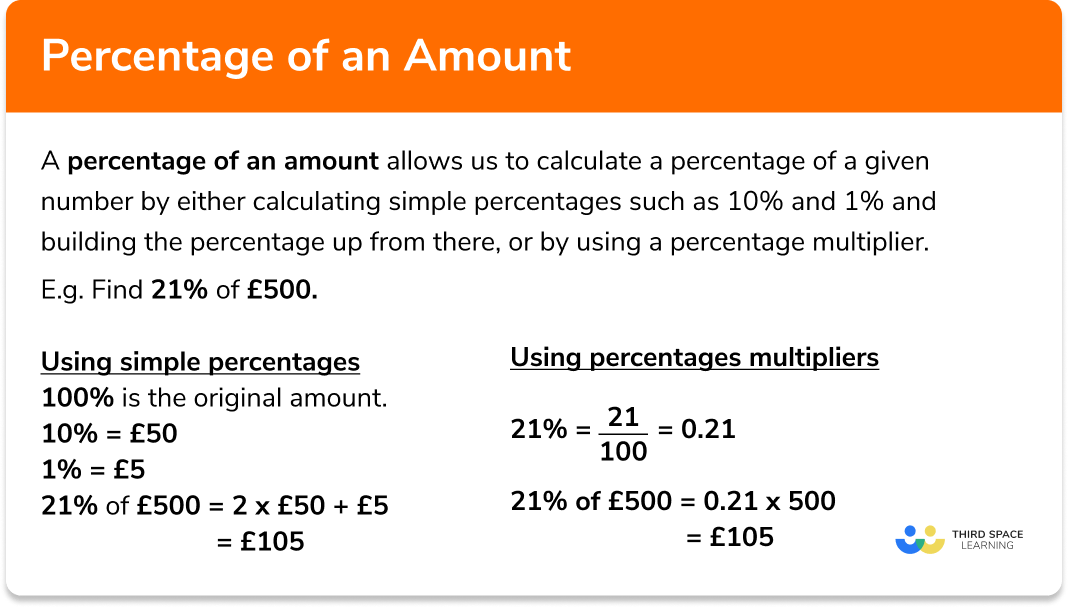
At its heart, calculating a percentage of a percentage is about understanding sequential changes. It’s not simply adding or subtracting percentages; it’s about applying one percentage change to a value that has already undergone another percentage change. This distinction is paramount in finance, where values rarely exist in isolation and are constantly being adjusted, discounted, or compounded.
What Exactly Does It Mean?
When we talk about a “percentage of a percentage,” we’re referring to a calculation where the base value for the second percentage is the result of the first percentage calculation. Imagine you have an initial amount. You first calculate a percentage of that amount, resulting in a new, adjusted amount. Then, you calculate another percentage, not of the original amount, but of this new, adjusted amount. This sequential application is what differentiates it from simpler percentage calculations.
For instance, if you have an item priced at $100 and it gets a 10% discount, the price becomes $90. If it then gets an additional 5% discount, that 5% is applied to the $90, not the original $100. This is the essence of a percentage of a percentage. The second percentage operates on the intermediate value, not the initial one.
Why This Calculation is Indispensable in Finance
The sequential nature of financial transactions makes this calculation indispensable.
- Compound Interest: The bedrock of wealth building, where interest earned also earns interest.
- Layered Discounts: Common in retail, where multiple discounts might apply to an item.
- Investment Returns: Calculating how a portfolio grows when subsequent gains are based on the new, higher value.
- Taxation: Many tax systems involve progressive rates or deductions that apply after other calculations.
- Inflation: Understanding the true cost of goods and services over time when prices change based on previous years’ inflated values.
Without this understanding, financial projections can be skewed, budgeting can be inaccurate, and investment decisions can be suboptimal. It provides a more realistic and granular view of financial movements.
The Basic Formula Explained
The method for calculating a percentage of a percentage is straightforward once you understand the sequential nature.
Let’s use a step-by-step approach:
-
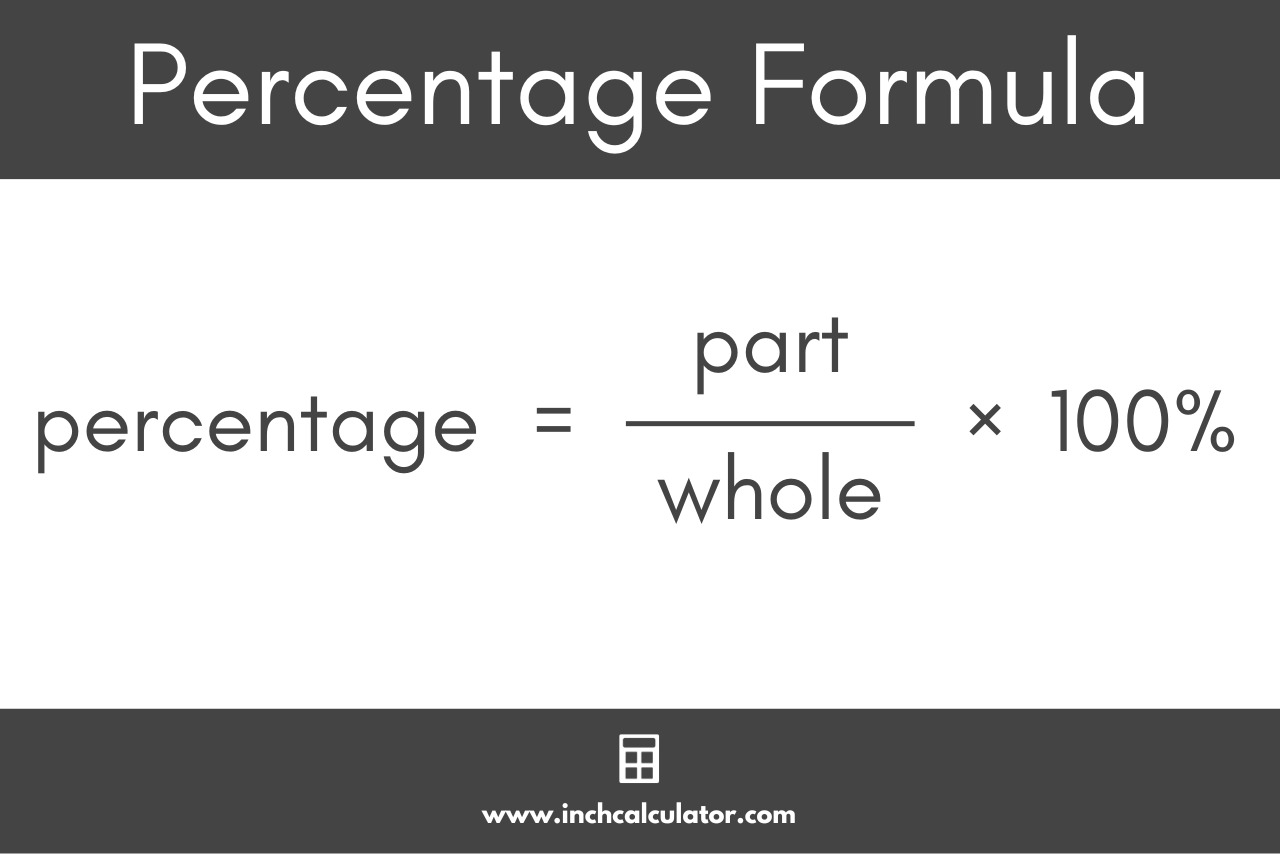
Convert Percentages to Decimals: Divide each percentage by 100.
- Example: 10% becomes 0.10; 5% becomes 0.05.
-
Calculate the First Percentage Change:
- If it’s an increase: Original Value × (1 + Decimal of First Percentage)
- If it’s a decrease: Original Value × (1 – Decimal of First Percentage)
- Alternatively, calculate the percentage amount, then add/subtract it: (Original Value × Decimal of First Percentage) then Original Value ± Result.
-
Use the Result as the New Base for the Second Percentage Change:
- Apply the second percentage change to the new value obtained from step 2.
- If it’s an increase: New Value × (1 + Decimal of Second Percentage)
- If it’s a decrease: New Value × (1 – Decimal of Second Percentage)
Example: Original Price = $100. First discount = 10%. Second discount = 5%.
- Step 1: Convert 10% to 0.10, 5% to 0.05.
- Step 2 (First Discount): $100 × (1 – 0.10) = $100 × 0.90 = $90.
- Step 3 (Second Discount): $90 × (1 – 0.05) = $90 × 0.95 = $85.50.
The final price after a 10% discount and then a 5% discount is $85.50. This is significantly different from a combined 15% discount (which would be $100 * (1 – 0.15) = $85.00). The difference, though small here, can escalate with larger numbers and more complex calculations.
A more direct way, especially for successive decreases or increases, is to multiply the factors:
Final Value = Original Value × (1 ± Decimal Pct1) × (1 ± Decimal Pct2) × …
For our discount example: Final Value = $100 × (1 – 0.10) × (1 – 0.05) = $100 × 0.90 × 0.95 = $85.50. This method is efficient and less prone to intermediate rounding errors.
Real-World Applications in Personal Finance
Personal finance is replete with scenarios where a percentage of a percentage calculation is vital for accurate planning and understanding. From making smart purchasing decisions to growing your personal wealth, mastering this concept empowers better financial literacy.
Mastering Discounts and Sales
One of the most common encounters with sequential percentages is in retail. Stores often advertise multiple discounts: “20% off all sale items, plus an extra 10% off for cardholders.” Many consumers mistakenly believe these discounts simply add up (e.g., 20% + 10% = 30% off). However, as demonstrated above, this is incorrect.
- Scenario: You want to buy a jacket originally priced at $200. It’s on sale for 25% off, and you have a coupon for an additional 15% off the sale price.
- Calculation:
- First discount: $200 × (1 – 0.25) = $200 × 0.75 = $150.
- Second discount (applied to the sale price): $150 × (1 – 0.15) = $150 × 0.85 = $127.50.
- Insight: If you had incorrectly added the discounts (25% + 15% = 40%), you might have expected to pay $200 × (1 – 0.40) = $120. The $7.50 difference could accumulate significantly over multiple purchases, impacting your budget.
Budgeting for Multiple Financial Goals
When allocating funds, particularly from a specific income stream or savings account, you might set up nested percentage goals. For example, you might decide that 20% of your paycheck goes into savings, and then 15% of that savings amount is earmarked for a specific goal like a down payment on a house, with another 10% of the savings going towards an emergency fund.
- Scenario: Your monthly net income is $4,000. You allocate 20% to savings. From that savings pool, 15% is for a house down payment, and 10% is for an emergency fund.
- Calculation:
- Total savings allocation: $4,000 × 0.20 = $800.
- House down payment: $800 × 0.15 = $120.
- Emergency fund: $800 × 0.10 = $80.
- Insight: This precise allocation ensures you know exactly how much is going into each bucket, making your budgeting realistic and your financial goals attainable. Without understanding sequential percentages, you might misallocate funds or underestimate what’s truly available for each goal.
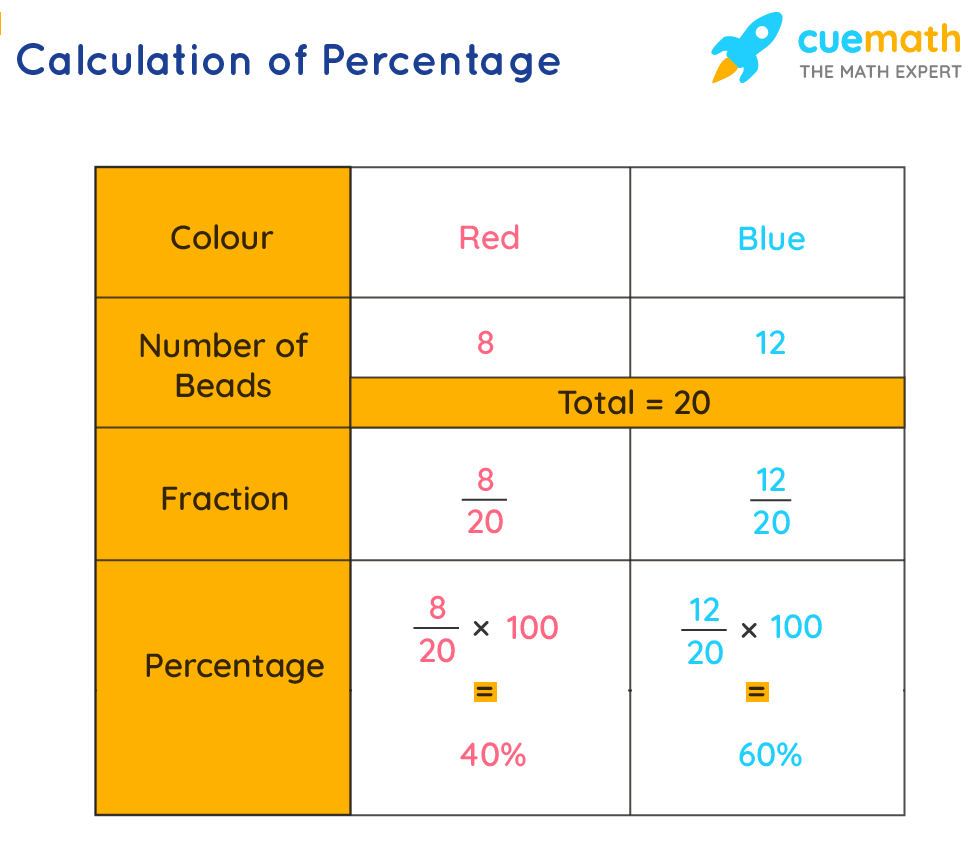
Understanding Debt and Interest Accumulation
While often detrimental, the power of compounding works against you with debt that accrues interest. Credit card interest, for example, is typically calculated on the outstanding balance, and if that interest isn’t paid off, it becomes part of the principal on which future interest is calculated.
- Scenario: You have a credit card balance of $1,000 with an annual interest rate of 20%, compounded monthly.
- Calculation (simplified monthly):
- Monthly interest rate: 20% / 12 = 1.6667% (approx).
- Month 1: $1,000 × (1 + 0.016667) = $1,016.67.
- Month 2: $1,016.67 × (1 + 0.016667) = $1,033.61.
- Month 3: $1,033.61 × (1 + 0.016667) = $1,050.84.
- Insight: The balance grows exponentially because interest is calculated on the previous month’s balance plus the accrued interest. This starkly illustrates the importance of paying down high-interest debt and highlights the accelerating effect of compound interest when it’s working against you.
Strategic Implications for Investing and Business Finance
In the realms of investing and business, the calculation of a percentage of a percentage shifts from personal budgeting to strategic financial analysis, demonstrating profound impacts on wealth creation, profitability assessment, and long-term planning.
Decoding Compound Returns on Investments
The concept of compound interest is often called the “eighth wonder of the world” for good reason. It allows your money to grow not just on the initial principal but also on the accumulated interest or returns. This makes understanding percentage of a percentage absolutely critical for long-term investment strategies.
- Scenario: You invest $10,000 in a mutual fund that averages a 7% annual return.
- Calculation (over 3 years, assuming no additional contributions):
- End of Year 1: $10,000 × (1 + 0.07) = $10,700.
- End of Year 2: $10,700 × (1 + 0.07) = $11,449.
- End of Year 3: $11,449 × (1 + 0.07) = $12,250.43.
- Insight: Each year, the 7% return is calculated on a larger base, leading to accelerated growth. After three years, your initial $10,000 has grown by $2,250.43, which is more than if you had simply earned $700 each year ($2,100 total). This demonstrates the power of compounding and why early, consistent investing is so impactful. For more complex scenarios, the formula $P(1+r)^n$ (where P=principal, r=rate, n=number of periods) is used, which is essentially the repeated application of percentage of a percentage.
Analyzing Profit Margins and Reinvestment Strategies
Businesses frequently encounter sequential percentages when analyzing their financial performance and making strategic decisions about reinvestment. For example, a company might achieve a certain gross profit margin, and then a percentage of that profit is allocated for R&D, and another percentage of the remaining profit is for marketing.
- Scenario: A company has $1,000,000 in revenue. Its gross profit margin is 40%. From the gross profit, 15% is allocated for R&D. From the remaining profit after R&D, 20% is earmarked for marketing campaigns.
- Calculation:
- Gross Profit: $1,000,000 × 0.40 = $400,000.
- R&D Allocation: $400,000 × 0.15 = $60,000.
- Profit remaining after R&D: $400,000 – $60,000 = $340,000.
- Marketing Allocation: $340,000 × 0.20 = $68,000.
- Insight: This layered calculation allows businesses to understand the true impact of various allocations on their bottom line and ensures that resource distribution aligns with strategic priorities. Miscalculating these percentages could lead to overspending in one area and underfunding in another, hindering growth.
Navigating Tax Calculations and Deductions
Tax systems, particularly in business and for high-income individuals, can involve multiple layers of rates, deductions, and credits, often applied sequentially. For instance, a percentage deduction might be applied to your adjusted gross income, and then a tax rate is applied to the new taxable income.
- Scenario: A small business earns $150,000 in pre-tax income. It qualifies for a 10% deduction on income for capital expenditures, and then the remaining taxable income is subject to a 21% corporate tax rate.
- Calculation:
- Deductible amount: $150,000 × 0.10 = $15,000.
- Taxable Income after deduction: $150,000 – $15,000 = $135,000.
- Tax Liability: $135,000 × 0.21 = $28,350.
- Insight: Understanding that the tax rate applies to the income after deductions (the new base) is crucial for accurate tax planning and forecasting. Businesses can strategically leverage deductions to reduce their effective tax rate, but only if they correctly calculate the sequential impact. Personal income tax, especially with progressive brackets and various deductions/credits, also heavily relies on this principle.
Avoiding Common Mistakes and Ensuring Accuracy
While the calculation method is straightforward, common errors can lead to significant financial misjudgments. Awareness of these pitfalls and the use of appropriate tools are key to maintaining accuracy.
The Difference Between Sequential and Additive Percentages
The most prevalent mistake is treating sequential percentages as additive. As explored, a 10% discount followed by a 5% discount is NOT a 15% discount. This applies to increases as well. A stock that gains 10% then gains another 5% on its new value has appreciated more than if it had simply gained 15% on its original value.
- Rule of Thumb:
- Sequential/Compound: Multiply the factors. (1 + Pct1) * (1 + Pct2)
- Additive (Rare in Real-World Finance): Only applicable if the percentages are explicitly stated to apply to the original base simultaneously, which is uncommon for discounts or growth rates. If a sales tax is 5% and an environmental fee is 2%, both applied to the original price, then it’s effectively a 7% charge on the original price. But if the environmental fee is on the price including sales tax, it’s sequential. Always scrutinize the wording.
Always assume percentages are sequential unless explicitly stated otherwise, especially in financial contexts involving time or multiple stages.
Leveraging Technology: Spreadsheets and Financial Calculators
For simple calculations, mental math or a basic calculator suffices. However, for more complex financial scenarios involving multiple percentages, longer time horizons, or larger sums, technology becomes indispensable.
- Spreadsheets (e.g., Excel, Google Sheets): Ideal for modeling financial scenarios. You can set up columns for initial values, apply a percentage change in one cell, and then reference that new value for subsequent percentage changes. This allows for easy adjustments to variables and clear visualization of results. Functions like
FV(Future Value) directly compute compound interest. - Financial Calculators: Dedicated financial calculators (or apps) have built-in functions for compound interest, present value, future value, and loan amortizations, which inherently handle sequential percentage calculations with precision. These are invaluable for investing, mortgage planning, and retirement projections.
- Online Calculators: Numerous reputable financial websites offer specialized calculators for discounts, compound interest, tax estimations, etc., which simplify complex computations.
Using these tools not only saves time but also significantly reduces the likelihood of human error, ensuring your financial planning is based on accurate figures.
When to Seek Expert Financial Advice
While understanding percentage of a percentage empowers you with significant financial literacy, there are times when the complexity of your financial situation warrants professional guidance.
- Complex Investment Portfolios: Managing diverse assets, rebalancing, and understanding nuanced performance metrics.
- Advanced Tax Planning: Optimizing deductions, understanding specific tax codes, or planning for inheritance and estate taxes.
- Business Financial Strategy: Detailed profit analysis, capital allocation, and long-term strategic investments.
- Retirement Planning: Projecting long-term growth, inflation adjustments, and withdrawal strategies.
A financial advisor, accountant, or tax professional can provide tailored advice, ensure compliance, and help you navigate intricate financial landscapes, leveraging their expertise to apply these percentage calculations correctly within the broader context of your financial goals.
The ability to calculate a percentage of a percentage is more than a mathematical trick; it’s a foundational skill for anyone serious about managing their money effectively. From the mundane daily discounts to the monumental impacts of compound interest on investments, this concept dictates the true financial outcomes. By understanding its mechanics, recognizing its applications, and wisely using available tools, you gain a powerful lens through which to view and control your financial destiny, making informed decisions that pave the way for sustained financial well-being and growth.
aViewFromTheCave is a participant in the Amazon Services LLC Associates Program, an affiliate advertising program designed to provide a means for sites to earn advertising fees by advertising and linking to Amazon.com. Amazon, the Amazon logo, AmazonSupply, and the AmazonSupply logo are trademarks of Amazon.com, Inc. or its affiliates. As an Amazon Associate we earn affiliate commissions from qualifying purchases.