
In the world of personal finance and alternative investments, few opportunities are as accessible as numismatics—the study and collection of currency. While many investors focus on high-yield savings accounts or the stock market, a growing niche of savvy individuals is finding significant profit in “pocket change.” Specifically, the humble five-cent piece, or nickel, contains certain years and varieties that are worth far more than their face value. Understanding which years are valuable is not just a hobby; it is a legitimate strategy for building a specialized asset portfolio.
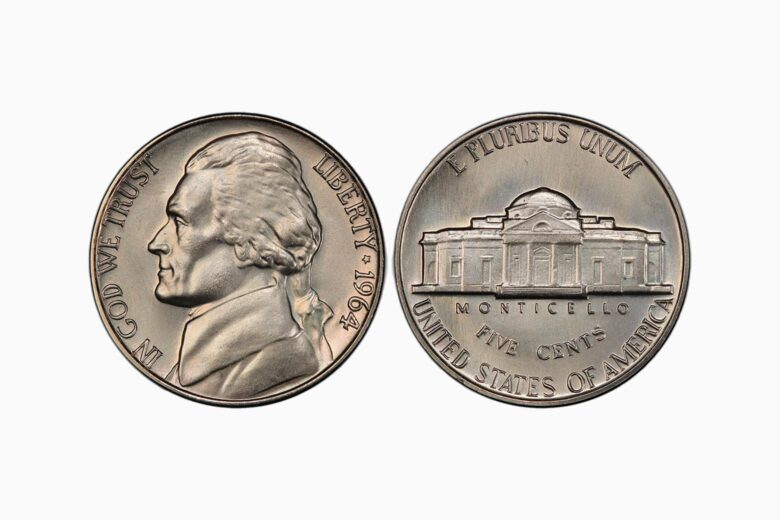
The value of a nickel is determined by a triad of factors: scarcity, historical significance, and condition. While billions of nickels circulate through the global economy, a fraction of them possess the “key date” status or mint errors that trigger massive premiums. Whether you are “coin roll hunting” as a side hustle or looking to diversify your long-term investments, knowing which years to target is the first step toward financial gain.
The Foundation of Value: Scarcity and the Sheldon Scale
Before diving into specific years, a professional investor must understand how value is quantified. In the numismatic market, the Sheldon Scale—a 70-point scale used to grade the condition of a coin—is the industry standard. A nickel from 1939 might be worth five cents in a heavily circulated state (G-4), but that same coin could command hundreds or even thousands of dollars if it achieves a “Mint State” (MS-65 or higher) grade.
The Role of Mint Marks
The location where a nickel was produced significantly impacts its rarity. Nickels minted in Philadelphia typically bear no mint mark (or a “P” on certain years), while those from Denver bear a “D” and San Francisco an “S.” Frequently, a specific year might have a high total production, but one specific mint may have produced only a small fraction of that total, creating a “key date” that drives up market value.
Market Liquidity and Demand
Unlike stocks, which can be sold instantly, rare coins require a buyer. However, the market for nickels is exceptionally liquid compared to other collectibles. Because the entry price for many valuable nickels is relatively low (between $20 and $100), there is a constant stream of buyers, making it an excellent “stepping stone” investment for those looking to build capital for larger ventures.
The Buffalo Nickel Era (1913–1938): Identifying High-Value Targets
The Buffalo Nickel, designed by James Earle Fraser, is one of the most iconic American coins. While many of these are worn down to the point where the date is illegible, specific years remain high-priority targets for those looking to flip coins for profit.
The 1913-S Type 2
In 1913, the first year of the series, the design was modified. The “Type 1” nickel features the buffalo standing on a mound, while the “Type 2” features the buffalo on a flat line. The 1913-S (San Francisco) Type 2 is a legendary rarity. In mid-range conditions, these coins can easily fetch $400, while high-grade specimens have been known to exceed $40,000 at auction.
The 1918-D 8 Over 7 Overdate
Error coins represent a significant segment of the “online income” potential in coin collecting. The 1918-D overdate is a primary example. Due to a die-cutting error, the “8” was stamped over a “7.” Even in lower grades, this coin is worth thousands of dollars because of its scarcity and the intense demand from series collectors who need it to complete their sets.
The 1937-D Three-Legged Buffalo
Perhaps the most famous “error” in the nickel series is the Three-Legged Buffalo. A mint worker accidentally polished away one of the buffalo’s front legs while trying to clean the die. This mistake created a financial windfall for anyone who finds one today. A 1937-D Three-Legged Buffalo in decent condition typically starts at $500 and can escalate into the five-figure range for pristine versions.
The Jefferson Nickel: Silver War Nickels and Modern Rarities
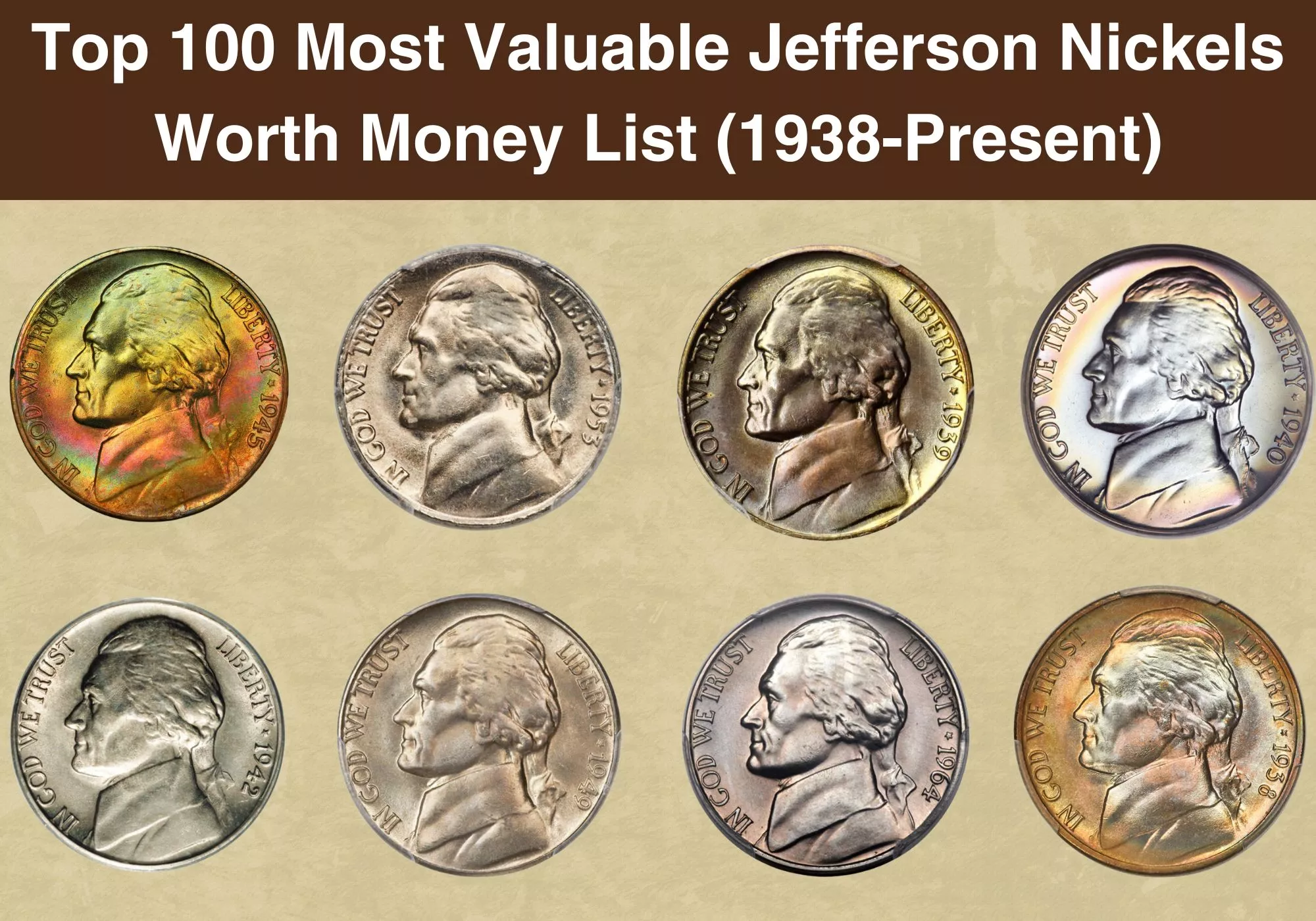
In 1938, the U.S. Mint transitioned to the Jefferson Nickel. While these are common in circulation, specific years hold immense value due to metal composition changes and low mintage figures.
The Silver “War Nickels” (1942–1945)
From a pure commodity investment standpoint, the “War Nickels” are essential. During World War II, nickel was a critical material for armor plating. To conserve the metal, the U.S. Mint changed the nickel’s composition to 35% silver, 56% copper, and 9% manganese.
- How to identify them: These are the only Jefferson nickels that feature a large mint mark (P, D, or S) located above the dome of Monticello on the reverse.
- Value: These coins track with the spot price of silver. Even if they are completely worn out, they have “melt value.” However, rare varieties like the 1943-P 3 over 2 overdate can sell for $500 to $3,000 depending on the grade.
The 1950-D: The King of the Jefferson Series
For decades, the 1950-D was considered the ultimate find for collectors. With a mintage of only 2.6 million—the lowest in the entire Jefferson series—this coin became an instant collectible. While many were hoarded, finding a high-quality 1950-D is still a win for any personal finance enthusiast. They generally trade for $15 to $50 in circulated condition, but “Full Steps” versions (where the steps on Monticello are perfectly defined) can reach much higher valuations.
The 1939-D and 1939-S
The second year of the Jefferson nickel saw very low production at the branch mints. The 1939-D is particularly sought after. If you find a 1939 nickel, flip it over; if there is a small “D” or “S” to the right of Monticello, you have found a coin worth significantly more than its face value.
Modern Error Nickels: Finding Money in Your Daily Change
One of the most effective “side hustles” in the financial world is coin roll hunting—buying boxes of nickels from the bank and searching for errors. Modern technology at the mint is better, but errors still slip through, and they are worth a fortune to the right buyer.
The 2004-P “Speared Bison”
As part of the Westward Journey series, the mint temporarily brought back the buffalo design. A die gouge on a specific batch of 2004-P nickels created a line that appears to go through the bison’s back. When this error was first discovered, examples were selling for over $100. Today, they remain a high-value item for error collectors.
Doubled Die Varieties
A “Doubled Die” occurs when the hub strikes the die out of alignment, resulting in a doubled image. The 1939 Doubled Die Reverse (DDR) is one of the most profitable. If the lettering “MONTICELLO” and “FIVE CENTS” appears clearly doubled, the coin can be worth $500 or more. Similar doubling can be found on 1941, 1945, and even some 1955 nickels.
Full Steps (FS) Designation
For the modern investor, the “Full Steps” designation is the ultimate “value multiplier.” On the reverse of the Jefferson nickel, the steps of Monticello are the highest point of the design and the first to wear away. A coin that has five or six fully defined steps is designated “FS” by grading services like PCGS or NGC. A common year nickel might be worth $1, but if it is an MS-67 FS, its value could skyrocket to $2,000 because of its sheer perfection.
Building a Strategy: How to Invest in Nickels
Treating nickel collecting as a financial endeavor requires more than just luck; it requires a structured approach to acquisition, preservation, and liquidation.
Sourcing for Profit
There are three primary ways to source valuable nickels:
- Coin Roll Hunting: This is the most cost-effective method. You trade $100 for 20 rolls of nickels at a bank, search them, and return the common ones. Your only “cost” is time, making the ROI effectively infinite for any finds.
- Estate Sales and Auctions: Often, non-collectors sell “jars of old coins.” These are goldmines for those who know how to identify silver war nickels or key dates that the general public overlooks.
- Cherrypicking: This involves visiting coin shops and looking through “junk bins” or lower-priced inventory to find mislabeled errors or high-grade specimens the dealer missed.
Preservation and Grading
To protect your investment, never clean a coin. Cleaning removes the original “luster” and can reduce a coin’s value by 90%. Use PVC-free flips or capsules for storage. If you believe you have found a high-value key date (like a 1913-S or a 1918/7-D), the most professional financial move is to send it to a third-party grading service. A certified grade provides “provenance” and makes the coin much easier to sell at a premium price.

Portfolio Diversification
While nickels should not replace a diversified stock portfolio, they serve as an excellent “tangible asset.” In times of economic volatility, physical assets with historical value tend to maintain their worth. By systematically collecting nickels from the years mentioned above, you are building a specialized collection that serves as both a hobby and a hedge against inflation.
In conclusion, the question of “what year nickels are valuable” opens a door to a sophisticated world of micro-investing. From the 1913 Buffalo to the 1950-D Jefferson and the silver-rich years of the 1940s, opportunities for profit are hidden in plain sight. By applying the principles of scarcity and condition, anyone can turn a jar of change into a valuable financial asset.
aViewFromTheCave is a participant in the Amazon Services LLC Associates Program, an affiliate advertising program designed to provide a means for sites to earn advertising fees by advertising and linking to Amazon.com. Amazon, the Amazon logo, AmazonSupply, and the AmazonSupply logo are trademarks of Amazon.com, Inc. or its affiliates. As an Amazon Associate we earn affiliate commissions from qualifying purchases.