
To understand the trajectory of modern industrial safety and energy technology, one must look back to the early morning hours of April 26, 1986. While the historical record focuses on the political fallout of the Soviet Union’s handling of the disaster, the technical community views the Chernobyl explosion as a pivotal moment that fundamentally reshaped the architecture of nuclear engineering, automated control systems, and risk-mitigation software. The disaster at the Vladimir I. Lenin Nuclear Power Plant was not merely a human error; it was a catastrophic failure of legacy hardware and systemic design flaws that have since informed the development of today’s highly sophisticated, AI-driven energy grids.

The Anatomy of a System Failure: Technology in 1986
In 1986, the technological landscape was defined by analog controls and early-stage digital monitoring. The Chernobyl plant utilized RBMK-1000 reactors (Reaktor Bolshoy Moshchnosti Kanalnyy), a design that was uniquely Soviet but suffered from inherent instabilities that modern digital simulations would have flagged long before construction began.
The RBMK-1000 Design Flaws
The RBMK reactor used graphite as a moderator and water as a coolant. From a technical standpoint, its most dangerous characteristic was a “positive void coefficient.” In modern engineering terms, this is a positive feedback loop: as water turns to steam (forming “voids”), the reactor’s power increases, which produces more steam, which further increases power. Today’s pressurized water reactors (PWRs) are designed with a negative void coefficient, ensuring that if the coolant boils away, the reaction naturally slows down. The tech of 1986 lacked the computational power to simulate these complex thermodynamics in real-time under extreme stress conditions.
Control Systems and the “SCRAM” Mechanism
The critical failure point during the 1986 test was the AZ-5 button—the emergency shutdown (SCRAM) mechanism. When the operators pressed this button, the control rods, which were tipped with graphite, were inserted into the core. Due to a hardware design flaw, the graphite tips caused a localized surge in reactivity before the boron (the absorber) could dampen the reaction. This “design bug” in the hardware stack led to the final explosion. Modern control systems utilize fail-safe logic where every component is designed to revert to a safe state upon failure, a concept known as “functional safety” that has become the gold standard in software and hardware engineering.
From Analog to Digital: How Chernobyl Changed Nuclear Safety Tech
The events of 1986 served as a catalyst for a global transition from manual, operator-dependent systems to highly automated, sensor-rich environments. The nuclear industry was forced to pioneer some of the most advanced data processing techniques seen in the late 20th century.
Redundancy and AI-Driven Monitoring
Post-1986, the emphasis shifted toward “defense in depth.” This is a layered approach to security and safety that we now see in modern cybersecurity and cloud computing. In the context of a nuclear plant, this involves multiple redundant systems that do not share the same failure points. Today’s reactors utilize Artificial Intelligence (AI) and Machine Learning (ML) to analyze thousands of data points per second. These algorithms can identify “pre-failure” patterns—micro-fluctuations in temperature or pressure—that a human operator would find impossible to detect on an analog gauge.
Real-Time Data Visualization in Modern Plants
One of the major issues in 1986 was the delay in information reaching the control room. The “Skala” centralized monitoring system utilized by the RBMK reactors was slow and provided fragmented data. Modern Human-Machine Interfaces (HMI) provide operators with 3D digital twins of the reactor core. Using high-speed data buses and fiber-optic sensors, these systems provide a holistic view of the plant’s health. This digital transformation ensures that the “fog of war” experienced by the Chernobyl technicians in the moments before the explosion is technologically impossible in a modern facility.
The New Safe Confinement: Engineering Marvels and Robotics
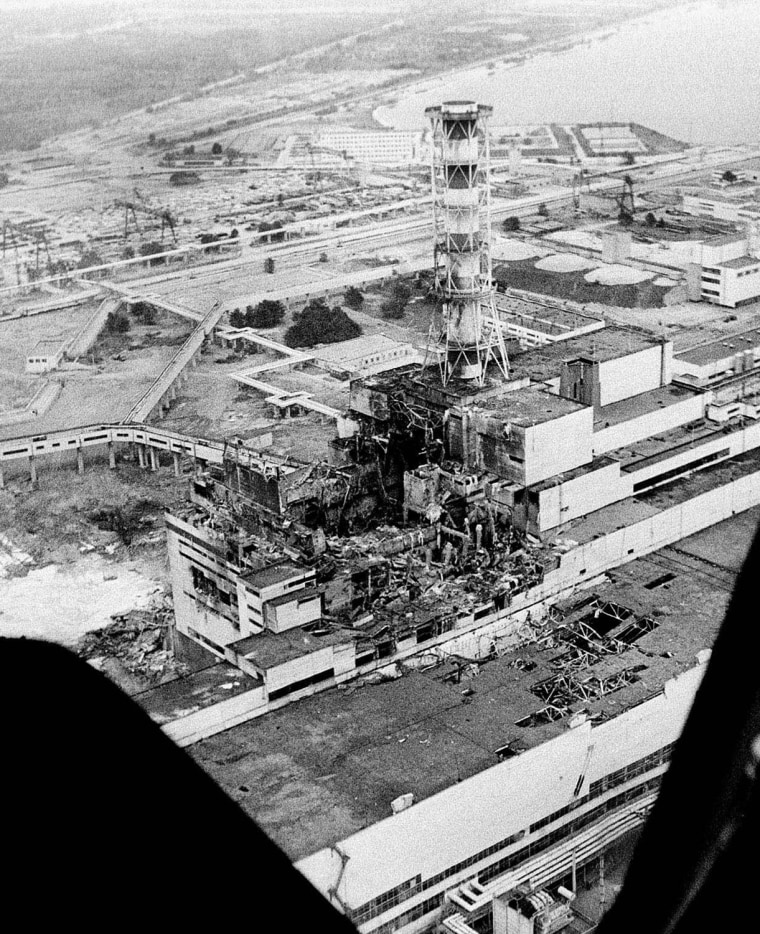
The cleanup of Chernobyl necessitated the development of specialized robotics and remote-sensing technology. Because the radiation levels inside the ruined Reactor 4 were lethal to humans, engineers had to innovate on the fly, creating a legacy of “extreme environment” technology that is now used in space exploration and deep-sea mining.
Utilizing Remote-Operated Vehicles (ROVs)
The initial attempts to clear debris from the roof of the reactor involved Soviet lunar rovers and repurposed police robots. However, the high levels of ionizing radiation fried the electronic circuits of these early machines. This led to a breakthrough in “radiation-hardened” electronics. Today, we use specialized shielding and redundant circuit paths to ensure that robots can operate in high-flux environments. The New Safe Confinement (NSC), completed in 2016, is the largest movable metal structure ever built, and its maintenance is largely performed by automated robotic cranes and sensor arrays.
Digital Twins and Structural Integrity Monitoring
The NSC is equipped with an extensive suite of sensors that monitor everything from humidity and temperature to the structural stress on the arches. This data is fed into a “Digital Twin”—a virtual replica of the structure that allows engineers to run simulations and predict when maintenance will be required. This proactive approach to infrastructure management is a direct tech descendant of the reactive, “fix it when it breaks” mentality of the 1980s.
Future-Proofing Energy: AI, Small Modular Reactors (SMRs), and Beyond
The tech world is currently looking toward a new generation of nuclear energy that is “inherently safe,” meaning the physics of the design prevents a 1986-style meltdown. This new wave of innovation relies heavily on modern software stacks and advanced material science.
Predictive Maintenance in the Nuclear Sector
Predictive maintenance is perhaps the most significant contribution of the tech sector to modern energy. By using Internet of Things (IoT) sensors and edge computing, plant operators can predict the failure of a pump or a valve weeks before it happens. In 1986, maintenance was scheduled based on time intervals; in the digital age, it is scheduled based on actual component health. This shift has drastically reduced the risk of the “cascading failures” that characterized the Chernobyl disaster.
The Role of Cybersecurity in Energy Infrastructure
As nuclear plants have moved from air-gapped analog systems to networked digital systems, the threat landscape has shifted from physical failures to digital vulnerabilities. Digital security is now as critical as physical containment. Modern reactors utilize sophisticated intrusion detection systems (IDS) and “unidirectional gateways” (data diodes) that allow data to flow out for monitoring but prevent any external commands from entering the control network. The technological lessons of Chernobyl have evolved from preventing physical steam explosions to preventing code-based exploits that could jeopardize grid stability.

The Evolution of the Safety Culture through Tech
The explosion in 1986 taught the world that technology is only as good as the systems that govern it. This led to the creation of the International Nuclear Event Scale (INES) and standardized reporting protocols that rely on global data sharing.
In the current era, the “Open Source” philosophy has even touched the energy sector. Collaborative platforms allow engineers from across the globe to share safety data and software patches, ensuring that a vulnerability found in one reactor is mitigated across all similar designs. This globalized tech stack is a far cry from the siloed, secretive environment of the Soviet-era RBMK program.
The legacy of April 1986 is not just a date in a history book; it is encoded in every line of safety software and every redundant circuit in our modern infrastructure. The shift from the brittle, analog systems of the mid-20th century to the resilient, AI-monitored grids of today represents one of the greatest technological leaps in human history. As we look toward Small Modular Reactors (SMRs) and even fusion technology, the technical post-mortem of the 1986 explosion remains the foundation upon which the future of safe, sustainable energy is built.
aViewFromTheCave is a participant in the Amazon Services LLC Associates Program, an affiliate advertising program designed to provide a means for sites to earn advertising fees by advertising and linking to Amazon.com. Amazon, the Amazon logo, AmazonSupply, and the AmazonSupply logo are trademarks of Amazon.com, Inc. or its affiliates. As an Amazon Associate we earn affiliate commissions from qualifying purchases.