
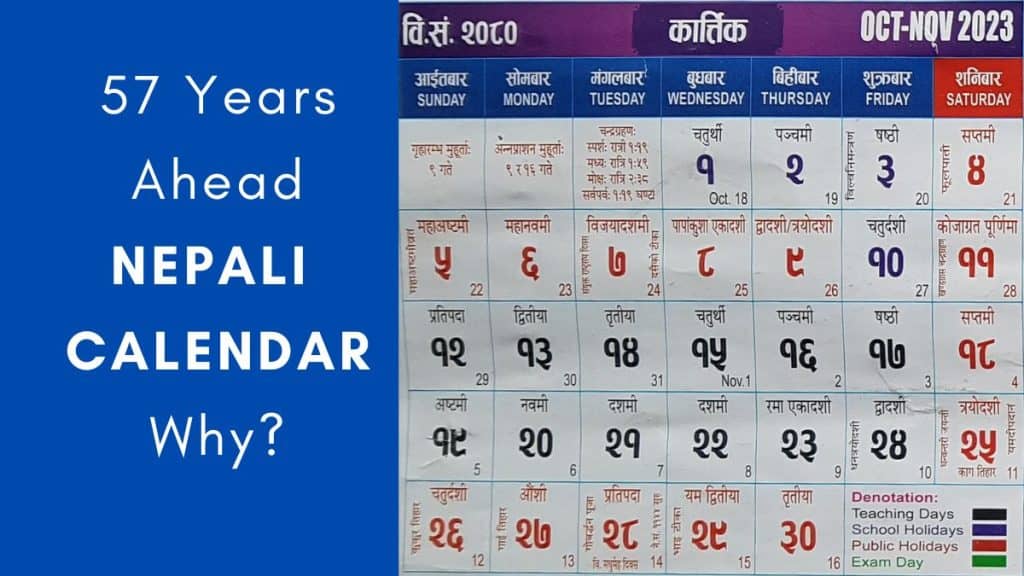
For those accustomed to the Gregorian calendar, the question “what year is in Nepal?” might seem like a trivial curiosity. However, for investors, entrepreneurs, expatriates, and anyone engaged in financial transactions or business with Nepal, understanding the country’s unique timekeeping system is far from a minor detail—it’s a critical component of sound financial strategy and risk management. Nepal operates on the Bikram Sambat (BS) calendar, a lunisolar calendar that is approximately 56 years and 8 months ahead of the Gregorian (Anno Domini, AD) calendar. This chronological divergence isn’t just a cultural nuance; it introduces a distinct set of considerations that can significantly impact financial planning, legal compliance, market analysis, and operational timelines within the Nepali economic landscape.

Navigating this parallel financial universe requires more than a simple conversion tool; it demands a deep appreciation for how calendar differences manifest in fiscal years, tax deadlines, contractual obligations, and even the psychological timing of market events. This article delves into the financial implications of Nepal’s Bikram Sambat calendar, offering insights for individuals and businesses seeking to thrive in, or engage with, the Nepali market. We will explore how calendar awareness translates into tangible financial advantages and helps mitigate potential pitfalls, ensuring that “what year is in Nepal” becomes a strategic cornerstone, rather than a mere point of trivia, in your financial toolkit.
The Bikram Sambat Calendar: A Unique Financial Landscape
The Bikram Sambat calendar, originating in ancient India, is officially recognized and widely used throughout Nepal for all civic and governmental purposes, including financial reporting, legal documentation, and official communications. Unlike the Gregorian calendar, which begins on January 1st, the Nepali new year typically falls in mid-April. This fundamental difference sets the stage for a series of financial considerations that demand careful attention.
Understanding the Discrepancy: BS vs. AD
The core of the matter lies in the approximate 56-year, 8-month difference. For instance, if the current Gregorian year is 2024 AD, the corresponding Bikram Sambat year would be 2080/2081 BS, depending on whether the Nepali new year has passed. This significant numerical gap can lead to confusion in cross-border transactions, legal agreements, and historical data analysis if not meticulously handled. Financial documents often require dates to be stated in BS, and sometimes both systems are used for clarity, particularly in international dealings. Misinterpreting these dates can lead to missed deadlines, invalidating documents, or miscalculating financial periods, all of which carry financial penalties or operational disruptions. For financial professionals, precision in dating is paramount, requiring diligent cross-referencing and validation when dealing with Nepali entities.
Key Dates and Their Financial Significance
The start of the Nepali fiscal year is perhaps the most critical calendar-related financial detail. Nepal’s fiscal year runs from Shrawan 1st to Ashad last, which roughly translates to mid-July of one Gregorian year to mid-July of the next. This timing significantly impacts corporate budgeting, financial reporting cycles, tax planning, and the availability of government tenders and grants. Businesses operating in or with Nepal must align their financial planning with this cycle, rather than the more common January-to-December or April-to-March fiscal years found elsewhere.
Beyond the fiscal year, several national holidays and festivals, determined by the BS calendar, carry financial weight. Dashain and Tihar, the biggest festivals, often involve significant consumer spending and a temporary slowdown in business operations as people travel and celebrate. Understanding these periods is crucial for sales forecasting, inventory management, and cash flow planning. For instance, an investor might notice a pre-festival spike in certain retail sectors, or a post-festival dip, influencing short-term trading strategies. Likewise, bank holidays and government office closures, all dictated by the BS calendar, affect transaction processing times and the overall pace of business. Ignoring these culturally significant financial periods can lead to inaccurate projections, missed opportunities, or liquidity issues.
Implications for International Business and Investment
For multinational corporations, foreign investors, and international businesses looking at Nepal as an emerging market, the calendar difference introduces a layer of complexity that must be strategically managed to ensure compliance, efficient operations, and optimal returns.
Financial Reporting and Compliance Challenges
One of the primary challenges stems from financial reporting. Companies with international operations typically consolidate financial statements according to international accounting standards (e.g., IFRS, GAAP), which often use a Gregorian calendar-based fiscal year. When integrating data from a Nepali subsidiary or venture, adjustments are necessary to align the financial periods. This involves meticulous reconciliation of revenue, expenses, assets, and liabilities across different reporting cycles, potentially requiring additional accounting resources and expertise. Audit cycles also need careful coordination. Regulators in Nepal will require filings based on the Bikram Sambat fiscal year, while parent companies or international investors will need corresponding Gregorian period reports. Failure to correctly manage this dual reporting can lead to compliance issues, misrepresentation of financial performance, and legal repercussions.
Navigating Contractual Agreements and Deadlines
International contracts involving Nepali parties must explicitly address the calendar system used for all dates, deadlines, and durations. Ambiguity can lead to disputes, delays, and financial losses. For example, a contract stating “delivery within 30 days” without specifying BS or AD could be interpreted differently by each party, especially if the 30-day period crosses the Nepali New Year. Legal counsel specializing in Nepali law and international contracts is essential to draft agreements that unequivocally define the applicable calendar system for all critical timelines, payment schedules, and performance milestones. This is particularly vital for project finance, loan agreements, supply chain contracts, and joint venture partnerships, where missed deadlines can trigger penalties or even contract termination.
Market Analysis and Investment Cycles
Understanding the Bikram Sambat calendar is also crucial for astute market analysis and identifying investment cycles in Nepal. Economic data, such as GDP growth, inflation rates, and sectoral performance, are officially reported based on the Nepali fiscal year. Foreign investors accustomed to Gregorian quarterly or annual reports must recalibrate their analytical frameworks. Seasonal trends linked to festivals, agricultural cycles (which are integral to Nepal’s economy), and monsoon patterns (impacting infrastructure and specific industries) all follow the BS calendar.
For instance, understanding the agricultural harvest seasons, which are calendar-dependent, is vital for assessing the performance of the agribusiness sector or the overall rural economy. Similarly, public sector spending patterns, often tied to the national budget announced within the BS fiscal year, can create investment opportunities or affect market liquidity. Savvy investors will track these BS-driven cycles to anticipate market movements, identify peak earning periods for certain industries, and time their investments for optimal entry and exit points. This proactive approach helps in formulating more accurate financial models and investment theses tailored to the local economic rhythm.
Personal Finance for Expats and Digital Nomads in Nepal
For individuals living, working, or even just visiting Nepal for an extended period, the Bikram Sambat calendar’s influence extends deeply into personal financial management, from budgeting to tax obligations.
Budgeting and Income Planning in a Different Calendar
Expats and digital nomads receiving income in Gregorian-based currencies or on Gregorian monthly cycles must adapt their personal budgeting to the Nepali financial year and local pay cycles. While many international organizations in Nepal pay salaries monthly, their internal reporting and bonus structures might still be influenced by the Nepali fiscal year. Rent agreements, utility bills, and local service contracts will almost certainly use BS dates. Misalignment can lead to confusion in tracking expenses, managing cash flow, and ensuring timely payments. It requires a conscious effort to convert and reconcile personal financial records between the two systems, perhaps using dual-entry systems for tracking income and expenses to avoid discrepancies.
Tax Obligations and Filing Deadlines
Taxation is a significant area where calendar awareness is non-negotiable. Nepal’s income tax year aligns with its fiscal year (mid-July to mid-July). This means that individuals earning income in Nepal, whether as an employee or through business activities, must file their taxes according to this schedule. For expatriates who might also have tax obligations in their home country (which typically uses a Gregorian fiscal year), this creates a complex scenario requiring careful planning to avoid double taxation and ensure compliance with both national tax authorities.
Understanding the specific tax deadlines—often spread across different quarters of the BS fiscal year for advance tax payments and final filings—is crucial. Missing these deadlines can result in penalties and legal issues. It is highly advisable for expats to seek advice from local financial advisors or tax consultants familiar with both Nepali tax law and international taxation to navigate these complexities effectively and optimize their personal tax situation.
Remittances and Exchange Rate Considerations
While not directly tied to the calendar date, the rhythm of the Nepali economy, which is dictated by the BS calendar, indirectly influences remittance flows and exchange rates. For instance, prior to major festivals like Dashain and Tihar, there’s often an increase in remittances from Nepalis working abroad to support family spending. This influx of foreign currency can temporarily influence exchange rates.
Individuals sending or receiving money need to be aware of how bank holidays, dictated by the BS calendar, might affect processing times. Planning remittances around these periods can prevent delays in funds availability. Furthermore, for those converting foreign currency to Nepali Rupees (NPR) for living expenses, understanding potential seasonal fluctuations in demand, often linked to the BS calendar and its associated economic activities, can inform decisions on when to exchange larger sums to secure more favorable rates.
Strategic Planning and Risk Mitigation
Beyond day-to-day operations, strategic long-term financial planning and effective risk mitigation in Nepal are intrinsically linked to a comprehensive understanding of the Bikram Sambat calendar.
Due Diligence Beyond the Gregorian Calendar
For potential investors or businesses entering the Nepali market, due diligence must extend beyond standard Gregorian timeline analysis. Financial statements provided by Nepali entities will be in BS; a thorough understanding requires comparing performance across BS fiscal years, aligning them with relevant economic indicators, and understanding the impact of local seasonalities. This means scrutinizing historical financial data not just numerically, but chronologically through the lens of the Nepali calendar. For example, a company’s “quarterly growth” might look different when translated from BS to AD, potentially masking or exaggerating trends if not correctly contextualized. Robust due diligence involves ensuring all financial projections, market analyses, and operational plans are anchored to the correct calendar system.
Leveraging Local Expertise for Financial Success
Given the complexities, engaging local financial expertise is not just beneficial but often essential. Nepali accountants, financial advisors, and legal professionals are inherently familiar with the Bikram Sambat calendar’s implications across all financial domains. They can provide invaluable guidance on:
- Financial modeling and forecasting: Ensuring projections align with the Nepali fiscal year and account for local seasonalities.
- Tax planning and compliance: Navigating the intricacies of Nepali tax law within the BS calendar framework.
- Contract negotiation: Drafting agreements that are legally sound and unambiguous regarding dates and deadlines.
- Market entry strategies: Timing investments and business launches to coincide with favorable economic cycles as per the BS calendar.
Investing in local knowledge mitigates the risks associated with calendar discrepancies, reduces the likelihood of costly errors, and enhances the probability of financial success in Nepal.

Future-Proofing Financial Ventures in Nepal
Future-proofing financial ventures in Nepal involves building adaptability into strategies. This means developing financial systems and processes that can seamlessly operate with both Gregorian and Bikram Sambat dates, or at least efficiently convert between them. It also means staying abreast of any potential changes in regulations related to calendar use, although the Bikram Sambat calendar has a long-standing official status. For long-term projects, understanding how future Nepali New Years will shift within the Gregorian calendar can inform multi-year planning for resource allocation, market campaigns, and operational shutdowns during festival periods. Proactive planning, grounded in a deep understanding of “what year is in Nepal” and its associated financial rhythm, equips businesses and individuals with the foresight needed to navigate the unique temporal landscape and secure their financial future in this vibrant market.
In conclusion, the seemingly simple question “what year is in Nepal?” unlocks a critical dimension of financial understanding for anyone looking to engage with the Nepali economy. From corporate financial reporting and international contractual agreements to personal budgeting and tax planning for expats, the Bikram Sambat calendar’s distinct flow demands careful consideration. By embracing this calendrical reality and integrating it into their financial strategies, investors, businesses, and individuals can overcome potential hurdles, enhance compliance, mitigate risks, and ultimately unlock greater opportunities for financial success in Nepal.
aViewFromTheCave is a participant in the Amazon Services LLC Associates Program, an affiliate advertising program designed to provide a means for sites to earn advertising fees by advertising and linking to Amazon.com. Amazon, the Amazon logo, AmazonSupply, and the AmazonSupply logo are trademarks of Amazon.com, Inc. or its affiliates. As an Amazon Associate we earn affiliate commissions from qualifying purchases.