
The year 1964 marks a pivotal moment in American numismatic and financial history. It was the last year that the United States Mint produced circulating quarters, dimes, and half dollars primarily composed of 90% silver. This change, enacted through the Coinage Act of 1965, fundamentally altered the intrinsic value of U.S. coinage and had lasting implications for collectors, investors, and the very concept of money. Understanding this transition is crucial for anyone interested in personal finance, precious metals, or the historical evolution of currency.
The Coinage Act of 1965: A Response to Economic Pressures
Prior to 1965, the silver content of U.S. coins was a direct link to their value, tying the nation’s currency to a tangible commodity. Dimes, quarters, and half dollars were minted from an alloy of 90% silver and 10% copper. However, by the early 1960s, a confluence of economic factors began to exert immense pressure on this system, ultimately forcing the U.S. government to make a drastic change.

Why the Change? Economic Pressures and Silver Scarcity
Several key factors contributed to the decision to remove silver from circulating coinage. Firstly, the rising price of silver on the global market became a significant issue. As the market value of silver increased, the intrinsic metal value of a 90% silver quarter began to approach, and eventually exceed, its face value of 25 cents. This phenomenon, known as Gresham’s Law, led to widespread “coin hoarding” where people began to remove silver coins from circulation, either to melt them down for their silver content or to save them as an investment. This created an acute shortage of circulating coinage, disrupting commerce and making everyday transactions difficult.
Secondly, increased industrial demand for silver, particularly from the photographic and electronics industries, further exacerbated the scarcity and drove up prices. The U.S. government, which had been a major consumer of silver for its coinage, found itself in an untenable position, effectively subsidizing the production of coins that were immediately hoarded or melted. The Treasury Department’s reserves of silver were rapidly depleting, threatening the long-term stability of the coinage system.
Finally, the philosophical shift towards a purely fiat currency was gaining momentum. A fiat currency’s value is derived from government decree and public trust, rather than being backed by a physical commodity like gold or silver. While the U.S. dollar was still partially linked to gold internationally until 1971, the move to remove silver from common coinage was a significant step towards a fully fiat domestic currency system.
The Shift from 90% Silver to Copper-Nickel Clad
The Coinage Act of 1965 addressed these challenges by mandating a dramatic change in coin composition. For dimes and quarters, the new standard was a “clad” composition: a core of pure copper sandwiched between two layers of a copper-nickel alloy (75% copper, 25% nickel). This new composition resulted in a coin that had the same diameter and electrical properties as its silver predecessor, making it compatible with vending machines, but with virtually no intrinsic metal value. The half dollar also saw a reduction, moving from 90% silver to a 40% silver-clad composition for a few years before also becoming copper-nickel clad in 1971.
This transition was critical. It aimed to stop hoarding by eliminating the profit motive associated with melting coins and to ensure a stable supply of circulating coinage for the public. From an economic perspective, it decoupled the face value of the coin from its material cost, allowing the government greater flexibility in managing the money supply without being subject to the volatility of precious metal markets.
Understanding the Financial Implications for Collectors and Investors
The abrupt discontinuation of silver coinage in 1964 created a distinct divide in the world of numismatics and precious metals investing. Pre-1965 silver quarters, dimes, and half dollars immediately gained a new significance, becoming sought-after items for various financial strategies.
Numismatic Value vs. Intrinsic Metal Value
For many, the appeal of pre-1965 quarters lies in their intrinsic metal value. Each 90% silver quarter contains approximately 0.1808 troy ounces of pure silver. This makes them a tangible asset whose value fluctuates with the spot price of silver. Investors who are looking to gain exposure to physical silver often purchase these “junk silver” coins (a term used by dealers, not reflecting actual condition but distinguishing them from collectible rarity) as an accessible and divisible way to own the metal. Their value as an investment is directly tied to the commodity market.
However, some pre-1965 quarters also possess significant numismatic value, which is their worth to collectors based on factors such as rarity, condition, mint mark, and historical significance. A rare date or a coin in exceptionally high-grade condition could be worth far more than its melt value. For example, a 1932-D Washington quarter in uncirculated condition would fetch a premium far exceeding its silver content. Understanding the distinction between a coin’s intrinsic metal value and its potential numismatic premium is crucial for both collectors and investors to make informed decisions. An investor primarily focused on silver weight will often buy bags or rolls of mixed-date 90% silver coins, prioritizing weight over individual coin rarity, while a numismatist will scrutinize each coin for its specific attributes.
The Appeal of Pre-1965 Quarters as a Tangible Asset
In an era of digital transactions and abstract financial instruments, physical silver coins offer a tangible alternative for wealth preservation. For many personal finance enthusiasts and investors, holding physical assets like silver provides a sense of security against inflation, economic downturns, and geopolitical instability. Pre-1965 quarters are particularly attractive for several reasons:
- Divisibility: Unlike larger silver bullion bars, these coins are small and easily divisible, making them practical for smaller transactions or for accumulating silver in incremental amounts.
- Recognizability: Their historical significance and widely known silver content make them easily identifiable.
- Liquidity: While not as liquid as cash, they are relatively easy to buy and sell through coin dealers, precious metals brokers, and online marketplaces.
- Historical Premium: They carry a historical premium for being actual currency that circulated, offering a connection to a past financial system.
Investors often incorporate these silver quarters into a diversified portfolio as a hedge against currency devaluation and as a store of value. Their performance is generally inversely correlated with the strength of the dollar and directly correlated with the broader precious metals market.
Silver as an Investment Vehicle Beyond Face Value
The cessation of silver coinage in 1964 underscores a broader financial principle: the distinction between face value and intrinsic value. For pre-1965 quarters, the face value of 25 cents is almost negligible compared to their current market value, which is dictated by the price of silver. This highlights how an item once used as transactional currency can transform into a commodity investment.

Investing in silver, whether through physical coins, bullion, or exchange-traded funds (ETFs), is a strategy employed by individuals and institutions seeking to preserve capital and potentially generate returns. The market for silver is influenced by industrial demand, investment demand, mining supply, and geopolitical factors. For those seeking to diversify their personal finance holdings, silver coins provide a straightforward entry point into the precious metals market, often serving as a gateway to understanding broader commodity investing principles.
Identifying Silver Quarters: Key Dates and Mint Marks
Distinguishing a valuable silver quarter from a modern copper-nickel clad quarter is relatively simple, primarily relying on the date. However, understanding other characteristics can enhance appreciation and identification.
The 1964 Cutoff and Transitional Issues
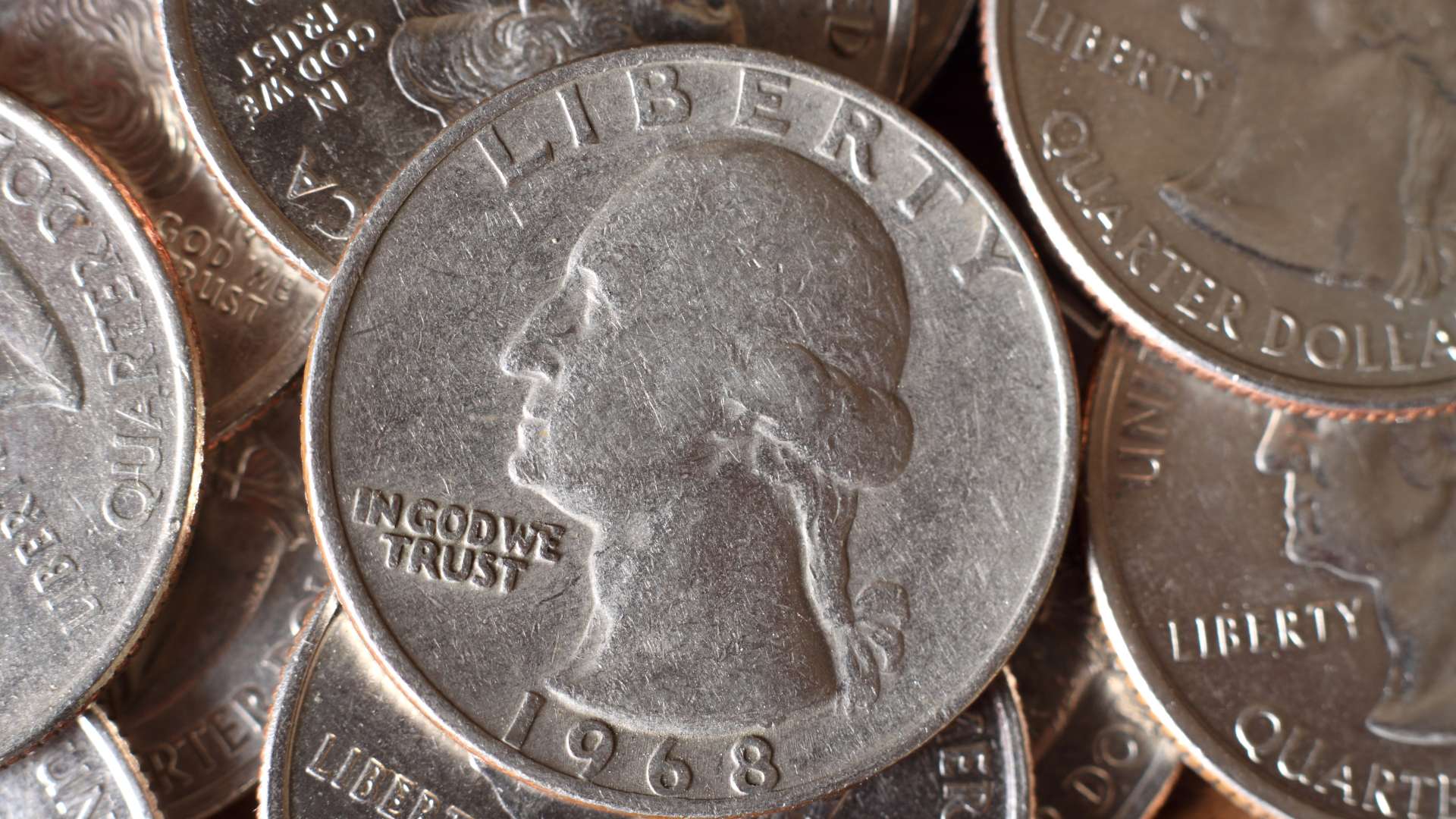
The most crucial detail for identifying a silver quarter is its mint date. Any U.S. quarter dated 1964 or earlier is composed of 90% silver. Quarters dated 1965 or later are copper-nickel clad, with the exception of specific commemorative issues or special collector sets not intended for circulation.
While the Coinage Act was passed in 1965, the year 1964 marks the definitive end of regular silver quarter production. There were no 1965 silver quarters minted for general circulation. It is important to note that due to the massive demand for coinage around this transition, some 1964-dated coins were minted well into 1965, but they still bear the 1964 date and are 90% silver. The shift was absolute from the 1965 date onward for circulating quarters.
Beyond the date, one can also discern silver quarters by their appearance and sound. Silver quarters have a distinct, brighter luster when clean, and they emit a higher-pitched “ring” when dropped on a hard surface compared to the duller “thud” of clad coins. The edge of a silver quarter will appear uniformly silver, whereas clad quarters will reveal a distinct copper stripe between the two nickel layers.
The Importance of Mint Marks for Rarity
While mint marks (small letters indicating where the coin was minted, e.g., “D” for Denver, “S” for San Francisco, or no mark for Philadelphia) do not affect the silver content of pre-1965 quarters, they can be significant for numismatic value. Some mint marks for specific years produced lower mintage numbers, making those coins rarer and more valuable to collectors. For example, while all 1964 quarters are 90% silver, a 1964-D quarter might have a slightly different mintage figure than a 1964 Philadelphia quarter, affecting its collectibility but not its intrinsic silver weight. For investors primarily concerned with the silver content, mint marks are generally secondary to the date.
Beyond Quarters: The End of Silver in U.S. Coinage
The story of silver’s removal from U.S. quarters is part of a broader narrative concerning all silver-bearing circulating coins. The Coinage Act of 1965 impacted dimes and half dollars in similar, though slightly varied, ways.
Dimes, Half Dollars, and Dollar Coins: A Similar Fate
Dimes, like quarters, were also stripped of their 90% silver content in 1964. All dimes dated 1964 or earlier are 90% silver, while those dated 1965 and later are copper-nickel clad. The economic pressures and the logic behind the change were identical to those for quarters.
Half dollars underwent a slightly different transition. While 1964 Kennedy Half Dollars were minted in 90% silver, the Coinage Act of 1965 reduced their silver content to 40% (a silver-clad composition) for coins minted from 1965 to 1970. This was a temporary compromise, perhaps reflecting a lingering sentiment for silver in larger denominations. These 40% silver half dollars contain approximately 0.1479 troy ounces of silver, making them also valuable for their metal content, albeit less so than their 90% predecessors. From 1971 onward, circulating half dollars, like quarters and dimes, became entirely copper-nickel clad.
The Legacy of Silver Coinage in Modern Finance
The discontinuation of silver in U.S. circulating coinage marks a significant milestone in the evolution of modern finance. It symbolizes a definitive move away from a commodity-backed monetary system towards a pure fiat currency. This shift has profound implications for how we understand the nature of money, value, and economic stability.
Reminders of a Commodity-Backed Currency
Pre-1965 silver coins serve as a tangible reminder of a time when the value of money was directly tied to a precious metal. This concept, known as “sound money,” suggests that a currency backed by a physical commodity like silver or gold is inherently more stable and less prone to inflation because its supply is naturally limited. The current fiat system, while offering greater flexibility for monetary policy, raises questions for some about the long-term purchasing power of currency. For these individuals, silver coins represent a small piece of a bygone era, embodying a different approach to financial security and value.
The Evolution of Fiat Money and Its Implications for Value
The decision to remove silver from quarters was a practical necessity driven by market forces, but it also cemented the path towards a fully fiat monetary system. In a fiat system, the value of currency is not derived from its intrinsic material but from government decree, legal tender laws, and the collective trust of its users. This allows central banks greater control over the money supply, which can be expanded or contracted as needed to manage economic growth and inflation. However, it also means that the value of currency is entirely dependent on effective governance and public confidence, making it susceptible to the risks of inflation if the money supply is mismanaged.
Silver Stacking as a Hedge Against Inflation and Economic Instability
Today, the act of “silver stacking”—accumulating physical silver coins or bullion—is a popular strategy for individuals concerned about inflation, currency devaluation, or broader economic instability. By acquiring assets that have intrinsic value, investors aim to protect their wealth against potential declines in the purchasing power of fiat currencies. Pre-1965 silver quarters, with their historical significance, divisibility, and direct link to silver’s spot price, remain a foundational element of this investment approach. They serve as a practical and accessible form of tangible wealth, demonstrating that even long-obsolete forms of currency can retain profound financial relevance in the context of personal finance and investment strategy.
aViewFromTheCave is a participant in the Amazon Services LLC Associates Program, an affiliate advertising program designed to provide a means for sites to earn advertising fees by advertising and linking to Amazon.com. Amazon, the Amazon logo, AmazonSupply, and the AmazonSupply logo are trademarks of Amazon.com, Inc. or its affiliates. As an Amazon Associate we earn affiliate commissions from qualifying purchases.