
The digital revolution has fundamentally reshaped how we live, work, and interact. At the heart of this transformation lies technology, and understanding the generational differences in its adoption and perception is crucial for businesses, educators, and even individuals seeking to navigate an increasingly tech-driven world. While the broad strokes of generational divides are often discussed, pinpointing the exact birth year ranges for each generation provides a clearer lens through which to examine their unique relationship with technology. This article delves into the defining birth years of key generations and explores how these timelines intersect with technological evolution, impacting everything from product development to marketing strategies.

Understanding the Generational Framework: Defining the Boundaries
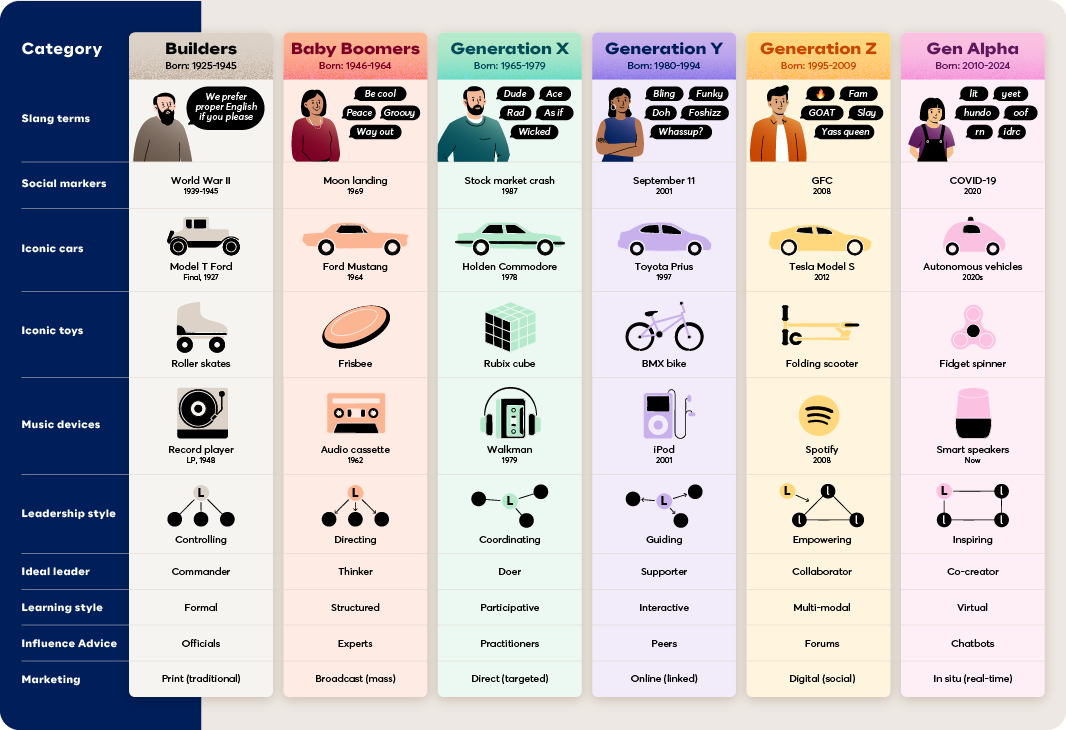
Before we can explore the technological nuances of each generation, establishing the commonly accepted birth year ranges is paramount. These are not rigid scientific classifications but rather widely used sociological markers that help us understand shared experiences and cultural touchstones. While slight variations may exist across different sources, the following framework provides a robust foundation for our discussion.
The Silent Generation: Forged in Pre-Digital Times
- Birth Years: Roughly 1928 – 1945
- Context: This generation came of age during the Great Depression and World War II. Their formative years predated the widespread adoption of personal computers, the internet, and mobile devices. Their early exposure to technology was limited to radio, television, and landline telephones.
- Technological Relationship: While not digital natives, many Silent Generation individuals have adapted to technology out of necessity or a desire to stay connected with loved ones. Their adoption often involves learning specific tools or platforms for particular purposes, such as email or video calls, rather than exploring technology for its own sake. They tend to value simplicity, reliability, and clear instruction. Their primary engagement with technology is often for communication and accessing information, with a cautious approach to new, unproven innovations.
Baby Boomers: Witnessing the Dawn of the Digital Age
- Birth Years: Roughly 1946 – 1964
- Context: This generation experienced the post-war economic boom and witnessed the early stages of the digital revolution. The advent of television became a central part of their upbringing, and they saw the rise of early computing in academic and corporate settings.
- Technological Relationship: Baby Boomers are a diverse group when it comes to technology. While some have fully embraced digital tools, others have adopted them more gradually. They were the first to experience the internet and personal computers as adults. Many Boomers are active online, using social media to connect with family and friends, and engaging in online shopping. They often appreciate user-friendly interfaces and may require more support or detailed explanations when encountering new technologies. Their digital habits are often driven by convenience and the desire to maintain social connections. They value established brands and are often loyal to technologies they trust, but are also increasingly open to exploring new platforms if they offer clear benefits.
Generation X: The Bridge Between Analog and Digital
- Birth Years: Roughly 1965 – 1980
- Context: Gen X grew up during a period of significant technological change, bridging the analog and digital worlds. They experienced the rise of video games, personal computers in schools and homes, and the early days of the internet.
- Technological Relationship: Often described as the “latchkey kids” of technology, Gen X is characterized by its adaptability and independence. They are comfortable with a range of technologies, from legacy systems to emerging platforms. They were the first generation to truly navigate the transition from analog to digital in a meaningful way, often having to learn new skills as technology evolved rapidly during their formative years. They are often pragmatic users of technology, valuing efficiency and utility. They are active on social media, use streaming services, and are generally adept at troubleshooting. Their technological fluency allows them to critically evaluate new tools and services, often seeking out those that offer practical solutions and enhance productivity. They are also a demographic that has witnessed the evolution of the internet and can recall a time before its ubiquity, giving them a unique perspective on its current impact.
Millennials (Generation Y): The First True Digital Natives
- Birth Years: Roughly 1981 – 1996
- Context: Millennials were born into a world where personal computers were becoming commonplace, and the internet was rapidly expanding. They grew up with dial-up, then broadband, and witnessed the explosion of mobile technology.
- Technological Relationship: As the first generation to be truly immersed in the digital age from a young age, Millennials are characterized by their digital fluency and constant connectivity. They are highly comfortable with smartphones, social media, and a wide array of apps and online services. Technology is an integral part of their daily lives, used for communication, entertainment, education, and work. They are early adopters of new trends and technologies, often influencing the mainstream adoption of platforms and gadgets. They value experiences, personalization, and social responsibility, and these values often translate into their technology choices. They are adept at multitasking across multiple devices and platforms and are often the drivers of trends in areas like app development and content creation. Their reliance on digital tools has also shaped their expectations for convenience, speed, and seamless integration.
Generation Z: The Always-Connected Generation
- Birth Years: Roughly 1997 – 2012
- Context: Gen Z has never known a world without the internet or smartphones. They have grown up with social media, streaming services, and advanced mobile technology as a constant presence.
- Technological Relationship: Generation Z are the quintessential digital natives, characterized by their intuitive understanding of technology. They are often more adept at using newer platforms and features than older generations and have a natural inclination towards visual communication and short-form content. They are highly proficient with mobile devices, social media (especially platforms like TikTok and Instagram), and are early adopters of emerging technologies like AI-powered tools and augmented reality. Their digital lives are deeply intertwined with their social lives, and they often use technology for entertainment, learning, and self-expression. They are also increasingly aware of the potential downsides of technology, such as privacy concerns and digital well-being, and are developing strategies to manage their online presence. Their comfort with rapid technological change makes them a key demographic for understanding the future trajectory of tech innovation.
Generation Alpha: The Future of Tech
- Birth Years: Roughly 2013 – Present
- Context: This generation is growing up in a hyper-connected world, surrounded by advanced AI, sophisticated smart devices, and immersive digital experiences from infancy.
- Technological Relationship: Generation Alpha are the first to be fully immersed in an AI-driven world. They interact with voice assistants, touchscreens, and educational apps from their earliest years. Their learning and play are often mediated by technology, and they are developing an innate understanding of digital interfaces and interactive systems. As they mature, their relationship with technology will likely be characterized by a seamless integration of the digital and physical realms, with AI playing an increasingly central role in their daily lives. Their formative experiences will shape their expectations for technology, potentially leading to entirely new forms of interaction and innovation that we can only begin to imagine today. Understanding their developmental trajectory is key to forecasting future technological needs and ethical considerations.
Technological Adoption Curves and Generational Cohorts
The differing birth years of these generations directly correlate with their exposure to and adoption of key technological advancements. Understanding these adoption curves is vital for anyone involved in the development, marketing, or implementation of technology.
Early Adopters: The Trailblazers of Innovation
- Generational Overlap: Primarily Gen X and early Millennials, with some influential individuals from the Baby Boomer generation.
- Characteristics: These individuals are often driven by curiosity, a desire for cutting-edge solutions, and a willingness to tolerate early bugs or complexities. They are the ones who will try out new software, gadgets, or platforms as soon as they become available. They are often influential within their peer groups, sharing their experiences and recommendations.
- Impact: Early adopters provide invaluable feedback that helps shape product development and refine user experiences. Their enthusiasm can create initial momentum for new technologies, paving the way for broader market acceptance. For tech companies, identifying and engaging with early adopters is a crucial strategy for testing hypotheses and building an initial user base.
Mainstream Adopters: The Growth Drivers
- Generational Overlap: Primarily Millennials and Generation Z, with a significant portion of Gen X and an increasing number of Baby Boomers.
- Characteristics: These groups adopt technology once it has proven its value and reliability. They are influenced by the successes of early adopters and are looking for practical benefits and ease of use. They represent the largest segment of the market and are key to widespread adoption and revenue generation.
- Impact: The mainstream adoption phase is critical for any technology to achieve widespread success. Companies need to focus on user-friendly design, clear value propositions, and effective marketing to capture this demographic. Understanding their needs and preferences ensures that technology remains accessible and relevant to a broad audience.
Late Adopters and Laggards: The Comfort Seekers
- Generational Overlap: Primarily the Silent Generation and some older Baby Boomers, though this is rapidly diminishing with increasing digital literacy.
- Characteristics: This group tends to adopt technology only when it becomes a necessity or when there are no viable alternatives. They may require significant support and training, and often prioritize familiarity and simplicity over advanced features.
- Impact: While they represent a smaller segment, engaging with late adopters requires a different approach. Emphasis on intuitive design, comprehensive support, and clear demonstrations of benefit is essential. Their adoption often signals the maturity and ubiquitancy of a technology. However, with the rapid pace of technological change, this group is increasingly becoming the exception rather than the rule.
Bridging the Generational Tech Divide: Strategies for Inclusion
The technological landscape is not monolithic, and understanding generational differences is key to fostering effective communication, collaboration, and innovation. Companies and organizations that acknowledge and adapt to these nuances are better positioned for success.
Tailoring User Experiences: Design for Everyone
- Accessibility and Simplicity: For older generations, prioritizing clear navigation, larger font sizes, and intuitive interfaces is crucial. Avoid jargon and complex multi-step processes.
- Engagement and Interactivity: For younger generations, incorporating interactive elements, gamification, and visually appealing content can enhance engagement. Providing opportunities for customization and personalization caters to their expectations.
- Hybrid Approaches: Many technologies can benefit from offering multiple modes of interaction or support. For example, a banking app might offer a simple, streamlined interface for basic transactions while also providing advanced features for more tech-savvy users.
Effective Communication and Support: Speaking the Right Language
- Channel Selection: Younger generations are more likely to engage through social media, instant messaging, and video calls. Older generations may still prefer email, phone calls, or in-person support.
- Content Format: Millennials and Gen Z often prefer short, digestible content like videos and infographics. Baby Boomers and the Silent Generation might benefit from detailed guides, FAQs, and step-by-step tutorials.
- Empathy and Patience: Regardless of generation, offering patient, empathetic support is paramount. Understanding that users have different levels of technical proficiency and offering tailored assistance will build trust and satisfaction.

Marketing and Product Development: Reaching Every Segment
- Targeted Messaging: Marketing campaigns need to resonate with the specific values and communication styles of each generation. What appeals to a Gen Z influencer might not appeal to a Baby Boomer looking for reliable financial tools.
- Feature Prioritization: Product development should consider the needs and desires of a broad user base. While innovation is key, ensuring core functionalities are accessible and user-friendly for all is essential for mass appeal.
- Cross-Generational Collaboration: Encouraging intergenerational teams in product development and marketing can lead to more holistic and effective strategies. This cross-pollination of ideas ensures that a wider range of perspectives is considered.
In conclusion, while the specific birth years of each generation provide a framework, it is their evolving relationship with technology that truly defines them. From the Silent Generation’s cautious embrace to Generation Alpha’s innate digital fluency, understanding these generational cohorts and their unique interactions with the technological landscape is no longer a matter of academic curiosity but a strategic imperative for navigating the present and shaping the future. As technology continues its relentless advance, bridging the generational divide through thoughtful design, inclusive communication, and targeted development will be key to unlocking its full potential for everyone.
aViewFromTheCave is a participant in the Amazon Services LLC Associates Program, an affiliate advertising program designed to provide a means for sites to earn advertising fees by advertising and linking to Amazon.com. Amazon, the Amazon logo, AmazonSupply, and the AmazonSupply logo are trademarks of Amazon.com, Inc. or its affiliates. As an Amazon Associate we earn affiliate commissions from qualifying purchases.