
The digital frontier has long been obsessed with the human face. From the early days of basic photo manipulation software to the current era of sophisticated machine learning, our fascination with aging has transitioned from a parlor trick into a complex intersection of predictive algorithms, neural networks, and generative AI. Today, the ability to visualize your future self is not just a novelty; it is a showcase of how far computer vision and predictive modeling have come in understanding human physiology.
The Architecture of Digital Aging: How AI Projects Your Future
At the core of the aging phenomenon in technology lies the science of Generative Adversarial Networks (GANs). These systems represent a revolutionary leap in how computers process and synthesize images. To understand how an application can accurately depict your face forty years from now, one must first understand the structural framework these AI models utilize.
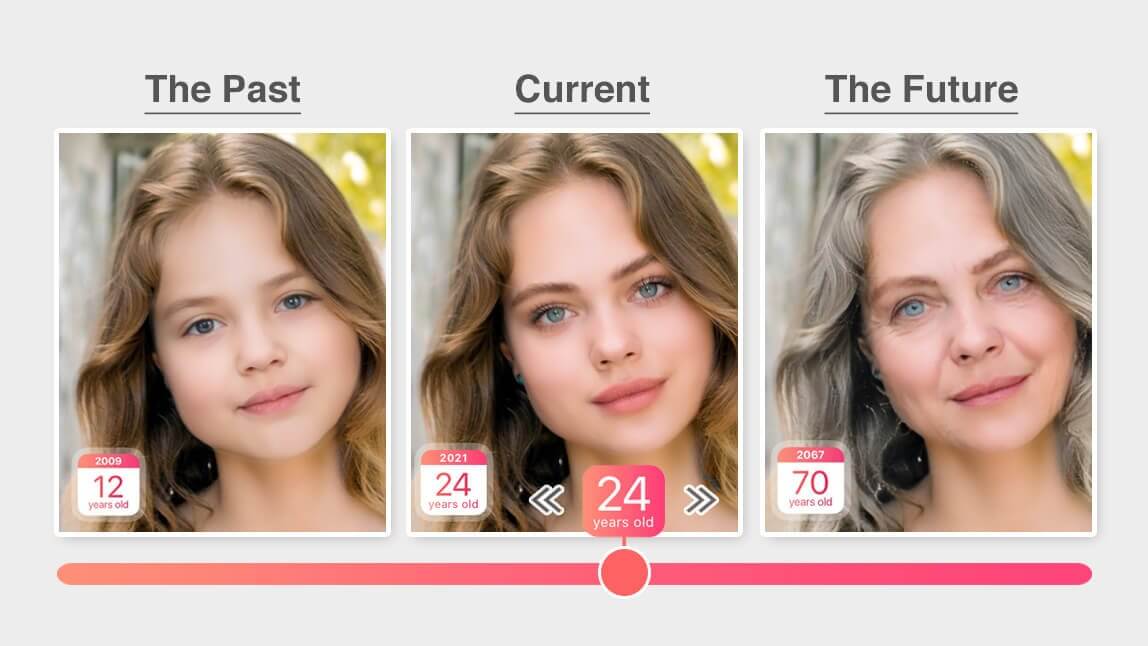
The Role of GANs in Predictive Modeling
Generative Adversarial Networks function through a dual-process system. One part of the network, known as the “generator,” creates images, while the other, the “discriminator,” evaluates them against a vast database of real human faces across every age bracket. When you upload a photo to an aging app, the model doesn’t simply apply a static filter. Instead, it creates a synthetic version of your features that evolves based on learned biological patterns. The AI identifies key facial landmarks—the distance between your eyes, the shape of your jawline, and the topography of your skin—and applies a predictive “aging mask” that accounts for skin elasticity loss, structural bone resorption, and pigmentation changes.
Mapping the Biological Markers of Time
Modern algorithms are trained on millions of data points derived from longitudinal studies of human aging. The AI recognizes that as the human face ages, the mid-face loses volume, the brow descends, and skin quality shifts due to cellular degradation. By cross-referencing your unique geometry with these biological markers, the software calculates the likely trajectory of your specific features. It is a form of spatial computing that turns your current photograph into a multi-dimensional map, allowing the processor to simulate how gravity and time will physically alter your appearance.
The Evolution of Aging Tools: From Simple Filters to Neural Synthesis
The technology behind age-progression has undergone a radical transformation. What began as simple pixel-blurring overlays has evolved into deep-learning experiences that prioritize photorealism and anatomical accuracy.
The Era of Static Overlays vs. Deep Learning
Early photo applications relied on basic texture blending. These tools would simply layer a generic “wrinkle mask” over an existing image, resulting in a look that felt disconnected from the subject. Today, however, the shift toward neural synthesis means that the software “reimagines” the face from the ground up. Instead of just drawing lines on a photo, the AI generates new pixels that adhere to the contours of your skull. This provides a level of depth and texture that was previously impossible, making the resulting image feel like a genuine photograph taken in the future rather than a digital smudge.

Latent Space Exploration
When an AI tool predicts your future look, it is operating within what engineers call “latent space.” This is a high-dimensional mathematical space where the model understands the relationships between features. For instance, the AI knows that if a specific eye shape is present in youth, it often correlates with a specific pattern of crow’s feet in old age. By navigating this latent space, the software can provide multiple versions of your future—some depicting a healthy lifestyle, others accounting for different genetic predispositions. This nuance is what distinguishes modern professional-grade software from the rudimentary mobile apps of the past.
Privacy, Security, and the Digital Legacy of Your Face
As we engage with these powerful tools, it is imperative to address the technological security implications of uploading biometric data to third-party servers. In the tech industry, your face is more than a portrait; it is a form of highly sensitive biometric information.
The Security Risks of Biometric Uploads
When you use a website or an app to generate an image of your older self, you are essentially providing the provider with a high-resolution biometric map of your facial structure. While many reputable developers utilize robust encryption protocols, the storage of these images poses a significant digital security challenge. Users must consider how these platforms handle data retention. Are your images being used to train future iterations of the model? Are they being stored in decentralized clouds? Understanding the privacy policy of these platforms is as important as the thrill of seeing the final result.
Protecting Your Digital Identity
From a technical perspective, digital hygiene is paramount. When engaging with AI aging tools, opt for platforms that utilize client-side processing—where the image generation happens on your device rather than being uploaded to a remote server. If a cloud-based service is required, ensure that the provider offers explicit “delete after process” options. As AI becomes more integrated into our daily digital interactions, treating your facial data with the same caution as your financial passwords is the new standard of digital literacy.
The Philosophical and Psychological Impact of Predictive Tech
The technology that tells us what we will look like is doing more than just moving pixels; it is changing our relationship with time. In the tech industry, we often talk about “user experience,” but the predictive modeling of our future selves introduces a psychological dimension that software designers are only beginning to comprehend.
The Mirror of Machine Learning
Seeing a high-fidelity rendering of your future self can be a profound, sometimes jarring, experience. This technology acts as a mirror that reflects the inevitability of change. Developers are now looking into how these visualizations can be used positively—such as in healthcare, where seeing one’s older self has been shown to increase long-term planning and even financial savings behavior. This is an example of how tech, when applied with psychological insight, can nudge human behavior toward better future outcomes.

Bridging the Gap Between Present and Future
The intersection of AI and human aging is essentially a tool for empathy. By allowing us to visualize the future, technology narrows the cognitive distance between our current actions and our long-term existence. Whether it is for entertainment, artistic exploration, or personal reflection, the capability of modern software to project aging with such clinical precision is a testament to the power of predictive computation. As these tools continue to refine their accuracy, they will likely become staples in various industries, from character design in gaming and cinema to medical research into the aging process itself.
In conclusion, the question “what would I look like when I get older” has moved far beyond the realm of wishful thinking and into the realm of advanced engineering. Through the application of GANs, neural synthesis, and high-performance processing, we have developed the tools to peer into the mirror of time. While we must remain vigilant regarding the security of our biometric data, the technological capability to synthesize the future is one of the most compelling demonstrations of artificial intelligence in the modern age. We are no longer just guessing; we are computing the biology of our own mortality, one pixel at a time.
aViewFromTheCave is a participant in the Amazon Services LLC Associates Program, an affiliate advertising program designed to provide a means for sites to earn advertising fees by advertising and linking to Amazon.com. Amazon, the Amazon logo, AmazonSupply, and the AmazonSupply logo are trademarks of Amazon.com, Inc. or its affiliates. As an Amazon Associate we earn affiliate commissions from qualifying purchases.