
The “Pinocchio Paradox” is a celebrated variation of the Liar’s Paradox that has fascinated logicians for decades. It poses a simple, yet devastating question: What happens if Pinocchio says, “My nose will grow”? If the nose grows, it implies he was telling the truth; but his nose only grows when he lies. If the nose does not grow, then he was lying, which should trigger the growth. Within the realm of technology, this is more than a children’s fable—it is a fundamental representation of the “recursive loop” and the “logical contradiction” that haunts modern software engineering, artificial intelligence, and cybersecurity.
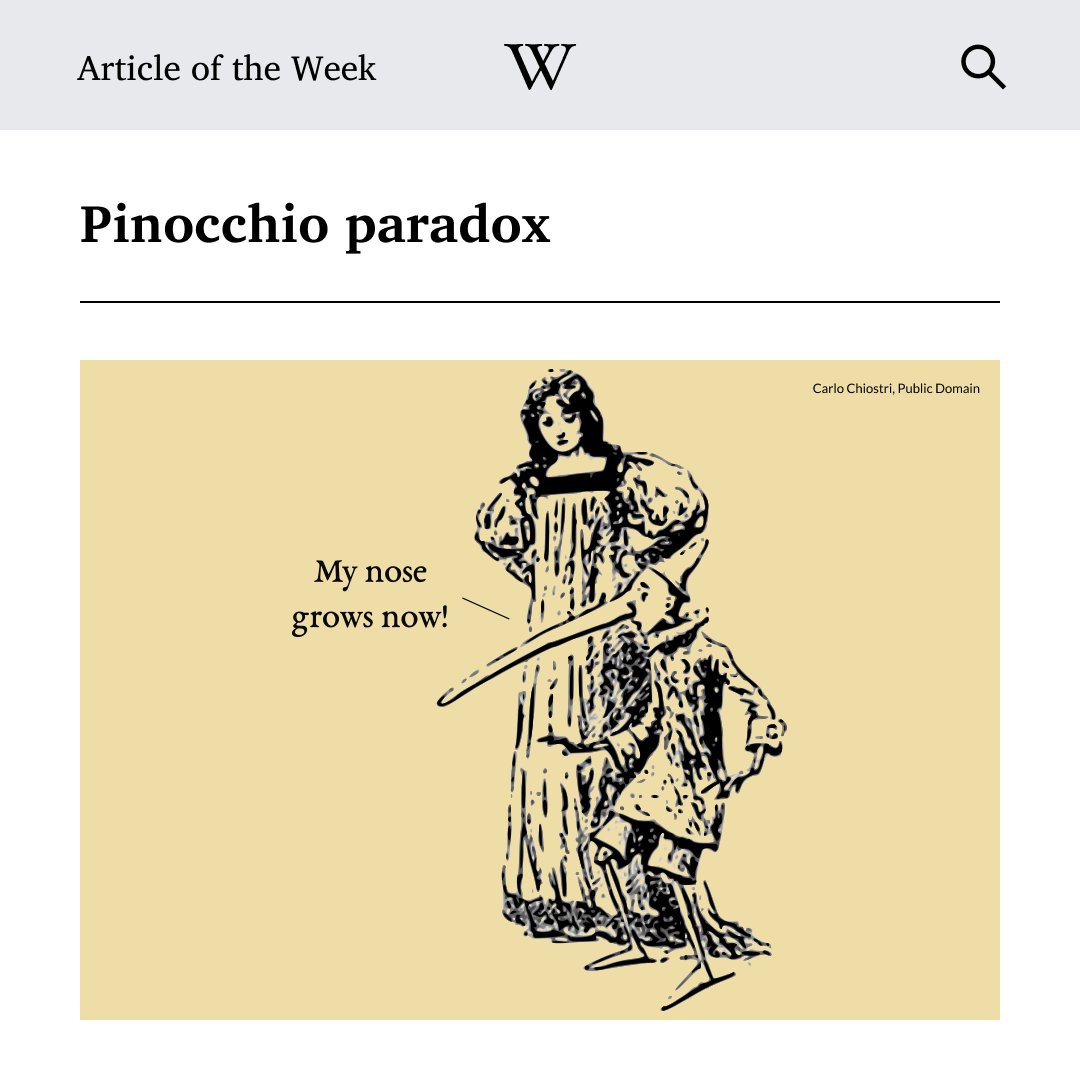
As we transition into an era dominated by Large Language Models (LLMs) and autonomous systems, the Pinocchio Paradox serves as a vital stress test for how machines process truth, navigate ambiguity, and handle instructions that are inherently self-defeating.
The Mechanics of Logic Loops: Why AI Struggles with Recursive Statements
At the core of every computer program is a foundation of binary logic. Traditionally, a statement is either true (1) or false (0). However, the Pinocchio Paradox introduces a state that is neither—or perhaps both. This is known in computer science as a “non-terminating” or “recursive” error.
The Liar’s Paradox and the Foundation of Computing
To understand how technology handles the Pinocchio Paradox, we must look at the work of Kurt Gödel and Alan Turing. In the mid-20th century, these pioneers explored the limits of formal systems. Turing’s “Halting Problem” is the computational cousin of Pinocchio’s dilemma. It asks whether an algorithm can determine, for any given program and input, whether the program will eventually stop or run forever.
When an AI is fed a paradox like “This statement is a lie,” it essentially encounters a recursive loop. In early computing, such a command could lead to a system crash or an infinite loop, consuming all available CPU resources. Modern systems are designed with “timeout” protocols, but the underlying challenge of identifying a logical contradiction before processing it remains a frontier in tech development.
How Modern LLMs Process Logical Contradictions
Unlike traditional compilers that might freeze when encountering a paradox, modern AI tools like GPT-4 or Claude use probabilistic reasoning. When a user asks an AI what would happen if Pinocchio said his nose would grow, the AI does not “break.” Instead, it analyzes the semantic structure of the sentence.
However, the AI’s “understanding” is still limited by its training data. It treats the paradox as a linguistic puzzle rather than a logical crisis. This highlights a gap in current AI technology: the difference between simulating logic and possessing a fundamental understanding of truth. Tech developers are currently working on “symbolic AI” layers that would allow models to map out these logical contradictions in a sandbox environment before generating a response, preventing the model from producing “hallucinated” or nonsensical explanations.
Algorithmic Hallucinations and the Truth Gap
The Pinocchio Paradox is the ultimate “edge case” for Generative AI. When faced with a situation where there is no logically consistent answer, AI models often attempt to force a resolution. In the tech industry, this is known as a hallucination—a confident but incorrect or nonsensical output.
Distinguishing Between Factuality and Logical Consistency
For a machine, “truth” is often defined as the highest probability of a sequence of tokens. If a model is asked about Pinocchio, it draws upon thousands of texts about the character. The paradox arises because the rules of the Pinocchio universe (lying causes growth) conflict with the logic of the statement (the statement predicts its own outcome).
This creates a “Truth Gap.” In mission-critical software—such as autonomous vehicle navigation or medical diagnostic tools—this gap is dangerous. If a system receives contradictory sensor data (e.g., “The road is clear” vs. “An object is detected”), it faces its own Pinocchio moment. Tech leaders are focused on developing “multi-modal verification” systems that cross-reference data points to ensure that a single paradoxical input cannot derail the entire decision-making process.
The Role of Reinforcement Learning in Mitigating Errors
To solve the issues raised by logical paradoxes, developers use Reinforcement Learning from Human Feedback (RLHF). By training models on how to identify and label paradoxes, tech companies can “teach” the AI to recognize when it has entered a logical cul-de-sac.

Instead of trying to resolve the Pinocchio Paradox, a well-calibrated AI will now respond by identifying it as a logical impossibility. This shift from “solving” to “identifying” is a major trend in digital security and software robustness, emphasizing that knowing when a system cannot provide an answer is just as important as providing the answer itself.
Cybersecurity and the Paradox of Self-Fulfilling Vulnerabilities
In the world of digital security, the Pinocchio Paradox manifests in “Recursive Calls” and “Logic Bombs.” These are scenarios where a piece of code’s execution creates conditions that invalidate its own security protocols, or where a system’s defense mechanism becomes the very tool used to exploit it.
Recursive Loops in Malware Analysis
Cybersecurity researchers often use “sandboxes” to observe how malware behaves. Sophisticated malware developers, however, write code that asks a version of the Pinocchio question: “Am I in a sandbox?” If the code detects it is being watched, it changes its behavior or shuts down.
This creates a recursive game of cat-and-mouse. The defense system must appear to be a real environment while knowing it is a simulation. If the defense system “lies” about its identity to catch the virus, it must do so without creating a logical loop that the malware can use to trigger an escape. This is a technical application of the paradox where the “nose growing” (the detection of the malware) only happens if the “lie” (the fake environment) is successful.
Zero-Knowledge Proofs as a Solution to Semantic Paradoxes
One of the most promising technologies for resolving trust issues without revealing sensitive data is the Zero-Knowledge Proof (ZKP). In the context of our paradox, a ZKP allows one party to prove to another that a statement is true without conveying any information apart from the fact that the statement is indeed true.
While the Pinocchio Paradox deals with the impossibility of establishing truth in a self-referential statement, ZKPs provide a mathematical framework to verify truth in a distributed system (like Blockchain) without needing to “see” the nose grow. By utilizing complex cryptography, tech firms can bypass the semantic traps of language and rely on the immutable laws of mathematics to verify identity and transactions.
The Future of Cognitive Computing: Beyond Binary Truths
As we look toward the future of technology, the Pinocchio Paradox suggests that binary “True/False” systems may be reaching their limits. The next generation of gadgets and software will likely rely on “Fuzzy Logic” and “Probabilistic Computing” to handle the nuances of the real world.
Moving Toward Fuzzy Logic and Probabilistic Reasoning
In standard computing, a door is either open or closed. In fuzzy logic, a door can be “mostly open” or “slightly closed.” Applying this to Pinocchio, a fuzzy logic system wouldn’t see a hard crash; it would assign a probability of truth to the statement.
This is how “Affective Computing” (AI that understands emotion) and “Context-Aware Systems” are being built. They understand that human communication is full of paradoxes, irony, and sarcasm. By moving away from rigid logic gates, tech companies are creating apps that can navigate the “gray areas” of human interaction, providing more intuitive and helpful user experiences.

Why the Pinocchio Paradox Remains the Ultimate Stress Test for AGI
Artificial General Intelligence (AGI) is the “Holy Grail” of the tech world—a machine that can perform any intellectual task a human can. A key milestone for AGI will be the ability to not only recognize a paradox like Pinocchio’s but to understand the intent behind it.
When a human hears the Pinocchio Paradox, we don’t “break”; we find it humorous or philosophically interesting. We understand that the “rules” of a story are separate from the “rules” of logic. For an AI to reach AGI status, it must develop a layer of meta-cognition—the ability to think about its own thinking. It must be able to look at the prompt “My nose will grow” and understand that the speaker is testing the boundaries of its system.
In conclusion, while Pinocchio’s dilemma may seem like a simple folk tale, it represents the deepest challenges in modern technology. From the way we code our software to the way we train our AI, the pursuit of a system that can reconcile contradiction is driving the next great wave of digital innovation. As we build increasingly complex systems, we must ensure they are robust enough to face the paradox, recognizing that in the world of tech, the truth is often more complicated than a simple “yes” or “no.”
aViewFromTheCave is a participant in the Amazon Services LLC Associates Program, an affiliate advertising program designed to provide a means for sites to earn advertising fees by advertising and linking to Amazon.com. Amazon, the Amazon logo, AmazonSupply, and the AmazonSupply logo are trademarks of Amazon.com, Inc. or its affiliates. As an Amazon Associate we earn affiliate commissions from qualifying purchases.