
In the rapidly evolving landscape of sustainable technology, fuel cells represent a cornerstone of the transition toward a zero-emission future. To understand the potential of these systems, one must first grasp the concept of “fuel cell property.” In the context of technology and engineering, fuel cell properties refer to the specific electrochemical, thermal, and material characteristics that dictate how efficiently a cell converts chemical energy into electrical power.
Unlike traditional combustion engines, which rely on thermal cycles, fuel cells operate via electrochemical reactions. This distinction is vital for understanding why fuel cell technology is increasingly integrated into everything from heavy-duty transport to modular data center power supplies. This article explores the core technical properties that define fuel cell performance, the material science behind their development, and how modern software is optimizing these properties for the next generation of energy solutions.

Fundamental Electrochemical and Transport Properties
The efficiency of a fuel cell is primarily governed by its electrochemical properties. These define how well the device manages the movement of electrons and ions, which is the heartbeat of the technology.
Proton Conductivity and Electrolyte Efficiency
The electrolyte is the “gatekeeper” of the fuel cell. In Proton Exchange Membrane (PEM) fuel cells, the most common variety in the automotive and gadget sectors, the membrane must possess high proton conductivity while remaining an electronic insulator. This property allows hydrogen protons to pass through the membrane to the cathode while forcing electrons to travel through an external circuit, creating usable electricity.
Modern tech trends in material science are focused on developing “high-temperature” membranes. Standard PEM membranes require liquid water to conduct protons, limiting their operating range. New tech developments in sulfonated polymers and ceramic-based electrolytes are pushing these properties to higher temperature thresholds, reducing the need for complex cooling systems and increasing overall system reliability.
Catalytic Activity and Surface Area Dynamics
At the heart of the fuel cell property spectrum is the catalyst. Most current fuel cell stacks utilize platinum-group metals (PGM) to facilitate the Hydrogen Oxidation Reaction (HOR) and the Oxygen Reduction Reaction (ORR). The “property” of interest here is the mass activity—the amount of current produced per milligram of catalyst.
Technological innovation is currently centered on “nano-structuring” these catalysts. By engineering catalysts at the atomic level, developers can increase the active surface area, allowing for more reactions to occur simultaneously. This reduces the amount of expensive raw material needed, making the technology more viable for mass-market consumer tech and hardware.
Mass Transport and Gas Diffusion
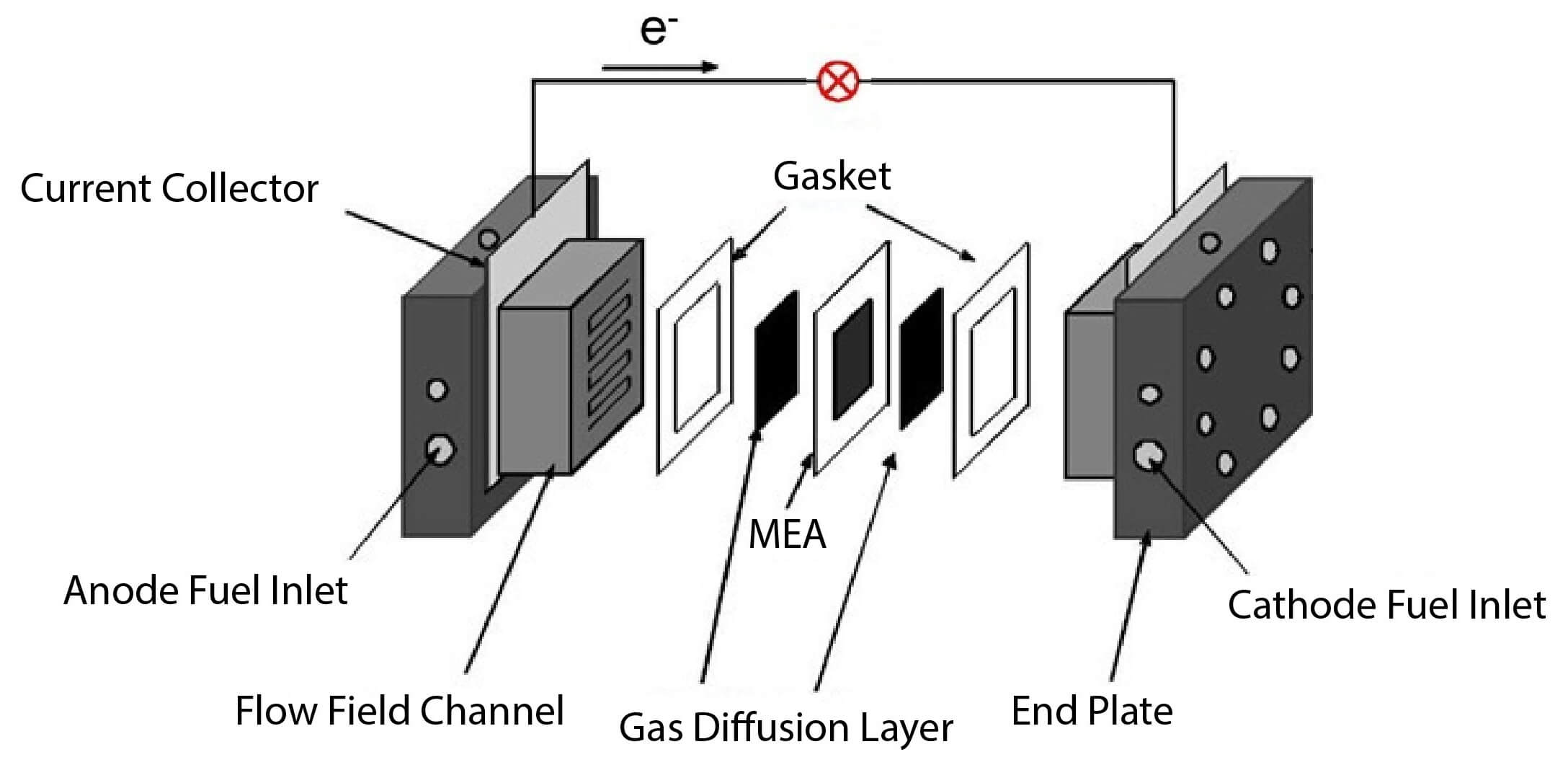
For a fuel cell to maintain high power density, it must efficiently manage the transport of reactant gases (hydrogen and oxygen) and the removal of the byproduct (water). This property is managed by the Gas Diffusion Layer (GDL). The GDL must be porous enough to allow gas to reach the catalyst but hydrophobic enough to prevent “flooding,” where water droplets block the pores and “choke” the cell. Engineers use advanced carbon-fiber paper and micro-porous layers to fine-tune these transport properties.
Thermal and Thermodynamic Properties
While fuel cells are often touted for their “cool” operation compared to internal combustion, they still generate heat. Managing the thermal properties of a fuel cell stack is a significant technological challenge that dictates the lifespan and efficiency of the device.
Heat Management and Thermal Gradients
The thermodynamic property of a fuel cell is defined by the difference between the chemical energy of the fuel and the electrical energy produced. The “lost” energy is released as heat. If a fuel cell gets too hot, the membrane can dehydrate or degrade; if it is too cold, the electrochemical reactions slow down significantly.
Advanced thermal management systems now utilize AI-driven sensors to monitor thermal gradients across the stack in real-time. By maintaining a uniform temperature property across the entire surface of the Membrane Electrode Assembly (MEA), technology providers can extend the stack’s life from 5,000 hours to over 20,000 hours, which is critical for industrial applications.
System Efficiency and Waste Heat Recovery
One of the most promising properties of Solid Oxide Fuel Cells (SOFCs) is their high operating temperature (up to 1,000°C). In a “Tech-first” approach, this high-grade heat is not seen as a waste product but as a secondary energy source.
Combined Heat and Power (CHP) systems utilize this thermal property to provide heating for buildings or to drive secondary turbines. This elevates the total system efficiency from approximately 50-60% (electrical only) to over 85% (combined). This makes fuel cells a primary interest for tech companies building green data centers, where both electricity and climate control are constant requirements.

Material Durability and Structural Integrity
The physical properties of the materials used to build a fuel cell—the “hardware” aspect—determine whether the technology is a laboratory curiosity or a commercially viable product.
Membrane Electrode Assembly (MEA) Resilience
The MEA is the most sensitive component of the fuel cell. Its structural properties must withstand mechanical stresses caused by the constant expansion and contraction of the membrane as it hydrates and dehydrates.
Recent breakthroughs in “reinforced membranes” involve embedding a chemically inert teflon-like mesh within the electrolyte. This technological enhancement improves the mechanical property of the membrane, preventing tears and pinholes that could lead to “gas crossover”—a dangerous condition where hydrogen and oxygen mix directly, potentially causing a failure of the stack.
Corrosion Resistance in Bipolar Plates
Bipolar plates make up the bulk of a fuel cell stack’s weight and volume. They serve as the structural backbone, the electrical conductor between cells, and the delivery channel for gases. Because they operate in a highly acidic and moist environment, their most critical property is corrosion resistance.
The tech industry is moving away from heavy graphite plates toward thin, coated metallic plates. Using techniques like Physical Vapor Deposition (PVD), manufacturers can apply nano-coatings of gold, titanium nitride, or chrome-carbon to stainless steel. This maintains high electrical conductivity while ensuring the plates do not corrode over thousands of hours of operation.
Integration into the Modern Digital and Software Ecosystem
Fuel cell technology does not exist in a vacuum. Its properties are increasingly managed and enhanced by digital tools, software, and artificial intelligence.
AI-Driven Optimization of Fuel Cell Performance
The “property” of a fuel cell is not static; it changes as the cell ages and as environmental conditions shift. Modern fuel cell controllers use machine learning algorithms to predict degradation patterns. By analyzing thousands of data points regarding voltage, current, and temperature, the software can adjust the hydrogen flow or the air pressure to optimize the electrochemical property of the cell in real-time.
This “Digital Twin” technology allows engineers to create a virtual replica of the fuel cell hardware. By simulating different stress tests on the digital twin, tech teams can predict when a component might fail, enabling predictive maintenance that saves millions in downtime for commercial fleets or power grids.
IoT and Remote Monitoring in Energy Storage
The Internet of Things (IoT) has revolutionized how we interact with fuel cell properties in the field. Remote sensors now track the “State of Health” (SoH) of fuel cell stacks across the globe. For gadgets and remote telecommunications towers powered by fuel cells, this connectivity ensures that the technological property of the energy source is always within the optimal operating window.
Cloud-based platforms aggregate this data to improve the design of future iterations. If data shows that a specific material property is failing in high-humidity environments, software updates can be pushed to the hardware controllers to mitigate those specific environmental stressors, essentially “patching” the physical performance of the tech through code.
The Future of Fuel Cell Technology
As we look toward the future of energy, the “properties” of fuel cells will continue to evolve. We are seeing a shift toward “Anion Exchange Membranes” (AEM) which could allow for the use of non-precious metals like nickel instead of platinum. This would be a massive technological leap, drastically lowering the cost of hardware and making hydrogen power as ubiquitous as the lithium-ion battery.
Furthermore, the integration of fuel cells into the “Smart Grid” represents the ultimate application of this technology. By utilizing the fast-response properties of fuel cells, software-defined grids can balance the intermittent nature of solar and wind power, using hydrogen as a long-term energy storage medium that can be converted back to electricity on demand.
In conclusion, “fuel cell property” is a multifaceted term that encompasses the very best of modern technology: from the nano-scale engineering of catalysts and the thermodynamic mastery of heat management to the high-level software that monitors and optimizes every electron produced. As these properties are refined through continuous research and digital integration, the fuel cell will undoubtedly become the powerhouse of the clean-tech revolution.
aViewFromTheCave is a participant in the Amazon Services LLC Associates Program, an affiliate advertising program designed to provide a means for sites to earn advertising fees by advertising and linking to Amazon.com. Amazon, the Amazon logo, AmazonSupply, and the AmazonSupply logo are trademarks of Amazon.com, Inc. or its affiliates. As an Amazon Associate we earn affiliate commissions from qualifying purchases.