
The landscape of home and business connectivity has undergone a radical transformation over the last decade. The traditional reliance on physical copper or fiber-optic lines is being challenged by a suite of wireless technologies that offer high-speed, low-latency data transmission. For many consumers and professionals, the question “what wireless internet is available in my area” is no longer just about finding a mobile hotspot, but about selecting a primary broadband solution that can handle 4K streaming, low-latency gaming, and intensive cloud-based workflows. Understanding the nuances of these technologies—ranging from 5G Fixed Wireless Access to Low Earth Orbit satellite constellations—is essential for making an informed technical decision.
The Rise of 5G Fixed Wireless Access (FWA)
Fixed Wireless Access (FWA) has emerged as the most significant disruptor in the home broadband market. Unlike mobile data, which is designed for devices on the move, FWA is engineered to provide a stable, high-capacity connection to a specific location using cellular infrastructure.
How 5G Ultra Wideband and Sub-6GHz Frequencies Work
The availability of 5G FWA in your area depends largely on the spectrum used by local carriers. There are two primary tiers of 5G technology currently deployed: Sub-6GHz and Millimeter Wave (mmWave). Sub-6GHz 5G operates in lower frequency bands, allowing signals to travel long distances and penetrate walls effectively. This is the backbone of “nationwide” 5G coverage, offering speeds that typically range from 100 Mbps to 300 Mbps.
In contrast, mmWave (often marketed as Ultra Wideband) operates at much higher frequencies. While its range is limited—often requiring a direct line of sight to a small cell node—it can deliver gigabit speeds that rival or exceed traditional fiber-optic connections. When checking availability, it is crucial to determine which spectrum the provider is utilizing in your specific neighborhood, as this dictates the hardware requirements and potential performance ceilings.
Hardware Evolution: Gateways and Signal Optimization
To access 5G FWA, providers supply a specialized gateway—a combination of a cellular modem and a high-performance Wi-Fi router. Modern 5G gateways utilize massive MIMO (Multiple Input, Multiple Output) antenna arrays to stabilize signals even in high-traffic areas. Users looking to optimize their connection often employ signal-testing software to find the “sweet spot” in their home, usually near a window facing the nearest cell tower. For power users, some gateways now support external antenna ports, allowing for the installation of high-gain directional antennas to pull in signals from distant towers.
Satellite Internet 2.0: The LEO Revolution
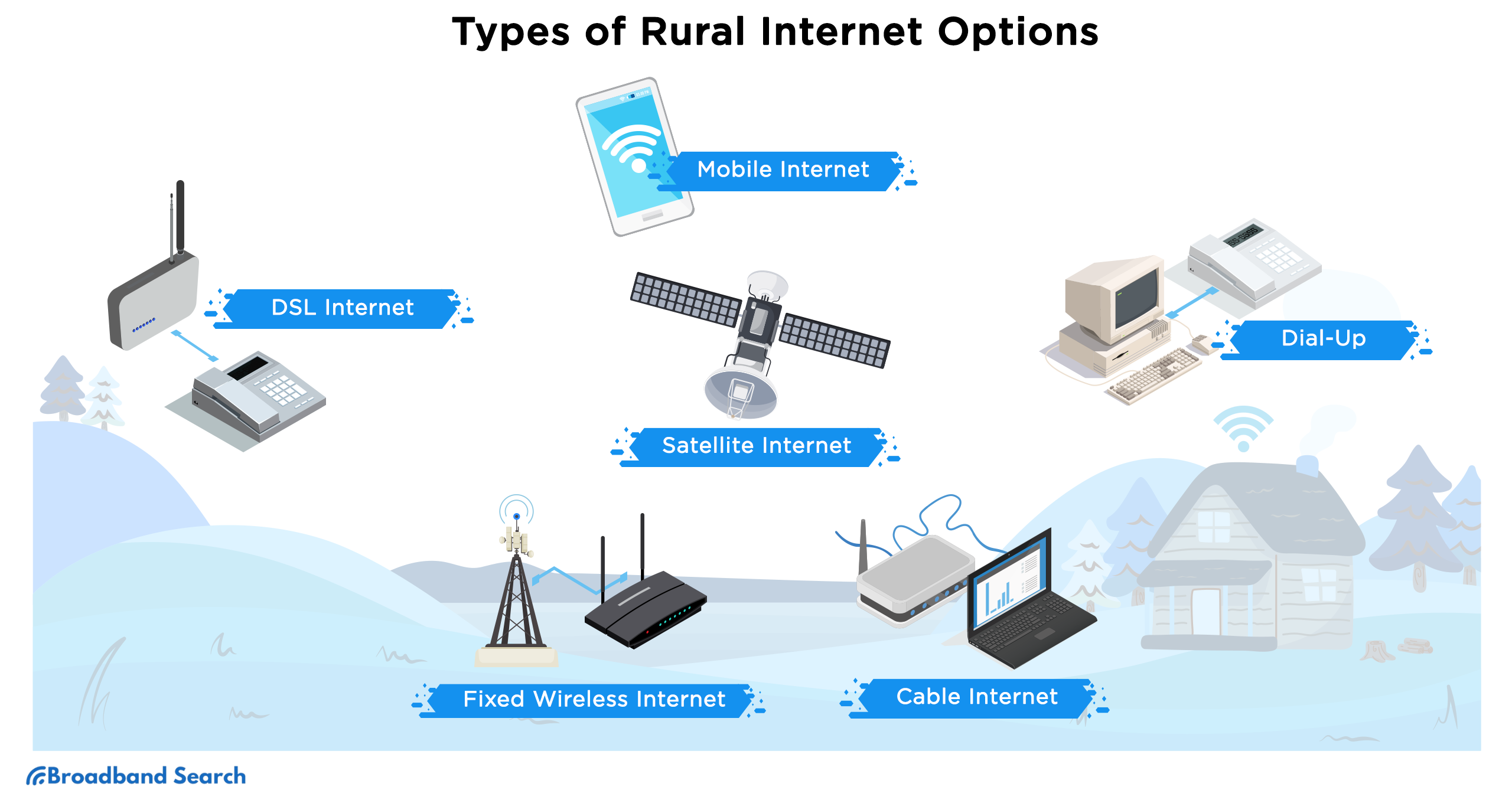
For those residing in rural or semi-rural areas where terrestrial wireless infrastructure is sparse, satellite internet has traditionally been the only option. However, the technology has moved far beyond the high-latency, low-bandwidth days of geostationary (GEO) satellites.
Starlink and Low Earth Orbit (LEO) Constellations
The most significant technological leap in this sector is the deployment of Low Earth Orbit (LEO) satellite constellations, pioneered by Starlink. Unlike traditional satellites that orbit at approximately 22,000 miles above the Earth, LEO satellites orbit at roughly 340 miles. This reduction in distance solves the “latency problem.” Where GEO satellites suffer from latencies of 600ms or higher, LEO systems can achieve latencies between 25ms and 50ms, making them viable for real-time applications like video conferencing and online gaming.
The phased-array antenna technology used in LEO terminals is a marvel of modern engineering. These “dishes” do not require a mechanical motor to track satellites; instead, they use electronic beamsteering to maintain a connection with multiple satellites passing overhead simultaneously.
The Emerging Ecosystem: Kuiper and Beyond
The wireless landscape is set to become even more competitive with the entrance of Amazon’s Project Kuiper and various international LEO initiatives. These systems are designed to provide a mesh network in space, using laser inter-satellite links to route data across the globe without needing to descend to a ground station at every hop. This architecture not only increases speed but enhances the security and resilience of the network, providing a robust wireless alternative in areas where physical infrastructure is vulnerable to environmental disruptions.
Navigating Local Wireless Infrastructure: Tools and Technical Mapping
Determining what wireless internet is available in your area requires more than just entering a zip code into a provider’s website. To get a true picture of the digital architecture surrounding your location, you must look at the underlying infrastructure.
Utilizing the FCC National Broadband Map
The Federal Communications Commission (FCC) maintains a National Broadband Map that is an essential tool for any tech-conscious consumer. This map provides a granular view of reported coverage, including the specific technologies (fixed wireless, satellite, or terrestrial) available at a specific street address. It allows users to see which providers claim to serve an area and, more importantly, what maximum speeds they theoretically support.
Signal Analysis and Tower Locators
For a more technical assessment, tools like CellMapper or OpenSignal provide crowdsourced data on tower locations, frequency bands, and signal strength. By identifying the proximity of the nearest 4G/5G towers and the specific bands they broadcast (such as Band n41 or n71), users can predict their expected performance. For instance, if a tower is less than a mile away and broadcasts on the 2.5 GHz mid-band spectrum, the user can expect a highly reliable, high-speed connection. Conversely, being on the edge of a cell’s radius might necessitate a different hardware configuration or a different provider altogether.
Optimizing the Indoor Wireless Experience
Even the fastest wireless internet connection from a provider is only as good as the internal network distribution. The transition from the “outside” wireless signal to the “inside” Wi-Fi network is where many performance bottlenecks occur.
The Technical Superiority of Wi-Fi 7 (802.11be)
As we move into 2024 and beyond, Wi-Fi 7 is becoming the gold standard for indoor wireless distribution. Wi-Fi 7 introduces Multi-Link Operation (MLO), which allows devices to send and receive data across different frequency bands (2.4 GHz, 5 GHz, and 6 GHz) simultaneously. This is a game-changer for wireless internet users, as it drastically reduces latency and increases throughput, ensuring that the high speeds delivered by a 5G or LEO satellite connection aren’t throttled by local Wi-Fi congestion.
Mesh Networking vs. Traditional Extenders
In larger homes or offices, a single gateway often fails to provide uniform coverage. The technical solution is a mesh networking system. Unlike traditional Wi-Fi extenders—which create separate, often degraded network IDs—mesh systems use a series of nodes to create a single, seamless fabric of connectivity. Advanced mesh systems use a dedicated wireless backhaul (often on the 6GHz band) to communicate between nodes, ensuring that the speed at the furthest node is nearly identical to the speed at the primary gateway.
Security Protocols and the Future of Wireless Connectivity
As wireless internet becomes the primary gateway for our digital lives, the underlying security protocols have evolved to meet new threats. Moving away from wired connections means that the “airwaves” are the medium, making encryption more critical than ever.
WPA3 and Network Isolation
WPA3 (Wi-Fi Protected Access 3) is the current standard for wireless security, providing modernized encryption that is much harder to crack via brute-force attacks than its predecessor, WPA2. Furthermore, many modern wireless gateways allow for sophisticated network isolation. Users can create separate Virtual Local Area Networks (VLANs) or “Guest Networks” to isolate IoT devices—like smart bulbs and cameras—from their primary computers and data storage devices. This prevents a compromised low-security gadget from becoming a backdoor into the entire network.
Looking Toward 6G and AI-Driven Networks
The future of “what is available in my area” is already being written in research labs focusing on 6G technology. While 5G focused on capacity and speed, 6G is expected to integrate sensing and AI directly into the network. This means your wireless internet could eventually use AI-driven beamforming to navigate around physical obstacles in real-time, providing a “wired-like” experience through even the most challenging environments. Additionally, the integration of Terahertz (THz) frequencies promises data rates that could reach 1 Terabit per second, effectively removing the distinction between local storage and cloud-based resources.
In conclusion, the question of what wireless internet is available is a gateway into a complex ecosystem of radio frequencies, satellite orbits, and hardware optimization. By understanding the technical differences between 5G bands, LEO satellite architectures, and the latest Wi-Fi standards, users can move beyond basic connectivity and build a high-performance digital environment that is tailored to their specific geographical and technical needs.
aViewFromTheCave is a participant in the Amazon Services LLC Associates Program, an affiliate advertising program designed to provide a means for sites to earn advertising fees by advertising and linking to Amazon.com. Amazon, the Amazon logo, AmazonSupply, and the AmazonSupply logo are trademarks of Amazon.com, Inc. or its affiliates. As an Amazon Associate we earn affiliate commissions from qualifying purchases.