
The concept of the “Three Estates” in pre-revolutionary France serves as a foundational element in understanding not only the socio-political landscape of the time but also the enduring historical underpinnings of French identity and its global brand. This hierarchical structure, deeply ingrained in the fabric of French society for centuries, defined roles, privileges, and obligations, shaping the collective consciousness and ultimately leaving a significant imprint on the national narrative and its perceived brand. Examining these estates offers a unique lens through which to analyze the historical evolution of French identity, its internal tensions, and its outward projection.
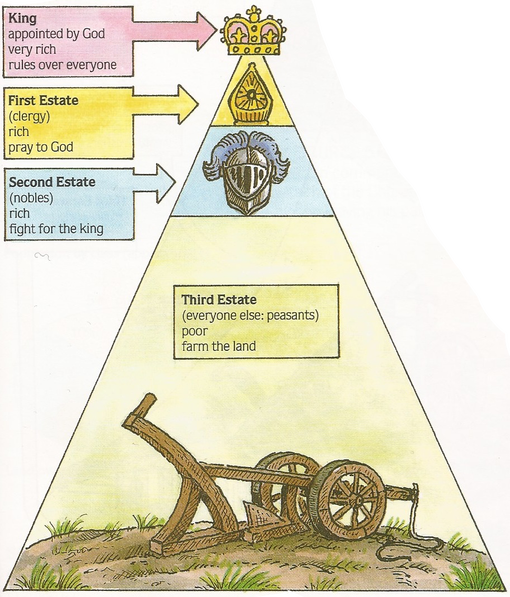
The First Estate: The Clergy – Spiritual Authority and Landed Influence
The First Estate, comprising the clergy, held a unique and powerful position within French society. This group was not a monolithic entity but rather encompassed a broad spectrum of religious figures, from the highest echelons of bishops and abbots to the humblest parish priests and monks. Their influence extended far beyond the spiritual realm, permeating political, economic, and social life.
The Hierarchy Within the Clergy
The clergy was internally stratified, reflecting the broader societal divisions. The high clergy, often drawn from noble families, enjoyed significant wealth and political influence. Bishops and archbishops held vast landed estates, collected tithes, and often served as advisors to the monarchy or held seats in regional parlements (high courts). Their lifestyles were frequently opulent, mirroring that of the aristocracy. In stark contrast, the low clergy, consisting of parish priests, vicars, and monks, often lived in more modest circumstances, closer to the common people they served. They bore the brunt of pastoral duties and, in many cases, shared the economic hardships of the Third Estate. This internal disparity within the First Estate contributed to growing discontent and highlighted the unequal distribution of power and wealth, even within the privileged orders.
Privileges and Responsibilities of the First Estate
The First Estate enjoyed considerable privileges, the most significant being exemption from most taxes, including the taille (a direct land tax). Instead, they were expected to offer a “free gift” (don gratuit) to the crown, a sum determined by the clergy itself and often less than what a comparable tax burden would have yielded. They also possessed their own courts and administered their own affairs through ecclesiastical assemblies. Their responsibilities, theoretically, included spiritual guidance, education, and charitable works. However, the vast landholdings of the Church, coupled with the tithes, made them one of the largest landowners in France. This economic power, combined with their spiritual authority, granted them immense social prestige and a profound influence on public opinion and cultural norms. The association of the Church with divine right further bolstered the legitimacy of the monarchy and the existing social order, a crucial element in the branding of the ancien régime.
The Second Estate: The Nobility – Military Prowess, Landed Aristocracy, and Social Distinction
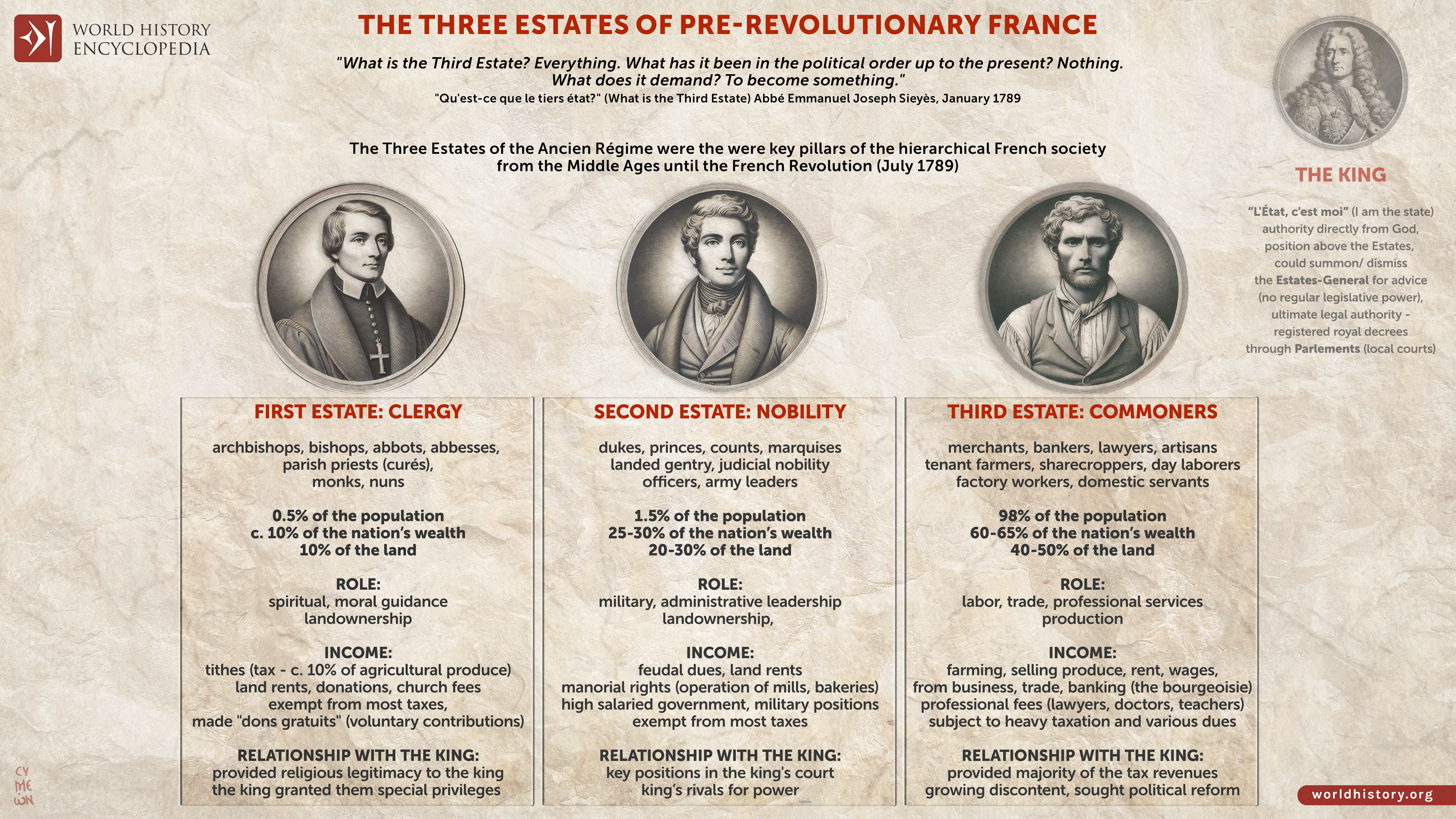
The Second Estate, the nobility, represented another privileged order whose historical roots lay in military service and feudal land ownership. Like the clergy, the nobility was not a uniform group, but its defining characteristic was its inherited status and its exemption from many of the burdens borne by the commoners.
The Diverse Ranks of the Nobility
The nobility could be broadly divided into two main categories. The Noblesse d’épée (Nobility of the Sword) represented the traditional aristocracy, whose lineage often stretched back to the medieval period. Their historical claim to power was rooted in military service to the crown, and they often held high positions in the army, the navy, and at court. They typically resided in grand châteaux in the countryside or maintained lavish residences in Paris. The Noblesse de robe (Nobility of the Robe) comprised those who had acquired noble status through the purchase of judicial or administrative offices, often hereditary. This group, which gained prominence from the 16th century onwards, sometimes found themselves in tension with the older aristocratic families, yet they enjoyed many of the same privileges, including tax exemptions and social precedence.
Rights, Immunities, and the Cult of Privilege
The nobility’s privileges were extensive. They were largely exempt from direct taxation and held monopolies on certain hunting rights and feudal dues from peasants living on their lands. They also enjoyed exclusive access to high offices in the military, government, and Church, further cementing their control over the levers of power. The nobility cultivated a distinct lifestyle characterized by leisure, patronage of the arts, and adherence to strict codes of honor and etiquette. This emphasis on inherited status and a life of privilege formed a crucial part of the external “brand” of the aristocracy – one of inherent superiority, refinement, and a perceived natural right to lead. Their influence at the royal court, particularly under Louis XIV, shaped French culture and fashion, projecting an image of elegance and sophistication that became synonymous with the French monarchy and, by extension, France itself on the global stage. However, this very opulence and perceived idleness also contributed to resentment among the Third Estate, who bore the brunt of taxation and labor.
The Third Estate: The Vast Majority – From Peasants to Bourgeoisie and the Seeds of Revolution
The Third Estate encompassed everyone else in French society, a vast and heterogeneous group that comprised approximately 97% of the population. This immense diversity, ranging from wealthy merchants to impoverished peasants, belied a shared experience of bearing the weight of taxation and lacking the privileges of the First and Second Estates.
The Spectrum of the Third Estate
The Third Estate was a complex tapestry of social classes and professions. At its base were the peasants, who constituted the largest segment of the population. While some owned their land, many were tenant farmers or agricultural laborers who owed feudal dues to local lords. Above them were the urban workers – artisans, shopkeepers, laborers, and servants – who formed the backbone of the cities’ economies. The most dynamic and increasingly influential segment of the Third Estate was the bourgeoisie. This class included merchants, bankers, lawyers, doctors, and intellectuals. They were often educated, wealthy, and possessed significant economic power, yet they lacked social and political standing commensurate with their contributions. Their frustration with the rigid social hierarchy and their exclusion from positions of influence became a driving force for change.

Economic Burdens and the Quest for Equality
The Third Estate bore the overwhelming majority of the tax burden. They paid not only direct taxes like the taille but also indirect taxes, church tithes (which they paid to the First Estate), and various feudal dues and obligations to the nobility. The financial strain on this group was immense, particularly during times of economic hardship or war. The lack of social mobility and the perceived injustice of the existing system fueled growing resentment. The educated and increasingly prosperous bourgeoisie, in particular, began to question the legitimacy of inherited privilege and the divine right of kings. Their aspirations for greater political representation and social recognition, alongside the economic grievances of the lower strata, created a powerful cocktail of discontent. This yearning for a more equitable society, a fundamental challenge to the existing “brand” of French society built on hereditary privilege, would ultimately lead to the upheaval of the French Revolution. The struggle for representation and a fairer distribution of resources within the Third Estate laid the groundwork for a redefinition of French identity, moving away from the rigid estate system towards a more inclusive, albeit often turbulent, vision of citizenship.
aViewFromTheCave is a participant in the Amazon Services LLC Associates Program, an affiliate advertising program designed to provide a means for sites to earn advertising fees by advertising and linking to Amazon.com. Amazon, the Amazon logo, AmazonSupply, and the AmazonSupply logo are trademarks of Amazon.com, Inc. or its affiliates. As an Amazon Associate we earn affiliate commissions from qualifying purchases.