
In the grand timeline of the American housing market, December 2021 stands out as a pivotal moment of transition. It was a month characterized by a lingering sense of opportunity, as the ultra-low interest rates born from the pandemic’s economic response began to show the first signs of upward movement. For homebuyers, investors, and financial analysts, looking back at mortgage rates in December 2021 provides more than just historical data; it offers a profound lesson in how monetary policy, global health crises, and market sentiment converge to dictate the cost of the “American Dream.”
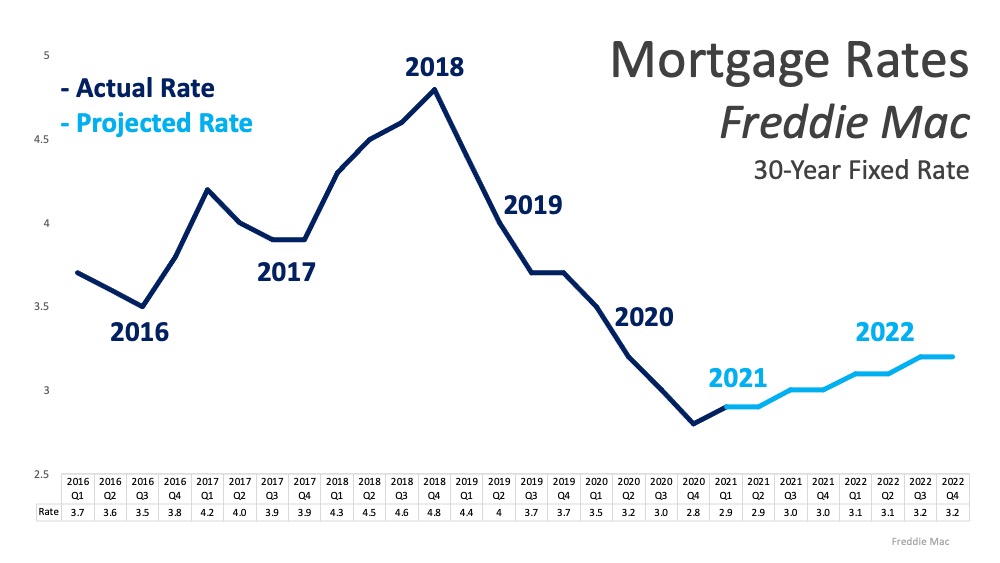
To understand where we are today, we must first dissect the specific numbers of late 2021 and the economic machinery that kept them at near-historic lows before the aggressive tightening cycles of the following years.
1. Defining the Landscape: Mortgage Rate Benchmarks in December 2021
As 2021 drew to a close, the mortgage market remained remarkably favorable for borrowers, though the “bottom” of the rate cycle had technically passed in early 2021. According to Freddie Mac’s Primary Mortgage Market Survey, the rates in December 2021 reflected a world that had not yet fully reconciled with the looming threat of persistent inflation.
The 30-Year Fixed-Rate Mortgage
For the majority of American homebuyers, the 30-year fixed-rate mortgage is the gold standard. In December 2021, the average rate for this product hovered between 3.05% and 3.11%. To put this in perspective, just one year prior, in December 2020, rates were even lower—averaging around 2.67%. By December 2021, the market was beginning to price in the Federal Reserve’s eventual pivot, yet the rates remained under the 3.25% threshold for the duration of the month. This allowed buyers to secure monthly payments that are, by today’s standards, exceptionally low.
The 15-Year Fixed-Rate and Adjustable-Rate Options
For those looking to build equity faster or refinance existing debt, the 15-year fixed-rate mortgage was even more attractive. In December 2021, these rates averaged approximately 2.30% to 2.38%. Meanwhile, 5-year Treasury-indexed hybrid adjustable-rate mortgages (ARMs) were averaging around 2.45%. During this period, the spread between fixed and adjustable rates was narrow enough that most consumers opted for the security of a 30-year fixed-rate lock, a decision that would prove to be one of the best financial moves of the decade for those who acted.
The Refinance Boom’s Final Chapter
December 2021 represented the final opportunity for the “refinance wave” that had dominated 2020 and 2021. Homeowners who had missed the absolute lows of late 2020 were still rushing to lock in rates near 3%. This surge in refinancing activity provided a massive cushion of disposable income for millions of households, as they traded 4.5% or 5% loans for the sub-3.5% rates available at the time.
2. The Economic Drivers Behind Record-Low Rates
The rates witnessed in December 2021 were not an accident of the free market; they were the result of deliberate and aggressive intervention by the Federal Reserve and the unique pressures of a post-lockdown economy.
Federal Reserve Policy and Quantitative Easing
The primary driver of low mortgage rates throughout 2021 was the Federal Reserve’s monetary policy. In response to the COVID-19 pandemic, the Fed had lowered the federal funds rate to near zero. More importantly for the housing market, the Fed engaged in massive “Quantitative Easing” (QE), which included the purchase of billions of dollars in Mortgage-Backed Securities (MBS) every month. By being a consistent and massive buyer of these securities, the Fed kept downward pressure on yields, which directly translated to lower interest rates for consumers. In December 2021, the Fed began discussing “tapering” these purchases, which is why rates started to creep upward from their absolute floor.
The Relationship with the 10-Year Treasury Yield
Mortgage rates traditionally track the yield on the 10-year U.S. Treasury note. In December 2021, the 10-year yield was fluctuating between 1.40% and 1.50%. Because investors view mortgages as slightly riskier than government debt, mortgage rates usually sit about 1.5 to 2 percentage points above the 10-year yield. At the time, this spread was relatively tight, indicating a high level of investor confidence in the housing market and a belief that inflation might still be “transitory.”
Inflationary Pressures and Supply Chain Realities
While the Fed was still supporting the market, the underlying economy was beginning to overheat. By December 2021, the Consumer Price Index (CPI) was showing significant gains. However, the full weight of this inflation had not yet hit the mortgage market. There was a prevailing hope that as supply chains normalized, prices would stabilize. We now know this was not the case, but in December 2021, that optimism was a key factor in keeping long-term borrowing costs from skyrocketing prematurely.

3. Comparing 2021 to the Current Market Reality
Looking at the rates of December 2021 through the lens of today’s financial environment reveals a stark contrast. The shift from a 3% environment to a 7% environment has fundamentally altered the mechanics of personal finance and real estate investing.
The Impact on Purchasing Power
The difference between a 3.1% rate and a 7.1% rate is not just a number—it represents a massive erosion of purchasing power. For example, on a $400,000 mortgage:
- At 3.1% (Dec 2021), the principal and interest payment was approximately $1,708.
- At 7.1% (a common recent rate), the payment for that same $400,000 loan jumps to $2,688.
This $980 monthly difference means that a buyer in December 2021 could afford a significantly more expensive home with the same monthly budget than a buyer today. This “affordability gap” is why the 2021 market was characterized by intense bidding wars and rapid price appreciation.
The “Golden Handcuff” Phenomenon
A direct consequence of the low rates in late 2021 is the “locked-in” effect, often referred to by economists as “golden handcuffs.” Because so many homeowners secured or refinanced into 3% mortgages in 2021, they are now extremely reluctant to move. Selling their current home would mean giving up a 3% rate to take on a 7% rate on a new property, effectively doubling their interest expense. This has led to a historic shortage of housing inventory, as owners choose to stay put rather than participate in a high-rate market.
Real Estate as an Inflation Hedge
In retrospect, those who purchased property in December 2021 utilized one of the most effective inflation hedges in history. They locked in a low fixed cost of debt while the value of the underlying asset (the home) and the general price level of goods rose significantly. In a sense, the high inflation of 2022 and 2023 effectively “eroded” the real value of their 3% debt, making it one of the most profitable financial maneuvers for the average American household.
4. Lessons for Today’s Homebuyers and Investors
While we cannot return to the rates of December 2021, analyzing that period offers strategic insights for navigating the current high-rate environment. The “cheap money” era may be over, but the fundamentals of smart financing remain the same.
Evaluating Buy-Downs and Adjustable-Rate Options
In 2021, there was little reason to look at anything other than a 30-year fixed rate. Today, the landscape requires more creativity. Many buyers are now looking at “2-1 buydowns,” where the seller pays a lump sum to lower the buyer’s interest rate for the first two years. Others are revisiting ARMs, hoping that rates will drop before the adjustment period kicks in. These tools, which were unnecessary in the 3% era of December 2021, are now essential for making the numbers work in a personal budget.
The Importance of the Debt-to-Income (DTI) Ratio
In 2021, low rates allowed for more flexibility in DTI ratios because the interest portion of the payment was so small. Today, with interest consuming a larger portion of the monthly check, maintaining a healthy DTI is more critical than ever. Financial advisors now emphasize larger down payments and more aggressive budgeting to offset the increased cost of borrowing.
Timing the Market vs. Time in the Market
The most significant takeaway from December 2021 is that the “perfect” time to buy is rarely obvious when you are in it. In late 2021, many pundits argued that rates were “too high” because they had risen from 2.6% to 3.1%. In hindsight, 3.1% was a gift. This reinforces the classic investment adage: it is almost impossible to time the market perfectly. For those focused on long-term wealth building, the goal should be to find a property and a payment that is sustainable within their personal finance framework, rather than waiting for a return to historical anomalies like the rates of 2021.

Conclusion
The mortgage rates of December 2021—averaging just over 3%—represented the sunset of a unique era in American finance. Driven by unprecedented Federal Reserve intervention and a world recovering from a global pandemic, these rates provided a final window of extreme affordability before the onset of the current high-inflation, high-rate cycle.
For the modern investor or homebuyer, December 2021 serves as a benchmark for what is possible when the stars of monetary policy and economic slack align. While we may not see those sub-4% rates again in the near future, understanding the mechanics of that period allows us to better appreciate the value of fixed-rate debt and the importance of acting decisively when financial conditions are favorable. In the world of personal finance, history doesn’t always repeat itself, but it certainly provides the map we need to navigate the future.
aViewFromTheCave is a participant in the Amazon Services LLC Associates Program, an affiliate advertising program designed to provide a means for sites to earn advertising fees by advertising and linking to Amazon.com. Amazon, the Amazon logo, AmazonSupply, and the AmazonSupply logo are trademarks of Amazon.com, Inc. or its affiliates. As an Amazon Associate we earn affiliate commissions from qualifying purchases.